
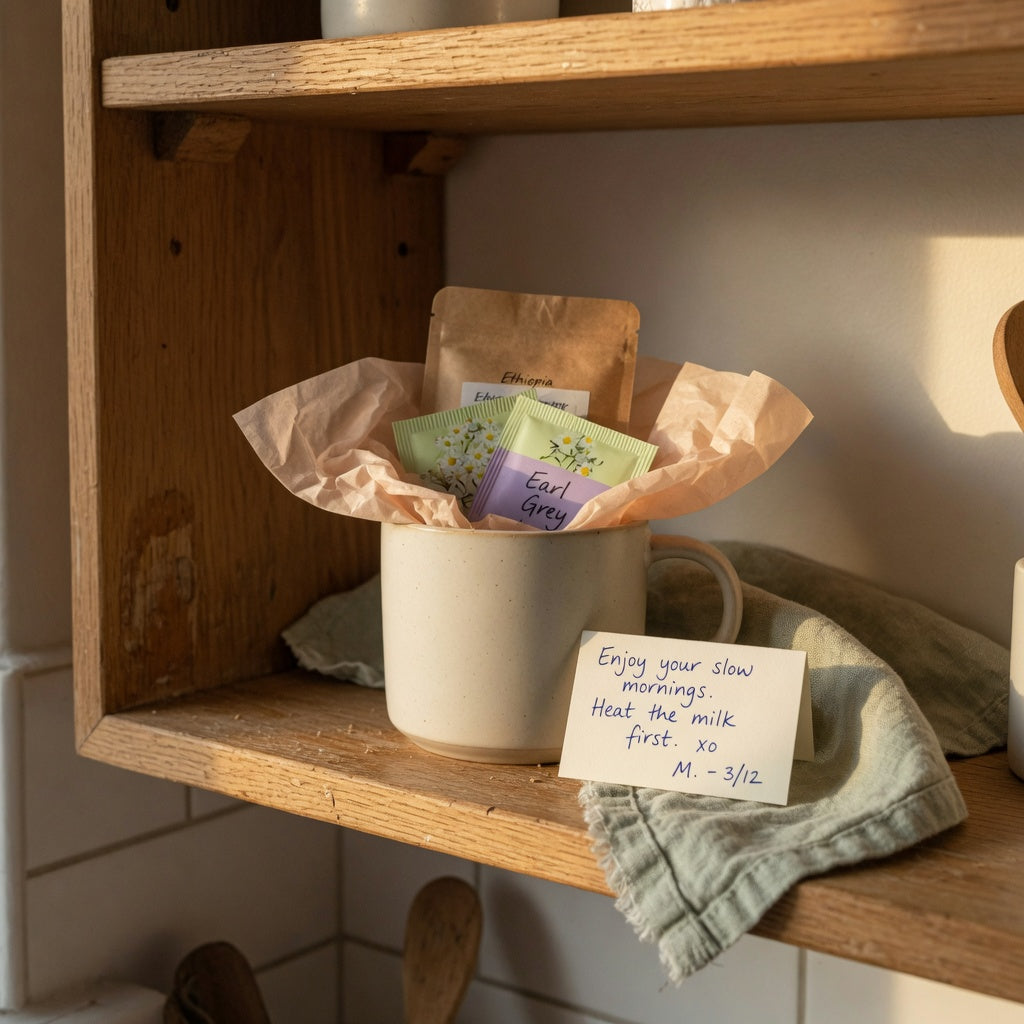
Coffee Mug Home Decor Gift: What Buyers Should Compare
Reading time: about 14 minutes
A housewarming cabinet fills faster than the thank-you notes go out. Two weeks later the new mug is behind the everyday cups, handle facing the wall, because it looked right in the photo and felt wrong at 7 a.m. We see the return version of that story in our store: pinched fingers, a graphic that lifted after a few dishwasher cycles, or a metallic line that made reheating a bad idea. A coffee mug home decor gift has to earn a place twice, once on the shelf and again in the hand, if drinking was part of the plan.
Color is the last comparison, not the first. Daily coffee at the counter, a single piece for open shelves, a matching set for an empty kitchen, and a drink that rides in a bag are four different purchases. Call a decorative cup drinkware and you are shopping for clutter.
Is this coffee mug home decor gift for the pour or the shelf?
Start with the recipient's actual morning, not the occasion printed on the card. Someone who already has a favorite mug will not retire it for a shape that is awkward to sip from. A home cook who styles open shelves may want one object with a strong profile and no extras. Those gifts should not look the same in the cart.
In our experience, gifted mugs fail in three quiet ways:
- The rim or opening feels wrong, so the mug becomes a pen cup or a planter.
- The print, vinyl, or decal is the entire design, and it peels or fades once hot water hits it.
- The piece is ornamental ceramic that only resembles a cup. If it is not for food, it does not hold coffee.
| Primary job | Choose | Leave behind |
|---|---|---|
| Daily coffee or tea at home | Food-use ceramic, a rim they will sip from, and a care mark they will follow | Decorative-only ware, unknown vintage glaze, or a hand-wash print if the dishwasher runs every night |
| Open-shelf display | One piece short enough for that shelf, with a foot that sits flat | A tall mug that hits the cabinet, or bare steel with nothing to look at |
| Drink leaves the house | An insulated bottle with a seal they already trust | A ceramic decor piece in a tote |
| New kitchen, bare shelves | Two or four mugs in one glaze, if guests will use them | A single monogram nobody else wants to drink from |
For one at-home coffee or tea mug that might also stay visible, open The Rock coffee tea mug and read the current page before you wrap it. The name tells you the drink it is aimed at. It does not tell you capacity, body material, handle clearance, dishwasher or microwave marks, or whether any decoration is metal. Those are listing facts, and they can change when the page is updated. Do not treat a product photo as a care label, and do not assume the piece is sold as a set.
If you are still choosing among unusual silhouettes, use our unique coffee mugs and sort by the job, not only by the illustration. A striking profile can be excellent on a shelf and a poor daily cup when the handle opening is tight or the rim is thick.
Stoneware, porcelain, glass, or a bottle that leaves the house?
Material follows the job. For coffee and tea that stay in the kitchen, ceramic is the usual body: it holds heat through a sit-down cup and takes glaze color that reads across a room. Heavier stoneware looks settled on a wood shelf and can feel like a chore on the walk from kettle to desk. Porcelain often gives a finer rim, which some tea drinkers want and which chips sooner when it shares a sink with dinner plates. Clear glass shows the drink. That helps with a pale tea or a layered coffee, and it adds little if the cup is a dark roast finished without a glance.
Insulated stainless steel wins when the drink leaves the house. It loses when the gift is supposed to be glaze, illustration, or a ceramic form on an open shelf. A double-wall tumbler is not a decor object. We would not send one as a home gift unless the person commutes, and we would not send a delicate hand-wash showpiece to a kitchen where the dishwasher runs nightly.
None of those bodies is suitable for food merely because it is ceramic, glass, or metal. Glaze, decoration, and how the piece was made decide whether anything unwanted can move into a hot drink. A rocking foot is a separate, simpler defect: if the mug wobbles on a flat counter, it will annoy someone every morning, and a rough unglazed foot can scratch a finished shelf. Check both before you call it display-worthy.
Listed ounces, handle clearance, and the cabinet above the shelf
Pages quote ounces. People pour less than brim-full. Leave a gap under the rim, and leave more if milk goes in. The number on the listing is not the drink they will finish.
FDA lead guidance uses a cups-and-mugs category for small ceramic hollowware commonly used for coffee or tea above room temperature. Those pieces normally, though not always, hold about 8 fluid ounces, roughly 240 milliliters, and are made with a handle. That is a description of a typical regulated cup. It is not a recommended gift size. Many people at home want more than 8 ounces. A short tea drinker may find a tall cafe mug clumsy on a narrow shelf.
Three fit checks hide in the photo:
- Comfortable fill versus listed capacity. If the page only gives a brim-full number, plan on a lower everyday pour. Two mugs with the same ounce claim can still drink differently once the walls curve inward.
- Handle opening and rim thickness. The gift fails when two fingers will not pass cleanly, or when a high handle makes the mug tip as it is lifted. A thick rim can feel sturdy and still be unpleasant on the lip. That mismatch is a common reason a pretty mug becomes a planter.
- Shelf and cabinet height. Open-shelf decor works only if the mug stands where it will be seen without crowding plates above it. Measure the shelf if you know it. A tall mug that cannot clear an upper cabinet lives on the counter forever. That is either the look they want or a nuisance.
Weight belongs in the same pass. Presence on a shelf and comfort on a daily carry are often in tension. If you are choosing the heavier look, say so on the card so the recipient is not surprised.
When a beautiful glaze is not a coffee cup
Gift roundups rarely separate a display piece from food-contact ceramic. Under 21 CFR 109.16, ornamental or decorative ceramicware that appears suitable for food is treated as food-use ware unless it carries a required visible warning, such as "Not for Food Use. May Poison Food," plus a permanent version of that statement on the base, or unless a hole is bored through the potential food-contact surface. No warning does not mean you may invent a display-only story. A warning does mean coffee, tea, and snacks stay out.
Lead in the glaze or decoration of some traditional pottery can move into food or drink if the piece was not made properly. FDA's questions on lead-glazed pottery are direct about cleaning: washing, boiling, and other processing do not remove lead from pottery. The FDA action level for lead leaching from ceramic cups and mugs is 0.5 micrograms per milliliter of leaching solution. In that cups-and-mugs category, the criterion is any one of six units above 0.5 micrograms of lead per milliliter. Cadmium has its own action levels for ceramic hollowware under CPG 545.400: 0.5 micrograms per milliliter for small hollowware and 0.25 micrograms per milliliter for large hollowware. Those are leach-test benchmarks. They are not a blood test, and they are not California Proposition 65 dose language. Mixing the two systems is how gift advice gets the numbers wrong.
A 2017 pilot study in Food Safety and Risk measured lead in coffee and tea from five in-use ceramic mugs already known to contain lead. Coffee ranged from 0.2 to 8.6 micrograms per liter. Tea ranged from below 0.2 to 1.6 micrograms per liter. The cup mattered more than the beverage or how long it sat. For one of the five mugs, the estimated daily dose was above California's 0.5 microgram per day Maximum Allowable Dose Level. Modeled blood lead levels in that study did not rise above the regulatory or guidance values the authors used. Five known-lead mugs are not a verdict on every glazed cup. They are a reason to buy food-use drinkware from a seller you can question, instead of an anonymous vintage piece with a bright glaze.
FDA advises extra caution with ceramicware that is handmade and irregular, antique, damaged or excessively worn, bought where the maker cannot be verified, or brightly decorated in orange, red, or yellow. The agency has also reported that some traditional pottery labeled lead free still released lead at or above FDA action levels. A sticker is not a substitute for knowing who made the mug and whether it is sold to be drunk from.
A used or vintage mug can still be a thoughtful shelf gift. It is a weak hot-drink gift when food-contact status is unknown. If they will not drink from it, write "display only" on the card and do not tuck coffee inside as if it were a cup.
Extra mugs often become planters after the rim fails the sip test. Most have no drainage hole. Soil stays wet, roots suffer, and a saucer only catches the overflow. A nursery pot or plastic liner inside the mug fixes that. Once a plant comes out, do not pour coffee into a piece that was marked not for food use.
Gold trim, metallic coatings, and the microwave
Do not plan on microwaving metal on a ceramic mug, including when a hangtag says otherwise. Gold and silver paint, a metallic rim, and a full metallic coating can spark, overheat, or break. A steel handle is not the only problem.
Two recalls make the gift risk specific. A 2016 recall of about 14,000 monogrammed ceramic coffee mugs involved metallic paint that could spark in a microwave and pose a fire hazard. Those mugs were marked microwave and dishwasher safe. The firm reported one sparking incident and no injuries. CPSC recall 24-171 later covered about 440,500 ceramic mugs with a metallic coating, sold in 2023 Starbucks-branded holiday gift sets in 11 oz and 16 oz sizes. Microwaved, or filled with extremely hot liquid, they could overheat or break and cause burns and cuts. CPSC reported 12 incidents and 10 injuries.
On our counter the check is short. Read the base and the listing. Then look at the surface. If you see metal paint, a metallic sheen, or gold or silver trim on anything that would enter a microwave, do not rely on a printed microwave-safe line by itself. Sparking has happened on mugs that carried that claim. Someone who reheats a half cup at a desk needs plain glazed ceramic with no metal decoration. Someone who only pours from a kettle can keep a metallic accent as a style choice with a hard limit. Put "no microwave" on the note.
Prints that peel, and what actually fits inside
Separate the ceramic body from the decoration. A stoneware or porcelain body can tolerate the dishwasher while a decal, vinyl wrap, or surface print cannot. This is where complaints pile up: edges lift after a few hot cycles, metallic ink dulls, and the hand-wash line was buried under the story on the page. If the design is the gift, a monogram, a street name, an illustration meant for the shelf, assume hand washing unless the current listing says the decoration itself is dishwasher safe, not merely the mug.
A joke mug has a special failure. The joke is the product. Once the print peels, the recipient owns a plain cup they did not ask for. Crazing, the fine crackle some glazes show on purpose, is a related shelf-versus-sink choice. It can be the look they want and still stain with coffee on a daily cup. Fired-in glaze color usually outlasts a sticker-style transfer on open shelving. Know which one is in the box.
Overstuffing ruins the other half of the gift. A mug cavity is small, and the handle snags tissue. What holds up in our packing area:
- One or two shelf-stable items below the rim: a few wrapped tea bags, a small bag of coffee, or a wooden stirrer. Not a basket.
- Tissue or shred only to the rim, so the wrap stays flat. A tall paper dome looks finished on the counter and collapses in a mailer.
- A liner if you add a small plant. The mug is not a nursery pot.
- Nothing that leaks, melts, or needs a refrigerator. Gift mugs often sit out overnight before they are opened.
Cellophane, a belly band, and a three-line care note beat another trinket. Measure height before you promise a ship date. A tall mug plus a rigid bow can outgrow a mailer you already own.
One statement mug or matching cups for empty shelves?
Housewarmings split on quantity. A new kitchen with bare open shelves can use two or four mugs in one glaze. Matching rims look intentional, and guests have something to drink from. A kitchen already full of mismatched mugs does not need another orphan. One strong piece, or no mug at all, is kinder.
A name, a new address, or a date works when that person will keep the cup in rotation. It works poorly as the only set of four. Guests do not want someone else's monogram, and a misspelled name is awkward to pass on. Novelty shapes have the same limit: right for the coffee lover who asked for that form, weak as a couple's everyday pair if only one shape is comfortable to hold.
That coffee and tea mug is the single-piece page we would open for at-home drinking with a chance of shelf time, and only after the listing's size, handle, material, and care notes match the person. Confirm each of those. The name does not confirm them. It is the wrong next step when you need several matching mugs, unless the current listing is actually sold as a set. It is also the wrong path when the drink lives in a car, when you want a piece already marked decorative only, or when the household has said the cabinet is full. For other forms, compare shapes in the unique coffee mug collection, then leave ceramics if an insulated bottle is what they use.
This kind of gift is not office swag anyone might microwave, not kids' drinkware, and not a planter that drains on its own. Believe someone who says they already own too many mugs.
Read the current listing before the tissue goes on
Run this on the page in front of you, not from memory of a similar mug:
- Name one job: drinking, display, a matching set, or travel.
- Confirm food-use drinkware. If the piece says it is not for food, gift it as display only and say so.
- No metal paint or metallic coating on a surface that will be microwaved. If metal is the look, write the limit on the note.
- A dishwasher claim that covers the decoration, not only the ceramic body. Hand wash only has to be known before the first cycle.
- Listed ounces, a realistic pour, handle clearance, a sip-able rim, a stable foot, and height versus the shelf or cabinet.
- A return window long enough for a duplicate or a too-small cup. Read it on that listing.
- Fillers below the rim, nothing perishable, and a liner if a plant is going in.
If any line is still blank, stay on the current page and compare it with other shapes in the collection. The coffee mug home decor gift that lasts is the one that still makes sense after the tissue is gone, on the shelf, in the hand, or both.
Frequently asked questions
What should I compare first on a coffee mug home decor gift?
Decide whether it will be drunk from every week or mostly displayed. Then check food-contact status, microwave and dishwasher marks, metal trim, usable size versus listed ounces, and handle comfort. A piece that fails the sip test becomes clutter or a planter, even when the glaze photographs well.
Are decorative ceramic mugs safe for hot coffee?
Only when they are sold as food-use drinkware. Ornamental ceramic that looks usable is treated as food ware unless it carries a clear not-for-food warning, with a permanent version on the base, or a hole through the food-contact surface. Lead can move from some glazes into a drink, and washing does not remove it. Skip antique, damaged, or unverified handmade pieces for hot drinks, and do not treat a lead-free label as proof.
Can I microwave a mug with gold trim or a metallic coating?
No. Metallic paint and coatings can spark, overheat, or break. Recalls have included gift mugs marked microwave safe, and holiday gift-set mugs with a metallic coating that overheated or broke when microwaved or filled with very hot liquid. If you see metal on the surface, keep that mug out of the microwave.
What should I put inside a coffee mug gift without overstuffing it?
Stay small and shelf-stable: a couple of tea bags, a modest bag of coffee, or a stirrer, with filler only to the rim. Skip perishable food and bulky extras that crush the tissue. If you add a plant, set a nursery liner inside, because a typical mug has no drainage hole.
Is a matching set better than one personalized mug for a housewarming?
A matching set fits a new kitchen with empty shelves and guests who need cups. One personalized or statement mug fits someone who will actually use that cup and already has everyday drinkware. Skip the mug when the household has said they own too many, or when you need identical pieces and the listing is only one cup.
More from our blog
Read more
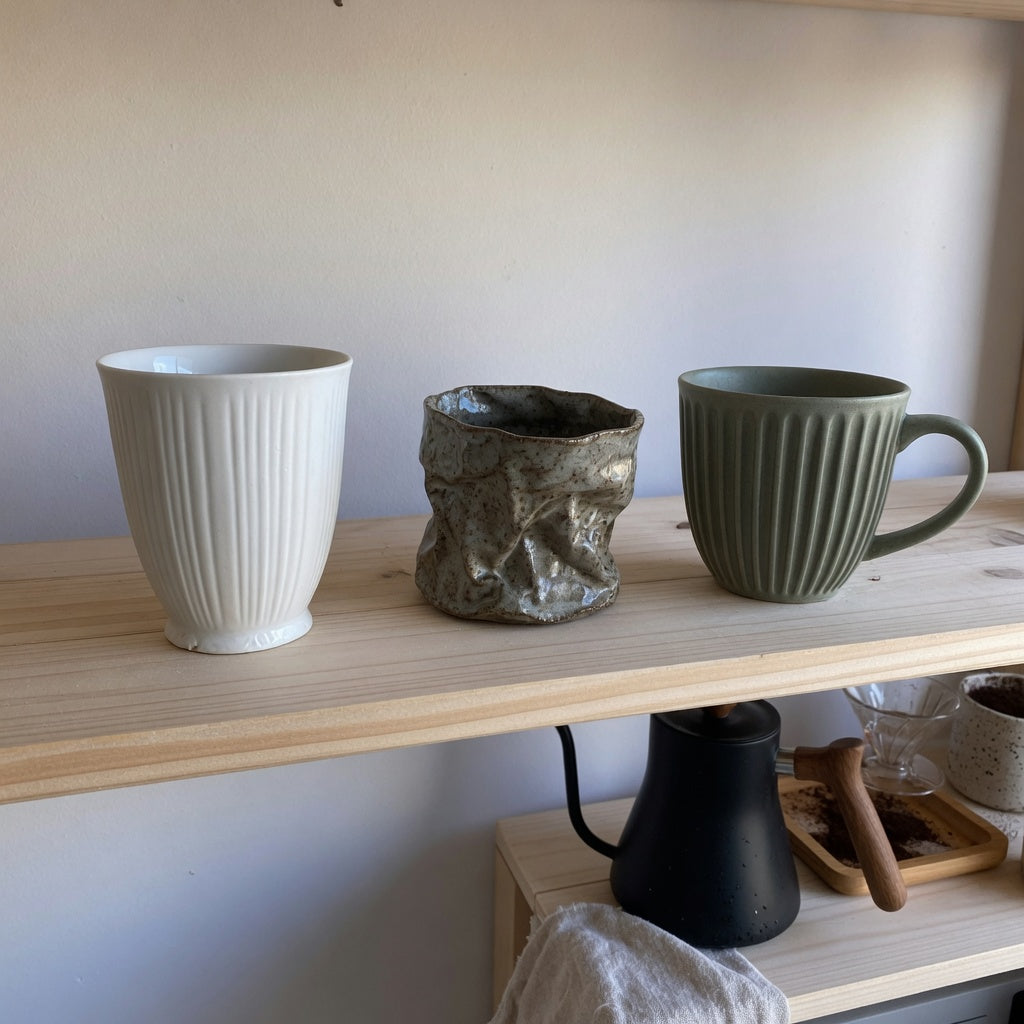
Pleated Ceramic Cup Home Decor Coffee Lovers: What to Compare
A textured cup can look finished on a coffee bar and still be too small for a real pour. We compare pleat styles, capacity, ridge care, and food-contact checks so coffee lovers buy for both the she...
Read more
the rock coffee tea mug for coffee lovers home decor: compare
Shoppers comparing the rock coffee tea mug for coffee lovers home decor should separate stone texture from printed mugs. Confirm capacity, food-use status, weight, lip comfort, and care on the curr...
Read more
Leave a comment
This site is protected by hCaptcha and the hCaptcha Privacy Policy and Terms of Service apply.