

Emerald Coffee Tea Mug for Coffee Lovers Home Decor Guide
Reading time: about 15 minutes
The mug looked jewel-green in the listing and olive under the cabinet light. That is the moment we hear about most often: a shopper sets a new cup on the coffee bar, pours, and the color, the fill line, or the handle is not what the photo sold. In our store, people searching for an emerald coffee tea mug for coffee lovers home decor usually want both jobs at once. They want a cup that takes morning coffee or afternoon tea, and a deep green accent that still looks intentional on an open shelf. The emerald coffee tea mug is the piece we point to when green is the reason for the purchase. The current listing is the spec sheet. A color name does not tell you capacity, glaze behavior, handle clearance, or whether the piece is sold for drinking.
If green is only one idea among several motifs, start in our unique coffee mugs and compare shapes before you commit to a glaze. A striking color will not fix a handle you cannot get three fingers through, or a bowl so wide it feels like a soup cup at 7 a.m.
Does this mug have to survive the sink and still dress the shelf?
Only if that is the job. We see two orders that look the same in a cart and fail in different kitchens. One customer rotates the mug through coffee, tea, and the dishwasher most nights. The other wants a single green note above the counter and may never fill it. Those are different products even when the color word matches.
A daily mug needs a foot that sits flat on a stone counter, a rim that does not dribble, and care rules you will actually follow on a weekday. A display piece can be heavier, more ornate, or marked not for food use. The failure we would rather catch at checkout is a display-only cup that ends up in a coffee habit because it was shaped like a mug.
An open ceramic mug is also the wrong tool for a commute. It will not seal in a tote, and it will not stay put in a car cup holder the way a lidded travel mug does. If the drink happens between the door and the desk, lid fit matters more than the glaze, and so does whether the lid and the body share the same wash rules. Do not ask a cafe-style green mug to cover that job.
Open cup, latte saucer, infuser, or lidded travel mug?
Search pages mash these styles into one green grid. Separate the job before the photo decides for you.
| Style | Fits | Poor fit |
|---|---|---|
| Open ceramic mug | Coffee, tea, or cocoa at a table or desk. Easy to spoon and easy to see the fill. | Bags, cars, or a cup set on a slanted notebook. |
| Latte cup with saucer | A breakfast nook or a guest tray. The saucer catches drips. | Narrow shelves. Rims chip if cups are stacked and saucers are ignored. |
| Infuser tea mug | Loose leaf, when you want the leaves out before the cup turns bitter. | A household that only uses bags or a pot. Extra parts live in the sink. |
| Lidded ceramic travel mug | A short walk from kitchen to desk. | A long heat hold. A ceramic lid is not vacuum steel, and the outside can still run hot. |
If you need both a microwave reheat and a drink that stays hot for a long drive, you may need two vessels. One mug rarely does both well. A sleeve or a double wall has to be stated on the page. We will not infer it from a green photo.
On the emerald listing, verify whether a lid, band, saucer, or infuser is in the box. If the page is silent, treat it as the cup only. That is the honest reading, not a hidden bundle.
Stated ounces versus the pour that still has room for milk
Brim capacity is the volume if you fill to the lip. Almost nobody drinks a mug that way. Coffee needs room so it does not slosh between the machine and the table. Milk, cream, and foam need more of that space. A number that looks generous on a product tile can land as a modest drink once you leave about a finger of headspace.
Regulators are not describing a cafe serving when they define a mug. Under FDA CPG Sec. 545.450, cups and mugs are small ceramic hollowware commonly used for coffee or tea above room temperature, normally about 240 mL (8 fl oz), and usually made with a handle. That figure is a definition used for lead testing. It is not a recommended pour, and it is not a specification for the emerald mug on our site. It is a reminder that the word mug can mean a modest cup or a bowl with a handle.
Before checkout, look for ounces or milliliters on the current page, and for a filled photo that is not cropped at the rim. If only one number is given, ask whether it is brim-full. A tall narrow cup and a low wide cup can share a stated volume and feel completely different in the hand and on the shelf.
Iced drinks are a separate test. Ice takes space a hot pour does not, and a cold ceramic wall can sweat onto a wood shelf or a paper notebook. An open mug handles iced coffee at a desk. It is a poor choice in a tote, where a lid and a stable base matter more than color.
Solid emerald, two-tone, or a reactive glaze that will not match?
Emerald is a selling color, not one glaze recipe. Listings use it for a flat deep green, a green exterior with a white interior, a mottled woodland finish, and reactive or iridescent glazes that shift as you turn the cup. Reactive and hand-applied glazes are supposed to vary. The hero photo is one firing. It is not a promise that the mug in the box will match the photo, especially under a warm kitchen bulb instead of studio light.
What we tell shoppers to read for, in this order:
- Words such as reactive, iridescent, crystalline, or each piece unique.
- Several photos taken in real rooms, not only the studio shot. North light and a brass lamp will not agree on the same green.
- Interior color. A white well shows coffee film differently than a green well, and an empty mug on a shelf reads as a different object.
- Crazing, the fine crackle some makers intend in the glaze. On a daily cup it can stain along the lines and is harder to keep looking new.
If you need four mugs to match for a breakfast nook, a reactive single is the wrong bet. Look through the unique coffee mug collection for a shape described with a consistent commercial glaze, and still expect small differences from piece to piece. If you want one statement mug, variation can be the point, as long as the listing said so before you paid.
We do not rank stoneware against porcelain for how long coffee stays hot. Retail copy disagrees, and we have not run a controlled hold test that would make that ranking fair. What we do watch is weight, wall feel, and whether the glaze is glossy and even or mottled and reactive. Those show up in the hand on day one. Heat rankings do not.
Microwave marks, gold rims, and what the dishwasher does
Dishwasher safe and microwave safe are separate sentences. A mug can survive the rack and still be a bad idea in the microwave. Gold, silver, platinum, or luster on a green ground is the usual reason a listing pulls microwave use. If the page says hand wash only, or not microwave safe, believe that line. Do not test a metallic rim yourself.
A plain glaze is not immune to wear either. In our experience, rims chip where handles knock together in a crowded rack, and repeated hot cycles can dull a glossy surface or make fine crazing easier to see. Handmade stoneware is often labeled dishwasher safe while careful owners still hand wash. That is a reasonable choice when the piece was a gift or the glaze will not be repeated. It is a poor plan if nobody in the house will hand wash a cup.
On the product page, confirm each point instead of borrowing it from the color:
- An explicit microwave-safe line, not just the word ceramic.
- An explicit dishwasher-safe line, and whether it covers a lid or an infuser if those parts exist.
- Any gold, silver, or metallic motif in the description or the photos, including a thin rim the crop almost hides.
- Whether the foot ring is glazed. An unglazed foot can scratch a glass shelf or a finished wood bar top.
Our emerald listing has to answer those points for itself. Category habits are not a substitute for the marks on that page. If two of the four lines are missing, we would not put that mug in a daily rotation yet.
When a pretty cup is foodware, and when it is only decor
A cup shape reads as something you drink from. FDA guidance treats ceramic that looks suitable for food as foodware unless it meets the ornamental-ware rule in 21 CFR 109.16: a conspicuous stick-on warning shoppers can see, plus a permanent statement of that message on the exterior of the base. A note that lives only on the box, or a sticker someone can peel off, does not turn a mug into decoration.
If the listing does not say the mug is sold for drinking, treat the green as shelf decor only.
Lead can sit in the glaze or decoration of some traditional pottery. FDA's practical account is this: fire the piece at the right temperature for the right time and essentially all the lead is locked into the glaze. Miss that firing and lead can move into food and drink. Washing, boiling, or any other process you can do at home does not take it out. For cups and mugs, the action level in CPG Sec. 545.450 is 0.5 micrograms of lead per milliliter of leaching solution in any one of six units tested.
Cadmium gets less shelf talk and still belongs in the check. FDA pottery guidance, CPG Sec. 545.400, records that imported and domestic ceramic ware has been found with significant extractable cadmium, that acid foods can draw it out, and that continued food use could cause chronic cadmium poisoning. The action level for small hollowware is 0.5 micrograms of cadmium per milliliter of leaching solution in any one of six units. FDA identifies effects on bone and kidneys as the most sensitive health outcomes associated with cadmium exposure.
A lead-free line on a hang tag is not a lab report in your hand. Ware that still releases lead under the CPG method should not be labeled lead free. Using that phrase when extractable lead is present can be treated as false and misleading. Levels above the action thresholds may lead FDA to consider the ceramicware adulterated. A color word is not a safety claim, and neither is a glossy photo.
Take extra care with crude or irregular handmade-looking pieces, antiques, damaged or heavily worn glaze, flea-market and street-vendor finds, makers you cannot identify, and bright orange, red, or yellow decoration. FDA describes everyday ware from commercial factories as much less likely to have lead problems. That is a sorting rule for a market find. It is not a certificate for a specific mug on a product page.
Children are the sharper risk. FDA ties lead poisoning in children to learning disabilities, developmental delays, and lower IQ scores, and says a child can be affected without looking or acting sick. An unverified decorative cup does not belong in a cocoa habit, even when the green would look charming in a small hand.
Handle clearance, full weight, and smaller hands
Buyers with smaller hands, a weak grip, or thumb arthritis keep coming back to the same complaint. A generous bowl with a tiny handle opening forces a pinch. A thick wall feels reassuring on a styled shelf and tiring once the mug is full of coffee and you are carrying it across the kitchen.
Check the listing for height, diameter, and any note about handle shape. If those dimensions are missing, that is a gap. Do not invent them from the photo. Wide-angle shots shrink handles and flatten bowls. You want enough clearance for the fingers that will actually hold the mug, and a balance point that does not tip forward when the mug is half empty.
In our experience, a slimmer cup is often easier to hold than a low, wide bowl of the same stated volume. It is worse for a pile of marshmallows and for a large infuser basket. Trade the shape to the drink you actually make, not to the styled photo on the coffee bar.
Where an emerald coffee tea mug for coffee lovers home decor belongs
Deep green holds up next to walnut, white stone, matte black hardware, and a small piece of brass. It fights with several other saturated colors on the same open shelf. One emerald mug beside cream, sand, and wood reads as a decision. Six different greens from six glazes read as leftovers from other kitchens.
Open shelves collect dust inside the bowl and along the handle. A mug you display empty still needs a rinse before the first pour, and a foot that will not scratch the shelf. Stacking saves a crowded mug wall and chips rims. If this is a single accent, leave it unstacked at the front, handle turned the same direction as the rest of the wall.
A breakfast nook wants the drinkable version: a stable base, a handle you can use before you are fully awake, and a finish you will not baby. A high shelf can hold a piece you have confirmed is not for food, as long as guests cannot casually grab it for coffee. Do not mix those roles quietly. If someone might pour into the pretty cup, it needs to be a real cup.
Farmhouse wood, a rental laminate bar, and a tight apartment ledge all change the same object. On a narrow shelf, a wide latte bowl with a saucer steals the whole surface. A taller mug with a modest footprint leaves room for the kettle. Measure the shelf before you fall for the widest green bowl in the grid.
A gift when you have not seen their cabinet
Coffee-lover gifts fail when the mug is beautiful and wrong for the routine. Too little room for a drip-coffee habit once milk goes in. Too fussy to wash on a weeknight. Too uncertain for food use. A housewarming has the same blind spot. You do not know their microwave rules, or whether the kitchen is farmhouse wood or a crowded rental dishwasher.
An emerald-themed anniversary, or a simple you-love-green gift, lands better when you can say what you checked. Capacity, if the listing states one. Microwave and dishwasher lines. No surprise metallic rim hiding in the crop. A return window in case the glaze is more olive, more teal, or more mottled than the photo.
This style is a weak gift for someone who only drinks from a travel tumbler, for a household that needs four identical mugs tonight, and for a child. It is also the wrong gift if you cannot confirm the piece is sold for drinking. In those cases, step back to the unique coffee mugs and match the shape to the routine first. Let color be the second decision, not the only one.
Frequently asked questions
Is an emerald coffee tea mug for coffee lovers home decor safe to drink from?
Only if that exact listing sells it as something to drink from, and the base is not permanently marked as not for food use. A mug shape is not proof. FDA treats food-looking ceramic as foodware unless it carries a warning shoppers can see and a permanent version of that message on the base. Skip unverified, antique, damaged, or flea-market pieces for coffee and tea.
Will the emerald glaze match the product photo?
Not always. Solid commercial glazes stay closer from piece to piece. Reactive, iridescent, and hand-applied greens are meant to vary, and a warm kitchen bulb will not match studio light. Read for wording that each piece is unique, look at photos taken in real rooms, and check the return policy if an exact match matters.
Can I microwave a green mug with a gold or silver accent?
Do not, unless that exact listing says the decorated mug is microwave safe. Metallic rims and luster are a common reason ceramic is marked hand-wash only and kept out of the microwave. A dishwasher-safe line does not mean the same mug is microwave safe.
Why does a listed capacity feel smaller once I add milk?
The listed number is often brim-full. A drinkable pour leaves headspace so coffee does not spill, and milk or foam takes more of that space. Read the ounces or milliliters on the page, then picture the mug about a finger short of the rim. That is the serving you will actually get.
Should I hand wash if the page calls it handmade stoneware?
If the listing truly describes handmade stoneware, hand washing is the cautious habit even when it also says dishwasher safe. Heat, detergent, and mugs knocking together are how rims chip and glazes dull. Confirm that description on the page first. Do not assume handmade stoneware from the word emerald alone.
What to confirm on the listing before you check out
We would rather you leave the tab open than guess from the color. On the emerald coffee tea mug page, tick through this before you buy:
- Drink job: open cup, saucer set, infuser, or lidded travel, and which parts are actually in the box.
- Usable size: stated volume, and whether you still have room for milk, foam, or ice.
- Glaze: solid, two-tone, or reactive, plus how returns work if the green is off.
- Care: explicit microwave and dishwasher lines, and any metallic decoration.
- Grip: dimensions or a clear handle view for the hand that will hold a full mug.
- Food use: sold for drinking, not only as decor, with no ornamental-only warning on the base.
- Where it will live: a daily sink rotation, or a dusty open shelf you will rinse before the first pour.
If two of those lines are missing, it is not ready to be a daily driver. Browse the rest of the collection, pick the shape that matches the morning, and let the green be the part you already decided.
More from our blog
Read more
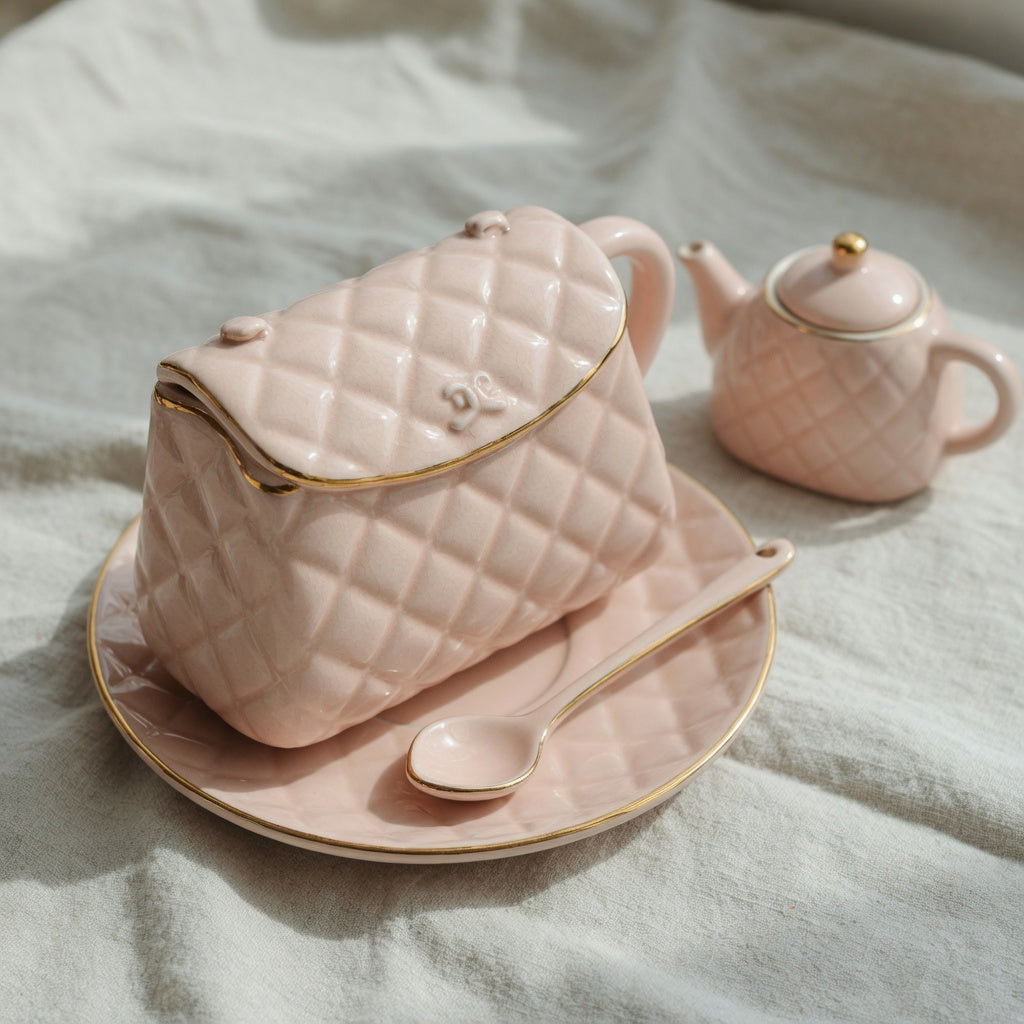
Ceramic Handbag Tea Cup: Size, Gold Trim, and Use
A ceramic handbag tea cup can be a sharp gift or a poor daily mug. We compare stated size, gold-trim care, microwave and dishwasher limits, and food-contact labels before you buy.
Read more
Tall Ceramic Coffee Mug 350 ml: Height, Oz, and Fit
A 350 ml listing is usually brim-full and about 11.8 US fluid ounces, but tall is a shape, not a volume. Compare body height, rim, base, handle room, drink fit, and the care line on the current page.
Read more
Leave a comment
This site is protected by hCaptcha and the hCaptcha Privacy Policy and Terms of Service apply.