

Tall Coffee Mug vs Tea Mug Size Comparison Buyer Guide
Reading time: about 14 minutes
Two mugs sit on the packing table, and the taller one gets picked up first. Shoppers read extra height as extra coffee. Pour the same kettle into both and the shorter, wider mug often takes the same drink, sometimes more. The tall one then clips a cabinet shelf or stands too proud for a car cup holder. This tall coffee mug vs tea mug size comparison buyer guide is how we stop that mismatch before a box leaves our store: usable volume first, silhouette second.
No consumer standard fixes how tall a coffee mug must be, or how many ounces a tea mug must hold. Listings often print one capacity and skip external height, rim diameter, base diameter, and the empty space you should leave under the rim. We sort those gaps the way we do at the packing table. Convert the number. Measure the gaps you actually have. Then decide.
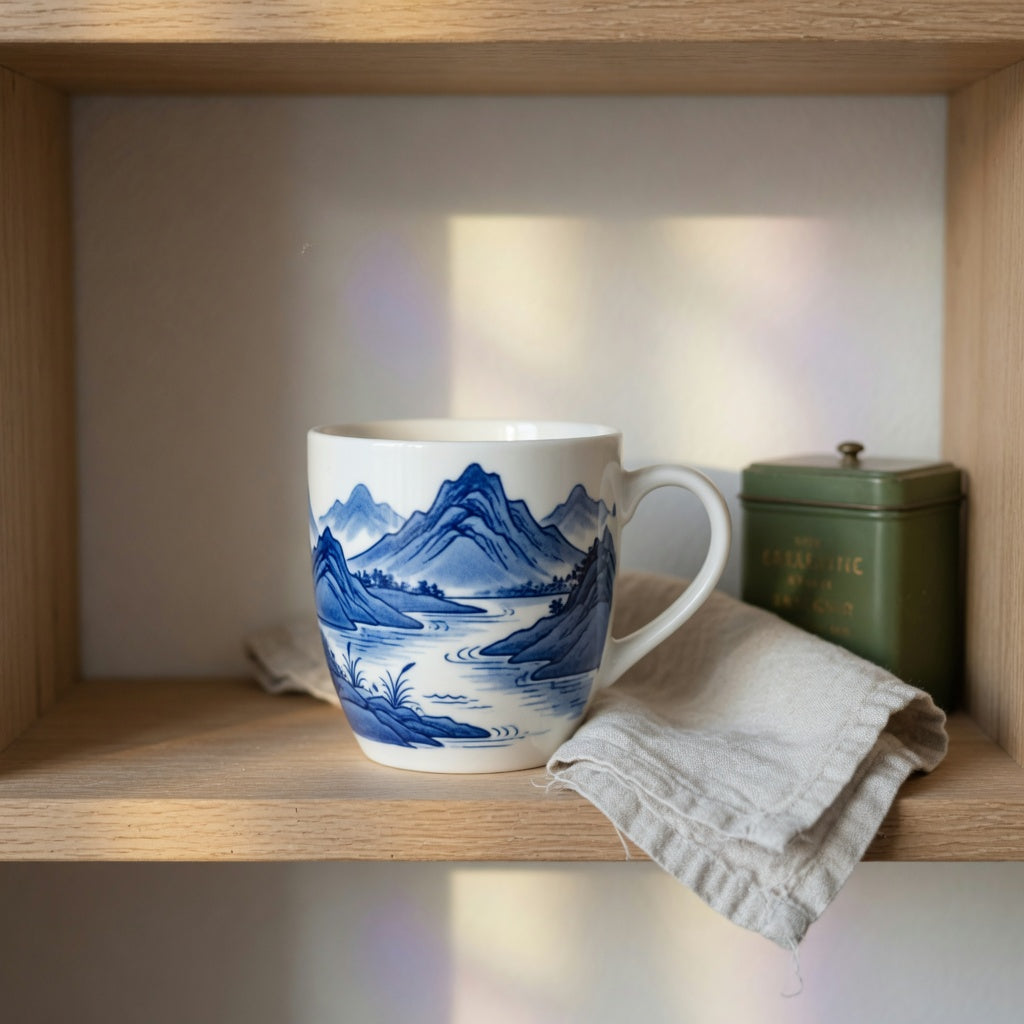
If a tall profile is the shape you want to test, open the current listing for our Landscape tall coffee tea mug and use only the capacity and dimensions printed there today. A similar name on another page is not this mug's spec sheet. If you are still choosing between a wide tea shape and a taller coffee shape, start in the unique coffee mugs collection and run the same checks on each candidate.
Why a brewer cup, a measuring cup, and a mug ounce disagree
A coffee-maker cup, a U.S. measuring cup, and the ounces printed on a mug are not the same unit. That is how a 12-cup brewer looks small beside a mug marked 12 oz. The machine is counting its own cups. The mug is counting fluid ounces of drink. Mixing them is the fastest way to buy the wrong size.
NIST lists the exact conversion: one U.S. fluid ounce is 29.57353 milliliters, and one U.S. cup is 236.5882 milliliters. A Canadian or U.K. imperial fluid ounce is smaller, at 28.41306 milliliters. For rough kitchen math, NIST also equates about 30 mL with 1 fluid ounce and about 240 mL with 1 cup. Those kitchen figures are approximations, not the exact factors. Use the long NIST numbers when a listing is in milliliters and you think in ounces.
On nutrition labels, the FDA states that 1 cup means 240 mL and 1 fluid ounce means 30 mL. Separately, the reference amount customarily consumed for flavored and sweetened coffee or tea is 360 mL prepared, shown as 12 fl oz (360 mL). That figure is a labeling basis for that beverage category. It does not define how much any mug should hold. ISO 3103:2019 is a method for preparing tea liquor for sensory tests. It is not a retail size chart. Shop dimension charts are shopping examples, not a rule for every cupboard.
- Milliliters to U.S. fluid ounces: divide by 29.57353.
- U.S. fluid ounces to milliliters: multiply by 29.57353.
- If the listing might mean imperial ounces, divide milliliters by 28.41306. The same liquid then looks like a higher ounce count.
- Do not treat a coffee-maker cup as 8 U.S. fluid ounces unless that machine's manual says so.
| Listed figure | In the other unit | What it is not |
|---|---|---|
| 8 U.S. fl oz | About 237 mL | Not automatically a tea cup, and not a brewer cup |
| 12 U.S. fl oz | About 355 mL | Not the 240 mL nutrition-label cup, and not a height |
| 16 U.S. fl oz | About 473 mL | Not proof the mug is tall; a wide bowl can hold it |
| 350 mL on a listing | About 11.8 U.S. fl oz, or about 12.3 imperial fl oz | Not the same claim as 12 oz until you know which ounce |
A page that says 350 mL and a page that says 12 oz are close in U.S. measure, not identical. Read which ounce the seller means before you treat them as one mug. We wrote a separate note on what to compare when a tall mug is listed in milliliters. Use it as a checklist. Do not copy a capacity from that page onto a different product.
Tall coffee mug vs tea mug size comparison buyer guide: height is not the pour
Capacity is the space inside. Height is the outside silhouette. The same internal volume can be a short, wide tea-style mug or a tall, narrow coffee-style mug. Tall does not mean it holds more than the mug already on your shelf.
In our experience, shoppers say tea mug when they want a wider rim they can watch and smell, and tall coffee mug when they want a narrower body that feels like a longer drink. Those are habits, not specifications. Nose position, sip size, and how much surface meets the air all change with shape even when the listed ounces match.
What listings drop, and why it shows up at home:
- External height. This hits a shelf, a microwave ceiling, or the gap under a machine spout. Capacity does not include the foot ring or a thick base. A foot can add height you never drink.
- Rim diameter. A wide rim gives a bigger sip and more aroma. It also sloshes more easily on the walk from kettle to desk.
- Base diameter. Cup holders grab the lower wall, not the ounce rating. A tall mug with a wide foot fails holders that a smaller base survives.
- Handle clearance. Fingers need the gap, and so does a dishwasher tine. A tall handle is often what refuses to stack, and a thin join at the body is where mugs chip when someone hangs them on a hook.
- Wall thickness. Thick walls add weight when the mug is full and shrink internal volume relative to the outside size. A heavy full mug gets old across a long desk session.
Set the mug you already like on the counter. Measure table to rim, across the opening, and across the foot. Compare those three numbers with the current product page, not with a lookalike photo. If the Landscape listing does not print height, rim, or base, those stay open questions. Do not guess them from the word tall.
What 12 oz and 16 oz ask of a weekday mug
The 12-versus-16 question is about the liquid you add, not a personality type. A 12 U.S. fl oz target is about 355 mL. That sits near one generous drip serving, and near the 12 fl oz figure in the caffeine note below. A 16 U.S. fl oz target is about 473 mL. People reach for it when they add a lot of milk, want fewer refills, or pack the glass with ice. The figures shoppers ask us to convert most often are 8, 12, and 16 U.S. fl oz. None of those is a required mug size.
Brim capacity is not the comfortable pour. Leave headroom for milk or cream added after the coffee, for foam that takes space without being a sip, for ice that displaces liquid and then waters the drink down, for a basket or ball infuser plus the leaf, and for the walk from kettle to desk. Filled to the glaze line, a mug sloshes. The glaze line is decoration. It is not a fill mark unless the listing says so.
When we try a new shape in the shop, we fill once toward the listed capacity over a tray and mark where a normal drink actually sits. A milk-heavy latte needs brim well above that line. Black coffee or a short steep does not. Buying unused brim mostly adds weight and a taller stack in the cupboard.
An oversized mug is a poor daily driver when the full vessel is awkward to lift, the footprint crowds a small desk, or the opening is so wide you are mostly cooling the surface. It also eats dishwasher space and may not nest. A smaller tea mug fits a short steep you want to finish while it is hot. A mid-size mug fits one drip serving. A taller or simply larger mug earns the shelf when milk, foam, ice, or fewer kettle trips matter, and only if the outside clears your shelf and holder.
Headroom is the part most ounce charts skip. We covered a comfortable fill versus listed capacity in our Americano cup guide on capacity and headroom. Read the ounce math here beside it. Neither page is a universal size law.
Cabinet, machine, and car-holder gaps the ounce rating skips
- Cabinet. Measure from the surface to the next fixed shelf. Leave enough room to lift without tilting over the rim. External height, foot included, must be shorter than that gap.
- Machine or pour-over stand. Measure from the drip tray to the spout or dripper. A tall mug that looks right in a styled photo forces an angled pull and a spill. Under a low machine, the shorter wide mug is often the one that actually gets used.
- Car holder. Measure diameter and depth. Holders grab the lower third. A narrow base rattles. A wide base will not enter. Height matters beside a shifter or under a console lid. Test with an empty mug first, then with a normal pour, because a full mug sits differently if the holder is shallow.
- Washer and microwave. Height plus handle has to clear the ceiling and the rack. A long handle can stop the rack from rolling in. If you stack, rim-to-rim contact is how mouths chip. A mug that will not nest is a single, not a set.
Our team asks gift buyers where the mug will live on a weekday before we tape the box. A desk with no commute can take a taller profile. A commuter who wants the holder should rank base diameter above the tall look. An office microwave with a low ceiling cares about handle height, not the ounce print. If the Landscape page omits base diameter or overall height, confirm those on the listing or measure after it arrives. We will not invent them here.
Heat, loose leaf, and the shape claims we will not promise
A common belief is that a tall, narrow mug keeps coffee or tea hot longer than a wide cup, because less surface meets the air. The intuition is familiar. We have not found a standards-body cooling test that ranks retail mug shapes by minutes, so we will not quote a time advantage. Wall thickness, a preheated mug, a lid, and how long you cup the body in your hands all move the result. If heat is why you want the tall shape, brew the same tea in your current wide mug and the new one, preheated the same way, and time it yourself.
What is on record from chemist Michelle Francl, in a Bryn Mawr College piece, is straightforward tea practice. Prewarm the cup or pot. Brew black tea with boiling water, 212 degrees F (100 degrees C). Brew green or white tea cooler, about 175 degrees F (80 degrees C). Give leaves room to expand to about four to five times their dry size. A very small infuser extracts less of the fragrant compounds because the leaf cannot open.
Expansion is why a tall mug is not automatically better for loose leaf. Basket volume comes out of mug capacity. A cramped infuser wastes a large mug. A wide basket may sit more naturally in a broader cup than in a narrow body that only accepts a tiny ball. Check whether the current listing includes an infuser. Do not assume the Landscape mug ships with one, or that its opening fits a basket you already own, unless the page says so.
One open mug can do both coffee and tea when the volume matches the pour and the opening fits your brew tool. It is the wrong tool when you need a lidded travel cup, when you must stack a set in a low cupboard, or when you want a small tasting cup for a short green-tea steep that should not sit and cool. It is also a weak commuter choice if the base is wide or the full mug feels top-heavy in the holder. Those limits are about the job, not about a glaze pattern.
Scale the spoon to the water you actually pour
Strength follows the water you pour, not the brim rating and not the word tall. Move from a small tea mug to a taller coffee mug with the same scoop and the drink goes thin. Keep a large scoop and fill only halfway and it goes harsh. The mug name does not brew the cup.
- Pick the drinking volume, not the brim. Example: about 300 mL of black tea left after the infuser comes out.
- Apply your usual recipe to that water. If a mug with half the water tastes right on one spoon, start near two spoons here, then adjust the next steep.
- Leave room for wet leaf. Leaf that swells about four to five times needs space in the infuser, and the infuser needs space in the mug.
- For coffee, scale grounds to the water on the bed, then pour the finished brew into the mug. Running extra water through the same bed just to fill a tall mug weakens the cup.
Caffeine follows what you drink, and people do not clear it at the same speed. The FDA has cited 400 milligrams of caffeine a day, about two to three 12-fluid-ounce cups of coffee, as an amount not generally associated with negative effects for most adults, and says sensitivity varies widely. A bigger mug is not that 12 fl oz reference. Decaf is not zero: the FDA notes decaf coffee still typically has 2 to 15 milligrams in an 8-fluid-ounce cup. If a large mug is how you cut refills, count the pour, not the trips to the pot. That is a unit warning, not a personal limit and not a reason to size a mug.
Five checks before the mug goes in the basket
- Convert the listed capacity with the NIST factor and note whether the ounce is U.S. or imperial.
- Subtract headroom for milk, foam, ice, or an infuser. That remainder is your drink, not the brim.
- Measure the shelf or machine gap and compare external height, foot included.
- Measure the cup holder's diameter and depth and compare the base, not the photo.
- Scale leaf or grounds to the water used, and leave expansion room inside the infuser.
When those five checks match a tall coffee-and-tea shape, read the live details on the Landscape tall coffee tea mug and buy only if those details still fit your shelf, holder, and pour. If you are still choosing a silhouette, stay in the unique coffee mugs collection and measure each candidate the same way. A wide tea mug wins a short steep and a low shelf. A taller mug wins when the listed volume, not the photo, covers milk or fewer refills and the outside still clears the gaps you measured.
Frequently asked questions
How should I use a tall coffee mug vs tea mug size comparison buyer guide when the listing shows only one number?
Treat that number as brim capacity in whatever unit it states, then convert with the NIST factor: divide milliliters by 29.57353 for U.S. fluid ounces. Subtract headroom for milk, foam, ice, or an infuser before you call it your drink size. If height, rim, and base are missing, measure your shelf and cup holder and confirm those dimensions on the current product page rather than inferring them from the words tall or tea.
Does a tall mug hold more than a tea mug?
Not by definition. Two mugs with the same internal volume can be tall and narrow or short and wide. Compare listed milliliters or U.S. fluid ounces, then compare outside height and base if shelves or car holders matter. A photo of a tall silhouette is not a capacity.
How many ounces are in a tea mug versus a coffee mug?
There is no required size. The figures shoppers ask us to convert most often are about 8, 12, and 16 U.S. fl oz, roughly 237, 355, and 473 mL. Your comfortable pour sits below the brim. Check the listing's own figure and whether the ounce is U.S. or imperial before you treat two pages as the same mug.
Will a tall coffee mug fit a car cup holder or a cabinet shelf?
Only if the base and lower wall are narrower than the holder and the overall height, foot included, is shorter than the shelf gap or console clearance. Ounce capacity does not predict either fit. Measure the holder and the shelf, then compare them with the base diameter and external height on the current listing. If those numbers are missing, the fit stays unverified until you measure the mug.
Is a wide tea mug worse for keeping drinks hot?
A wider surface can lose heat to the air faster, which is why some buyers prefer a narrower tall mug. We do not have a standard cooling test that ranks shapes in minutes, so we will not promise a time difference. Preheating the mug is documented tea practice. Black tea is typically started at a boil, 212 degrees F (100 degrees C). Green or white tea is often brewed cooler, about 175 degrees F (80 degrees C).
More from our blog
Read more
Home Decor Landscape Tea Mug: What Buyers Should Compare
A home decor landscape tea mug has to hold tea safely and still look right on a shelf. Compare food-use marks, scene type, capacity, infuser limits, and stain care before you trust the listing photo.
Read more
Gradient coffee mug for office desk: what to compare
A gradient coffee mug looks right in a photo, then fails on handle clearance, fill size, or a finish that cannot take the microwave. We compare the desk checks we use before that cup stays beside a...
Read more
Leave a comment
This site is protected by hCaptcha and the hCaptcha Privacy Policy and Terms of Service apply.