



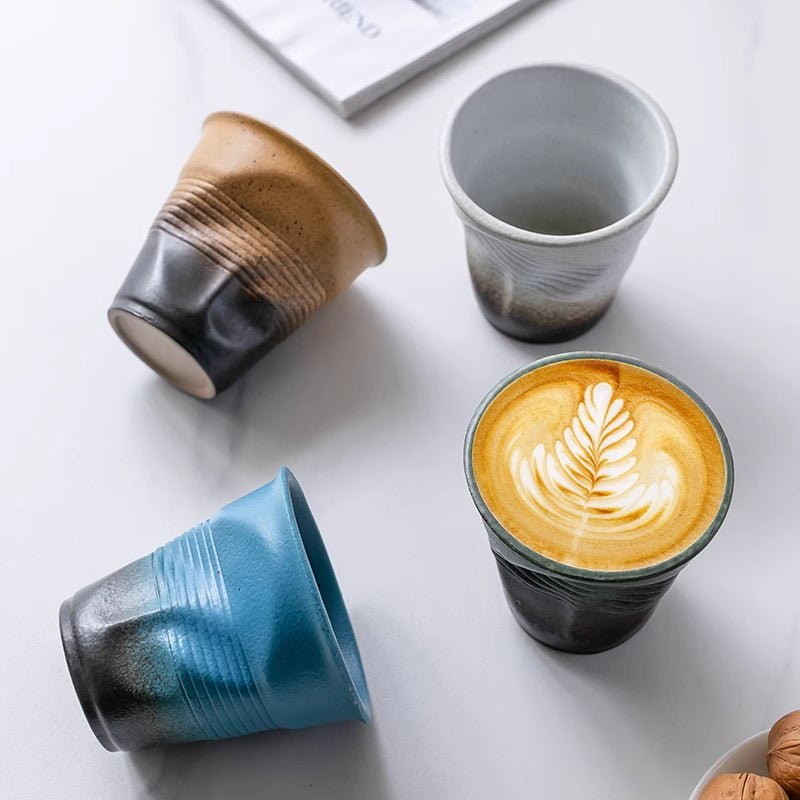
Pottery Tea Cups Everyday Mug Rotation Practical Purchase Checklist
Reading time: about 10 minutes
The cup that gets used twice a day in most kitchens is rarely the prettiest one. It is the one that fits the pour, sits within arm's reach of the kettle, and doesn't scald your fingers at 7 a.m. We see it constantly in our store: someone orders a single pottery tea cup, then comes back three weeks later for a second of the same shape, because the first one never made it back to the shelf.
So here is the pottery tea cups everyday mug rotation practical purchase checklist we walk customers through in person — in the order that actually narrows the decision. Frequency of use first, then capacity, then glaze contact, then grip, then storage. Each step eliminates options. By the end you are choosing between two cups instead of twenty.
How many cups do you actually touch in a day?
Before you open a single listing, count the cups you used yesterday. Not the ones you own — the ones you reached for.
- Daily driver: two or more fills a day. Lives on the counter, in the drying rack, or beside a keyboard. It takes the most hot water and the clumsiest handling.
- Second shift: one fill a day, usually in the evening. Herbal tea, decaf, a slow weekend cup.
- Occasional: guests and display. Also the cup most likely to chip, because it gets stored somewhere it can be knocked.
Three to five cups covers most households: two daily drivers, one or two second-shift cups, and one set aside for guests. More than that is a collection, which is a perfectly good thing to have — just don't draft a display cup into a daily-driver schedule and expect the finish to hold up.
One more count worth doing: how often do you reheat the same cup? If the answer is three, appliance guidance matters more to you than silhouette does. We treat that as an open question below rather than a category-wide assumption.
Does the listed capacity match the pour you actually make?
Capacity is where pottery cup purchases go sideways. Shoppers read a number as a serving size, fill to the rim, and discover that a full cup is not a comfortable cup. Here is how our three ceramic cups map onto real pours.
| Cup | Listed capacity | The pour it fits | Where it falls short |
|---|---|---|---|
| Retro Coffee & Tea Cup | 170 ml (about 5.7 fl oz) | Short, concentrated pours — an afternoon tea, half a cup of chai, a tasting session | Too small for anyone who wants one big morning coffee |
| Pleated Coffee & Tea Cup | 200 ml (about 6.8 fl oz) | Green and oolong sessions, a second cup, tea you drink slowly | Won't replace a 12 oz mug habit on its own |
| Ball Handled Coffee & Tea Mug | 250 ml (about 8.5 fl oz) | Breakfast tea with milk, a standard coffee, a long desk session | The protruding handle needs more shelf depth than the body suggests |
For scale, FDA's own description of a ceramic cup or mug assumes a handled vessel holding about 240 ml (8 fl oz). That puts the 250 ml Ball Handle closest to a conventional mug, while the 170 ml Retro sits firmly in tea-cup territory.
Leave 1–1.5 cm of headspace when you pour. It keeps the rim cooler against your lip and gives you room to move without a spill. On the two smaller cups, overfilling is the default mistake.
If none of the three matches your habit, work backwards instead. Fill the cup you currently reach for most with water, pour it into a measuring jug, and compare that number against the options in our unique coffee mugs collection rather than guessing from photos.
What actually touches the tea and your lip line?
Two surfaces carry the food-contact question: the interior and the rim. The foot, the exterior, and the handle are about grip and wear, not what you drink from.
On glazed ceramic, safety comes down to the glaze and how the piece was fired. FDA notes that lead may be present in the glazes or decorations on some traditional pottery, and that firing at the proper temperature for the proper time binds essentially all of it into the glaze. The failure case is underfiring or a worn surface — not handmade work as a category. No amount of washing or boiling removes lead from a piece that has it.
FDA's higher-concern list is worth memorizing, because it points at things shoppers don't expect:
- Handmade pieces with a crude appearance or an irregular shape
- Antique or excessively worn pieces, plus anything with visible damage
- Items from flea markets, street vendors, or an unidentifiable maker
- Bright decoration in orange, red, or yellow
Everyday factory-made pottery is described by FDA as much less likely to have lead problems. That certifies nothing on a shelf — it means the maker's firing schedule and glaze choice are what you are actually vetting, and they deserve a direct question before the cup joins your morning.
Four checks to run before a cup earns a place in the rotation:
- Run a fingernail over the interior and rim. Intact glaze feels glassy and even. Pinholes, dry patches, or exposed clay on a drinking surface are a reason to ask the seller questions — not an automatic no, but never something to shrug off.
- Separate crackle from cracks. Intentional crazing is a decorative glaze effect. A line your fingernail catches is damage. A crazed cup that has taken on dark staining along those lines is the one to retire from tea duty.
- Read labels literally. 'Not for Food Use' is a permanent warning, not a suggestion — FDA treats decorative ceramicware that looks food-suitable as foodware unless it carries that marking. FDA also says ware with extractable lead should not be labeled 'Lead Free' at all, so treat the phrase as a question, not an answer.
- Ask for the finished-piece test. For cups and mugs, FDA guidance sits at 0.5 micrograms of lead per millilitre across six units; cadmium for small hollowware is also 0.5 micrograms per millilitre. If a seller can't say whether a result applies to the exact cup you are buying, that silence is your answer.
We publish what we can verify on each product page — ceramic body, listed capacity, and the form you see in the photos. Glaze chemistry and finished-piece leach testing are questions to put to any seller, us included, before a cup moves into daily rotation.
Handle, ball handle, or no handle — which grip survives a hot pour?
Grip is a temperature question wearing a style costume. A handleless cup is lovely at 80°C and a mistake you only want to make once at a rolling boil.
- Rim or palm (Retro, 170 ml): small cups get pinched at the rim or cradled in the hand. Suits short pours you finish quickly.
- Cradled body (Pleated, 200 ml): the pleated exterior gives your fingers something to sit against, which reads as more grip than a smooth wall. It is still a hand-warmth experience — hold one filled before you commit.
- Full handle (Ball Handled, 250 ml): keeps your fingers off the wall entirely, which makes it the sensible pick for near-boiling water, milk-heavy tea, or anyone who reheats.
There is a mismatch worth knowing about: FDA's cup-and-mug language assumes a handle, so handleless and sub-200 ml pottery tea cups do not map cleanly onto that reference point. If a care page cites cup-and-mug standards without explaining how they apply to the form you are buying, that is a fair question to send the seller.
Where will it live? Shelf-depth and stacking math
A cup that doesn't fit its shelf becomes a cup that doesn't get used. Do this before checkout:
- Measure interior shelf depth and the clearance above it. Handles are the usual culprit — a 250 ml mug with a protruding ball handle needs more depth than its body suggests.
- Decide whether you are stacking. Pottery stacks rim-to-foot, and handles get in the way. Textured exteriors also collect dust in the grooves, so plan on a quick rinse before first use rather than a wipe.
- Keep daily drivers near the kettle. A cup stored two cabinets away loses to the one within arm's reach, every single time.
- Give display pieces their own space. The chipped cup in any rotation is almost always the one stored above shoulder height.
If you drink green tea in particular, small cups tend to multiply fast, so plan shelf space for a set rather than a single piece.
The pottery tea cups everyday mug rotation practical purchase checklist
Run these in order. Nine items, about five minutes.
- Capacity under your real pour, not the rim. 170 ml for short tea, 200 ml for a slow second cup, 250 ml if you want a standard mug fill.
- Intact glaze on the interior and rim — no dry patches, no pinholes you can feel with a fingernail.
- Crazing versus cracks. Crackle is a finish; a line your nail catches is damage.
- Label language. 'Not for Food Use' means display only, no exceptions.
- A finished-piece leach test the seller can tie to the cup you are actually buying.
- Grip matched to your hottest pour. A full handle for boiling water, a hand cradle for tea you drink at 80°C.
- Appliance answers in writing. Dishwasher, microwave, and whether any metallic or overglaze decoration is present — never infer compatibility from shape, glaze colour, or another cup in the same collection.
- Shelf depth and handle clearance measured, not eyeballed.
- One backup daily driver, so a single chip doesn't send you shopping in a hurry.
When a larger handled mug is the smarter buy
Some habits simply don't fit a small pottery cup, and it is better to admit that before you fall for a glaze. The 170 ml Retro is not a travel mug, not a 12 oz coffee vessel, and not the cup to hand someone who drinks their tea in three gulps. A handleless or heavily textured cup is the wrong pick for near-boiling pours or for anyone with limited grip strength.
Appliance care is the other honest limitation. We don't publish dishwasher or microwave guarantees for these cups, because that answer is piece-specific — and any cup with gold or metallic rim decoration should stay out of the microwave unless the maker confirms otherwise for that exact item. Sudden temperature swings, like setting a hot cup down on a cold stone counter, are the classic way to shorten a cup's working life.
Start with the cup you will genuinely reach for tomorrow morning: compare body shape and listed capacity side by side in our unique coffee mugs collection, then run the nine-item checklist on the one cup you are about to add to the rotation.
Frequently asked questions
What belongs on a pottery tea cups everyday mug rotation practical purchase checklist?
Nine items, in this order: real pour capacity, glaze integrity on the interior and rim, crackle versus actual cracks, label wording, a finished-piece leach test tied to your specific cup, grip for your hottest pour, appliance guidance in writing, measured shelf clearance, and one spare daily driver. Most buying regret in this category comes from skipping the middle four, not from picking the wrong colour.
Are glazed pottery tea cups safe to drink from?
Safety lives in the glaze and the firing, not in the word pottery. FDA notes that properly fired pottery binds lead into the glaze, and its higher-concern list focuses on worn, antique, unidentifiable, or unusually decorated pieces rather than handmade work in general. Ask any seller — us included — whether a finished-piece leach test applies to the exact cup you are buying, and retire anything with exposed clay on the drinking surface.
Which capacity suits a daily tea habit?
If you sip green or oolong slowly through the day, 200 ml is the sweet spot and 170 ml works for short concentrated pours. If your first cup is breakfast tea with milk or a full coffee, go to 250 ml on the Ball Handled Coffee & Tea Mug. Measure the cup you already reach for most and match that number instead of sizing up.
Is crazing on a pottery cup a defect?
Not always. Intentional crackle is a decorative glaze effect and shows as an even, fine network across the surface. The problem case is a line your fingernail catches, or crazing that has taken on dark staining along the cracks — that cup should come out of daily tea duty and become a decorative piece.
Can pottery tea cups go in the dishwasher or microwave?
That answer is maker- and piece-specific, and we treat it as an open question rather than a category assumption. Check the seller's guidance for the exact cup, keep anything with metallic or overglaze decoration out of the microwave, and avoid sudden temperature changes such as moving a hot cup onto a cold stone counter.
More from our blog
Ready to pick your mug? Two ways to save on today's order:
Ordering 1–3 mugs? Get an extra 10% off your 1st order with code 10_OFF Apply 10% Off & Shop Wooden-Handle Mugs →
Gifting 4+ mugs? Buy 3, Get the 4th Free applies automatically at checkout (no code needed; offers do not stack) · Free standard shipping (Nov pre-Christmas delivery: 15–20 calendar days US) · Free replacement if chipped in transit.
Popular mug buying guides: Ceramic Tea Cups & Infuser Mugs · Ceramic Mugs with Lids Compared · Wooden-Handle Tea Infuser Mugs Compared · Christmas & Secret Santa Mugs 2026 · Espresso & Cortado Cups Guide · Cup & Saucer Gift Sets · All 25 Mugs Spec Table · Mug Size Guide · Shipping & Promo FAQ
FIRST ORDER 10% OFF (CODE: 10_OFF) · OR BUY 3, GET THE 4TH FREE


Read more
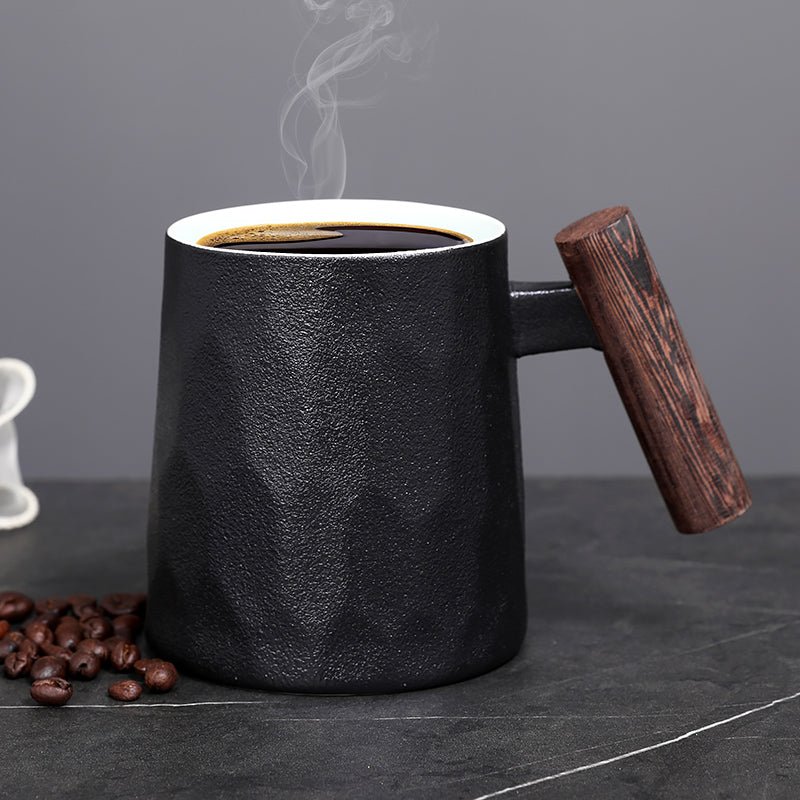
15 Oz Ceramic Coffee Mugs: Everyday Rotation Checklist
Compare usable capacity, full-mug weight, handle comfort, storage fit, care instructions, and food-contact safety before adding a large ceramic mug to your daily rotation.
Read more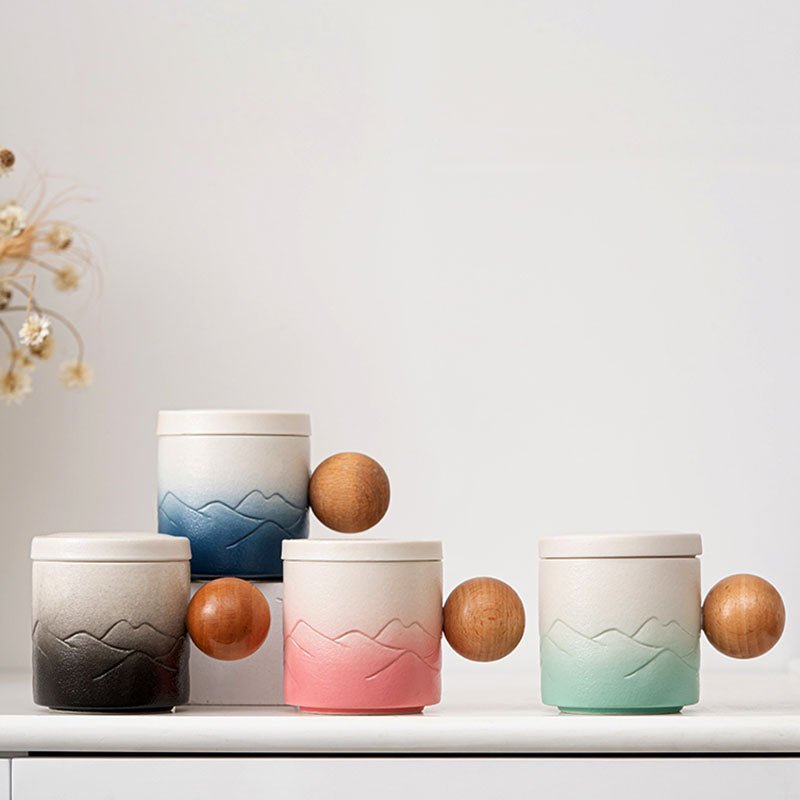
Wide Based Coffee Mugs: Everyday Mug Rotation Practical Checklist
A wide foot keeps a mug planted on a counter, but it will not rescue a tapered cup holder or a cramped shelf. Here are the measurements, capacity slots, and care checks we would run before giving a...
Read more
Leave a comment
This site is protected by hCaptcha and the hCaptcha Privacy Policy and Terms of Service apply.