



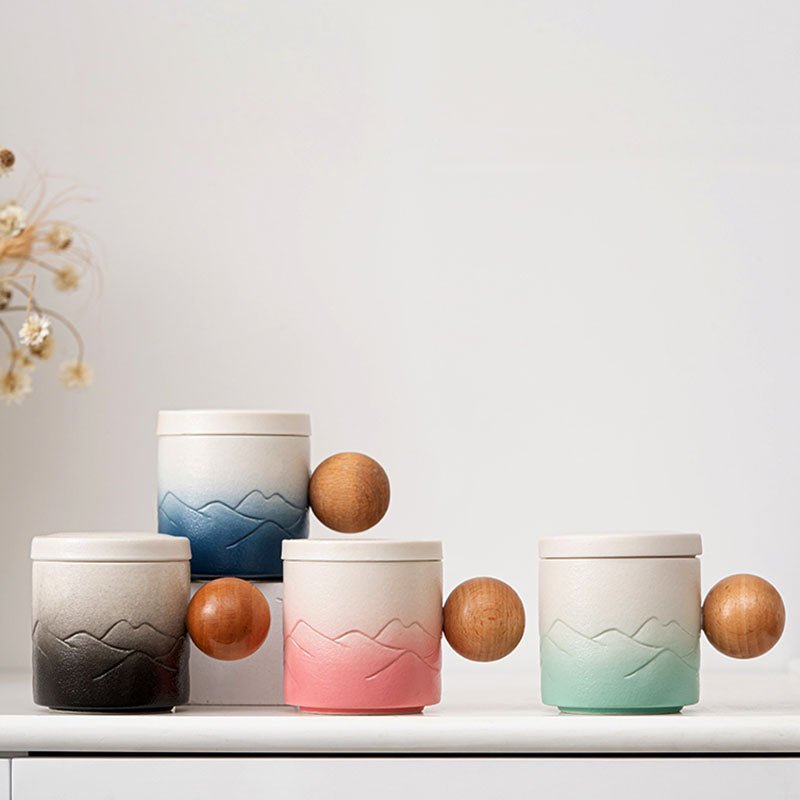
Wide Based Coffee Mugs: Everyday Mug Rotation Practical Checklist
Reading time: about 9 minutes
Three mugs on the shelf and one that does the actual work. We hear a version of that from customers most weeks, and it is almost never a quality problem — the mug simply landed in the wrong slot of the day. Too heavy for the 7 a.m. one-handed lift. Too broad for the cabinet row. Too tall for the brew head.
So this wide based coffee mugs everyday mug rotation practical purchase checklist is the one we run ourselves: the measurements to take at home, the slot each mug has to earn, and the situations where we would steer you to a different mug entirely. We sell these pieces, which is precisely why we would rather you bought one that works than three that photograph well.
Only one specification is verified for the three mugs in this comparison: capacity. The Ball Handle is listed at 250 ml, The Flow at 400 ml, and The Rock at 480 ml. Base diameter, overall height, handle opening, glaze details, and dishwasher or microwave guidance have to come from the current product page — a photograph cannot tell you a millimetre, and listings change.
Why does a wide base feel steady on a counter and uncertain in a cup holder?
"Wide base" has no agreed definition in the mug trade. We have not found a public test that measures the tipping angle of commercial coffee mugs while holding height, fill level, and handle position constant. Treat "tough to tip" and "non-skid" as description, not specification.
The physics is not mysterious. A broader base of support gives the mug farther to lean before its centre of gravity passes over the edge of that base, and a lower, heavier body makes that lean take longer. Both help. But a full mug raises the centre of gravity, a handle shifts weight to one side, and a foot that rocks on a granite counter undoes a broad footprint completely. Width is one of five inputs, not the whole answer.
Shoppers also blur three shapes that all get called "wide":
| Shape cue | What it actually changes | What it tells you nothing about |
|---|---|---|
| Broad foot | Base of support and surface contact | Full weight, handle room, cup-holder fit |
| Wide mouth | Aroma, spoon access, dripper fit | How stable the underside is |
| Tall body | Capacity and fewer refills | Whether it gets top-heavy as you pour |
A stable foot can sit under a narrow rim, and a wide rim can sit on a small foot. Our shape and fit notes go deeper on the geometry; this page stays on the buying decision.
Which slot in your day does each listed capacity actually fill?
A rotation works when every mug has a job. Ours usually breaks into four slots, and picking by slot is faster than picking by silhouette.
Short pour. An espresso with a splash of milk, a small tea, an afternoon top-up. The 250 ml Ball Handle mug fits that slot on capacity alone, and it is the one to think about if carrying a full mug one-handed is the part you do not enjoy. Height and handle opening still need checking against your shelf and your knuckles.
Standard desk coffee. The Flow at 400 ml is the middle option worth comparing. Footprint matters more than the number here — a mug can hold exactly the right amount and still crowd a keyboard if the handle swings toward your mouse hand. Look at where the handle sits relative to the base, not just the base itself.
Long session or iced drink. The Rock at 480 ml is the largest capacity we list. Extra volume cuts both ways: more coffee, and more mass in the same hand. For iced drinks that headroom leaves room for ice without the drink becoming half a cup by 10 a.m.
Gift. Buy the recipient's serving size, not your favourite shape. If you do not know it, browse the unique coffee mugs collection to compare profiles, then confirm capacity and care on the exact product page before it ships.
| Mug | Listed capacity | Slot it usually fills | Confirm before ordering |
|---|---|---|---|
| Ball Handle | 250 ml | Short coffee, tea refills, lighter lift | Base diameter, height, handle opening |
| The Flow | 400 ml | One standard desk coffee | Footprint on a coaster, brew-head clearance |
| The Rock | 480 ml | Long sessions, iced drinks with ice room | Full weight, handle comfort, shelf height |
What belongs on a wide based coffee mugs everyday mug rotation practical purchase checklist?
These are the checks our team would run before handing a mug a permanent spot. Each one exists because the failure shows up after a week of use, not in the product photo.
- Landing footprint, handle included. Measure the coaster, desk pad, or shelf, then add the handle's side-to-side reach. That total is the object you are actually placing.
- Cup-holder width at its narrowest point. Car holders taper. Measuring across the rim tells you almost nothing about whether a broad foot will drop in.
- Vertical clearance under the brew head. Check the gap beneath a drip machine basket, a single-serve spout, and a pour-over dripper. A mug can clear the counter and still fail at the brew.
- Opening versus foot. Pour-over cones and AeroPress depend on the rim, not the underside. A modest foot with a wider mouth is the combination that clears most brewers.
- Shelf and cabinet width. Broad-foot mugs stored in a row eat more linear space than the capacity suggests, and stackability is usually nonexistent.
- Full handling weight. Coffee and tea add mass fast. If a 480 ml mug becomes a two-handed lift for you when full, that is useful data, not a character flaw.
- Handle finger room. Count the fingers you actually use and check knuckle clearance to the body. Base width says nothing about this.
- Flat-foot test at home. Set the mug on a level counter and press opposite edges gently. A click or a wobble now becomes a mug that feels unsteady every morning.
- Underside shape. A recessed or concave foot traps water after washing. Dry it upside down before it meets unfinished wood or a fabric desk mat.
- Care and food-use wording. Dishwasher, microwave, metal trim, and food-contact details belong to the exact listing, never to another mug in the same collection.
Where is a wide-bottom mug the wrong tool for the job?
We would point you elsewhere in a few situations, and we would rather say so now than process the return later.
- Daily car commute. A tapered holder may reject the foot outright, and an open mug is not a passenger-seat item. A purpose-built travel mug is the right object.
- Bag or backpack carry. Splash-resistant and leak-resistant are different claims. Unless a listing clearly states leakproof use, treat a lidded mug as a stationary desk item.
- Boats, dashboards, and moving surfaces. A broad foot helps, but a grippy mat or holder does more of the work. We do not publish a non-slip claim for our mugs, so plan on a surface that grips rather than a base that promises to.
- Small hands or reduced grip strength. Go lighter in capacity and check handle measurements in person where you can. Weighted-base language is marketing, not clinical guidance — we found no published guidance specifying mug weight or base size for tremor or limited grip.
- Tight pour-over clearance. Height and opening matter more than the foot. Measure the gap under the dripper before falling for a shape.
Do glaze safety, lid wording, and dish routine change the decision?
For a mug used daily with hot coffee, yes. FDA guidance explains that some ceramic foodware can leach lead from food-contact surfaces, and that continued use of lead-leaching ware can cause adverse health effects, including chronic lead poisoning. For cups and mugs, the action level is 0.5 micrograms of lead per millilitre of leaching solution in any one of six tested units, using methods that include ASTM C738.
The FDA also notes that lead in improperly fired traditional pottery glazes can migrate into food or drink, and that washing or boiling does not remove it. glazed, antique, damaged, and brightly orange-, red-, or yellow-decorated pieces get specific caution; ordinary commercial factory tableware is described as much less likely to have the problem, and anything labelled "not for food use" should never hold coffee. If you are weighing an uncertified decorative piece, read the FDA's lead-glazed pottery guidance first.
Two habits follow. Do not infer heat retention from a broad ceramic base — retention depends on material, wall thickness, lid design, starting temperature, and the room, and we do not publish hold-time figures for our mugs. And do not assume dishwasher or microwave safety from the phrase "ceramic mug." Check the listing for the exact piece, then drain a recessed foot upside down before it goes back on the shelf.
How do you keep a rotation from turning into shelf clutter?
Frequency of use is the honest filter. If two mugs serve the same volume on the same surface, one of them is shelf cost with no return. Give each mug one slot — short pour, desk coffee, long session, guest — and retire anything that duplicates another.
Before checkout, write down three numbers: your available footprint including handle swing, your vertical clearance under the brewer, and the volume you can comfortably lift when full. Then compare the compact 250 ml Ball Handle, the 400 ml Flow, and the 480 ml Rock against them. If none of the three clears your main setting, start from the full collection and confirm the open questions on each listing instead of guessing from a silhouette.
Frequently asked questions
What should be on a wide based coffee mugs everyday mug rotation practical purchase checklist?
Footprint with handle swing, cup-holder width at its narrowest point, brew-head clearance, listed capacity, full handling weight, handle finger room, underside shape, lid wording, and care instructions for the exact product. Then assign each mug one slot in your day. If it fails its main slot, change the shape rather than forcing it into service.
Do wide based coffee mugs actually tip less easily?
A wider foot can make a mug harder to tip by enlarging its base of support, but it does not make the mug tip-proof. Height, fill level, handle position, weight distribution, and a foot that sits flat all matter. Judge the mug on its full dimensions and your full-pour weight, not on "non-slip" wording.
Will a wide-base mug fit my car's cup holder?
Only if the foot clears the holder at its narrowest point, which is usually below the rim. Measure inside the holder rather than across the opening, and compare that to the base measurement published on the product page. If the listing does not give it, ask before ordering — no base width is universal across vehicles.
Does a wider base mean the mug holds more coffee?
No. Base width and interior capacity are separate measurements. The verified capacities here are 250 ml, 400 ml, and 480 ml, and those numbers say nothing about how wide or tall each mug is — check dimensions separately.
Can I assume a wide ceramic mug is dishwasher and microwave safe?
No — confirm it for the exact product you are buying. Care guidance can differ between glazes and handle constructions within one collection. A recessed foot may also hold rinse water, so drain the mug upside down before it touches wood or fabric.
Ready to pick your mug? Two ways to save on today's order:
Ordering 1–3 mugs? Get an extra 10% off your 1st order with code 10_OFF Apply 10% Off & Shop Wooden-Handle Mugs →
Gifting 4+ mugs? Buy 3, Get the 4th Free applies automatically at checkout (no code needed; offers do not stack) · Free standard shipping (Nov pre-Christmas delivery: 15–20 calendar days US) · Free replacement if chipped in transit.
Popular mug buying guides: Ceramic Tea Cups & Infuser Mugs · Ceramic Mugs with Lids Compared · Wooden-Handle Tea Infuser Mugs Compared · Christmas & Secret Santa Mugs 2026 · Espresso & Cortado Cups Guide · Cup & Saucer Gift Sets · All 25 Mugs Spec Table · Mug Size Guide · Shipping & Promo FAQ
FIRST ORDER 10% OFF (CODE: 10_OFF) · OR BUY 3, GET THE 4TH FREE


Read more
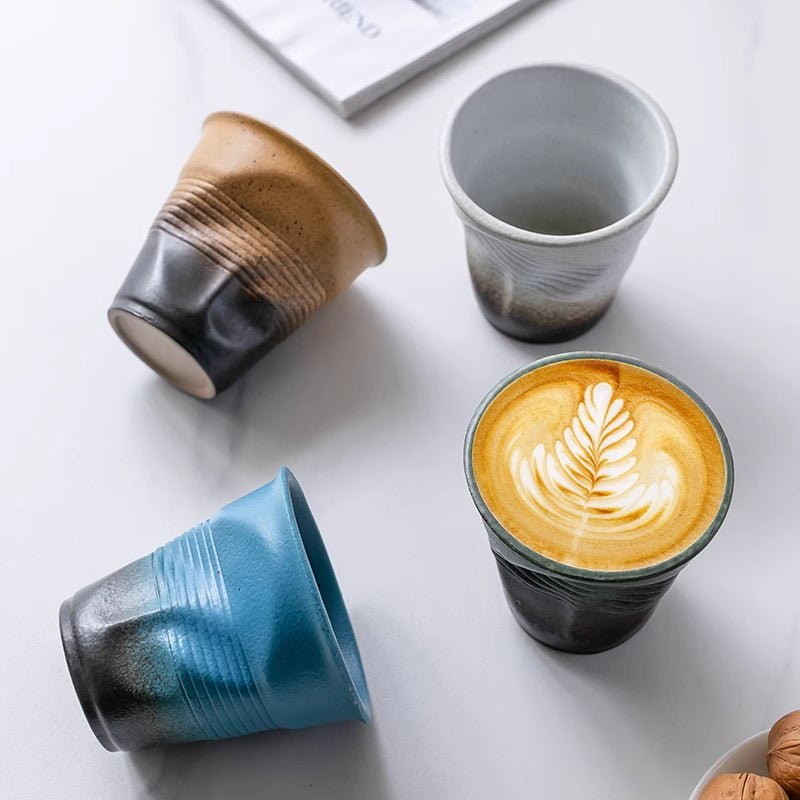
Pottery Tea Cups Everyday Mug Rotation Practical Purchase Checklist
A decision-ready checklist for building a pottery tea cup rotation that survives daily use: capacity matched to your real pour, glaze-contact checks before checkout, grip that handles a hot drink, ...
Read more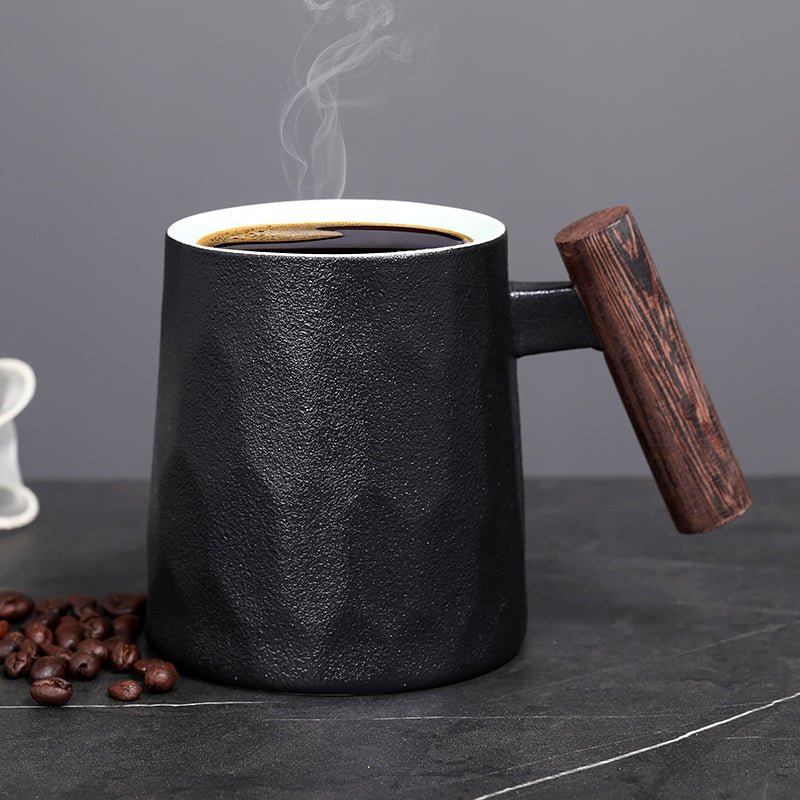
Large Round Coffee Mugs: Everyday Mug Rotation Purchase Checklist
A working checklist for shoppers building a mug rotation: what the listed capacity really pours, whether the body clears your brewer and shelf, how the handle feels when the mug is full, and what t...
Read more
Leave a comment
This site is protected by hCaptcha and the hCaptcha Privacy Policy and Terms of Service apply.