



Pleated Coffee Tea Cup Ceramic Home Decor: What to Compare
Reading time: about 13 minutes
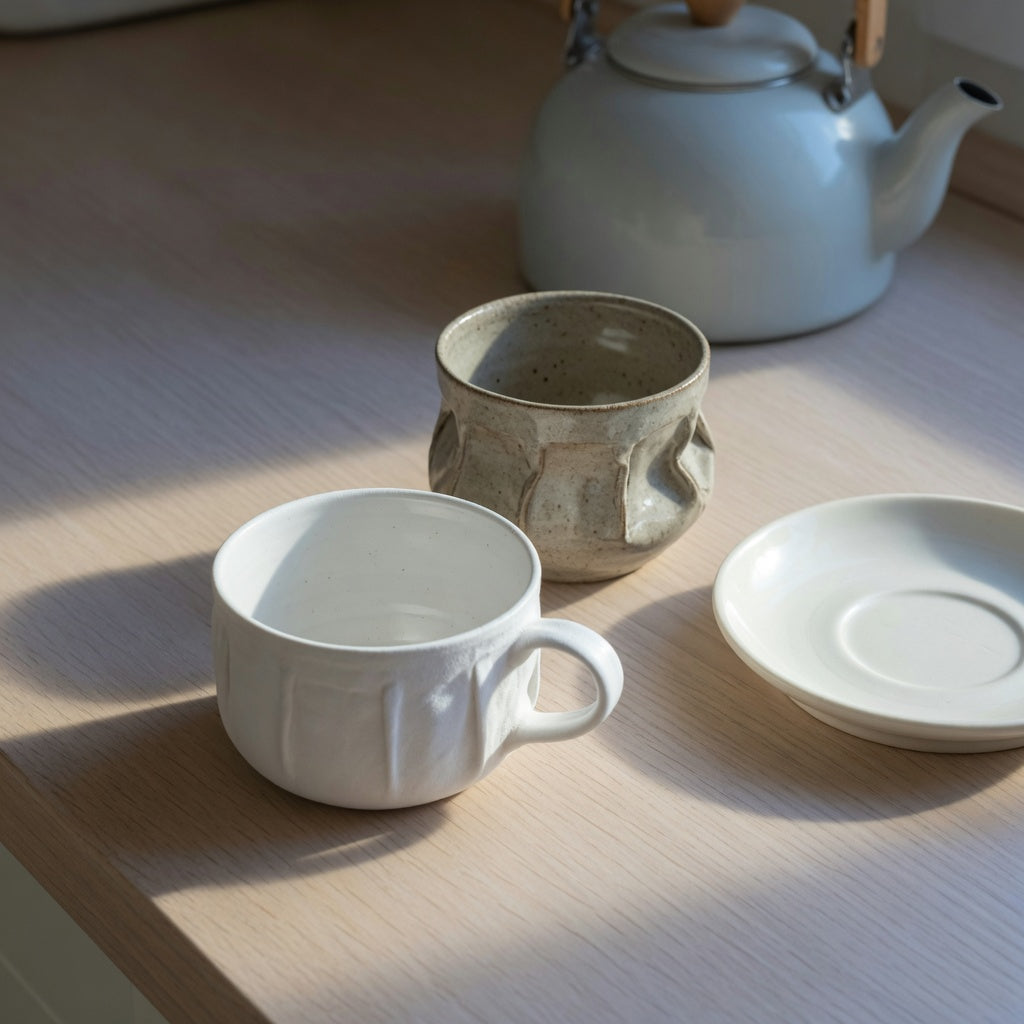
A shopper opened a box that looked like a breakfast mug and pulled out a short cup. The pleats were deep enough that a thumb slid off every ridge. We hear that story more often than a complaint about how the coffee tasted. A search for a pleated coffee tea cup ceramic home decor piece pulls in two objects that share a silhouette: refined porcelain with shallow, fabric-like folds, and handmade or hand-pinched stoneware with irregular, crumpled ridges. Both can live on an open shelf. They stop being the same purchase once hot coffee, a dishwasher rack, or a chipped rim is involved.
In our store, the mood of the photo is the last thing we trust. If a specific folded shape is already the one you want, open the pleated coffee tea cup and read the material, the stated capacity, any glaze note, and the care line before the styling shots decide for you. If the folds are optional and you mainly want a mug that does not look like every office ceramic, start in the unique coffee mugs collection and compare walls, handles, and sizes side by side.
Porcelain pleats or pinched stoneware: which cup did the photo show?
Formal pleated porcelain, sometimes labeled plisse or fabric-fold, usually repeats a shallow pattern. The rim tends to stay even. The foot is usually level enough to sit on a hard counter. Hand-pinched pleated stoneware is crumpled while the clay is soft, so one wall runs thicker, the folds wander, and two cups from the same glaze batch often will not match. A reactive glaze makes that difference louder. Color breaks along the ridges instead of lying down as one solid coat.
Care claims do not cross from one of those bodies to the other. High-fired porcelain and a handmade stoneware cup can share a pleated photo and still be different firings, different glazes, and different rules for the sink.
| What you are comparing | Formal pleated porcelain | Hand-pinched pleated stoneware |
|---|---|---|
| Look on a shelf | Even folds, closer to a matched set | Irregular, more wabi-sabi or farmhouse |
| How size is sold | Often split into espresso, tea, and larger mug sizes | Often one handmade size that a tight crop makes look bigger |
| Where a care claim lives | Only on that maker and that firing | Another brand's dishwasher badge does not apply |
| Where it fails first | Thin rims and raised edges chip | Uneven bases rock; deep folds hold residue |
A matched set for a formal table is the wrong job for reactive, one-off stoneware. A rustic pinched look is the wrong expectation for even factory pleats. In our experience, that mix-up starts more disappointed unboxings than the drink does. Deep exterior folds are also a poor fit in a small cabinet. They waste shelf height and catch the rim of the cup beside them.
Espresso, tea, breakfast, or a desk mug: what is the real fill?
Retail pages lump espresso cups, tea cups, breakfast cups, and everyday mugs under one pleated label. Across those listings, sizes run from small espresso and tea cups up through larger mugs listed around 14 oz. That is a market spread, not a capacity for any cup whose page you have not read, and not a number hiding inside the word pleated. Pleats do not tell you ounces or milliliters.
The photo trick is consistent. Shot from above, cropped tight, with no hand and no saucer, a short cup reads like a breakfast mug. Before it goes in the cart, line the current page up against three checks:
- The stated capacity in ounces or milliliters, and whether that figure is brim-full or a comfortable pour below the rim.
- A scale clue: saucer diameter, a hand in the frame, or dimensions in centimeters or inches.
- Whether a saucer is included. On many pleated porcelain tea and espresso listings, the saucer is a separate item. A saucer in a styled photo is not proof it ships with the cup.
A full mug at a desk makes a demitasse-sized pleated cup annoying by the second refill. That same short cup can be exactly right for espresso, a small afternoon tea, or a tray you style and rarely fill. It is not a stand-in for a diner mug. Our team asks people to name their usual pour before the fold wins the argument.
Is a pleated coffee tea cup ceramic home decor piece for the pour, the shelf, or the gift?
Shoppers use these cups two ways, sometimes in the same week. One is the morning pour. The other is open-shelf styling: folds catching side light beside a kettle, one cup on a console, or a pair set out for guests who may never drink from them. Pick the primary job before glaze color picks it for you.
- Daily drinking. You need a stable base, a handle that clears knuckles, an interior meant for food contact, and a capacity you will actually finish. If those details on the current pleated coffee tea cup page match that routine, read them against your counter, not against a mood board. Decor is the bonus.
- Open shelf, farmhouse table, or a formal tray. Fold depth, glaze break, and whether the pieces match matter more than ounces. Matte, uneven stoneware tends to suit a farmhouse table. Even porcelain pleats plus a saucer suit a formal tray. Wabi-sabi styling wants the pinch marks. A cup labeled decorative-only stays off the coffee rotation. Style does not fix a foot that rocks.
- Gifting. The person who unwraps it will ask, the same day, whether coffee can go in it. If the listing does not say, leave that guess off the card and point them at the product page. If the gift is really a mug that looks considered, not a cup defined by folds, compare smoother shapes in the unique coffee mugs collection instead.
Reactive glaze is a feature on a shelf and a limitation at a table of four. The cups will not look like twins. This shape is also not a travel cup, not a camping mug, and not a smart desk neighbor if the base is wavy and a laptop sits an inch away.
What should the glaze say before hot coffee sits on the rim?
Coffee and tea rest hot against the interior for minutes. That is a different job from a cup that only poses on a shelf. Food-contact status has to be written for the piece you are buying. A lead-free line on another marketplace listing, or on a cup with a similar name, does not transfer.
The U.S. Food and Drug Administration has said lead may be present in the glazes or decorations on some traditional pottery. If a piece is not fired properly, lead can leach into food or drink. Fired correctly, that lead is bound into the glaze. Washing or boiling does not remove it. Problem patterns the agency describes include handmade ware with a crude or irregular look, antiques, damaged or worn pieces, items from flea markets, street vendors, or unknown makers, and ware brightly decorated in orange, red, or yellow. Commercially made everyday ware is much less likely to have lead problems. The agency also states that lead poisoning in children has been linked to learning disabilities, developmental delays, and lower IQ scores, and that infants, young children, and a developing fetus can be affected by chronic exposure that may not cause obvious symptoms.
Use that as a filter, not as a claim that every pleated cup is unsafe. A handmade look is not proof of lead either. No independent lab comparison we can cite has tested this pleated or hand-pinched style for lead or cadmium release, for how stable an irregular base is, or for how deep exterior folds trap residue. When a page is vague, walk it in this order:
- Is the interior glazed, including the rim where a lip rests?
- Is bright orange, red, or yellow on the inside or the lip, or only on outside decoration?
- Does the seller say the cup is for food use, or only for decoration?
- Is the maker named, or is the cup an unbranded piece with no firing information?
- If children, or someone who is pregnant, will drink from it regularly, skip any piece whose glaze safety you cannot verify.
On our product page, treat food-use or lead-related wording as something to read in the current description. If those words are missing, ask. Do not infer safety from the pleats.
One counter test before a cup becomes a daily driver: set it on a dry surface with room-temperature water inside, and keep the outside dry when you fill it. A wet ring can be condensation from a cold wall in a warm kitchen. It can also mean water is passing through an unsealed foot. If the outside started dry and a ring still appears, treat food-use claims as unconfirmed until the seller explains the clay and glaze. Do not try to fix that with a boil. Boiling does not remove lead from a poorly fired glaze, and it does not turn a porous foot into a vitrified one.
Do the pleats help a hot grip, or do they fight your hand?
Shallow exterior folds can give fingertips a little purchase when the handle is small. Deep, crumpled pleats do the opposite on a hot pour. The wall you would normally cradle is ridged, so skin meets the peaks first. Heat feels sharper than it does on a smooth mug of similar thickness. When we pass a deeply folded cup with a hot pour across the counter, the usual move is to stop cradling the wall and take the handle. If that handle is narrow, short, or set tight against the body, knuckles hit the folds.
Check four fit points on the listing photos. If you already own a similar cup, check them against your own hand too.
- Handle opening. Two fingers, or a full wrap, without the thumb landing on a sharp ridge.
- Thickness at the peaks versus the valleys. On thin porcelain, the pleat edge is where the first chip usually shows after a few knocks in the sink.
- Base. A flat foot ring versus a pinched, wavy bottom. Picture it on a stone counter, not a soft cloth. Cloth hides a wobble.
- Stacking and cabinet height. Pleats rarely nest. Plan on a single layer.
An irregular base stops being charming if the cup tips toward a laptop. If a stable office mug matters more than a sculptural one, pick a smoother wall and keep the pleated piece for the shelf. Deep valleys also hold coffee film and tea tannin. A soft brush reaches them. Steel wool does not belong on glaze. It can open tiny chips that stain darker the next week.
Which care rule belongs to this cup, not the one in the next ad?
Dishwasher-safe and microwave-safe describe one clay body, one glaze, and one firing. They are not a property of the pleats. You may see a dishwasher line on one formal porcelain listing and silence on a handmade cup that looks similar. Only the line on the page you are buying counts. If that page does not say, the honest status is unconfirmed. Silence is not a yes.
- Dishwasher. If the page allows it, set the cup so the handle and rim do not knock the rack. Raised pleats chip when they ride against metal. If the listing is silent, hand wash.
- Microwave. Only if that exact cup is stated microwave-safe. Metallic decoration, an unknown glaze, a crack, or a wet foot is a reason to keep it out.
- Thermal shock. Do not pour boiling water into a cup that just came out of the refrigerator, and do not set a hot cup on a wet stone counter. Pleated rims are thin at the high points.
- Folds. Residue sits in the exterior valleys. A soft cloth or a soft brush is enough. Abrasive pads dull the glaze and make the next stain stick.
- Decorative-only pieces. Dust them. Do not run them through a wash cycle to see what happens.
This category is a poor match for a household that will only ever use the dishwasher, for a microwave-every-morning routine when the page never mentions the microwave, and for anyone who scrubs mugs with scouring powder. The ridges show that damage first.
Eight lines to read before a pleated cup stays on the counter
When we walk someone through this shape, the same short list keeps a pretty fold from standing in for facts the seller never gave.
- Material named on this listing: porcelain, stoneware, or ceramic left unspecified.
- Capacity with a unit, and whether the photo scale matches that number.
- Interior glaze, plus an explicit food-use line that is separate from the words home decor.
- A maker or origin, not only a style word such as pleated, plisse, or wabi-sabi.
- Saucer included, sold separately, or never mentioned.
- Dishwasher, microwave, and hand-wash language written for this item only.
- Handle clearance, and whether the base is described as flat.
- What the page does not say. Silence on food contact is a decision, not a detail to skip.
If those lines hold for the way you actually drink, the next step is the pleated coffee tea cup listing itself. Read it against the list, then decide. If the folds fight the size or the care routine you need, step back to smoother everyday mugs and compare a shape without deep ridges. The pleated cup earns a spot when the look and the listed use agree. It does not earn that spot from the photo alone.
Frequently asked questions
Is a pleated porcelain coffee or tea cup automatically dishwasher safe?
No. Dishwasher safety depends on that cup's clay, glaze, and firing, not on the pleats. You may see a dishwasher line on one formal porcelain listing and no care line at all on a handmade pleated cup. If the listing in front of you is silent, hand wash and keep the rim off metal racks. Do not borrow a yes from a different brand.
Can I microwave a pleated ceramic or porcelain cup?
Only when that exact product says it is microwave-safe. A similar photo is not evidence. Skip the microwave if you see metallic paint, an unknown glaze, a crack, or a wet ring that is more than condensation. Silence on the page is not permission.
Is a hand-pinched pleated cup large enough for coffee?
Sometimes it is a full mug. Sometimes it is closer to espresso or a small tea cup. Tight photos hide that gap. Match the stated ounces or milliliters to your usual pour, and check whether the number means filled to the brim. A short pleated cup can be the right espresso cup. It is a frustrating daily driver if you drink a tall mug.
What should I compare before buying pleated coffee tea cup ceramic home decor?
Compare the named material, the real capacity, interior glaze and food-use wording, whether a saucer is included, handle and base stability, and the care lines for dishwasher and microwave. Then decide whether the cup is mainly for drinking or for the shelf. Those are different purchases even when the folds look alike. Read those points on the current listing rather than on a similar product somewhere else.
If a ceramic cup leaves a wet spot, is it fine for daily coffee?
Not until you know why the ring is there. Condensation on a cold exterior can drip. A ring that appears from room-temperature water, while the outside started dry, suggests an unsealed foot or wall. Washing or boiling will not remove lead if a poorly fired glaze is the real issue, and boiling will not seal porous clay. Ask the seller, or keep the piece decorative.
More from our blog
Ready to pick your mug? Two ways to save on today's order:
Ordering 1–3 mugs? Get an extra 10% off your 1st order with code 10_OFF Apply 10% Off & Shop Wooden-Handle Mugs →
Gifting 4+ mugs? Buy 3, Get the 4th Free applies automatically at checkout (no code needed; offers do not stack) · Free standard shipping (Nov pre-Christmas delivery: 15–20 calendar days US) · Free replacement if chipped in transit.
Popular mug buying guides: 8 oz & 9 oz Mugs · Cute & Aesthetic Mugs · Ceramic Tea Cups & Infuser Mugs · Ceramic Mugs with Lids Compared · Wooden-Handle Tea Infuser Mugs Compared · Christmas & Secret Santa Mugs 2026 · Espresso & Cortado Cups Guide · Cup & Saucer Gift Sets · All 25 Mugs Spec Table · Mug Size Guide · Shipping & Promo FAQ
FIRST ORDER 10% OFF (CODE: 10_OFF) · OR BUY 3, GET THE 4TH FREE


Read more
Best Coffee Mugs for Brunch Gift Pair Ceramic Checks
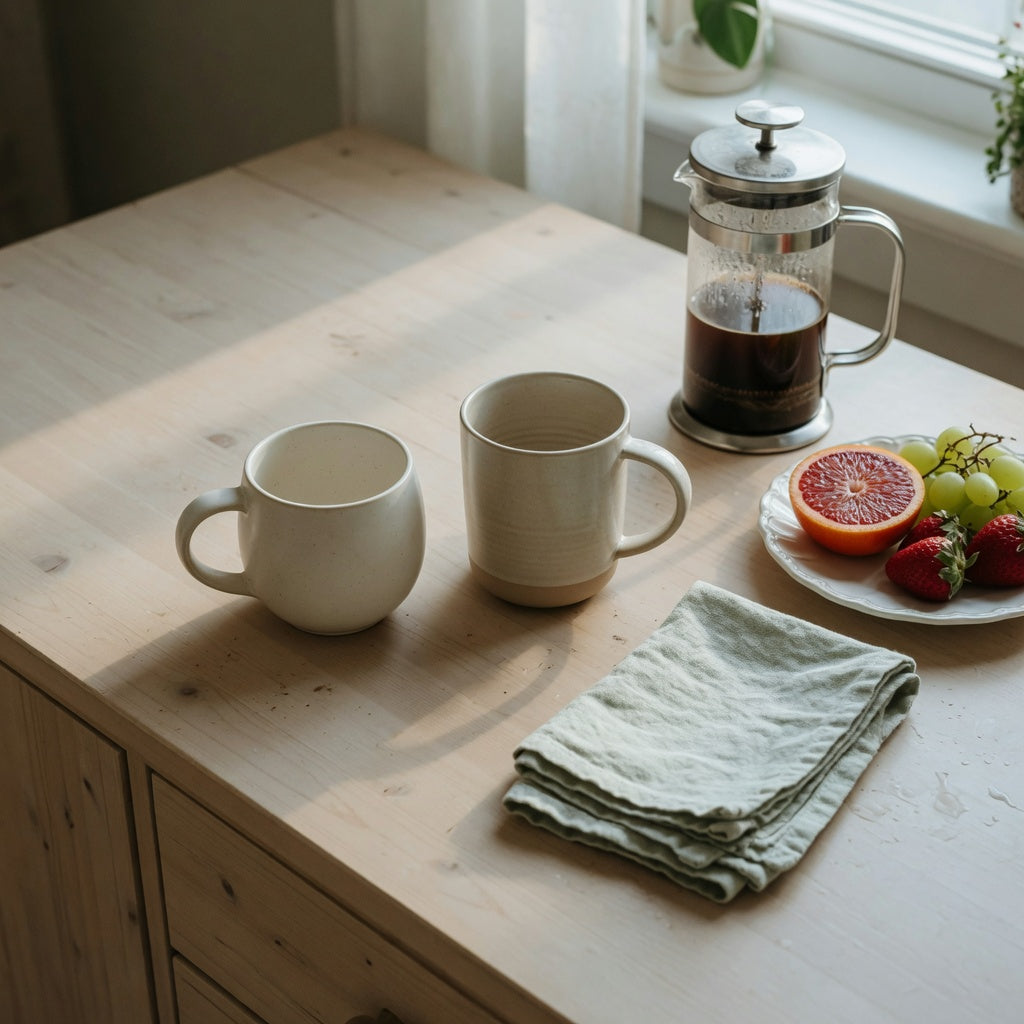
A ceramic brunch gift is two cups for the people at the table, not a slogan set. Compare listed capacity, handle comfort, glaze questions, and whether a round or tall silhouette fits how they pour.
Read more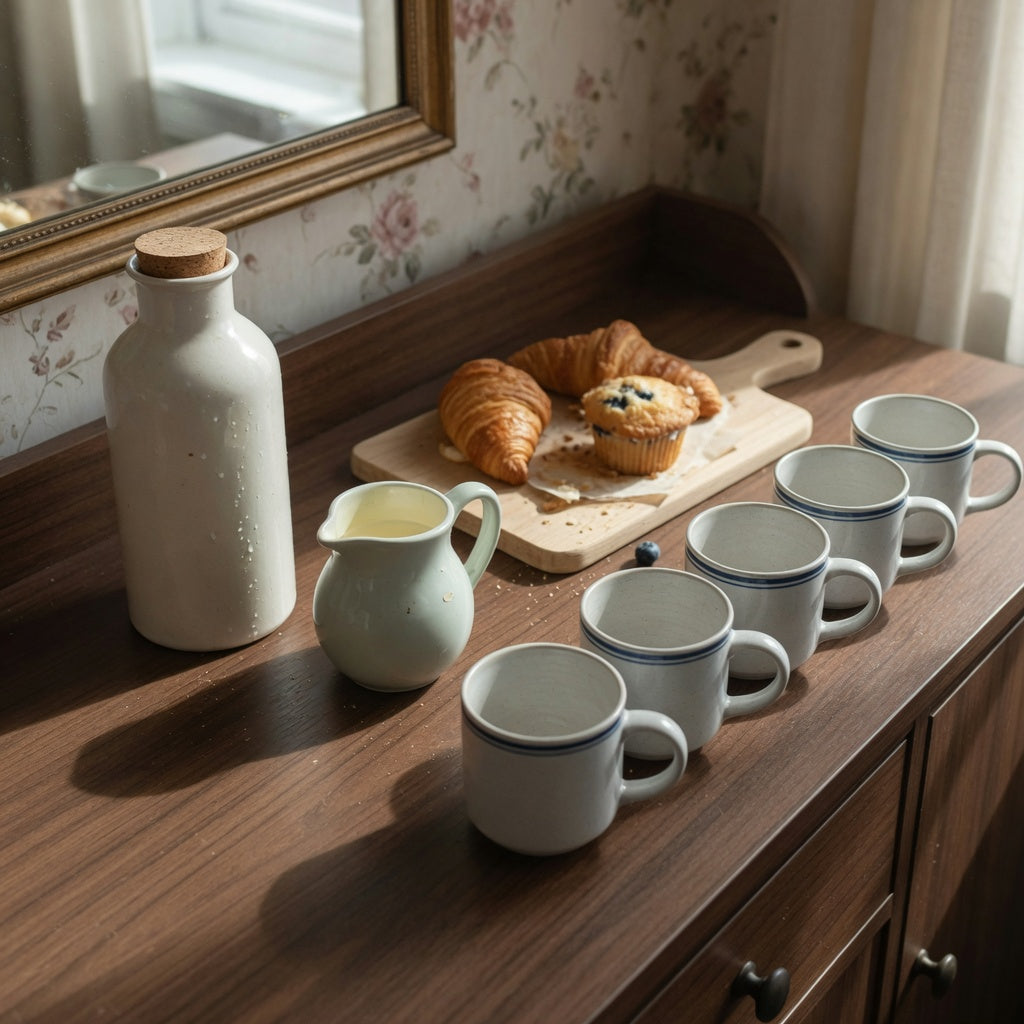
Brunch Coffee Mugs for Sideboard: What Buyers Compare
Brunch coffee mugs for a sideboard have to take a hot pour without crowding the carafe and food. We compare capacity, shelf clearance, dust, and food-contact checks so the set you stage is one you ...
Read more
Leave a comment
This site is protected by hCaptcha and the hCaptcha Privacy Policy and Terms of Service apply.