



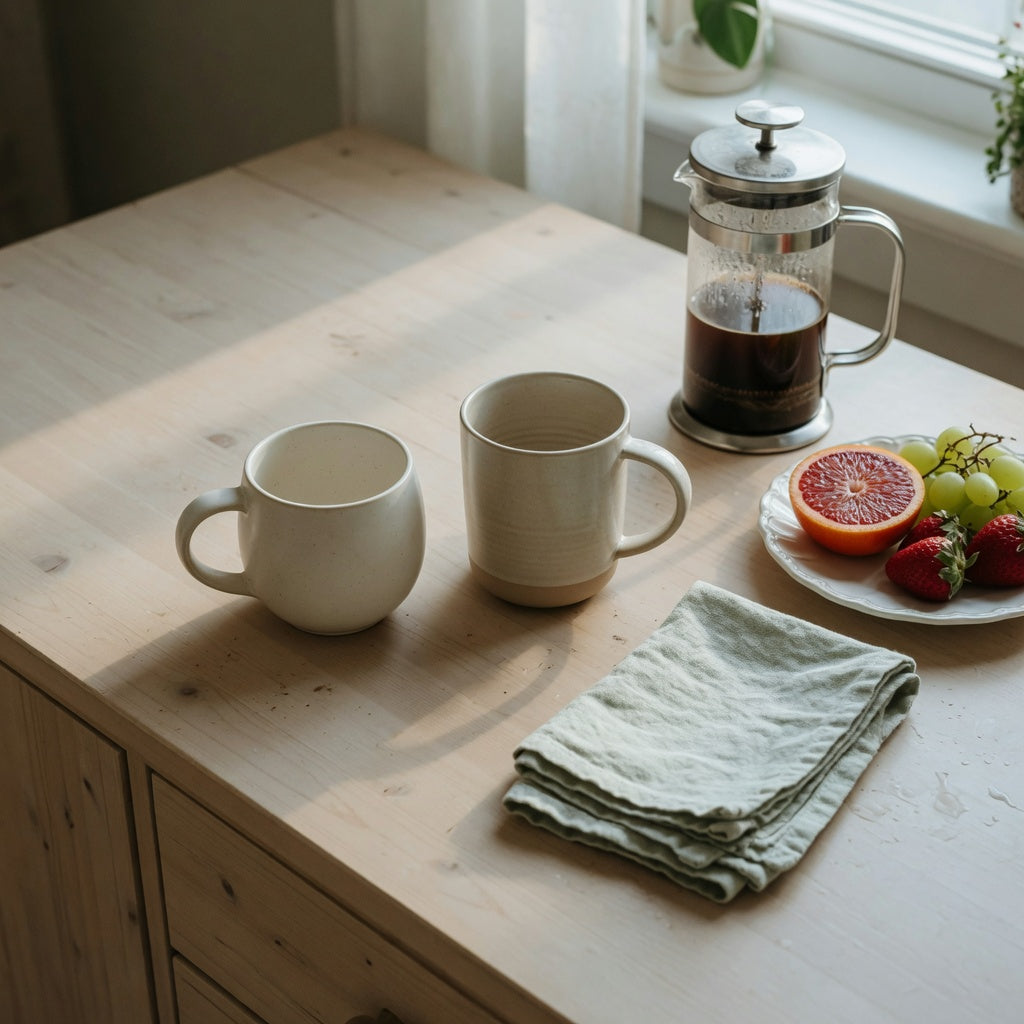
Best Coffee Mugs for Brunch Gift Pair Ceramic Checks
Reading time: about 15 minutes
The box lands on the sideboard between the fruit bowl and the napkins. Two mugs that looked charming in a listing photo feel wrong in the hand. One is a slogan. The other is so small the latte crowds the rim before anyone sits down. A brunch gift is a two-person table piece. It has to take hot coffee, a second pour, and Monday's dishwasher. That is the job behind the best coffee mugs for brunch gift pair ceramic: two cups that belong at the meal, not a gag that migrates to the back of the cabinet.
In our store, this request usually arrives as a housewarming, a wedding weekend, or a host gift for people who already own a jumble of random mugs. They do not need six more everyday cups. They need a pair that looks deliberate on a brunch table and still gets reached for on a Tuesday. If you are sorting shapes, start with our unique coffee mugs, then open the round coffee and tea mug and the landscape tall coffee and tea mug as two different silhouettes. Order a matched pair of one, or one of each. What each page holds, and how it should be washed, is on that listing. A product name is not a measurement.
Who a ceramic pair fits, and who still needs four
A pair fits when two people share the table and the cabinet is already full. Newlyweds setting a small table, friends who host brunch for two, or a couple in a first apartment usually want coordination, not bulk. A set of four or six is the better buy when the kitchen is starting from empty, or when weekend guests rotate through the same shelf.
We also see pairs bought as decor that nobody wants to drink from. If the glaze, the capacity, or the handle only works in a styled photo, you bought a display object. A brunch pair still has to be a drinking vessel first.
What a pair is not: a full brunch serving set. No plates, no juice glasses, no pot. It will not outfit a crowd. If the recipient hosts six people every Sunday, two beautiful cups leave four guests with the chipped leftovers. Buy the larger everyday set, or give the pair as the hosts' own cups and say so on the card.
What the best coffee mugs for brunch gift pair ceramic should hold
Capacity is where brunch gifts fail quietly. FDA compliance policy describes cups and mugs as small hollowware commonly used for hot drinks such as coffee or tea, normally but not exclusively about 240 mL (8 fl oz), and usually made with a handle. That figure describes the regulatory category. It is not the size of any mug on our site, and it is not proof that a brunch pour will fit.
A short black coffee can live in a smaller cup. A milky brunch pour often cannot. Foam or a second splash needs headroom so the rim stays clean on the walk from kitchen to table. Read the stated capacity on that exact page and picture the drink they actually make. We will not treat a product photo as an ounce count. On both the round listing and the tall listing, confirm the fill amount in writing. If the number is missing, ask. Do not guess from how tall the handle looks.
Handle comfort matters as much as volume. A brunch mug gets picked up with a plate in the other hand, often full and hot. Check these points on the piece itself, or against the listing text if you are ordering unseen:
- A handle opening that fits the recipient's fingers without pinching, including a ring if they wear one.
- A join at the body that looks substantial, not a thin loop that could snap if the mug is bumped in a crowded sink.
- A rim that is comfortable on the lip. A very thick lip can feel clumsy. A sharp thin lip can feel fragile.
- Balance when full. In this category, a tall cup with a small foot can tip on a soft tablecloth. A low round cup can feel steadier and still be too small for a latte. Confirm those proportions on the page, not from the adjective in the title.
- Weight in the hand. Thicker walls can keep the outside warm longer and tire a smaller hand faster. The material name belongs on the current listing. Do not assign stoneware, porcelain, or earthenware from a photo.
Couple listings often lean on his-and-hers wording and skip these checks. Shoppers then argue about whether a smaller pair is enough for a real morning. Settle it with the listed ounces and the drink, not the slogan. If one person drinks a short coffee and the other drinks a long milky cup, two identical small mugs will annoy one of them. Mix shapes if the listings support it. Do not ignore capacity.
Round bowl or tall line beside the brunch plates
Shape is the decision we walk through once capacity is on the table. The round coffee and tea mug is the page to open when you want a classic rounded cup rather than a tall line. Whether that piece is actually lower or wider, and what it holds, is written on the current listing. Do not decide those facts from the word round. A rounded profile often sits calmly beside a plate. It suits black coffee, tea, and anyone who likes a hand around the bowl as well as the handle. It is a weaker choice if the listed capacity is modest and the brunch drink is mostly milk. Verify that number before you buy two.
The landscape tall coffee and tea mug is the page to open when you want a taller silhouette for a latte-style pour or a clearer shape across a sideboard. Height, stability, and capacity still have to be read there. We will not invent them from the product name. In the category, height is a display advantage and a storage cost. Tall mugs take more vertical room in a dishwasher rack and can be awkward in a low cabinet. They are a poor default for a smaller grip or a shaky carry from kitchen to patio. Judge those trade-offs against the listing, not a styled photo.
A matched pair of one shape looks calm on linen. One round and one tall looks intentional only if the two people drink differently and the card says so. Neither option includes saucers, spoons, or a gift box unless the page you are ordering from says it does. Packaging is a listing fact. A plain mailer is fine for a practical gift. It is a poor surprise if you promised a ready-to-wrap set. Coordinated glaze is a bonus only when both cups are still comfortable to drink from.
In our experience, the mug that gets used after brunch is the one whose listed ounces match the drink and whose care line matches the household dishwasher. A prettier unmatched detail rarely survives that test.
If one person also keeps a solo cup by the kettle on weekdays, the checks in our morning coffee ceramic mug notes cover a different job. That cup can be about one pour. A brunch pair has to work for two people at the same meal.
Ceramic, stoneware, and porcelain are labels, not care rules
Shopping pages throw these words around as if they settle the gift. They do not. Ceramic is the broad family. Stoneware and porcelain are narrower names a maker may print. Earthenware shows up too. None of those words, alone, tells you the ounce capacity, whether the glaze belongs in the dishwasher, or whether a metallic band is allowed in the microwave. Limit material claims to the sentence on that exact product page.
A glossy commercial surface and a matte or reactive-looking glaze can age differently in a busy sink. You still need the maker's care line. Do not upgrade a speckled photo into a durability promise, and do not dismiss a simple cup because it lacks a handmade story. For brunch, the useful question is whether both mugs are sold for food use and will tolerate the washing routine this household actually runs.
Lead, cadmium, and a lead-free sticker
Everyday coffee is repeated contact, so glaze questions belong in the gift conversation. FDA compliance policy for ceramic cups and mugs treats leachable lead above 0.5 micrograms per milliliter of leaching solution, in any one of six units, as the action-level guideline. A separate cadmium policy for pottery sets guidelines of 0.5 micrograms per milliliter for small hollowware and 0.25 micrograms per milliliter for large hollowware, also using any one of six units, with methods that include ASTM C738. Those are enforcement guidelines for leachable metal. They are not a promise on a random product page, and they are not the same thing as a marketing line that says lead free.
Lead may be present in glazes or decorations on some traditional pottery. Fired properly, it is bound into the glaze. Fired poorly, it can move into food or drink. The agency has also reported traditional pottery labeled lead free that still leached lead at or above action levels. A sticker is not a test report. Dishwasher safe is not a lead test either. A mug can carry one claim without the other.
Use extra caution with pieces that look handmade in a crude or irregular way, antiques, damaged or heavily worn cups, anything from a flea market, street vendor, or unknown maker, and ware brightly decorated in orange, red, or yellow. FDA notes that commercially factory-made everyday pottery is much less likely to have lead problems. Read the specific listing anyway. Do not assume a beautiful imported gift mug is ordinary factory ware, and do not assume a plain commercial mug was individually lab-tested unless the seller shows that.
Washing, boiling, or other home processes do not remove lead from pottery. If a piece tests positive for leachable lead, or if it is labeled not for food use, do not cook, serve, or store food or drinks in it. Under 21 CFR 109.16, ornamental ceramicware that looks suitable for food and is introduced into interstate commerce must be clearly marked not for food use, with specified warning language on a visible label and a permanent statement on the base, or it must have a hole through the potential food-contact surface. The rule exists because lead in glazes or decorative decals can leach if that ware is used to prepare, serve, or hold food.
FDA also notes that lead exposure can affect nearly every body system depending on dose, duration, and age, and that infants, young children, and a developing fetus can be harmed by chronic exposure that may not cause obvious symptoms. It links childhood lead poisoning with learning disabilities, developmental delays, and lower IQ scores. A brunch mug aimed at adults is still a food-contact object. Do not hand a questionable decorative cup to a household with children and hope only the adults use it.
That is not a reason to panic over every ceramic cup from a known retailer. It is a reason to skip the risky categories and to treat missing food-use information as a question, not as a yes.
Microwave, dishwasher, and metal trim before you wrap it
Care labels decide whether the gift gets used. A mug can be ceramic and still be a poor microwave or dishwasher candidate. Gold luster, other precious-metal bands, and some overglaze decoration are frequent exceptions in maker guidance. Makers commonly keep metal trim out of the microwave, and that same trim often dulls in a dishwasher. Matte surfaces and some handmade or imported glazes also show wear that a glossy commercial glaze may not. If the listing does not say microwave safe or dishwasher safe in words, do not fill the gap from a clean photo.
Some people reheat coffee and find the cup uncomfortable to hold while the drink is barely warm. That is a reason to read the care line and to think about how this household reheats, not a diagnosis you can make from glaze color. On the round page and the landscape tall page, read the care lines separately. One shape is not evidence for the other. Confirm freezer use the same way if they like iced coffee later. A hot-drink mug is not automatically tolerant of a fast jump from the freezer to hot water.
If a mug is marked dishwasher safe and the glaze discolors, crazes, or clouds after a cycle, stop and ask the seller before anyone keeps drinking from it. Crazing is a network of fine cracks in the glaze. It can trap stains, and on a worn piece it belongs with the damaged ware FDA already flags for extra caution. We are not saying every craze line equals lead. A gift that fails on the first wash is a bad gift, and a damaged food-contact surface is not something to explain away.
When the maker's card allows ordinary washing, these habits protect a pair through repeated brunch use:
- Let the mug cool before it hits hot suds or a cold rinse. Fast temperature swings are how rims and handles crack when a manufacturer warns about thermal shock.
- Skip abrasive pads on decorated surfaces. Printed or reactive-looking glazes can scuff even when the clay body is tough.
- Do not soak a mug with an unglazed foot if the listing says the base can stain or take up water.
- Wash metallic or luster rims by hand unless the page explicitly allows the dishwasher.
- Retire a cup that chips on the rim. A chipped lip is unpleasant to drink from, and it is a worn surface you should not ignore.
None of those steps removes lead, and none of them turns a decorative object into a food-safe one.
Pieces we would not put on a Sunday table
Some ceramics are interesting and still the wrong present. Leave these out of the gift pile:
- Vintage or antique cups with an unknown glaze, even if the pattern is charming.
- Flea-market, street-vendor, or no-maker pottery you cannot trace.
- Anything labeled not for food use, or sold as ornamental, even if it looks like a normal mug.
- Pieces with a hole through the food-contact surface. That hole is a warning, not a quirky design.
- Heavily worn, chipped, or crazed cups resold as vintage charm.
- Bright orange, red, or yellow traditional glazes when you cannot confirm how they were fired and tested.
- Slogan-only couple mugs that ignore capacity and care. Funny for a minute, unused by the third brunch.
Handmade work from a potter you know, with a clear food-safe firing practice, can be a strong gift, especially with a bag of coffee beside the pair. That is a different purchase from an anonymous handmade claim on a marketplace photo. For a commercial silhouette you can compare on the current pages, use the round listing, the tall listing, and the unique coffee mugs collection, and judge each one on its own care and capacity text.
A round pair is the wrong pick when you need a taller pour and the listing does not support that. A tall pair is the wrong pick when cabinet height, small hands, or a low dishwasher rack will make the cups annoying. Two mugs are the wrong pick when the household needs service for a crowd. Any ceramic is the wrong pick when the only facts you have are a pretty photo and a couple pun.
The counter check we use before a pair leaves the store
Run the decision in this order:
| Check | What you want to see | When to walk away |
|---|---|---|
| Who drinks from it | Two regular users, or hosts who want their own cups | You actually need service for a crowd |
| Capacity on the listing | Enough for their real brunch pour, with headroom | Ounces are missing and the seller will not answer |
| Handle, rim, foot | Comfortable grip, steady base, pleasant lip | The handle looks thin or the foot looks tiny for the height |
| Material and care | A named ceramic type plus microwave and dishwasher wording | Metallic trim with no care exception explained |
| Food-contact status | Sold for food use by a known seller, with no decorative-only marks | A not-for-food label, a hole in the bowl, or an unknown vintage glaze |
| Gift practicality | You know whether it is boxed, and the pair matches how they drink | You are guessing at packaging or buying a slogan instead of a cup |
If the round shape fits the table and the listed capacity fits the drink, order two of the round coffee and tea mug. If the taller line fits the pour, order two of the landscape tall mug. If the two people do not drink the same way, order one of each and write that on the card. Then stop adding cups they will not reach for.
Frequently asked questions
What should I compare in the best coffee mugs for brunch gift pair ceramic?
Compare listed capacity against the drink they actually pour, then handle comfort, rim, and how steady the foot is on a tablecloth. Read microwave, dishwasher, and metallic-trim care on that exact page. Confirm the piece is sold for food use, and decide whether you need two matching cups or one shape for each person. A slogan and a styled photo do not answer any of those.
Does dishwasher safe mean a ceramic mug is non-toxic?
No. Dishwasher safe, when the maker states it, describes washing tolerance. It is not a lead or cadmium test. FDA action-level guidance for leachable lead in cups and mugs is 0.5 micrograms per milliliter in any one of six units, and cadmium guidelines differ for small and large hollowware. Ask about food use separately, and do not use ware labeled not for food.
How do I know if this brunch mug is microwave safe?
Read the current listing. A plain ceramic look does not prove microwave safety, and gold or other metallic trim is a common reason makers say no. The round coffee and tea mug and the landscape tall coffee and tea mug can differ, so check each page rather than copying care from a similar cup. If the page is silent, treat microwave use as unconfirmed.
Is a ceramic pair of two large enough for brunch?
Two mugs are enough when two people are the regular users. They are not enough for a full guest brunch. Too small is about ounces, not about buying only two. Regulatory language often describes a cup or mug at about 8 fl oz, while a milky brunch drink usually wants more room. Use the capacity printed on the listing, and skip the gift if that number is absent.
Is a handmade ceramic pair a better brunch gift than a store mug?
It can be, when you trust the maker's food-safe firing practice and the recipient will drink from the cups. It is a poor gift when the piece is antique, damaged, brightly glazed in the colors FDA flags, or sold without a clear food-use statement. For a simpler commercial comparison, pick a silhouette from the current listings and match it to how the pair actually drinks.
More from our blog
Ready to pick your mug? Two ways to save on today's order:
Ordering 1–3 mugs? Get an extra 10% off your 1st order with code 10_OFF Apply 10% Off & Shop Wooden-Handle Mugs →
Gifting 4+ mugs? Buy 3, Get the 4th Free applies automatically at checkout (no code needed; offers do not stack) · Free standard shipping (Nov pre-Christmas delivery: 15–20 calendar days US) · Free replacement if chipped in transit.
Popular mug buying guides: 8 oz & 9 oz Mugs · Cute & Aesthetic Mugs · Ceramic Tea Cups & Infuser Mugs · Ceramic Mugs with Lids Compared · Wooden-Handle Tea Infuser Mugs Compared · Christmas & Secret Santa Mugs 2026 · Espresso & Cortado Cups Guide · Cup & Saucer Gift Sets · All 25 Mugs Spec Table · Mug Size Guide · Shipping & Promo FAQ
FIRST ORDER 10% OFF (CODE: 10_OFF) · OR BUY 3, GET THE 4TH FREE


Read more

Handbag Coffee Cup for Office Desk: What to Compare
A handbag coffee cup for office desk looks larger in photos than it feels beside a laptop. We cover capacity, gold trim, microwave marks, saucer space, and when a plain larger mug is the better buy.
Read more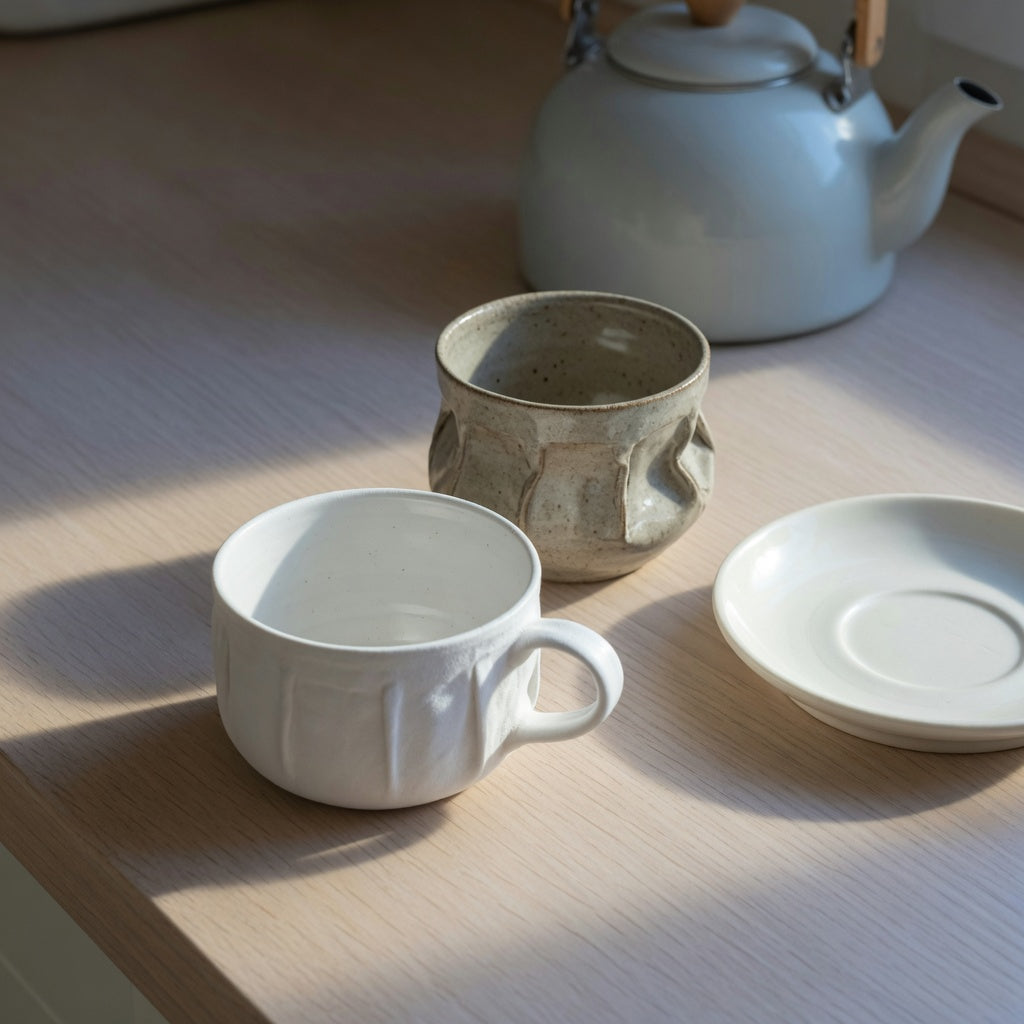
Pleated Coffee Tea Cup Ceramic Home Decor: What to Compare
Shoppers hunting a pleated coffee tea cup ceramic home decor piece often mix even porcelain folds with hand-pinched stoneware. We separate capacity, glaze wording, hot grip, and care so the cup mat...
Read more
Leave a comment
This site is protected by hCaptcha and the hCaptcha Privacy Policy and Terms of Service apply.