
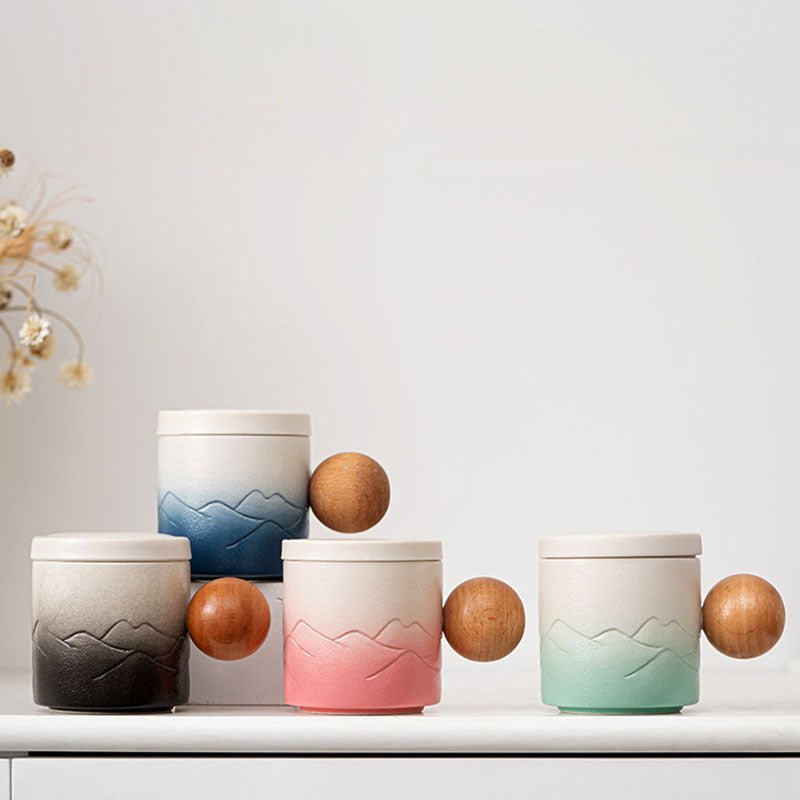
Macchiato cup shared household product shortlist guide: 3 sizes
Reading time: about 10 minutes
At 7 a.m., one person in a shared kitchen may stop after a short espresso and a small addition of milk, while the next person keeps pouring until the same compact cup is close to the rim. This macchiato cup shared household product shortlist guide deals with that practical mismatch. Instead of assuming everyone follows one macchiato recipe, it compares the finished drink volume, room for stirring, carrying habits, and preferred cup form.
In our store, we find that the drink name is less useful than the amount that actually reaches the cup. Macchiato proportions vary by household and coffee routine, so they are context rather than a universal standard. The product-specific facts used here stay deliberately narrow: all three options are ceramic, with listed capacities of 170 ml, 200 ml, and 250 ml, plus distinct retro, pleated, and ball-handle forms.
A macchiato cup shared household product shortlist guide starts with the finished pour
A listed capacity is a comparison figure, not an instruction to fill the cup to its rim. A person who adds milk, stirs sugar, or carries coffee to another room needs more working space than someone who drinks beside the espresso machine. Before choosing a cup, run this quick test with each household member:
- Prepare the drink exactly as that person normally makes it, including the usual milk or other additions.
- Measure the combined liquid going into the cup with a marked kitchen measure.
- Note whether foam rises above the liquid and whether the drink is stirred after pouring.
- Check how the cup is used: at the counter, on a sofa, or beside a keyboard.
- If the finished volume sits close to a listed capacity, compare the next size up for practical headroom.
| Option | Listed capacity | Strongest fit | Main reason to skip |
|---|---|---|---|
| Retro | 170 ml | Genuinely short, espresso-forward servings | Little nominal room if the finished drink approaches 170 ml |
| Pleated | 200 ml | A middle capacity for moderately different pours | Not enough margin for a drink already close to 200 ml |
| Ball Handled | 250 ml | More milk, more stirring room, or occasional tea | Less compact for someone who wants a short-cup presentation |
These are three separate product choices, not a three-piece set. The current product pages remain the place to confirm included quantity, external measurements, care guidance, and any other listing details that capacity alone cannot establish.
Which 170 ml, 200 ml, or 250 ml cup fits each household role?
170 ml Retro: for the person who keeps the drink short
Choose it if: one household member makes an espresso-forward drink that remains comfortably below 170 ml after milk is added. The Retro Coffee Tea Cup is the smallest listed option here, and its visible retro form gives that person a distinct cup to reach for on a shared drying rack.
Skip it if: the normal finished drink is close to 170 ml, requires vigorous stirring, or is regularly carried between rooms. It is also not the practical choice for large tea servings or ice-heavy coffee. A compact cup should not force someone to slow down just to avoid spilling.
200 ml Pleated: for two routines that nearly overlap
Choose it if: the household wants one moderate size, but 170 ml feels restrictive for at least one person. The Pleated Coffee Tea Cup adds 30 ml of listed capacity over the Retro option while remaining below the 250 ml choice. Its pleated exterior is also easy to distinguish visually from smooth-sided cups in the cupboard.
Skip it if: a regular serving already approaches 200 ml or the buyer specifically wants a plain exterior. Pleating is a visible design decision, not a functional advantage for every user. Its contours also deserve a quick visual check during rinsing so no residue is missed.
250 ml Ball Handled: for extra margin and crossover use
Choose it if: one person adds more milk, stirs in the cup, or occasionally uses the same vessel for tea. The Ball Handled Coffee Tea Mug has the largest listed capacity in this shortlist: 50 ml more than the Pleated cup and 80 ml more than the Retro cup. The ball-shaped handle also gives it a clearly different visible form.
Skip it if: the user wants the tight visual scale of a very short coffee or prefers a conventional loop-style handle. A distinctive handle does not guarantee a comfortable grip for every hand. View the product images carefully, and choose a larger vessel outside this compact range if the primary drink is a high-volume tea or iced coffee.
To compare these forms with the broader catalog, open our unique ceramic coffee mug collection. Keep capacity first in the decision, then use visible form to separate two options that both suit the measured pour.
How much headroom do stirring, foam, and desk trips need?
Headroom is the unused space between the finished drink and the rim. It matters because listed capacity and comfortable working volume are not the same decision. A 165 ml drink in a cup listed at 170 ml leaves only 5 ml on paper. Likewise, a 195 ml drink leaves the same nominal margin in a 200 ml cup. Neither example allows much room for movement.
- Counter-side drinking: a careful drinker who does not stir after pouring may be comfortable with the smaller option.
- Milk or sugar added in the cup: compare the next capacity up so the spoon can move without pushing liquid toward the rim.
- Carrying to a desk or sofa: extra space is useful around doorways, stairs, and electronics.
- Foam or ice: both occupy cup volume even though they do not behave like a flat liquid measurement.
These examples are comparison tools, not prescribed macchiato recipes or guaranteed fill lines. Cup shape affects how high a given volume sits, so check current product measurements if machine clearance or rim width will decide the purchase.
Can one compact cup cover macchiato, tea, and iced coffee?
It can cover nearby routines, but each crossover has a limit. The 170 ml Retro option is most aligned with a short serving and is not intended to replace a high-volume tea mug. The 200 ml Pleated option is the middle choice for someone who alternates between compact coffee and a modest non-coffee drink. The 250 ml Ball Handled option offers the most flexibility of these three, although a short espresso-based drink will sit lower inside it.
- Short espresso-forward drink: start with 170 ml if the measured serving leaves usable space.
- Milkier compact coffee: compare 200 ml and 250 ml according to the completed pour.
- Occasional tea: 250 ml provides the most room here, but it is still compact beside many conventional tea mugs.
- Large iced coffee: skip this shortlist if ice and a long pour are the main use, because ice quickly consumes the available capacity.
Do retro, pleated, and ball-handle forms change shared use?
Visible form can help household members recognize their preferred cup without checking capacity each morning. The retro cup has a distinct styled appearance, the Pleated cup has exterior contours, and the Ball Handled mug has an unconventional handle shape. Those differences are useful for identification, but they do not establish grip comfort, stackability, or storage dimensions.
Before ordering, check the current product images and measurements against the espresso machine, cupboard shelf, and dishwasher rack used at home. A 170 ml cup is not automatically the narrowest externally, and a 250 ml cup is not automatically too tall for a particular machine. Capacity describes volume; it does not provide all the dimensions needed for storage planning.
What should you check before a ceramic cup enters daily rotation?
In handling ceramic cups, the areas we inspect first are the drinking rim, base edge, and the point where a handle joins the body. Those exposed areas can show chips or cracks after an impact. Shared kitchens add more cup-to-cup contact because several pieces may be moved through the sink and drying rack at once.
- At unboxing: inspect the rim, body, base, and handle junction under good light. Do not drink from a chipped rim or continue using a visibly cracked cup.
- Before a dishwasher cycle: read the current care directions. Ceramic material by itself does not confirm dishwasher or microwave compatibility.
- During hand washing: use a non-abrasive sponge and avoid striking the cup against the sink or neighboring dishes.
- With the Pleated cup: look along the exterior contours during rinsing rather than assuming running water reached every recess.
- During temperature changes: avoid abrupt extremes unless the product instructions specifically support that use.
We do not treat a capacity listing as evidence of appliance compatibility, impact resistance, or stackability. Those are separate buying checks, especially in a household where cups go through frequent washing cycles.
Should everyone use one size, or should cups be assigned?
One size simplifies cupboard organization if the measured pours are similar and everyone accepts the same amount of headroom. Assigned cups make more sense when one person drinks short coffee, another adds substantially more milk, and a third wants occasional tea. The practical role of a macchiato cup shared household product shortlist guide is to show where uniformity stops being convenient.
For a gift, look at the recipient's current serving rather than choosing only by appearance. A compact 170 ml cup can be visually appealing but frustrating for someone whose normal drink nearly fills it. Also confirm the included quantity on each listing. Comparing three products here does not mean they arrive together or are sold as a coordinated set.
The shared-cupboard checkout checklist
- Record each person's normal finished drink volume.
- Allow extra room for stirring, foam, and carrying.
- Choose 170 ml, 200 ml, or 250 ml before deciding by visible form.
- Check the retro, pleated, or ball-handle design against the user's grip preference.
- Verify current dimensions, included quantity, and care instructions on the product page.
- Move outside this compact range if large tea or iced coffee is the main routine.
Frequently asked questions
What size macchiato cup works for two people who add different amounts of milk?
Use this macchiato cup shared household product shortlist guide as a three-step capacity comparison. Start at 170 ml for the shorter completed drink, move to 200 ml for moderate added milk, and consider 250 ml when more headroom is needed. Measure both finished pours rather than assuming the same drink name means the same volume.
Is a 170 ml ceramic cup too small after adding milk?
Not if the completed drink remains comfortably below 170 ml. It is too restrictive if milk brings the serving close to the listed capacity or the drink still needs to be stirred and carried.
Is 200 ml the safest single size for a shared cupboard?
It is the midpoint of these three options and can suit households whose pours are moderately different. It is not a universal compromise: a drink close to 200 ml will still have limited headroom, while a genuinely short serving may feel better in 170 ml.
Can the 250 ml Ball Handled mug replace a tea mug?
It can handle occasional compact tea servings and offers the most capacity in this shortlist. It is not a substitute for a larger tea mug if the user prefers high-volume pours, and its ball-shaped handle should be chosen only after reviewing the visible form.
Are the Retro, Pleated, and Ball Handled cups sold as a set?
This article compares them as separate options. Do not assume they are bundled; check each product page for the current included quantity and other listing details before checkout.
Next step: measure each household member's normal drink, note who needs carrying or stirring room, and compare the results in the CoffeifyMug unique coffee mugs collection. Choose the smallest capacity that keeps the usual pour comfortably below the rim.
More from our blog
Read more
12 oz ceramic coffee mugs shared household product shortlist guide
Compare the Landscape Tall, Round, and Mountain Tall 12 oz ceramic mug listings by serving habit, cupboard footprint, care routine, and ownership cue. Each option includes a reason to choose it, a ...
Read more
Hot Cocoa Mug Weekend Coffee Practical Purchase Checklist: 400 vs 480 ml
Compare The Rock at 480 ml with The Gradient and The Flow at 400 ml using your actual weekend pour, cabinet space, carrying route, and care requirements. We also flag the specifications and extras ...
Read more
Leave a comment
This site is protected by hCaptcha and the hCaptcha Privacy Policy and Terms of Service apply.