
170-250 ml macchiato cup home office product shortlist guide
Reading time: about 7 minutes
A 9:05 video meeting exposes a poor cup match quickly: a short coffee can look lost in a large mug, while milk and foam can bring a smaller cup closer to the rim than expected. This macchiato cup home office product shortlist guide compares three catalog-verified capacities around the way a home office actually runs: first coffee at the desk, a drink during a meeting, and a proper kitchen-counter break.
In our store, we see macchiato used for several home recipes. Some are espresso-led with a small amount of milk or foam; others are larger and milkier. There is no single finished volume that suits every preparation. The catalog identifies all three shortlisted options as ceramic, so we keep our product claims to material, listed capacity, and visible form rather than assuming dimensions or performance features.
What does a home-office cup need to handle?
Start with the drink you make, not the name printed on a cafe menu. Capacity should cover the finished coffee, milk, foam, sweetener, and any space you want below the rim. That unfilled space is practical headroom for stirring and serving; it is not a lid or a spill-resistance claim.
- Make your usual recipe and measure the finished drink, including milk and foam.
- Note whether you stir in sugar or add more milk after brewing.
- Decide how much visible headroom feels comfortable instead of choosing a cup equal to the liquid volume.
- Check any listed height and diameter separately because capacity does not prove the cup's physical desk footprint.
The 170 ml Retro Coffee Tea Cup is the smallest listed starting point in this shortlist. If visible form matters as much as volume, compare it with the broader unique coffee mugs collection before narrowing the options.
170, 200, or 250 ml: macchiato cup home office product shortlist guide
Here, compact refers to listed capacity, not confirmed outer dimensions. The three sizes form a useful ladder: 170 ml for the shortest routine, 200 ml for moderate headroom, and 250 ml for a larger or mixed-drink routine.
| Option | Best shortlist situation | Reason to choose | Reason to skip |
|---|---|---|---|
| Retro, 170 ml | A dedicated, espresso-led desk drink | Smallest listed capacity and a visible retro profile | Your recipe regularly needs more milk, foam, or room for additions |
| Pleated, 200 ml | A routine that shifts between short breaks and meetings | Middle capacity, 30 ml above the Retro, with a pleated exterior | You want either the shortest possible serving or notably more volume |
| Ball Handle, 250 ml | A milkier drink or coffee-and-tea crossover | Largest listed capacity, 50 ml above the Pleated and 80 ml above the Retro | You want the visual proportion of a dedicated short macchiato cup |
The capacity differences are clear, but the supplied capacity figures do not establish base width, total height, wall thickness, or handle clearance. If desk fit is your deciding variable, use our macchiato cup desk-use capacity comparison alongside the live product details.
Who should put the 170 ml Retro cup first?
The Retro is the focused option for someone who makes a consistently short drink and wants the smallest capacity in this three-product set. It is not the automatic winner for every small desk because milliliters describe internal volume, not the diameter of the base or the reach of the handle.
- Situation: Your measured macchiato fits below 170 ml with the headroom you prefer.
- Why it fits: The lower capacity keeps a short recipe from sitting in the largest vessel on the shortlist.
- Skip it if: You often increase the milk or foam, or expect the same cup to cover a larger tea break.
- Next step: Review the visible profile and current details on the Retro Coffee Tea Cup product page.
Is 200 ml the practical middle for meetings and breaks?
The Pleated cup adds 30 ml over the Retro without moving to the 250 ml option. That modest increase can make sense when the recipe changes slightly from one day to the next or when you prefer more empty space below the rim. Its pleated exterior is a visible design feature, but we would not infer grip, wall thickness, or external measurements from that texture alone.
- Situation: You alternate between a short macchiato and a somewhat milkier meeting drink.
- Why it fits: Its 200 ml capacity sits exactly between the two other listed choices.
- Skip it if: Your measured drink clearly belongs at either end of the range; the middle size would add no practical value.
- Next step: Check the form and listed details for the 200 ml Pleated Coffee Tea Cup.
When does the 250 ml Ball Handle mug make more sense?
The 250 ml Ball Handle mug is the largest option here. It belongs on the shortlist when your home-office drink is milk-forward, when additions take up meaningful volume, or when one ceramic cup needs to cover both coffee and tea routines. For a very short espresso-led drink, the extra empty volume may look and feel less intentional.
- Situation: Your finished drink approaches the limits of a 200 ml cup or you want a broader coffee-and-tea use case.
- Why it fits: It provides 50 ml more listed capacity than the Pleated and has a distinctive ball-shaped handle.
- Skip it if: You are buying a dedicated short-serving cup or dislike substantial unused space around a small drink.
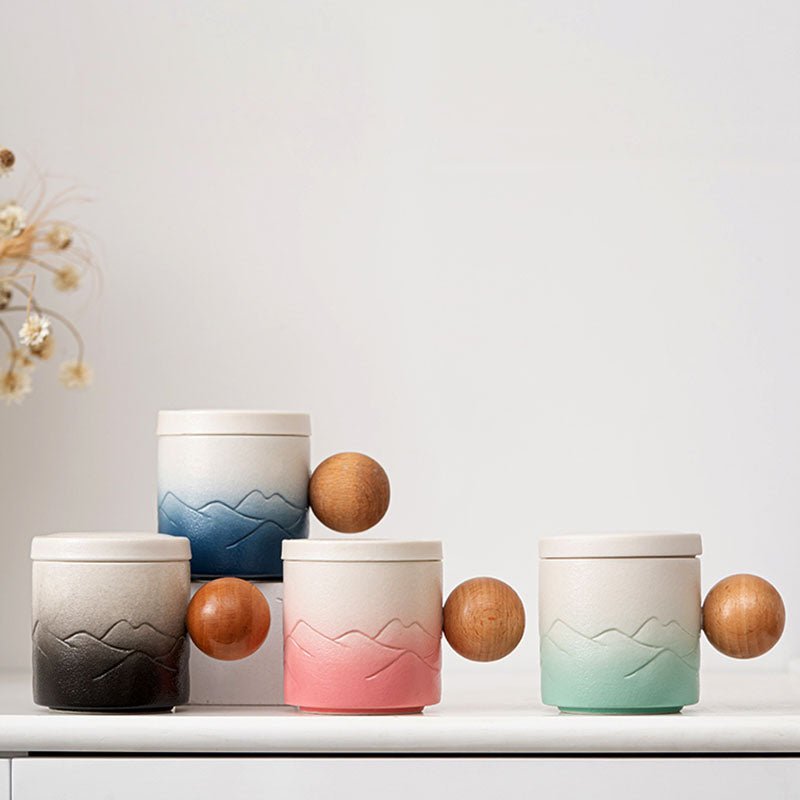
- Next step: Inspect the visible handle form on the 250 ml Ball Handle Coffee Tea Mug; handle comfort is personal and should not be assumed from appearance.
How do ceramic material, handles, and care checks affect the shortlist?
Ceramic is rigid and can chip or crack if knocked. That makes the unboxing check important, especially when the cup is a gift or will be used beside a keyboard every day. Our practical inspection routine focuses on contact points rather than decorative details.
- Rim: Examine it under good light for chips, rough spots, or a fine crack before first use.
- Handle connection: Check the ceramic where the handle meets the cup body. A visible line that appears to be a crack should be assessed before use.
- Base: Set the empty cup on a flat kitchen counter and check for obvious rocking.
- Cleaning: Rinse away coffee and milk residue, use a non-abrasive sponge, and follow the product's current care directions.
- Appliance compatibility: Do not assume that ceramic alone confirms dishwasher or microwave suitability; verify the live listing or care marking first.
These are general inspection points for handled ceramic cups, not a claim that any of the three products commonly arrives defective. For more category-level care and fit considerations, read our small ceramic coffee cup daily-use guide.
Five checks before adding a cup to the cart
- Finished volume: Measure the drink after adding milk, foam, or sweetener.
- Headroom: Leave the amount of unfilled space that suits your stirring and serving routine.
- Desk and cupboard fit: Confirm height, diameter, and handle clearance where those measurements are listed; ask before assuming if they are absent.
- Visible form: Choose among the retro profile, pleated exterior, and ball-shaped handle based on the form you actually want to use.
- Dedicated or mixed use: Decide whether this is only for short macchiatos or must also cover milkier coffee and tea.
If the decision still feels close, the macchiato cup daily-use guide for 170 ml to 250 ml provides another capacity-focused comparison without treating one size as universally correct.
Frequently asked questions
What size macchiato cup is best for a home-office desk?
There is no universal best size because home macchiato recipes vary. Choose 170 ml for a consistently short drink, 200 ml for moderate headroom and some recipe variation, or 250 ml for a larger milk-forward drink or coffee-and-tea crossover. Confirm external measurements separately if desk space is tight.
Is a 170 ml cup too large for a macchiato?
Not necessarily. A short espresso-led recipe may leave noticeable headroom in 170 ml, but that can still be practical if you like room for foam or stirring. Measure your finished recipe rather than relying on the drink name alone.
Can these ceramic cups go in a dishwasher or microwave?
The verified facts used for this shortlist do not establish dishwasher or microwave compatibility. Check the current product page and any care marking supplied with the cup. If compatibility is not stated, washing with a non-abrasive sponge is the cautious approach.
Which cup should I buy if my drink changes from day to day?
Use the macchiato cup home office product shortlist guide as a capacity ladder. The 200 ml Pleated cup is the middle option for moderate variation, while the 250 ml Ball Handle mug better accommodates recipes that regularly exceed the useful space in a 200 ml cup. Choose 170 ml only if your larger recipes still fit with your preferred headroom.
For the next step, measure one finished drink and note the maximum cup height, width, and handle clearance that your desk and cupboard can accept. Then compare those needs against the live product details in our unique coffee mugs collection and keep only the options that pass both checks.
Read more

americano coffee cup compact kitchen practical purchase checklist
Compare verified 200, 270, and 350 ml options against real cabinet, shelf, counter, and headroom constraints. This checklist also flags exterior-size, material, and care details to confirm before c...
Read more
Green Tea Mug Morning Routine Practical Purchase Checklist
Compare CoffeifyMug's verified 170 ml, 200 ml, and 270 ml options by morning timing, usual pour, visible shape, and willingness to refill. It also flags material, dimensions, and care details that ...
Read more
Leave a comment
This site is protected by hCaptcha and the hCaptcha Privacy Policy and Terms of Service apply.