
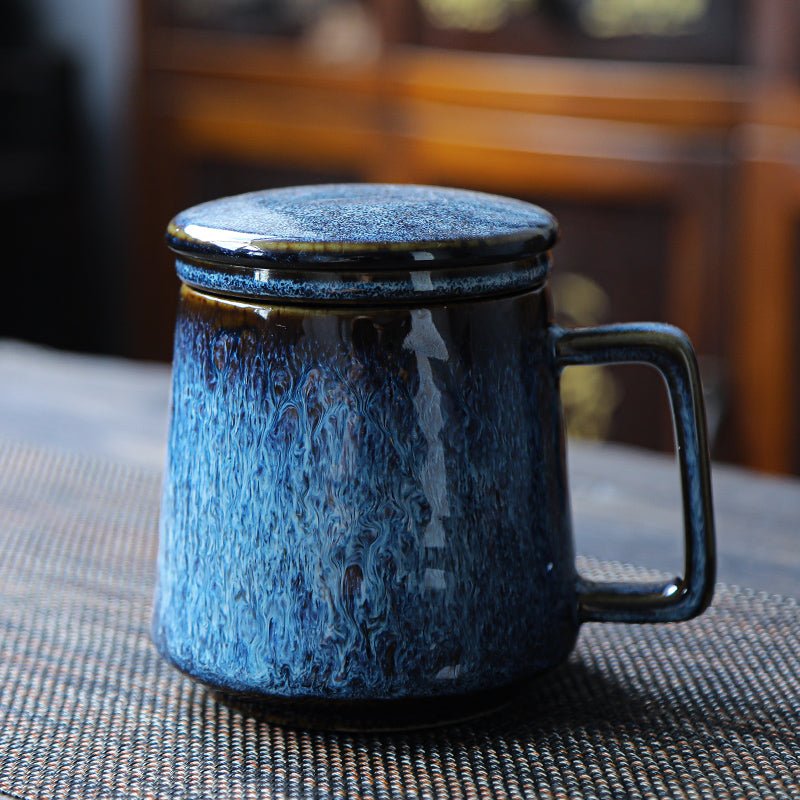
Hot Toddy Mug Morning Routine Product Shortlist Guide
Reading time: about 10 minutes
At 7:10 a.m., the wrong mug is easy to spot: your drink is still half-finished when you need to leave, or the cup is empty before breakfast is over. Our hot toddy mug morning routine product shortlist guide starts with three facts that change the buying decision: how long you have, how much you actually pour, and how willing you are to refill.
We sell these as everyday ceramic drinkware, not as insulated travel vessels or recipe kits. The current comparison is compact. In our unique coffee mugs collection, The Gradient Coffee & Tea Mug is 400 ml, The Flow Coffee & Tea Mug is also 400 ml, and The Rock Coffee & Tea Mug is 480 ml. That makes capacity the first cut; the pictured handle and exterior design separate the two 400 ml options.
Three filters in a hot toddy mug morning routine product shortlist guide
In our experience helping shoppers compare ceramic mugs, the best shortlist starts with the routine rather than the product name. Run these three checks before studying colors or decorative details:
- Morning timing: A 10- or 20-minute kitchen-counter drink does not automatically need the largest mug. If the drink follows you from breakfast to a stationary desk, refill inconvenience may matter more, although ordinary ceramic should not be treated as specialized heat-retention drinkware.
- Finished drink volume: Use a kitchen measuring jug once and measure the complete drink, including anything you normally add. Brewer or kettle markings may not equal the amount that reaches your mug. Treat the listed mug capacity as a comparison figure, not an instruction to fill to the rim.
- Refill tolerance: If a second pour is easy and part of your routine, either 400 ml mug can remain on the shortlist. If leaving your desk or breakfast table for a refill regularly annoys you, the 480 ml Rock deserves the first look.
Our practical rule is simple: choose capacity from your measured drink, then use the product photography to choose the handle and exterior design. Reversing that order is how a good-looking mug becomes the one you refill—or leave half full—every morning.
400 ml or 480 ml: what do you finish before leaving?
The Rock has 80 ml more listed capacity than either The Gradient or The Flow. That difference matters most when your finished drink approaches 400 ml. A drink close to that amount leaves little preferred space below the rim in a 400 ml mug, while a 480 ml option provides more nominal room. If you usually drink about 300 ml, all three can work on capacity alone.
| Morning pattern | First shortlist | Reason to choose | Reason to skip |
|---|---|---|---|
| You pour roughly 250–350 ml and finish it quickly | The Gradient or The Flow, both 400 ml | The listed capacity is aligned with a moderate serving | Skip if regular top-ups push your final drink close to 400 ml |
| Your finished drink is close to 400 ml and you want space below the rim | The Rock, 480 ml | The additional 80 ml gives you more capacity margin | Skip if you normally leave a larger serving unfinished |
| You prefer a smaller first drink and a deliberate refill | The Gradient or The Flow | A 400 ml option suits a two-stage routine without buying for unused capacity | Skip if refilling interrupts work or breakfast |
| You want one larger pour before settling at your desk | The Rock | Its 480 ml capacity can hold more of the finished drink in one mug | Skip if you dislike carrying more liquid in a full cup |
For a closer capacity-only comparison, use our 400 ml versus 480 ml hot toddy mug capacity guide. Capacity does not establish exterior dimensions, empty mug weight, or temperature performance, so those points should not be inferred from the numbers.
Which handle shape suits a sleepy, one-handed grip?
Handle fit is partly geometry and partly habit. Two mugs with the same 400 ml capacity can feel different because of handle opening, knuckle clearance, attachment position, and the way you distribute your fingers. We do not assign a universal ergonomic winner because hand size and grip style vary, and no professional handle testing is being claimed here.
- For a finger-through grip: Pick up your current favorite mug and count how many fingers you place inside the handle. Compare that habit with the side-view product photos and any current dimensions shown on the listing.
- For a pinch grip: Look at where your thumb and first finger would brace the handle. A visually appealing handle can still be a poor match if you prefer a flat or broad gripping area.
- For knuckle clearance: Check the visible gap between the inside of the handle and the mug wall. Do not assume a 400 ml capacity guarantees a compact or roomy handle.
- For full-mug balance: The 480 ml Rock can contain 80 ml more liquid than the two 400 ml mugs. That says nothing about empty mug weight, but the extra liquid still matters if you prefer a lighter one-handed lift.
Our daily-use guide to hot toddy mug capacity, handles, and trade-offs covers these grip habits in more detail. For this shortlist, the key point is that The Gradient and The Flow are a handle-and-design decision, not a capacity decision.
Three morning scenarios: reasons to choose or skip each mug
The Gradient, 400 ml: a moderate pour and fast counter routine
Situation: You make one moderate drink, sit at the kitchen counter, and expect to finish before leaving. Why it fits: Its 400 ml listed capacity keeps the decision focused on a moderate serving rather than the largest available option.
- Choose it if: Your measured drink fits within 400 ml with the space you prefer below the rim, and The Gradient's current handle and exterior design suit your grip and kitchen.
- Skip it if: Your finished drink regularly approaches 400 ml, you strongly dislike refills, or you need a lidded commuter vessel.
Next step: Review The Gradient product page beside a photo or measurement of the mug you already enjoy holding.
The Flow, 400 ml: the handle-and-style alternative
Situation: A 400 ml mug suits your pour, but The Gradient's pictured form is not your preferred match. Why it fits: The Flow gives you another current 400 ml option, allowing handle appearance and exterior design to break the tie without changing capacity.
- Choose it if: The handle profile shown on the current listing appears closer to your finger-through or pinch-grip habit.
- Skip it if: You expect it to provide more volume than The Gradient. Both have the same verified 400 ml capacity.
Next step: Open The Flow product page and compare its handle opening, attachment points, and overall form with The Gradient before deciding.
The Rock, 480 ml: one larger morning serving
Situation: Your complete drink is close to 400 ml, or you want one larger pour before moving from the kitchen to a stationary desk. Why it fits: The Rock's 480 ml capacity is 80 ml greater than the other two current options, providing more room for the drink itself.
- Choose it if: Refill avoidance matters more than keeping your serving moderate, and you expect to use the extra capacity.
- Skip it if: You normally drink a much smaller serving, dislike the feel of more liquid in hand, or need insulation, a sealed lid, or bag-safe portability.
Next step: Check The Rock product page for its current photography and care details. Do not use the 480 ml capacity alone to estimate shelf footprint or empty weight.
Where does everyday ceramic work, and where does it not?
A ceramic mug is at its best on a stable kitchen counter, breakfast table, or office desk. It gives you familiar everyday drinkware without asking you to manage a lid or travel mechanism. Ceramic is also rigid and impact-sensitive, so it is not the most forgiving choice around crowded bags, hard floors, or a car cup holder.
- Good fit: Coffee, tea, cocoa, or a prepared hot toddy enjoyed at home or at a stationary desk.
- Consider another style: A sealed travel mug for commuting, an insulated vessel when extended temperature retention is the priority, or a smaller cup for short servings you rarely finish in a 400 ml mug.
- Package expectation: Treat these listings as ceramic drinkware listings. Do not assume drink ingredients, mixes, spoons, lids, or specialized accessories are included unless the current product page explicitly says so.
How should ceramic care fit a rushed cleanup?
The word ceramic does not automatically establish dishwasher or microwave suitability; decoration and finish can affect care directions. The current instructions on the individual product page should control. When our team handles ceramic drinkware at unboxing, these are the practical checks we make first:
- Inspect before use: Look around the rim, finished surface, base, and both handle attachment points. A sharp chip, structural crack, or pronounced wobble on a flat counter is a reason to pause and contact the store before using the mug.
- Wash before the first drink: Follow the product-page directions. If handwashing is required or preferred, mild dish soap and a non-abrasive sponge are the cautious choices for a decorated ceramic surface.
- Verify appliance guidance: Do not put the mug in a dishwasher or microwave solely because it is ceramic. Check the current listing for each model.
- Prevent knocks during dishwasher cycles: If dishwasher use is permitted, leave enough clearance so the handle cannot strike a plate or another mug as the rack moves.
- Avoid abrupt temperature changes: Moving a very cold ceramic mug directly to a very hot fill can stress ceramic drinkware. Let the mug return toward room temperature and avoid using it as if it were specialized thermal equipment.
For a gift, send the product-page link with the mug so the recipient has current care information after unboxing. That is more reliable than assuming all ceramic drinkware has identical instructions.
Will the mug fit your shelf, sink, and dishwasher routine?
Capacity is not a substitute for external dimensions. A 480 ml mug may require more room, but the capacity figure alone does not tell you its height, body diameter, or handle projection. Measure the shelf opening and the space occupied by the handle of a mug you already own; also consider faucet clearance and dishwasher rack spacing if those are part of your morning cleanup.
If dimensions are shown on the current product listing, compare them with those measurements. If they are not, do not estimate footprint from capacity alone. Our guide to the best ceramic mug fit for an open-shelf morning routine has a more detailed shelf-and-display checklist.
Frequently asked questions
Is a 400 ml mug large enough for a morning hot toddy or tea?
Yes, if your finished drink plus your preferred space below the rim stays within 400 ml. That is why this hot toddy mug morning routine product shortlist guide asks you to measure the complete pour once rather than estimate from your brewer or kettle. If your drink lands close to 400 ml and you dislike refills, shortlist the 480 ml Rock.
How much bigger is The Rock than The Gradient and The Flow?
The Rock has a listed capacity of 480 ml, which is 80 ml more than the 400 ml Gradient and Flow. That comparison covers liquid capacity only; it does not establish exterior size, empty weight, or heat retention.
Which current mug has the best handle for large hands?
There is no universal winner because finger count, knuckle clearance, and pinch-versus-finger-through grip vary by shopper. Compare the current side-view photos and any listed measurements with a mug that already fits your hand well.
Can these ceramic mugs go in the dishwasher or microwave?
Check the current care directions on the individual product page before using either appliance. Ceramic material alone is not enough to confirm compatibility because finishes and decoration can have different requirements. If dishwasher use is allowed, load the mug with clearance around the handle.
Are these mugs suitable for commuting or keeping a drink hot for hours?
This shortlist covers everyday ceramic drinkware and does not claim sealed, travel-safe, or specialized temperature performance. If those are your main requirements, a lidded insulated travel mug would be a better product category.
Your two-minute shortlist before ordering
- Measure the final amount you normally drink, not just the initial brew.
- Choose 400 ml for a moderate pour or refill-friendly routine; consider 480 ml if your drink approaches 400 ml and refill tolerance is low.
- Compare the pictured handle opening with your preferred finger count and grip.
- Confirm dishwasher and microwave guidance on the current product page.
- Check that ceramic suits a stationary counter, table, or desk rather than a commute.
- Measure shelf and dishwasher space instead of estimating from capacity.
If your answers point to 400 ml, compare The Gradient and The Flow side by side. If refill avoidance points to 480 ml, review The Rock, then use the unique coffee mugs collection to confirm the design you want to see every morning.
Read more
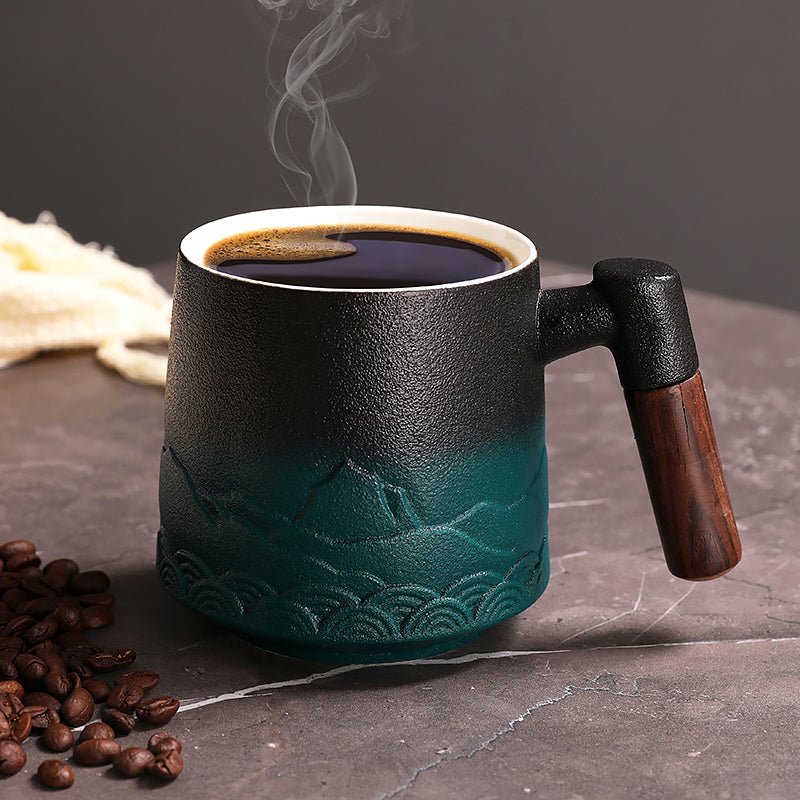
Coffee Mug Gift Idea Home Office Product Shortlist Guide: 3 Picks
Compare Golden Waves Kio, The Crane, and Mountain & Sea by home-office routine, design fit, desk measurements, care checks, and gifting trade-offs. Each pick includes a clear reason to choose i...
Read more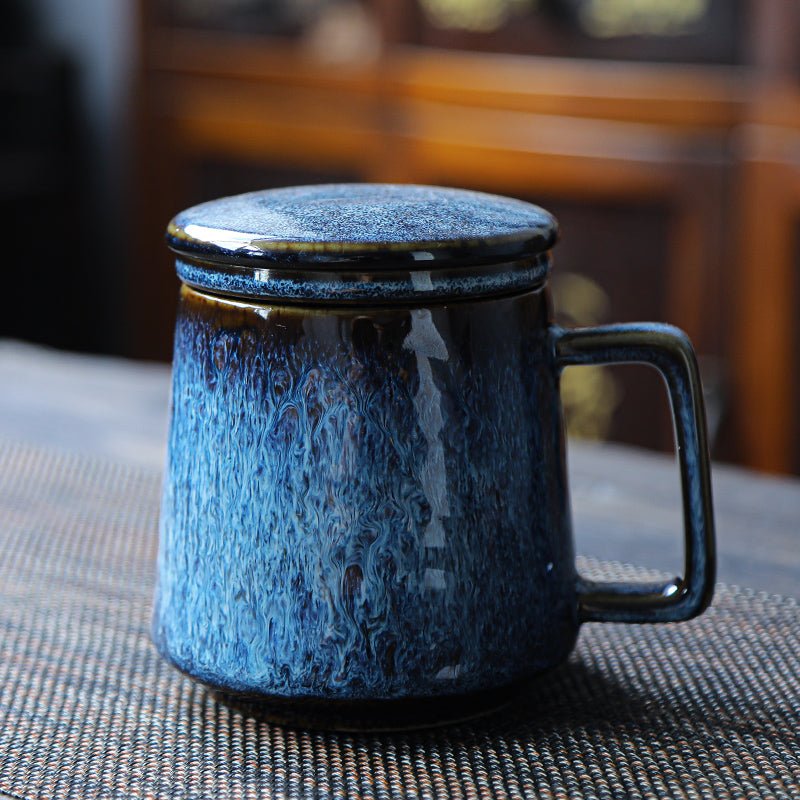
Mocha Mug Home Office Product Shortlist Guide: 400–480 ml
Compare The Flow 400 ml, Morning and Night 440 ml, and The Rock 480 ml by desk routine, meeting pattern, and typical serving size, with clear reasons to choose or skip each.
Read more
Leave a comment
This site is protected by hCaptcha and the hCaptcha Privacy Policy and Terms of Service apply.