
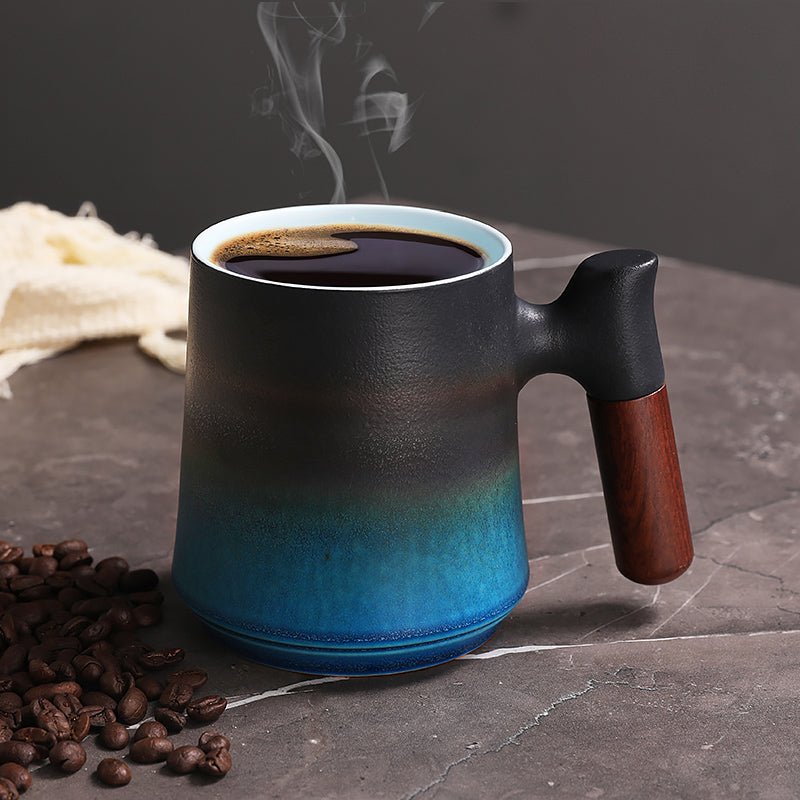
Hot Toddy Mug Home Office Product Shortlist Guide
Reading time: about 9 minutes
A mug can feel perfectly normal at the kitchen counter, then become the wrong choice once it sits beside a keyboard, notebook, and charging cable. The listed capacity may be more than you drink during a meeting, or the handle may ask for a grip you do not naturally use. This hot toddy mug home office product shortlist guide reduces the decision to three everyday ceramic options from our unique coffee mugs collection: two at 400 ml and one at 480 ml.
In our store, we see the best shortlist decisions come from matching an actual desk routine, not automatically choosing the largest number. We are comparing drinkware only. This article does not assume included ingredients, sealed lids, spill resistance, specialized temperature performance, or professional testing.
Three ceramic mugs for 400 ml and 480 ml desk routines
This is a scenario shortlist, not a ranking. Each option makes sense for a different pour size or visual and handle preference.
| Mug | Listed capacity | Choose it for | Skip it when |
|---|---|---|---|
| The Gradient | 400 ml | Your usual meeting or break drink fits within 400 ml, and the pictured Gradient design and handle profile suit your grip. | You regularly prepare more than 400 ml at once, or its pictured handle opening does not look compatible with the way you hold a mug. |
| The Flow | 400 ml | You want the same capacity range as The Gradient but prefer The Flow's pictured form, exterior, or handle silhouette. | You need the extra 80 ml offered by The Rock, or another handle profile appears more comfortable for your hand. |
| The Rock | 480 ml | Your measured desk drink regularly exceeds 400 ml and you prefer one larger pour for a longer work block or break. | The extra capacity would go unused, you prefer smaller fresh pours, or more liquid feels cumbersome in your usual grip. |
The Rock offers 80 ml more listed capacity than either 400 ml option. That fact does not establish exterior dimensions, base diameter, total handle projection, or the mug's empty weight, so capacity alone should not be used as a desk-footprint measurement.
How to use this hot toddy mug home office product shortlist guide
Four quick checks usually remove at least one option before style becomes the deciding factor.
- Measure your real pour. Use a measuring jug to see what 400 ml looks like. Then add 80 ml to understand the difference between The Gradient or The Flow and The Rock. Your comfortable working fill may be lower than the listed capacity if you leave room for stirring or additions.
- Audit your grip. Note how many fingers you place through your current handle. Compare the interior handle height and width, knuckle clearance, and distance between the loop and mug body with the current product imagery.
- Check the desk zone. Look at the clear area between your keyboard, mouse, notebook, and cables. Remember that the handle contributes to the total occupied width even when the ceramic base fits easily.
- Confirm the care routine. Check the current product instructions before assuming dishwasher or microwave suitability. Ceramic material by itself does not confirm either care claim.
For a more detailed way to assess placement, our hot toddy mug desk-use comparison for capacity, footprint, and fit explains how those variables interact.
Which mug fits a 400 ml meeting routine, and when is 480 ml better?
Choose The Gradient for a 400 ml routine and its specific pictured design
The Gradient is a practical candidate if your normal pour stays within 400 ml and its design is the one you would rather see beside your screen each day. This can suit a meeting-heavy routine where you make one measured drink before a call and do not need the additional 80 ml. Skip it if your measured serving is consistently larger or if another handle shape appears closer to your established grip.
Choose The Flow when its handle and form break the 400 ml tie
The Flow has the same verified 400 ml capacity as The Gradient. There is no capacity-based reason to call one of these two more practical, so the honest comparison is visual design and handle fit. Choose The Flow if its pictured form matches your desk and hand position; skip it if you are only choosing by name while preferring the other mug's visible handle profile.
Choose The Rock when your actual serving exceeds 400 ml
The Rock is the clear shortlist step-up when you have measured your usual drink above 400 ml but within its listed 480 ml capacity. It fits a longer desk session or deliberate break where one larger serving matches your routine. Skip it if you tend to drink slowly and prefer making smaller fresh pours, since we do not claim specialized heat retention and unused capacity provides no practical benefit.
How should handle shape affect a mug kept beside a keyboard?
Handle comfort is personal, but it can be evaluated more precisely than simply calling a handle large or small. In our experience handling ceramic mugs, the useful comparison points are the interior opening, knuckle clearance, handle projection, and the position of the two attachment points on the mug body.
- Finger count: Decide whether you naturally use one, two, three, or more fingers. A handle that suits someone else's grip may feel awkward in yours.
- Knuckle clearance: Look for enough space between your fingers and the ceramic body. This matters more once the mug contains a full drink and you are lifting it repeatedly.
- Handle projection: A loop that extends farther from the body takes up more total desk width. Check side and angled product images rather than judging from a front view alone.
- Loaded grip: Test your current mug with 400 ml of water, then with an additional 80 ml if it can safely hold that amount. The liquid difference helps you judge leverage even though it does not tell you the empty weight of a new mug.
The largest-looking handle is not automatically the best. Some shoppers prefer a controlled two-finger grip, while others need more interior height and width for comfortable clearance.
What should you expect from everyday ceramic at a home-office desk?
Ceramic is appropriate for everyday desk and kitchen use, but it is rigid drinkware that can chip if it strikes a sink, countertop edge, or another dish. The areas we inspect while handling ceramic mugs are the drinking rim, both handle attachment points, the body, and the base. A sharp rim chip, a crack through the handle junction, or a spreading body crack is a reason to stop using the mug.
- After a drink: Rinse residue rather than leaving a sweetened or spiced drink at the bottom through the rest of the workday.
- During washing: Keep the handle and rim from knocking against heavier dishes. If the current care instructions permit dishwasher use, place the mug where those vulnerable points have clearance during the cycle.
- During temperature changes: Avoid abrupt moves between very cold and very hot conditions. Everyday ceramic should not be treated as laboratory or specialized thermal-shock glassware.
- Before microwave use: Verify the product's current care information. Do not infer microwave suitability from the word ceramic alone.
These mugs are also not the right style for every routine. A sealed, lidded travel mug is a better category if commuting, spill protection, or specialized insulation is the priority. For more detail on realistic ownership trade-offs, read our hot toddy mug daily-use guide to capacity, handles, and care.
A five-minute desk simulation before you order
A quick simulation with your current drinkware is more useful than guessing from a capacity number.
- Clear the exact place where the mug will sit during meetings and focused work. Include the area needed to reach and lift it without moving your keyboard or notebook.
- Measure 400 ml of water. Use a suitable current mug or measuring jug to judge how that serving compares with what you actually drink.
- Add 80 ml to represent the capacity difference offered by The Rock. Decide whether that extra serving is useful or simply more than you want at one time.
- Measure the interior height and width of a handle you already find comfortable. Also note how far it projects from the mug body, then compare those proportions with available product details and images.
- Check where the mug will be washed and stored. A mug that fits the desk but not the shelf or normal care routine is not a practical home-office choice.
If you are reviewing the rest of the workspace at the same time, our article on choosing the best ceramic coffee mug for a home office desk covers the broader setup without changing the three-product shortlist here.
Frequently asked questions
Is 400 ml or 480 ml better for a home-office hot toddy?
Choose from your measured serving, not from the assumption that more capacity is always better. The Gradient and The Flow are listed at 400 ml, while The Rock is listed at 480 ml and makes sense when you regularly use more than 400 ml.
Does a 480 ml capacity automatically mean a larger desk footprint?
No. Capacity describes how much the mug holds, while desk fit depends on exterior body diameter, base size, and handle projection. Check current dimensions where supplied and compare product imagery before deciding.
What does a hot toddy mug home office product shortlist guide compare?
It compares listed capacity, handle shape, ceramic care, and the way each mug fits meeting, break, and longer desk routines. It should also identify reasons to skip an option, including unused capacity, unsuitable handle geometry, or a need for lidded and insulated drinkware.
Can I assume a ceramic hot toddy mug is dishwasher safe?
No. Ceramic material alone does not establish dishwasher suitability. Follow the current product listing or care label, and protect the rim and handle from contact with heavier dishes if dishwasher use is permitted.
How do I choose between The Gradient and The Flow if both hold 400 ml?
Compare the pictured handle opening, overall form, and exterior design against a mug you already enjoy using. Since their verified capacities are the same, choose the one that better matches your grip and desk preferences rather than expecting a volume advantage.
Your final 400 ml or 480 ml decision
- Choose The Gradient if 400 ml fits your pour and its pictured design and handle are your preferred match.
- Choose The Flow if you also want 400 ml but prefer its visible form and handle profile.
- Choose The Rock if your measured serving exceeds 400 ml and the 480 ml capacity will be used.
Once you have settled the capacity question, open the CoffeifyMug unique coffee mugs collection and compare the current product images and care details side by side. Place the order only after the pour size, handle profile, and desk routine point to the same option.
Read more
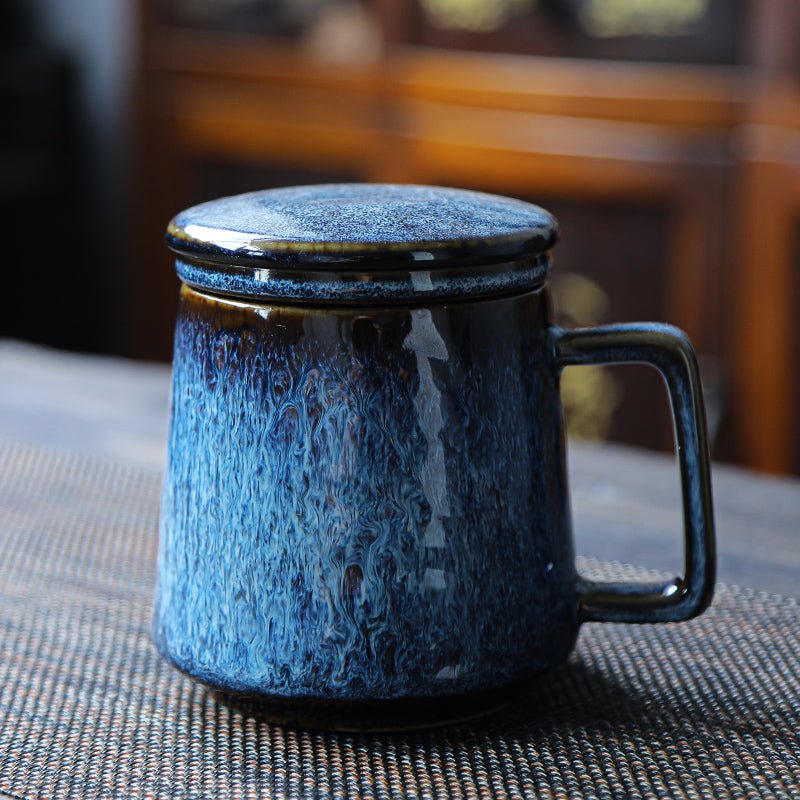
cafe au lait mug morning routine practical purchase checklist
Use your morning timing, usual finished drink volume, and refill tolerance to compare CoffeifyMug's 400, 440, and 480 ml options. This checklist also flags handle, footprint, material, and care det...
Read more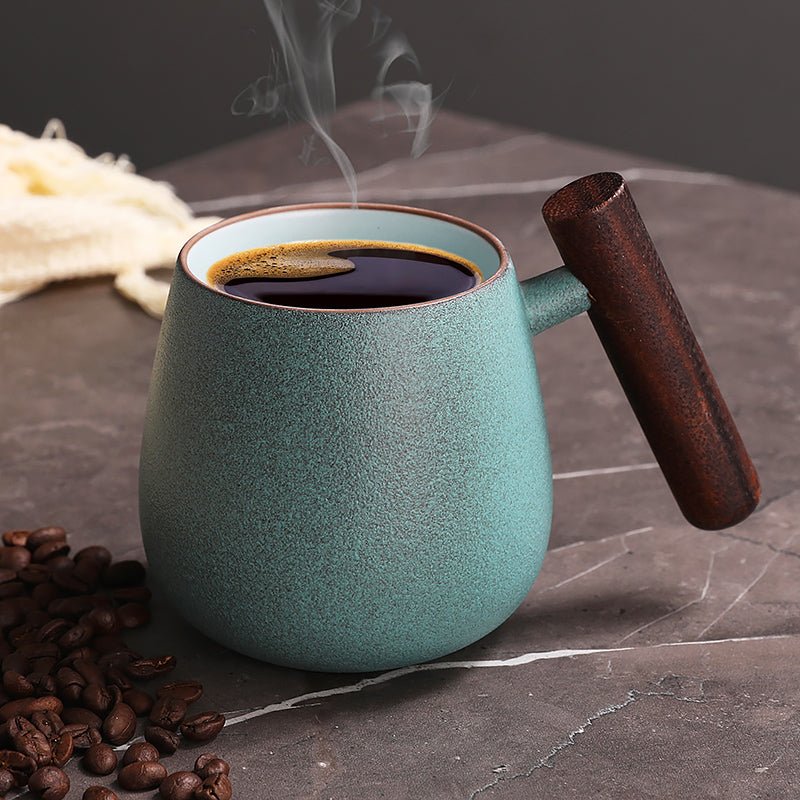
12 oz ceramic coffee mugs home office product shortlist guide: 3 options
A scenario-based comparison of three current 12 oz ceramic mugs for focused desk work, video meetings, coffee breaks, and gifting. See why each option makes the shortlist, when to skip it, and whic...
Read more
Leave a comment
This site is protected by hCaptcha and the hCaptcha Privacy Policy and Terms of Service apply.