



Home Decor Ceramic Mug: Safety, Fit, and Shelf Use
Reading time: about 15 minutes
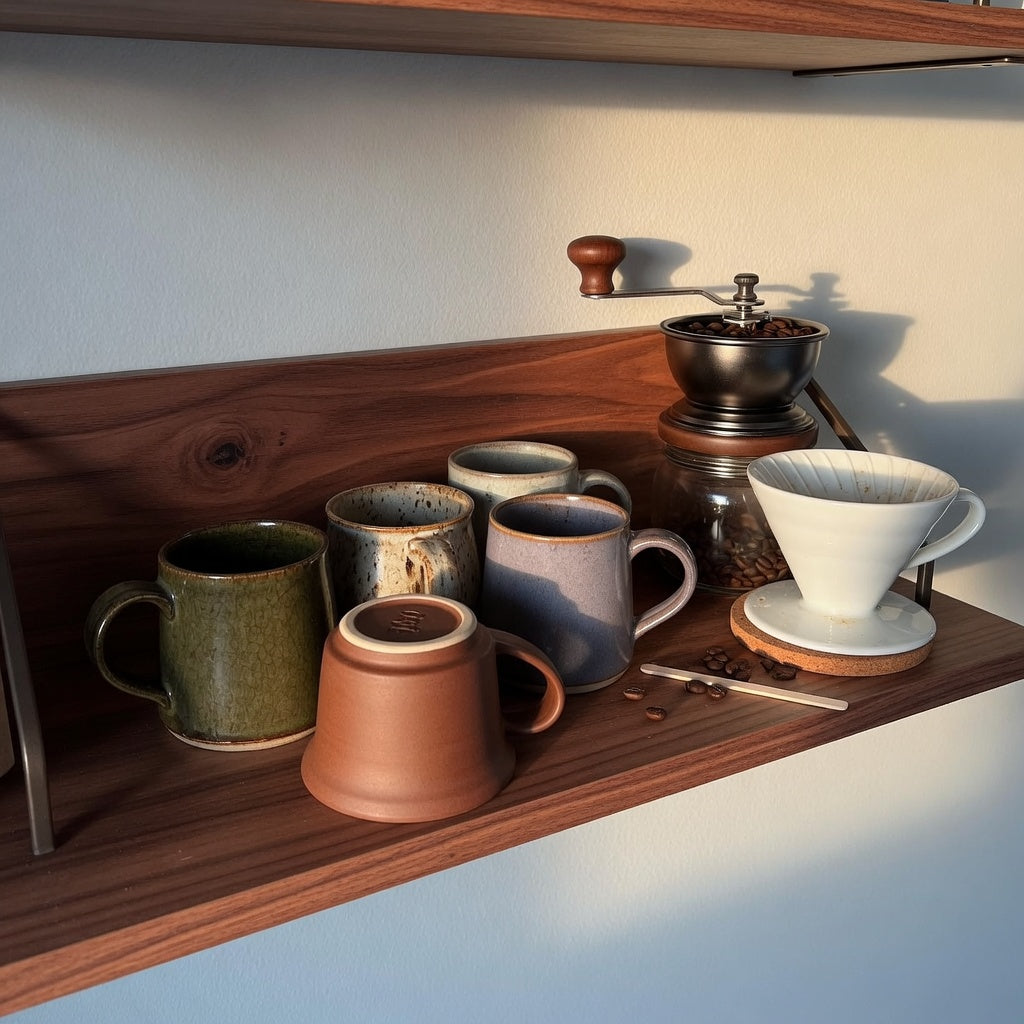
A customer set a scenic mug on the open shelf above the coffee maker, liked how it sat beside the grinder, and then asked the question that decides the purchase: can I pour coffee in this, or is it only for show? That split is the job of a home decor ceramic mug. It has to read from across the kitchen. If someone will drink from it, the glaze, the permanent line on the base, and the care label have to hold up on a Tuesday morning, not only in a styled photo.
In our store the miss is almost always the same. The picture is finished. The ounces, the foot ring, and the base marking are not. Separate the cups you will use every day from the pieces that should stay ornamental.
Can a home decor ceramic mug be both shelf art and a drinking cup?
Sometimes. Sometimes the honest answer is no, and the piece belongs beside a plant, not next to the kettle.
Everyday factory drinkware sits in a different risk bucket from a flea-market find, a heavily worn vintage cup, or a handmade piece with a crude, irregular shape and a bright glaze. The U.S. Food and Drug Administration says commercially made everyday pottery is much less likely to have lead problems. It tells shoppers to be more careful with ceramicware that is handmade and crude or irregular, antique, damaged or heavily worn, bought from flea markets, street vendors, or an unknown maker, or brightly decorated in orange, red, or yellow.
Ornamental ware follows a labeling rule, not a style mood. Under 21 CFR 109.16, lead is a toxic metal used in some ceramic glazes and decorative decals, and using ornamental ceramicware to prepare, serve, or hold food may leach lead into food. A piece that looks suitable for food is treated as food-use ware unless it carries both a required visible stick-on warning and a permanent statement on the base, or a hole through the surface that would have touched food. The messages to recognize are specific: “Not for Food Use. May Poison Food,” “Not for Food Use. Glaze contains lead. Food Use May Result in Lead Poisoning,” and “Not for Food Use—Food Consumed from this Vessel May be Harmful.” A hangtag that says decorative is not that permanent base line. A sticker you can peel off is not enough on its own. FDA guidance also says a removable not-for-food-use sticker, or a warning that lives only on the package, is not enough identification for ornamental ceramicware.
| Signal on the piece or listing | How we treat it |
|---|---|
| Permanent not-for-food-use line, or a hole through the bowl | Display only. No drinks and no food storage. |
| Factory mug with a food-contact claim and written care labels | A fair daily cup if the listing matches the piece you unpack. |
| Handmade, antique, damaged, flea-market, or bright orange, red, or yellow glaze, and no maker you can trace | Higher scrutiny. Keep it as decor until food-use firing is clear. |
| Gold, silver, or luster on the rim or illustration | Do not microwave it unless that exact listing says microwave safe. |
If you want a mug you will actually drink from, start in our unique coffee mugs and read the live listing for a food-contact claim. If the only promise is that it will look good on a mug wall, keep it as decor.
Why is a lead-free slogan weaker than the words on the base?
Lead free on a product page is a slogan until a maker stands behind the glaze and the base marking survives unboxing. The FDA has reported traditional pottery from several Mexican manufacturers that was labeled lead free but still contained extractable lead at levels comparable to lead-glazed pottery and, in some cases, above the agency’s action levels. A line printed only on the box fails the same way a loose sticker does. It can be in the recycling before the mug reaches the shelf.
The numbers decor posts usually skip:
- For cups and mugs, FDA Compliance Policy Guide Sec. 545.450 uses an action level of 0.5 micrograms of lead per milliliter of leaching solution, applied to any one of six units tested. The guide describes those pieces as small ceramic hollowware commonly used for coffee or tea, normally but not exclusively about 8 fl oz (240 mL), and usually made with a handle. That is a regulatory description. It is not the capacity of a mug on our site.
- For cadmium, Sec. 545.400 uses 0.5 micrograms per milliliter for small hollowware: ware deeper than 25 mm inside with a capacity under 1.1 liters. The FDA says extractable cadmium can be taken up by acid foods and, with continued use, could cause chronic cadmium poisoning.
- The method tied to those figures, ASTM C738, draws lead and cadmium from the glazed surface with acetic acid. ASTM describes that extraction as a severe test, one that ordinary use is unlikely to match.
Those figures are leach limits from a standardized acid test. They are not a claim that a mug contains zero lead or zero cadmium in the clay or the decoration. The FDA states there is no known safe level of lead exposure, and that lead used in pottery may leach into food. If the piece is fired properly for the right time, the FDA says essentially all the lead is bound into the glaze and any migration into food is insignificant. If it is not properly fired, lead may contaminate food or drink. High exposure in pregnancy, infancy, and early childhood can cause learning disabilities, behavior difficulties, and lowered IQ. In adults, chronic exposure is associated with kidney dysfunction, hypertension, and neurocognitive effects. Saving a doubtful cup for guests does not remove that risk.
No amount of washing, boiling, or other home process removes lead from pottery. If a lead test swab shows leachable lead, the FDA strongly advises against using the piece to cook, serve, or store food or drinks. Anything permanently marked not for food use stays out of the drink rotation, including a pretty mug you only planned to use for water.
On the bottom, not in the ad copy, we ask customers to check four things before the first pour:
- A permanent statement on the base, not only a sticker, hangtag, or insert card.
- Any line that says the piece is not for food use, or that the glaze contains lead.
- Chips, worn metallic bands, or glaze rubbed through to bare clay. Damage and heavy wear stay on the FDA caution list even when the mug was sound when it was new.
- A maker you can still match to a current note on materials and care.
Stoneware, porcelain, or earthenware: which body fits the shelf and the morning?
Clay changes the look and how many knocks the mug forgives. These are category patterns from our sales floor, not a hidden specification for any single listing.
- Stoneware is the usual farmhouse and rustic body: thicker walls, a dense fire, often a satin or speckled glaze. It feels steady in the hand and hides a coffee tide line. The trade-off is weight. A full mug with a chunky handle tires the wrist on the walk from the shelf to a desk, and a heavy foot can mark soft wood.
- Porcelain suits a minimalist shelf: thinner walls, a brighter white, and a cleaner rim line. It also chips when a lip meets a faucet or a metal hook. Once that lip is chipped, we take the cup out of drink use.
- Earthenware is often the most decorative option, with a softer, lower-fired body and glazes that can look earthy or very saturated. Bright orange, red, and yellow need a clear food-contact story before anyone drinks from them. This body is a weak choice if the mug will be knocked around every morning.
None of those clay names means food-safe, dishwasher safe, or microwave safe. Glaze recipe, firing, and any color sitting on top of the glaze decide that. Overglaze paint and metallic luster live on the surface, so they are the first details a dishwasher attacks. If a listing will not name the clay and the glaze in plain language, do not treat the mug as a daily drinker.
Will the handle, the rim, and the listed ounces work at the coffee station?
Styled photos crop out the annoying parts. We hear about them after the box is open.
Handle clearance comes first. A loop that looks roomy in a square crop may fit one finger once the mug is full and the wall is hot. People who carry a cup from an open shelf to a desk usually want two or three fingers through the opening, with knuckles clear of the ceramic. A wooden or wrapped handle changes both the grip and the sink rules. Do not assume it can go in a microwave or a dishwasher because an all-ceramic mug in the same cupboard can.
Then the rim. A sharp, uneven, or heavily textured lip drips down the outside and stains the shelf you just arranged. We look for a smooth, slightly rounded lip that stays consistent all the way around. A molded pour spout can trap a bead of glaze and become the drip.
Capacity is where photos mislead most. A tall silhouette can be a thick-walled cup near that regulatory example of about 8 fl oz, or a wide bowl that holds much more and still looks modest from the front. Measure the open shelf or the inside of the cabinet before you fall for height. A statement piece that cannot clear the shelf above it ends up on the counter, picks up grease film from the cooktop, and gets bumped by the kettle.
Balance matters too. Sculpted walls and heavy relief can throw weight forward so the mug tips when it is only half full. That is a poor daily driver, even when it looks planted in a product photo.
For a scenic coffee or tea piece meant to live on a coffee bar, open the landscape coffee tea mug and read the current listing. We will not treat the photograph as a specification. Confirm each of these on the page you are buying from. If a line is missing, the listing has not told you whether this is a 7 a.m. mug or a styling object.
- A food-contact claim, rather than display-only language.
- Listed capacity, plus exterior height and width if they are published.
- Handle material, and any sentence that says dishwasher safe, microwave safe, or hand wash.
- Metallic print, gold, or silver that would change microwave use.
- Foot finish, if the base photos or the description show it.
How do hooks, stacks, and an unglazed foot ruin a styled shelf?
Mug walls sell this category. They also chip rims. In our experience, the foot ring marks the shelf long before anyone notices a dull patch in the glaze.
- Do not stack pieces you care about. Rims nest, glaze rubs, and the top mug rocks. Porcelain and raised patterns suffer first.
- Give hooks room. A handle on a thin peg knocks the rim into the wall when a cabinet door slams. Leave clearance, and do not hang a mug by a fragile, sculpted, or repaired handle.
- Check the foot. Many pots leave an unglazed ring where they sat on the kiln shelf. That dry clay acts like fine sandpaper on painted wood, walnut, and glass. If the foot looks or feels rough, use a small clear pad, or set the mug on a tray or a stone board.
- Plan for dust and grease. An open shelf near a cooktop films the inside of a mug that still looks clean from the doorway. Wash before the first pour. Do not park a wet spoon in a cup you drink from.
Group by height and by use, not only by color. Daily cups go in front, within easy reach. Taller display pieces go back or higher, where an elbow will not clip them. A home decor ceramic mug you enjoy seeing and hate lifting belongs on the upper shelf, not in the weekday rotation.
Crazing, a fine crackle in the glaze, is not the same defect as a crack through the wall. Pinholes are smaller still: tiny breaks in the glaze surface that makers argue about at length. Our floor rule is simpler. A crack that runs through the body, a chip that exposes clay on the rim or interior, flaking glaze, or an open path to bare clay on a piece you cannot trace comes out of food service. A light crackle on an intact commercial glaze the maker will stand behind is a question for that maker, not an automatic verdict from a product photo. Unknown vintage with crazing, pinholes, chips, or worn gold is decor only.
What fails first in a heated dishwasher or a microwave?
Follow the mark on the piece or on the current listing. The word ceramic is not a care instruction.
Dishwashers are hard on anything sitting on top of the glaze. Hand-painted overglaze, transfer prints, metallic bands, and sculpted add-ons are the usual losses. In our experience, gold lines dull and printed scenes fade after heated dry cycles while the clay body stays intact. If the listing says hand wash, believe it. One experimental cycle is how a gift becomes a faded copy of the photo.
Microwaves are the other failure point. Gold, silver, and luster show up often on decor rims, and they are a poor reason to run a home test. If this listing does not say microwave safe, heat the drink in a plain cup and pour it over. Thermal shock is a separate problem: a cold, thick mug sent straight to high heat can crack. That crack ends drink use even when the pattern still looks perfect.
This kind of mug is a poor fit when you need:
- An unknown antique or flea-market cup as everyday drinkware, especially for children or during pregnancy.
- Any piece with a permanent not-for-food-use statement, a hole through the bowl, or a lead-swab failure.
- A reheating cup when the rim or illustration is metallic.
- Easy one-hand carry from a heavy, oversized statement piece.
- A soft, painted, or glass shelf left unmarked by a rough foot.
If the priority is a plain morning cup rather than a styled object, our comparison of a ceramic mug for a home coffee break stays on daily use. If the open question is ceramic versus a wrapped grip, read what changes with a wooden-handle decor mug before you assume the grip and the sink rules match an all-ceramic cup.
What has to be true before you gift one at a housewarming?
Gifts are where display-only pieces cause the awkward Monday. Someone brews coffee, the mug is beautiful, and nobody turned it over.
- They will drink from it. Food-contact status has to be explicit on the listing or the base. Capacity should match a small tea pour or a large coffee, not whichever silhouette photographed taller. Care has to match their kitchen. Hand-wash-only is a weak gift for someone who loads the dishwasher and never flips a mug to read the base.
- They want it on a shelf. Color, height, and foot finish matter more than ounces. Say so on the card if you are not confident it is for drinks.
- It is a housewarming object. One scenic mug reads as a coffee-bar piece. A matched set reads as cabinet stock. Our notes on a ceramic coffee mug gift for home decor lovers stay on that split.
Run the live page against this list before checkout. Listings change, and a photograph is not a spec sheet.
- Food-contact wording, and any warning presented as permanent.
- Clay and glaze description, including metallic or luster decoration.
- Dishwasher and microwave sentences, not an assumption from the material name.
- Capacity in ounces or milliliters, plus height if the shelf is tight.
- Handle shape and clearance. If the listing is vague, ask whether two fingers fit when the mug is full.
- Foot finish, so you know whether the shelf needs a pad.
- The return window, in case the rim feels sharp or the color shifts off the screen.
If you want a landscape-style coffee or tea mug that has to be seen and used, take that list to the landscape coffee tea mug listing and browse the unique coffee mug collection beside it. Pass on any piece that only answers how it will look.
Frequently asked questions
Is a home decor ceramic mug safe to drink from?
Only when it is sold as food-use ware and the current listing or the piece itself supports that. The FDA says commercially made everyday pottery is much less likely to have lead problems than handmade, antique, damaged, flea-market, or brightly colored traditional ware. If the base says not for food use, or a lead test shows leachable lead, keep it as decor. Washing does not remove lead from a glaze.
Does a lead-free label mean the mug met the FDA leach limit?
Not by itself. The FDA has reported traditional pottery from several Mexican manufacturers that was labeled lead free and still released extractable lead, in some cases above the 0.5 micrograms per milliliter action level used for cups and mugs. That figure is a leach limit from a severe acid test, not proof the clay contains zero lead. A removable sticker or a line printed only on the box is not the identification ornamental ware is supposed to carry.
Can I microwave a ceramic mug with a gold or silver rim?
Do not assume you can. Gold, silver, and luster are common on decor rims, and a mug with that trim should stay out of the microwave unless that exact listing says microwave safe. If the page is silent, heat the drink in a plain cup and pour it in. Use the same caution for overglaze the maker tells you to hand wash.
Is crazed, pinholed, or slightly chipped glaze still all right for coffee?
A crack through the clay wall is not, so retire that mug from drinks. A chip that exposes clay on the rim or inside, flaking glaze, or pinholes that open a path to bare clay on a piece of unknown origin are also reasons to stop drinking from it. Damaged and heavily worn ware is on the FDA caution list. A light crackle in an intact glaze from an identified food-safe maker is a different question, and that maker should answer it.
Will the foot of a ceramic mug scratch an open wood or glass shelf?
It can. Many pieces leave an unglazed foot ring from the kiln shelf, and that ring scuffs wood, paint, and glass. Check the base photos on the listing, and use a pad, tray, or stone board if the foot is rough. Skip tight hooks and stacking if you want the rim and handle to stay intact.
Ready to pick your mug? Two ways to save on today's order:
Ordering 1–3 mugs? Get an extra 10% off your 1st order with code 10_OFF Apply 10% Off & Shop Wooden-Handle Mugs →
Gifting 4+ mugs? Buy 3, Get the 4th Free applies automatically at checkout (no code needed; offers do not stack) · Free standard shipping (Nov pre-Christmas delivery: 15–20 calendar days US) · Free replacement if chipped in transit.
Popular mug buying guides: Ceramic Tea Cups & Infuser Mugs · Ceramic Mugs with Lids Compared · Wooden-Handle Tea Infuser Mugs Compared · Christmas & Secret Santa Mugs 2026 · Espresso & Cortado Cups Guide · Cup & Saucer Gift Sets · All 25 Mugs Spec Table · Mug Size Guide · Shipping & Promo FAQ
FIRST ORDER 10% OFF (CODE: 10_OFF) · OR BUY 3, GET THE 4TH FREE


Read more
Ceramic Mountain Mug Home Decor: What to Compare First
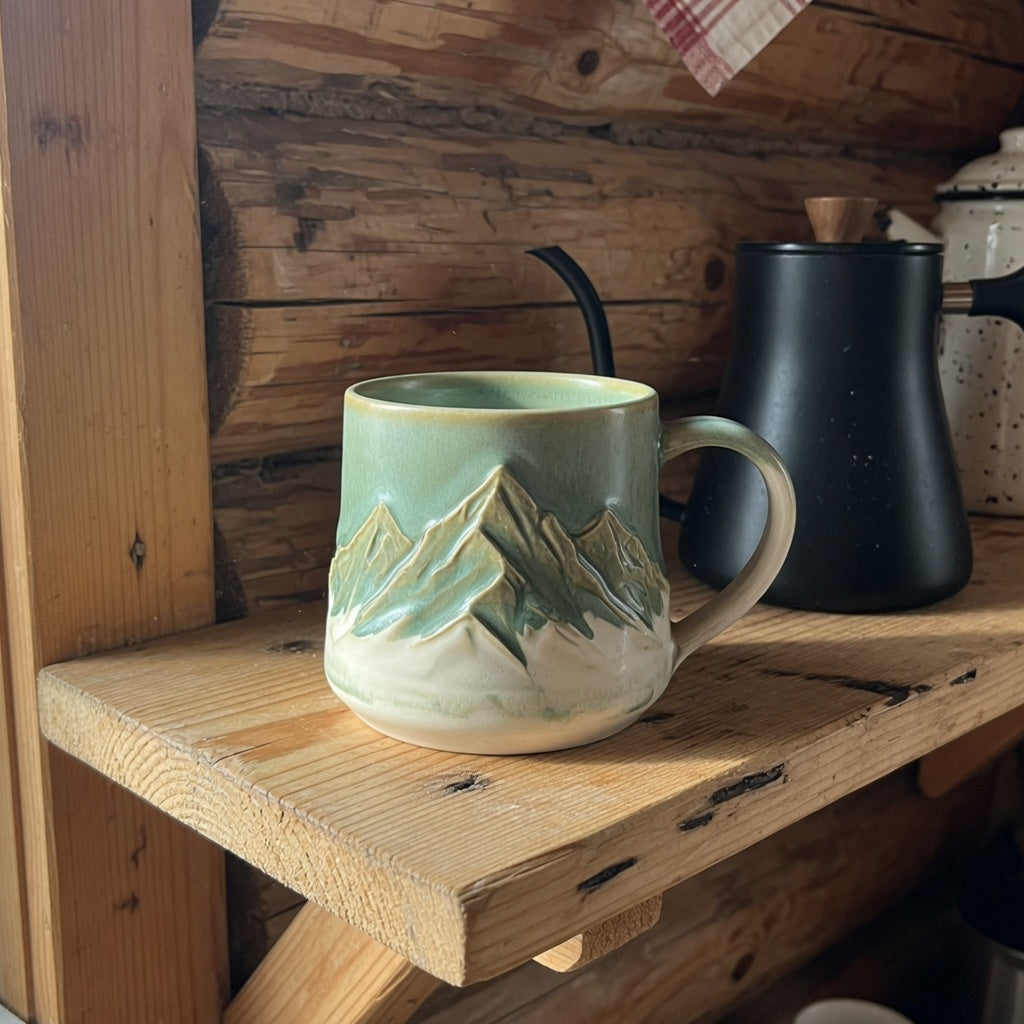
A mountain mug has to survive the coffee maker and still look right on a cabin shelf. We compare capacity, carved versus printed surfaces, glaze safety, care claims, and the listing lines to verify...
Read more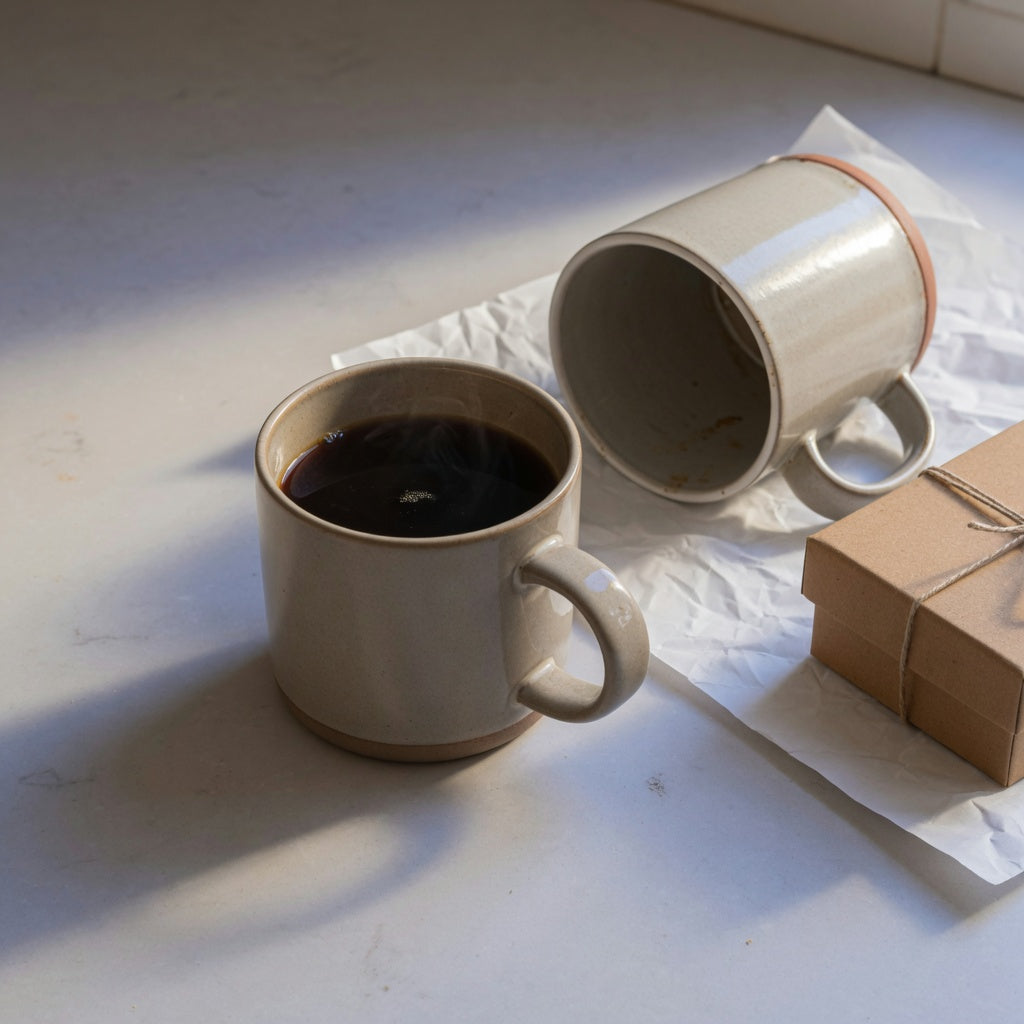
Ceramic Mug Gift for Coffee Drinkers: What to Compare
A ceramic mug only stays in the weekday rotation if listed capacity matches how that person drinks, the handle and rim feel right, and the current page states microwave or dishwasher use. We cover ...
Read more
Leave a comment
This site is protected by hCaptcha and the hCaptcha Privacy Policy and Terms of Service apply.