



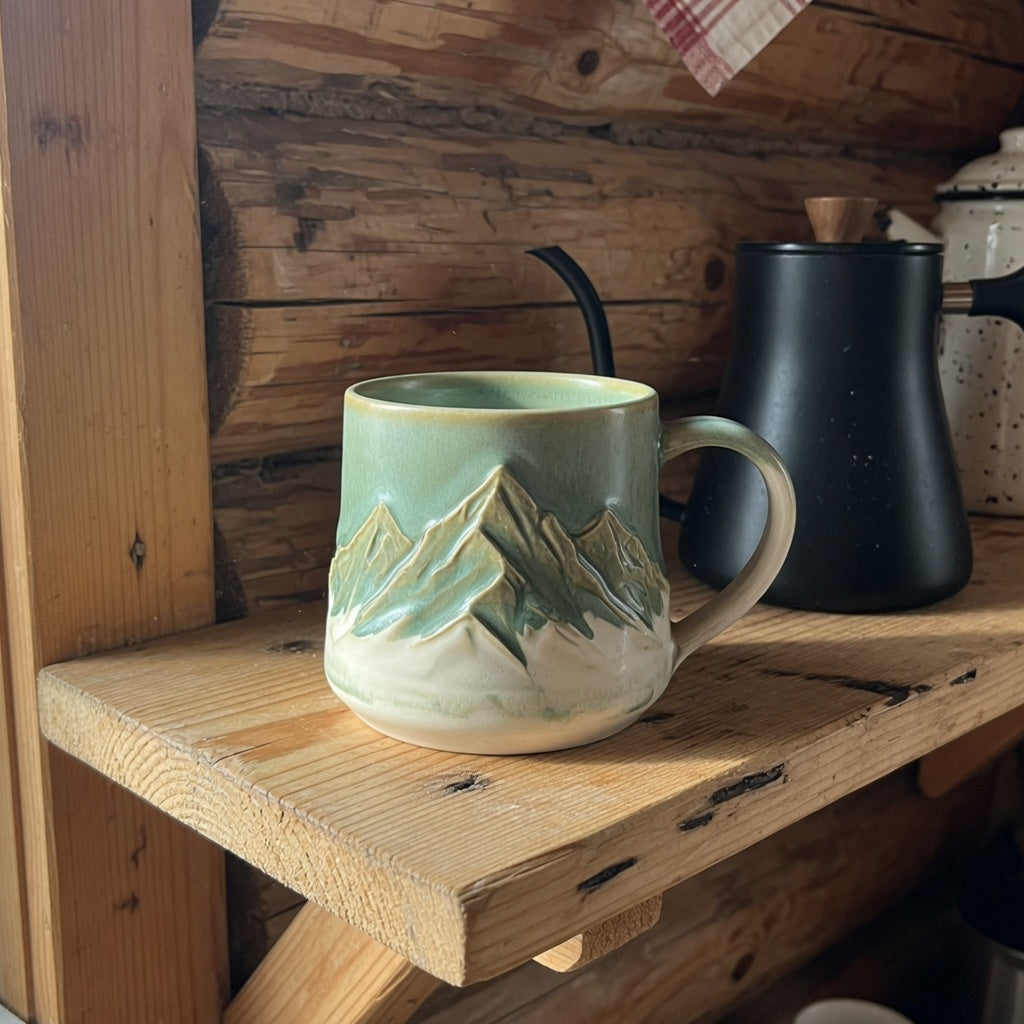
Ceramic Mountain Mug Home Decor: What to Compare First
Reading time: about 13 minutes
A customer will send a shelf photo and a coffee-maker photo in the same note. One shows a pine ledge with room for a single cup. The other shows a crowded corner where the handle has to clear a canister. That is the real brief for ceramic mountain mug home decor. The ridge can look right and the cup can still fail: black tea stains the liner, an unglazed foot scuffs the wood, or the care line says hand wash only after the gift paper is already in the bin. In our store, those are the questions that show up once the box is open.
A mountain on the outside does not prove the piece is daily drinkware. Open the current listing for the Great Mountain coffee and tea mug the way you would read the base of a pan. Look for stated capacity, material, glaze notes, and appliance wording for that exact finish. If a line is blank, it stays blank. Do not borrow it from a mug with a similar ridge, a marketplace thumbnail, or the last cup that survived your dishwasher. Cups bought to be seen and used sit with the rest of our unique coffee mugs, and each page still has to carry its own facts.
Ceramic mountain mug home decor has two jobs on one counter
Shoppers put these cups to work in two ways, sometimes in the same week. One job is the open shelf: a lodge wall, a stack beside field guides, a single cup on a windowsill where the ridge reads from across the room. The other is the first pour of coffee or tea. A piece that only has to be looked at can be more textured, more irregular, even a little fragile at the rim. A piece you drink from needs a handle that does not bite the fingers, a lip that does not send coffee down the outside, and a food-contact surface the maker actually intends for hot drinks.
We ask which job comes first before we point anyone at a listing. If the mug lives high and comes down for guests twice a month, color and how the mountain reads at a distance matter more than the ounce mark. If it is the everyday cup, those priorities flip. Relief you can trace with a thumb feels good in the hand and holds a film of coffee in the grooves. A tall silhouette can look dramatic in a photo and still refuse a standard cabinet.
This style is not a trail mug, and it is not camp cookware. Ceramic chips in a backpack. The wall of the cup holds heat that never reaches the drink. There is no lid worth trusting on a switchback. For hikers and cabin weekends, the useful gift is the cup that stays at the house. Take the insulated bottle on the hike.
Is the mountain carved, scratched through, or printed flat?
Search results mash four surfaces into one phrase. They are not the same object, and they do not age the same way at the sink. Some pages say stoneware and others say ceramic. That word alone does not tell you which surface you are holding.
| Surface | What the hand notices | What repeated washing does |
|---|---|---|
| Printed or decal landscape | Smooth wall, a flat picture | Crisp from across the room. Confirm the image sits under a clear glaze, not on the surface where detergent can dull it. |
| Hand-painted or underglaze | Brush edges and small shifts in the greens and blues | Harder to match as a set. Color sealed under a glossy coat usually outlasts paint left on the outside. |
| Carved or sgraffito relief | Ridges and cut lines you can follow with a finger | The pottery mountain most people mean. Grooves trap tea tannin and coffee oils. A soft brush beats a rinse. |
| Reactive or kiln-change glaze | Pooled color, sometimes a metallic flash on a ridge | The firing moves, so the photo is a cousin, not a twin. Metal on the rim or handle means you stop and read the microwave line. |
Sgraffito means the maker coats the clay, then scratches the mountain back through that coat so the clay body becomes the drawing. A carved mug pushes the landscape outward in relief. A printed mug is a picture applied to a formed cup. All three can be worth owning. Only the listing tells you which one is in the box. If you need four cups that match one product photo, a reactive or heavily carved piece is the wrong surface.
Which ounce mark, handle, and shelf gap fit the pour?
FDA defines cups and mugs as small ceramic hollowware: pieces commonly used for coffee or tea above room temperature, normally but not exclusively about 8 fluid ounces (around 240 milliliters), and usually made with a handle. That is a testing category. It is not a suggestion for how much you pour at 7 a.m.
People shopping a large morning cup usually land on listings marked about 11 oz, a handmade span such as 12-14 oz, 15 oz, or 16 oz. When a maker measures at all, that figure is brim capacity, filled until the liquid would spill. It is not the amount you can walk from the machine to the table. Leave a finger of headspace. A cup marked 14 oz that you fill only to the ridge line is a calmer drink, and it is the one that arrives intact.
Handmade pages often print a range because each piece shrinks a little differently in the firing. A single number with no height or width is not enough to compare against the diner mug you already like. On the Great Mountain coffee and tea mug page, read the capacity and dimensions on the current listing. Do not estimate them from the crop of the photo. A wide relief can make a modest cup look enormous.
Handle comfort is the check our team runs when someone describes a cramped cupboard. Two fingers through the opening, then three. See whether the handle stays inside the rim height or sticks up and blocks a shelf. Measure the bookcase gap with the handle included, not just the body. If the foot is unglazed clay, it can scuff a wood shelf. A coaster or a small felt pad fixes that without hiding the mountain.
The interior matters more than the landscape. A smooth glossy liner wipes clean. A matte, crackle, or bare-clay drinking surface looks soft in photos and takes coffee and tea stain faster. We would rather see a quiet glossy inside and the drama on the outside.
What dishwasher and microwave lines mean for this finish
There is no single care rule for a mountain scene. Similar cups are sold as dishwasher safe, top-rack only, or hand wash. The difference is the finish, not the picture of the ridge. Follow the maker's line for that exact piece.
- Surface prints and decals can fade when they are not sealed under glaze. Hand wash until the listing says the machine is fine.
- Carved and sgraffito cuts need a soft brush. A dishwasher may be allowed and still leave brown lines in the grooves.
- Crackle and some reactive glazes craze on purpose. The network of lines is the look. It is also where stain settles.
- Silver, gold, or another metallic accent on a handle or rim is a stop for the microwave until that finish is explicitly called microwave safe.
- A shiny food-contact interior resists stains better than a matte one. Keep the texture on the outside.
Microwave safety is a sentence on the page, not a guess from the clay. Heat food and drinks only in ceramic, or other cookware, that the maker specifies as microwave safe. Do not heat food or drinks on melamine dinnerware, and do not treat a ceramic body as a stand-in for that sentence. If the listing is silent, leave the mug out. Warm the drink in a cup you already trust, then pour.
Detergent and machine heat are harder on relief and on anything painted over the glaze. In our experience, when a customer writes that the ridge looks flatter after a month, a care note from a different mug was usually applied to this finish. Top rack is gentler than the bottom rack when the maker allows the machine at all. It does not turn a hand-wash piece into a safe one.
When lead or cadmium rules keep the mug on the shelf
The mountain does not change ceramic safety rules. The questions are whether lead or cadmium can move into a hot drink, and whether anyone said the object is not for food.
FDA's action level for lead in ceramic cups and mugs is 0.5 micrograms of lead per milliliter of leaching solution, judged on any one of six units tested. ASTM C738 is among the test methods the agency cites. Some ceramic foodware has released significant lead from surfaces that touch food. The metal can move into what you eat or drink, and continued use can cause harm, including chronic lead poisoning. There is no known safe level of lead exposure. Fetuses, infants, and children are particularly vulnerable because of smaller body size, metabolism, and rapid growth. Childhood lead poisoning is linked to learning disabilities, developmental delays, and lower IQ scores, and a child may not look or act sick.
Lead may sit in the glaze or decoration of some traditional pottery. Proper firing binds essentially all of it into the glaze. Poor firing lets it leach into coffee or tea. Washing does not remove it, and boiling does not either. FDA has also found significant extractable cadmium in some imported and domestic ceramic ware. Acid foods can draw cadmium out, and continued use could cause chronic cadmium poisoning. In that guidance, hollowware means a piece with an interior depth greater than 25 millimeters. The cadmium action level is 0.5 micrograms per milliliter for small hollowware and 0.25 micrograms per milliliter for large hollowware, each judged on any one of six units.
Give extra attention to handmade pottery that looks crude or irregular, to antique or damaged pieces, to ware from flea markets or unknown makers, and to bright orange, red, or yellow decoration. Commercially factory-made everyday pottery is much less likely to have a lead problem. A named studio that says its glaze is formulated for food is a different purchase from an unmarked souvenir. A lead-free line in the copy is still not a leach test. Ceramicware that shows extractable lead under the method in FDA CPG Sec. 545.450 should not be labeled lead free. Using that phrase when extractable lead is present can be misleading, and levels above the action thresholds may lead the agency to treat the ware as adulterated.
A display-only mountain cup should say so in a way that survives unboxing. Under 21 CFR 109.16, ware that looks suitable for food is treated as foodware unless it carries both a conspicuous stick-on warning and a permanent warning on the exterior of the base. A card in the tissue, or a note only on the mailer, is easy to throw away. People then drink from the pretty cup. CDC reported elevated blood lead levels in a New York City family associated with traditional glazed ceramic ware used for cooking, storing meals, and making coffee. Lead on a glaze or paint can transfer into food or drink. CDC also advises against using vintage dishware for food service unless it is known not to contain lead.
If a lead swab shows leachable lead, do not cook, serve, or store food or drinks in that piece. The shelf is the right place for it.
For a mountain mug from our catalog, read the food-contact language on that listing. If it is missing, ask before anyone uses the cup for coffee or tea. We would rather hold a gift than guess.
Cabin gifts, photo drift, and the buyer who should pass
On handmade work, glaze, size, and carving drift from the photo. That drift is normal unless the listing promised a uniform production run. Color pools darker in carved valleys. A snow highlight can land higher or lower on the ridge. If you need four identical cups for a table, choose a printed production mug and accept a flatter picture. If you want one strong piece for a lodge shelf, the variation is part of the object.
Gift buyers often never drink from the mug first, so size, care, and food-contact notes have to be obvious on the page. A ceramic mountain mug home decor piece is a solid cabin housewarming, a host gift for someone who hikes and then makes coffee at home, or a desk cup for a person who already owns a row of plain mugs. It is a weak gift for a commuter, a camping kit, or anyone who wants to bake in the piece. It is also a weak fit when the kitchen is all white, high-gloss, and strictly matched. A rustic ridge will look like it arrived from another house.
People ask us for a matching mountain mug and bowl. Only do that when the same maker shows the pair, or when you have confirmed the clay body and glaze family actually line up. Two mountain pieces from different studios rarely share a blue.
The listing lines we want beside the cart
Run this on the product page in front of you. Do not run it from memory of a similar mug.
- Name the surface: printed, underglaze, carved, sgraffito, or reactive. That name tells you what can wear off.
- Read the stated capacity, then height and width with the handle. Compare both to your shelf and to the pour you actually drink.
- Check the interior: glossy and sealed, or matte, crackle, or bare clay.
- Find the dishwasher wording for this finish: full machine, top rack, or hand wash. Ignore a care note copied from a different mountain mug.
- Find the microwave wording. If metal is mentioned, or the page is silent, do not microwave it.
- Read the food-contact language. If you plan to drink from it, there should be no permanent not-for-food mark on the base.
- If the piece is handmade, decide whether a shift in glaze or carving is acceptable before you order it as a pair.
If those lines hold and the mountain is the look you want on the counter, open the Great Mountain coffee and tea mug with this list beside the description. Still choosing among scenes? Stay in the unique coffee mugs and compare one listing at a time. The photo sells the ridge. The text has to earn the Tuesday morning.
Frequently asked questions
Is ceramic mountain mug home decor safe in the dishwasher?
Only when that exact finish says so. Printed surfaces, carved relief, crackle, and metallic accents do not share one rule. If the listing says hand wash, a top-rack cycle is not a workaround. If the machine is allowed, a soft brush on the mountain grooves still keeps tea stain out of the cuts.
Can I microwave a mountain mug with a silver or gold handle?
Not unless the listing says that specific finish is microwave safe. A ceramic body is not clearance by itself. Heat the drink in a cup already marked microwave safe, then pour it over. If the page never mentions the microwave, leave this mug out of it.
How do I know the glaze is for coffee and not only for display?
Look for a clear food-use statement from the maker, and check the base for a permanent warning that the piece is decorative only. A note that lived only on the shipping box does not count once the box is gone. If a lead test swab shows leachable lead, keep the mug off the table. Factory everyday pottery is much less likely to leach lead than unmarked traditional or vintage ware, but a lead-free slogan is not a test report.
What capacity should I compare for a large morning coffee?
Shoppers usually compare listings around 11 oz, a 12-14 oz handmade range, 15 oz, or 16 oz. Those figures, when measured, are full-to-the-rim numbers. Plan to drink less than the brim capacity so the cup does not spill on the walk to the table. Confirm the number on the current listing instead of guessing from the photo.
Will a handmade mountain mug match the photo on a cabin shelf?
Expect a close relative, not a copy. Glaze pooling, ridge height, and overall size move in the kiln. That is a poor fit if you need several identical cups for a matched table. It is a reasonable fit if you want one piece of cabin decor you will also drink from. Read the variation note before you order a pair.
More from our blog
Ready to pick your mug? Two ways to save on today's order:
Ordering 1–3 mugs? Get an extra 10% off your 1st order with code 10_OFF Apply 10% Off & Shop Wooden-Handle Mugs →
Gifting 4+ mugs? Buy 3, Get the 4th Free applies automatically at checkout (no code needed; offers do not stack) · Free standard shipping (Nov pre-Christmas delivery: 15–20 calendar days US) · Free replacement if chipped in transit.
Popular mug buying guides: Wooden-Handle Tea Infuser Mugs Compared · Christmas & Secret Santa Mugs 2026 · Espresso & Cortado Cups Guide · Cup & Saucer Gift Sets · All 25 Mugs Spec Table · Mug Size Guide · Shipping & Promo FAQ
FIRST ORDER 10% OFF (CODE: 10_OFF) · OR BUY 3, GET THE 4TH FREE


Read more

Breakfast Nook Coffee Mug: Safety, Size, and Fit
Shoppers searching for a breakfast nook coffee mug want a cup that looks right on a small table and still survives daily coffee. We compare food-contact safety, care labels, usable fill, handle fit...
Read more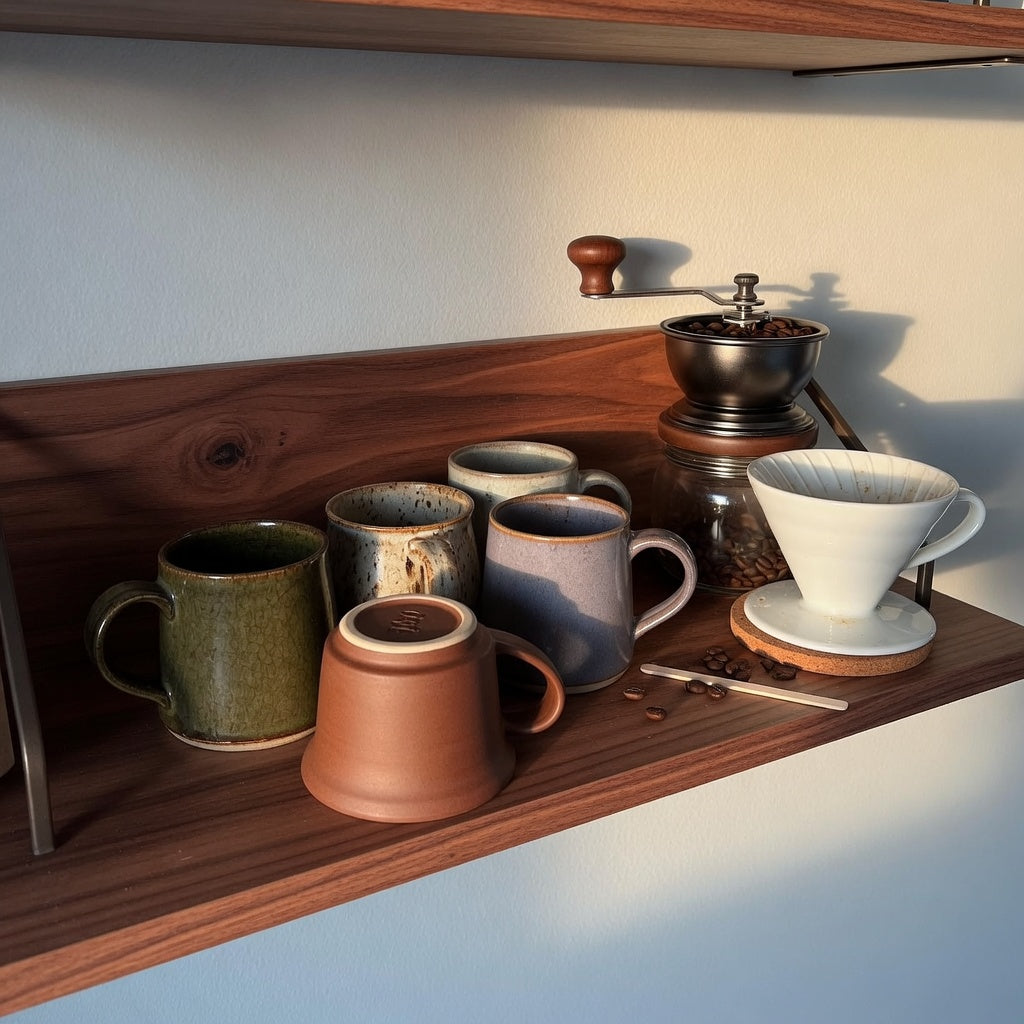
Home Decor Ceramic Mug: Safety, Fit, and Shelf Use
A home decor ceramic mug is often chosen for the shelf and only later questioned as a cup. Compare food-contact warnings, glaze risk, handle comfort, listed capacity, and display habits that chip r...
Read more
Leave a comment
This site is protected by hCaptcha and the hCaptcha Privacy Policy and Terms of Service apply.