



Cute Espresso Cups Size Decision Guide: 170 vs 200 vs 250 ml
Reading time: about 11 minutes
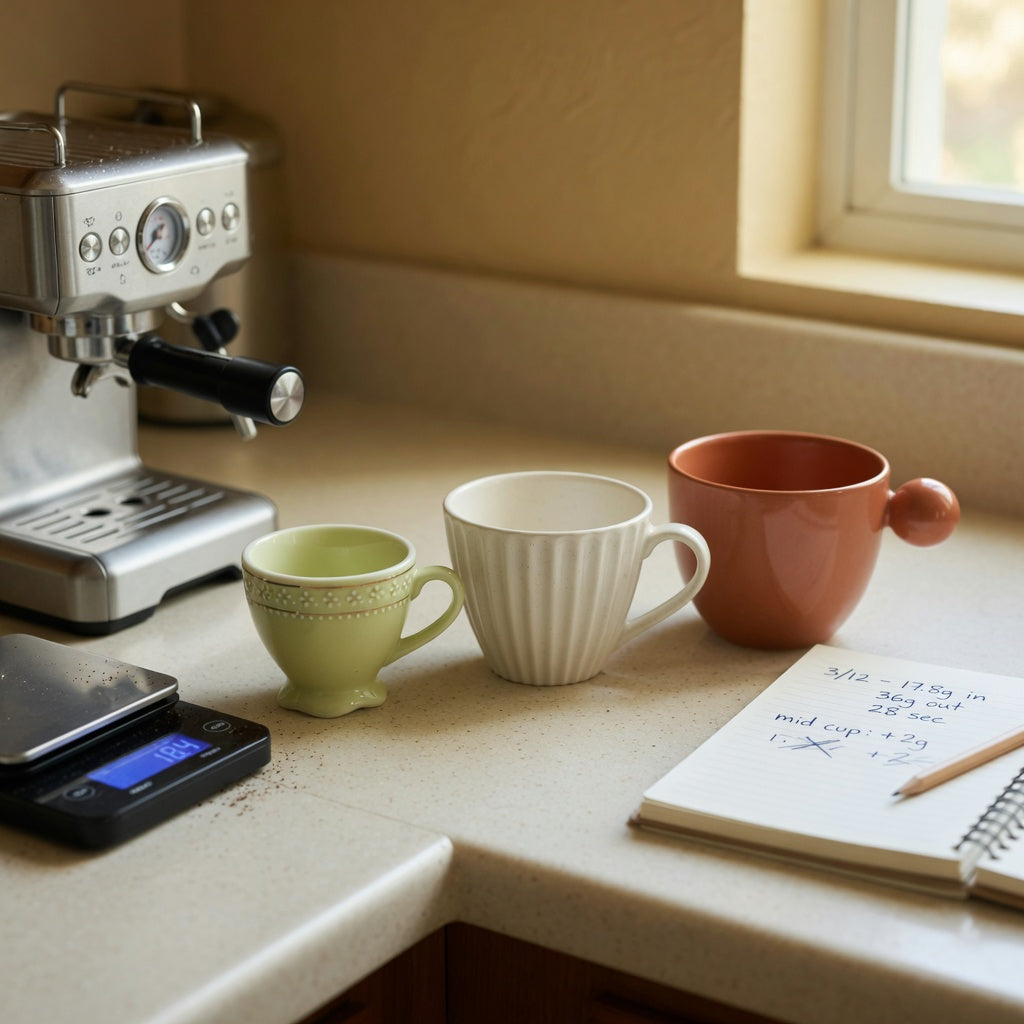
Three cups sit on our packing table most weeks: a 170 ml retro cup, a 200 ml pleated cup, and a 250 ml mug with a ball handle. Side by side on a shelf they look like three takes on the same idea. In the hand, they are three different answers to one question — how much room does your usual drink actually need? That question is the spine of this cute espresso cups size decision guide. Match listed capacity to your pour, not to the styled photo.
We sell and pack these cups, so we also field the follow-up emails: will it clear the spout, can it go through a dishwasher cycle, does the pattern hide the crema. Our claims stay narrow here. We can state listed capacity, ceramic body, and visible form. Measurements under your machine, care instructions, and food-contact labeling are things to confirm on the current product page before checkout, not things we will guess at in a blog post.
Where 170, 200, and 250 ml actually land next to an espresso
Start with an honest note about scale. All three of these compact ceramic cups are larger than a traditional single-shot espresso cup. That is not a defect. It is the reason they work for tea, for a longer coffee, and for anyone who does not want a thimble balanced on a saucer. It also means the word espresso in the product name describes the style, not a fixed pour size.
Capacity is a ceiling, not a recipe. A 170 ml cup does not dictate how much coffee you brew; it tells you how much liquid the cup is listed to hold. That number is what decides whether a short drink looks intentional or looks stranded at the bottom of the vessel.
| Current option | Listed capacity | Sits well with | Trade-off to accept |
|---|---|---|---|
| Retro Coffee Tea Cup | 170 ml | Short solo servings, small tea, a first cute cup that does not take over a shelf | Less room for a longer or milk-heavy drink |
| Pleated Coffee Tea Cup | 200 ml | One cup for small coffee plus the occasional tea | A deliberate middle: neither the tightest pour nor the roomiest |
| Ball Handle Coffee Tea Mug | 250 ml | Longer coffee, tea, milk drinks, a round handle to hold | A short espresso can look undersized inside it |
One pattern we see in exchanges: people size up for the wrong reason. They imagine needing more room, buy the largest cup, then find their usual short pour looks sparse. The reverse happens too. Someone starts with the smallest cup, begins adding milk within a month, and the cup is crowded by week two.
The 170 ml Retro is right when a short pour should look finished
The Retro Coffee Tea Cup is the smallest of the three at a listed 170 ml. Pick it when your routine is genuinely short: a solo espresso after lunch, a small tea at a desk, a cup for a guest who drinks one and stops. It is also the easiest first buy if you are unsure how often a small cup will get used, because it does not dominate a cupboard the way a larger mug can.
The retro profile does quiet work here. Proportion is what most buyers are reacting to when they call a cup cute — the ratio of ceramic wall to liquid, and how much bare rim sits above the drink. At 170 ml, a short serving leaves a visible band of ceramic, which is usually the look people have in mind when they order. In the 250 ml mug, that same serving drops low and the cup reads as under-filled.
Where it is the wrong choice: long coffees, milk-heavy drinks, and anyone who wants one cup to cover every hot drink in the house. It also deserves a second thought if you brew on a scale. Cup plus scale changes the height under your spout, and no capacity number tells you whether that stack clears your machine.
A small practical note from packing these: the Retro is the cup we most often see bought in pairs rather than singles. Two of them stack neatly in a narrow cabinet and still leave room for the larger mugs, which is rarely true once you move up to a 250 ml body.
The 200 ml Pleated is the one-cup compromise for coffee and tea
The Pleated Coffee Tea Cup is listed at 200 ml. Thirty millilitres over the Retro does not sound dramatic on paper, but it changes the buyer profile. This is the cup we point to when someone wants a single vessel for small coffee and an occasional tea, or a little more headroom without committing to the largest option we currently list.
The pleated exterior is the visible reason to choose it. Vertical texture catches window light, so a pair on an open shelf looks less flat than plain walls, and the ridges register under your fingers when you pick the cup up. That texture is also a care question. Check the current listing for the interior finish and the care line, because an exterior detail you love can still come with handling you should know about before it becomes a daily cup.
Trade-off, stated plainly: a middle capacity is a compromise by design. It is not the tightest cup for a short pour and not the roomiest for a generous tea. If you already know your drink is short, the Retro is the cleaner match. If you already know you want maximum room, skip ahead to the Ball Handle.
The 250 ml Ball Handle earns counter space once milk enters the drink
The Ball Handle Coffee Tea Mug is the largest at a listed 250 ml. Consider it when your espresso cup is really a small coffee cup: a longer drink, a splash of milk, an afternoon tea that should not feel cramped. The ball handle is a form choice, not a grip guarantee — look at the handle opening in the listing photos and measurements if hand size or grip strength matters to you.
Extra capacity has a physical cost that photos hide. A larger cup takes a wider footprint on a drip tray and needs more vertical clearance in a cabinet, so measure before you commit. We cannot quote external dimensions for you here; the current listing is the place to confirm them, and it is the only place we would trust for that.
Where it falls short: a short espresso can look lonely in 250 ml. That is an aesthetic trade-off rather than a flaw, but it matters if you drink espresso partly for how it looks. Buyers who photograph their shots or read a pour by the crema ring usually prefer the Retro. Buyers who want one cup that also handles a milky afternoon drink usually end up here.
Will the cup clear your spout? Measure before you choose a size
More questions reach us about machine fit than about capacity, and capacity cannot answer them. Height and volume do not move together. A wide 170 ml cup can stand taller than you expect, and a narrow 250 ml cup can sit short and broad. Measure the cup, not the millilitres.
- Fit the portafilter, then measure from the drip tray up to the lowest point of the spout.
- Add the height of your scale if you brew on one. That extra centimetre is the difference in a lot of tight setups.
- Measure the cup height from base to rim, not to the top of the handle.
- Check the rim opening against the width of two streams so both land inside the cup.
- Look at handle clearance if your machine has a low overhang or a recessed tray.
If your clearance is tight, remember that a smaller capacity does not automatically mean a shorter cup. Choose based on measured height first, then go back to capacity to decide whether the pour will look right.
Pattern, glaze, and how much of the crema you actually see
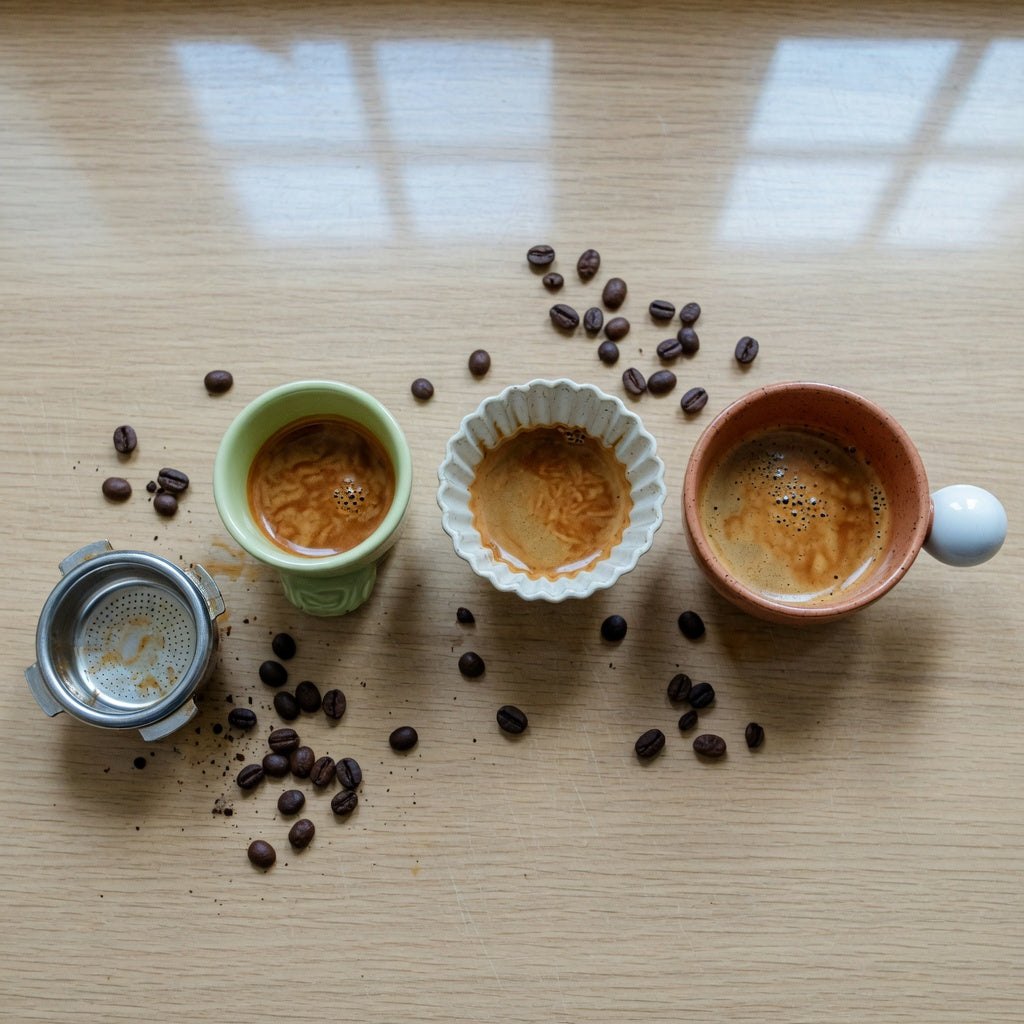
A decorated cup is usually the whole reason someone searches for cute espresso cups. The practical question is what the decoration does to the drink. A busy interior pattern or a dark glaze makes crema harder to read, because there is less contrast between coffee and ceramic. A plain, light interior gives the shot a cleaner backdrop.
That is a real trade-off, not a rule. If you judge extraction by eye, a quieter interior is the easier daily choice. If the cup is mainly for tea, for display, or for a gift, pattern earns its place and crema contrast stops mattering.
There is a safety boundary worth keeping too. Ceramic is not a food-contact guarantee on its own. The U.S. FDA explains that lead in ceramic glaze is bound when pottery is fired correctly, but improperly fired glaze can leave lead available, and ceramicware intended only as decoration should be identified so it is not used with food. If food-contact labeling matters to you, ask before ordering rather than assuming from a product photo.
Gift unboxing or daily rotation: two buyers, two checklists
Cute cups get bought for two very different jobs, and the size logic flips between them.
- Gift purchase: confirm what is actually in the box. One cup or a set? Is a saucer, stand, or gift packaging included? A styled photo showing a saucer that does not ship with the cup is the most common disappointment we hear about. Capacity matters less than whether the recipient drinks short or milky coffee.
- Daily rotation: weight goes to handle comfort, rim width, and care. We do not claim dishwasher safety for these cups unless the current listing states it. Hand-washing is the conservative choice for painted or textured exteriors, and small handles take more careful loading either way.
If the cup will live on a desk and be rinsed in an office sink, the 170 ml Retro is the least fuss. If it will be carried to a sofa with a milky drink, the 250 ml Ball Handle is the more forgiving choice.
Run this cute espresso cups size decision guide against your own counter
Work through the list in order and the size usually picks itself.
- Short espresso or small tea, one drinker: 170 ml Retro. It keeps the cup proportional to the pour.
- One cup for small coffee and occasional tea: 200 ml Pleated. More room without becoming the biggest body in the cabinet.
- Longer coffee, milk, tea, or a round handle preference: 250 ml Ball Handle. Capacity and grip outrank a tiny-cup look.
- Tight machine clearance: measure height first. Capacity will not rescue a cup that will not fit.
- Gift: confirm box contents, food-contact labeling, and care before you wrap it.
To see all three side by side, browse our unique coffee mugs collection and compare the listed capacities before you commit. That is the fastest way to settle the smaller-or-larger question with your own routine in mind.
Frequently asked questions
Which size should I buy if I only want one cute espresso cup?
Match the capacity to your most common pour. Mostly short coffee or small tea points to the 170 ml Retro. If you want one cup for small coffee plus occasional tea, the 200 ml Pleated sits in the middle. For longer drinks or anything with milk, choose the 250 ml Ball Handle.
Is 170 ml too small for a double espresso?
There is no universal answer, because a double varies by basket, dose, and ratio. The Retro is listed at 170 ml, which is larger than a traditional single-shot cup, so it is not a tiny demitasse. If your usual yield regularly reaches the rim, the 200 ml or 250 ml cup is the more comfortable choice.
Will the 250 ml Ball Handle fit under my espresso machine?
Capacity alone cannot tell you that. Measure the clearance from drip tray to spout with your portafilter and scale in place, then compare it with the cup height on the current listing. Also check the rim opening if two streams need to land inside.
Can these cups be used for tea instead of espresso?
They are listed as coffee tea cups, so tea is a reasonable use, though the size logic shifts. The 170 ml cup suits a small tea serving, while the 200 ml and 250 ml options give you more room. Check the current listing for care and food-contact details before daily use.
Are the painted or colored cups dishwasher safe?
We do not assume dishwasher safety for a decorated ceramic cup unless the current product listing says so. Painted glazes and textured exteriors can carry different care needs, so read the care line or hand-wash if you want to be cautious. This matters most for a gift cup headed into daily rotation.
Your next step: measure your spout clearance, decide whether your usual drink is short or roomy, then pick the capacity that makes the cup look intentional rather than empty. The unique coffee mugs collection puts the 170 ml Retro, 200 ml Pleated, and 250 ml Ball Handle in one place so you can compare listed capacities without juggling tabs.
More from our blog
Ready to pick your mug? Two ways to save on today's order:
Ordering 1–3 mugs? Get an extra 10% off your 1st order with code 10_OFF Apply 10% Off & Shop Wooden-Handle Mugs →
Gifting 4+ mugs? Buy 3, Get the 4th Free applies automatically at checkout (no code needed; offers do not stack) · Free standard shipping (Nov pre-Christmas delivery: 15–20 calendar days US) · Free replacement if chipped in transit.
Popular mug buying guides: Ceramic Tea Cups & Infuser Mugs · Ceramic Mugs with Lids Compared · Wooden-Handle Tea Infuser Mugs Compared · Christmas & Secret Santa Mugs 2026 · Espresso & Cortado Cups Guide · Cup & Saucer Gift Sets · All 25 Mugs Spec Table · Mug Size Guide · Shipping & Promo FAQ
FIRST ORDER 10% OFF (CODE: 10_OFF) · OR BUY 3, GET THE 4TH FREE


Read more
Cute Espresso Cups Current Product Facts: 170 vs 200 vs 250 ml
The cute espresso cups current product facts we publish are simple: 170 ml, 200 ml, and 250 ml ceramic cups, all larger than a classic demitasse. Here is what each capacity means at the machine, pl...
Read more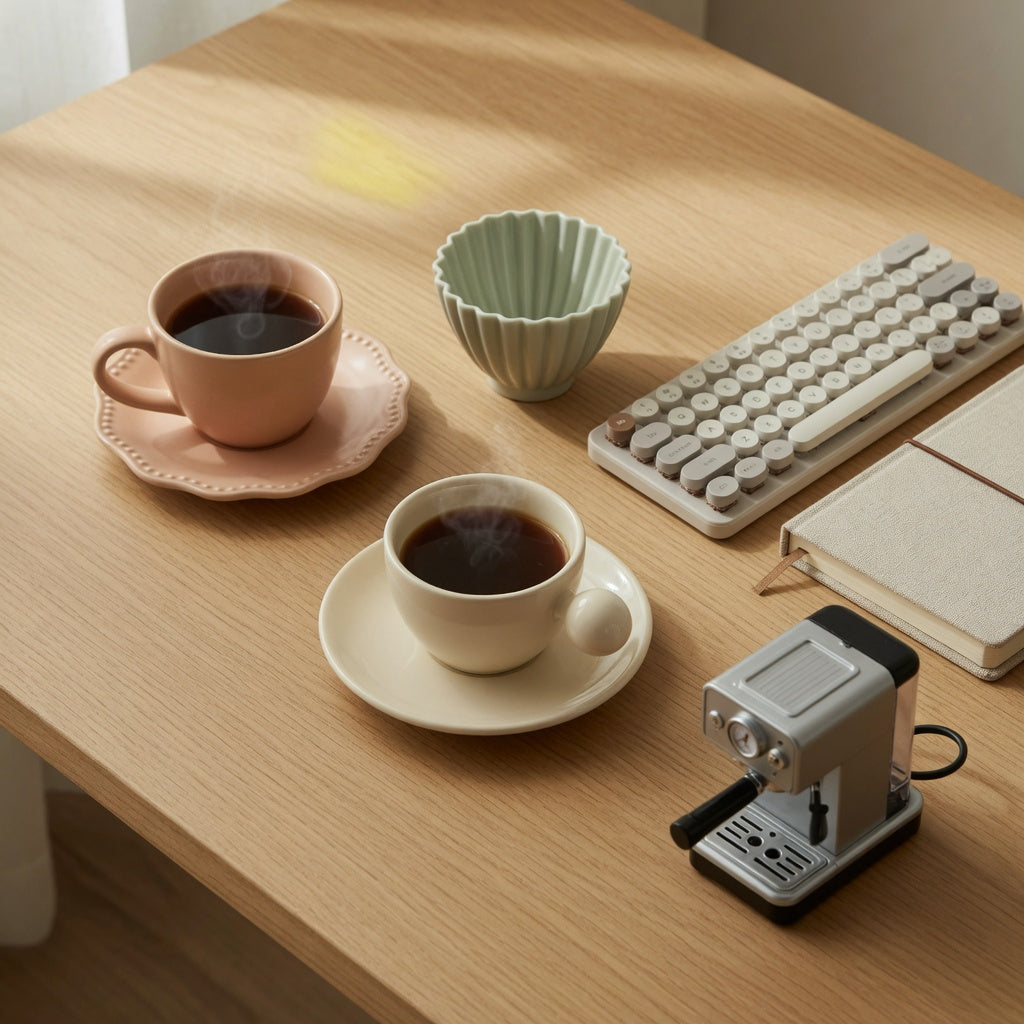
Unique Espresso Cups for Desk Use: Capacity, Footprint, and Fit
Our three ceramic cups hold 170 ml, 200 ml, and 250 ml — well past a 25 ml shot. Here is how each one sits on a desk, clears a group head, and changes how often you get up for a refill.
Read more
Leave a comment
This site is protected by hCaptcha and the hCaptcha Privacy Policy and Terms of Service apply.