
12 Oz Ceramic Coffee Mugs Size Decision Guide: Size Up or Down?
Reading time: about 9 minutes
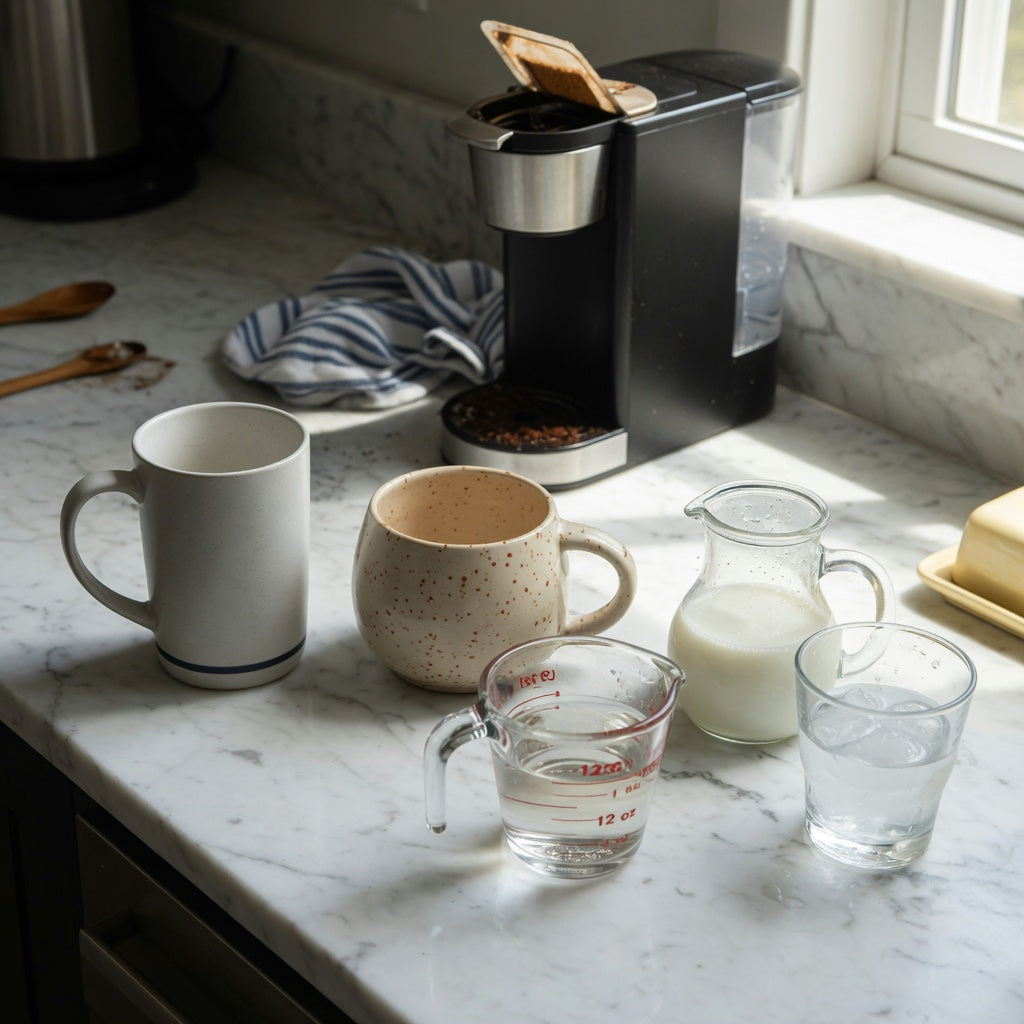
A mug can look right in a product photo and still fail at the first morning pour: milk pushes the coffee to the rim, the mug will not clear the brewer, or a third of the drink is left beside the keyboard. This 12 oz ceramic coffee mugs size decision guide starts with those ordinary problems. In our store, we handle and pack tall and round ceramic mugs, and the useful question is not whether 12 oz sounds familiar. It is whether your finished drink, available space, and refill habit fit that listed capacity.
We keep general size guidance separate from product-specific facts. The CoffeifyMug options discussed here are ceramic mugs presented as 12 oz designs, with tall or round profiles identified in their product names. For exact dimensions, finish details, and care directions, rely on the current product page rather than an assumption based on a photograph.
12 oz ceramic coffee mugs size decision guide: what should you measure?
The listed capacity is a starting point, not a promise that your complete drink will sit at a comfortable level. Coffee, tea, milk, creamer, foam, and ice all occupy space. You also need enough empty room for the way you use the mug. A cup carried from the kitchen to an upstairs office generally needs more headroom than one that stays on the breakfast counter.
- Measure the amount produced by the brewer or kettle setting you use most often.
- Measure your usual milk, creamer, or other liquid additions separately and add them to the total.
- For iced drinks, test your normal quantity of ice with measured cold water because ice displacement changes the usable space.
- Decide how much empty room you personally need to carry and stir the drink without spilling.
- Compare that finished volume with 12 oz before choosing a shape or design.
| Your measured result | Practical direction | Main trade-off |
|---|---|---|
| The complete drink fits below 12 oz with comfortable headroom | Keep 12 oz on the shortlist | You still need to compare mug dimensions and profile |
| You regularly leave a large part of the mug empty or unfinished | Consider a smaller capacity | Less room for additions and more frequent refills |
| The drink reaches the rim before all additions are included | Consider a larger capacity | More filled weight and potentially more storage space |
| The volume fits but the mug does not fit the brewer or shelf | Keep the capacity and change the dimensions or profile | Capacity alone cannot confirm physical clearance |
If your measurement points away from 12 oz, review the current unique coffee mugs collection and check the capacity shown on each individual listing. A collection photo is useful for comparing style, but the product page should make the final size decision.
When does a smaller ceramic mug make more sense?
A smaller mug is the more practical choice when your normal finished drink consistently leaves unused space in a 12 oz vessel. We see this with shoppers who prefer a short coffee pour, brew tea one cup at a time, or deliberately make several smaller drinks during the day. Buying extra capacity does not add value if the last portion is routinely left on the desk.
- Your measured drink remains well below 12 oz after all additions.
- You prefer a fresh refill instead of one larger serving.
- You carry the mug between rooms and want less filled weight.
- Your cabinet space is limited and a verified smaller exterior will fit better.
- You rarely use ice, foam, or generous amounts of milk.
The limitation is straightforward. Smaller mugs provide less flexibility when a guest wants milk, when you change brewer settings, or when you occasionally make an iced drink. A lower capacity also does not guarantee a smaller exterior; a thick-walled or wide design can still occupy substantial shelf space. Check listed dimensions rather than using capacity as a shortcut for footprint.
When is a larger capacity worth the extra space?
Size up when the drink you actually prepare is too close to the rim of a 12 oz mug. This often happens because the base pour is treated as the whole measurement while milk, creamer, foam, or ice is ignored. A larger mug can also suit someone who wants one fill during a long meeting instead of returning to the kitchen.
That convenience has costs. More liquid means more weight in the hand, and the mug itself may require additional cabinet, brewer, or desk clearance. A larger capacity does not automatically produce a better fit under a single-serve machine. It can make the clearance problem worse if the mug is also taller or wider.
None of the linked 12 oz options fixes a genuine capacity mismatch. If your measured finished drink exceeds the space available with your preferred headroom, choose a larger listed capacity instead of deliberately filling a 12 oz mug to the edge. A large open ceramic mug is also not a substitute for a travel mug when you need a fitted lid, cup-holder compatibility, or spill resistance during a commute.
How do tall and round 12 oz profiles affect the choice?
Once your measured drink fits 12 oz, shape becomes the next decision. It changes how the mug uses space, but it does not turn a 12 oz listing into a smaller or larger capacity. In our experience, shoppers often react to the silhouette first and check physical fit second. Reversing that order prevents more disappointment.
If you have confirmed enough vertical clearance and prefer an upright silhouette, compare the Landscape Tall Coffee Tea Mug with the Mountain Tall Coffee Tea Mug. The reader situation is specific: the 12 oz capacity suits the measured drink, a tall profile fits the intended space, and the remaining decision is which design shown on the product pages suits the kitchen, office, or recipient.
If a round profile is your starting preference, review the Round Coffee Tea Mug. This is the relevant next step for someone whose drink fits 12 oz but who does not want one of the tall silhouettes. Do not assume that round automatically means shorter, wider, or more stable without checking the listing. The actual dimensions and base geometry matter more than the category name.
These three products are style and profile choices within the 12 oz decision. They are not the right answer for a shopper whose measured drink clearly calls for a smaller or larger capacity.
Will the mug fit your brewer, cabinet, and office desk?
Capacity describes volume. It does not tell you whether the mug will fit the physical places where you use it. Before ordering, measure the tightest constraint in your routine and compare it with the current product details.
- Brewer: Measure from the drip tray to the dispensing point in the machine configuration you normally use. Do not rely on a photo of a mug sitting near a brewer.
- Cabinet: Check shelf height as well as the mug's widest point, including the handle. A mug can clear the shelf opening and still collide with neighboring pieces.
- Desk: Allow room for the full base and the handle near keyboards, monitor stands, notebooks, and charging cables.
- Dishwasher: First confirm that the product's care directions permit dishwasher use. If they do, consider rack height and whether the handle could contact another item during a cycle.
- Gift recipient: Use a capacity the recipient already enjoys when possible. A decorative shape cannot compensate for an unknown brewer clearance or an oversized daily pour.
This is also where a smaller or larger choice can become misleading. A smaller-capacity mug is not always shorter, and a larger-capacity mug is not always taller. Dimensions settle the fit question; ounces settle the drink-volume question.
What should you inspect and confirm with a ceramic mug?
Gift unboxings and first washes are the right time to inspect ceramic carefully. Our team pays attention to the same structural points shoppers should check after delivery: the drinking rim, the handle attachment areas, the glazed body, and the foot ring at the base.
- Inspect the rim and body under good light before washing or using the mug.
- Look for chips, impact cracks, or hairline cracks where the handle joins the body. Do not use a structurally damaged mug.
- Review the product page's care directions before placing the mug in a microwave or dishwasher. We do not make a blanket appliance-safety assumption for decorated ceramic.
- If the listing allows dishwasher use, position the mug so its handle does not strike adjacent dishes during the cycle.
- Distinguish decorative surface character shown on the listing from structural damage. Ask the store about anything that looks like a chip or crack rather than guessing.
Ceramic is not the best material for every buyer. Someone who regularly drops cups, needs a lightweight commute vessel, or requires a sealed lid may be better served by a purpose-built travel mug. The 12 oz ceramic options here make more sense for stationary use on a kitchen counter, dining table, or office desk.
A 60-second size check before ordering
- Measure the finished drink, including the additions you use most days.
- Leave the amount of headroom that feels comfortable for stirring and carrying.
- Choose smaller, 12 oz, or larger based on that result.
- Measure brewer height, shelf clearance, and available desk footprint.
- Compare tall and round profiles only after capacity and fit are settled.
- Confirm the care directions on the exact product page.
The purpose of this 12 oz ceramic coffee mugs size decision guide is to remove a practical mismatch before color or design takes over. If the drink fits 12 oz, move on to the Landscape Tall, Mountain Tall, or Round product page. If it does not, keep comparing listed capacities.
Frequently asked questions
How does the 12 oz ceramic coffee mugs size decision guide account for milk and ice?
Measure milk with the base drink rather than treating it as spare space. For ice, test the amount you normally use with measured cold water because the displacement varies with cube size and quantity. If the complete drink crowds the rim, choose a larger capacity or reduce the recipe.
Is a 12 oz mug the same as a comfortable 12 oz finished drink?
Do not assume it is. Listed capacity and comfortable everyday fill can differ depending on how the product page defines capacity and how much headroom you need. Verify the listing and avoid planning to carry a mug filled to the edge.
Will a 12 oz ceramic mug fit under my single-serve brewer?
The capacity cannot answer that question. Measure the vertical distance from the drip tray to the dispensing point, then compare it with the mug dimensions on the current product page. Pay particular attention to tall profiles.
Should I choose a tall or round 12 oz mug for an office desk?
Choose the profile whose listed dimensions fit the open space around your keyboard, monitor stand, papers, and cables. Tall and round describe shape, not guaranteed stability or footprint. Both remain poor choices for a commute if you require a sealed lid.
Can these ceramic mugs go in a dishwasher or microwave?
Follow the care directions on the exact product page. Decorative ceramic products can have different care limits, so material alone is not enough to confirm dishwasher or microwave use. Check before the first wash or reheat.
Measure one normal drink today, then compare the current CoffeifyMug mug listings by capacity, dimensions, profile, and care instructions. That short check will tell you whether 12 oz is the right middle ground or a smaller or larger option is the more practical purchase.
More from our blog
Read more
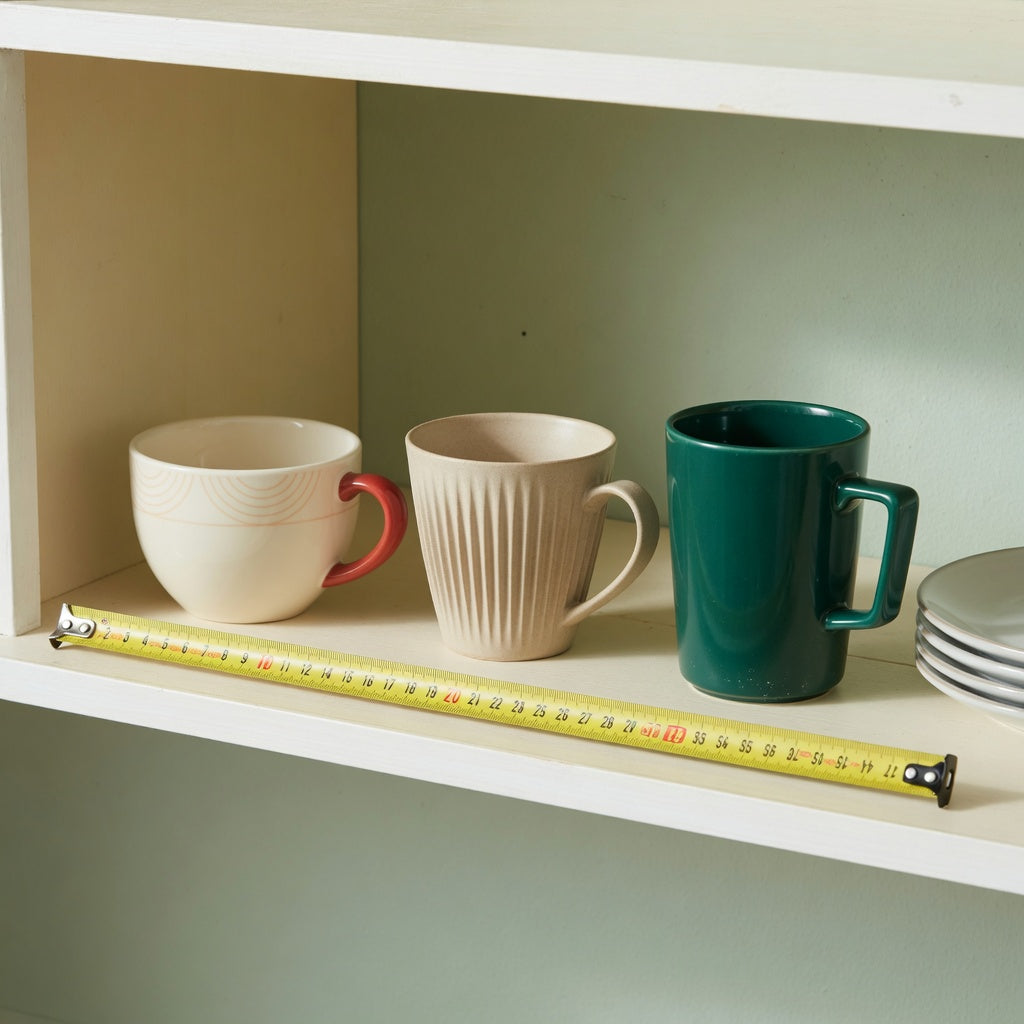
Affogato Cup Storage Fit Guide: Retro, Pleated, or Emerald?
Compare the verified capacities and visible profiles of the Retro 170 ml, Pleated 200 ml, and Emerald 270 ml, then use practical checks for shelf height, cabinet depth, handles, and everyday access.
Read more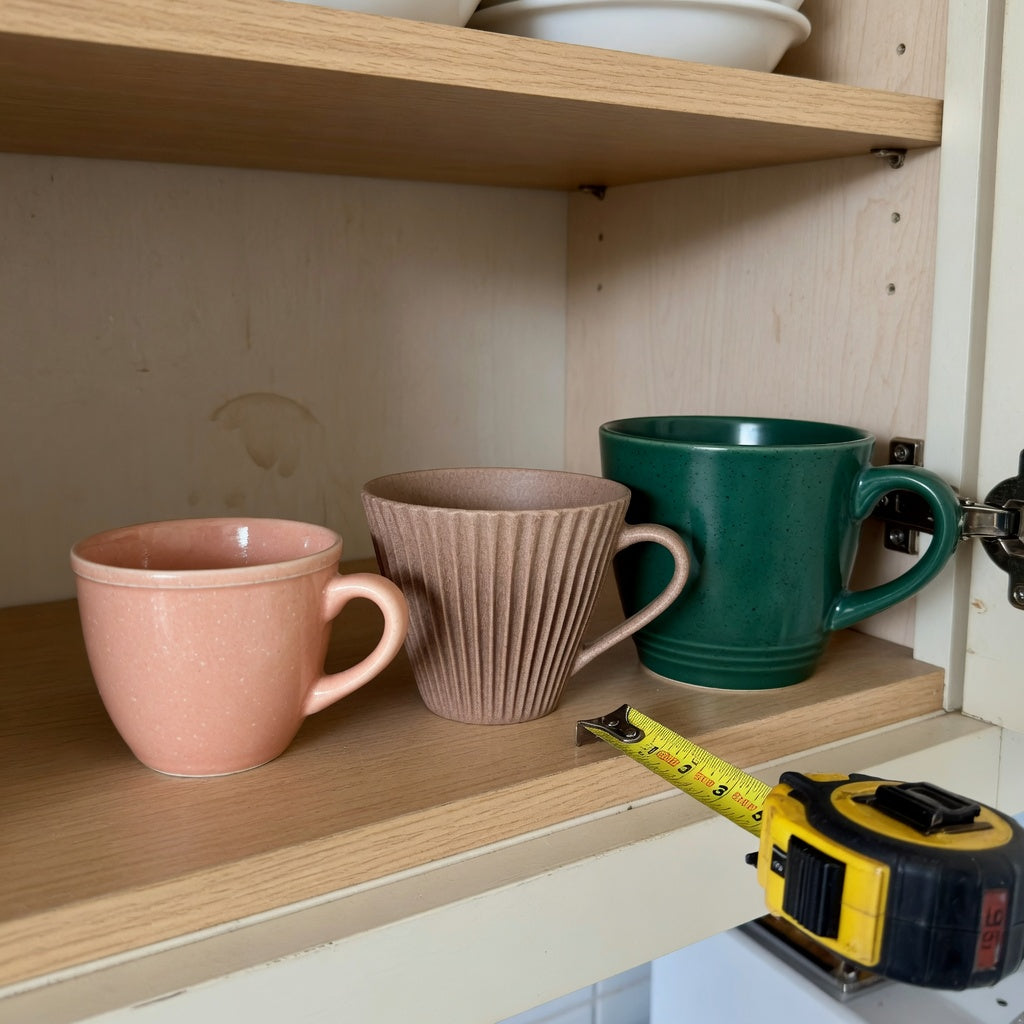
Cappuccino Coffee Mug Storage Fit Guide: Shelf Fit by Shape
Compare the verified 170 ml, 200 ml, and 270 ml options by visible form and realistic shelf needs. This guide shows what to measure around the body, handle, cabinet door, and shelf before choosing ...
Read more
Leave a comment
This site is protected by hCaptcha and the hCaptcha Privacy Policy and Terms of Service apply.