

Ceramic Espresso Cup Size Decision Guide: 170, 200 or 250 ml
Reading time: about 9 minutes
A short espresso can look undersized in a 250 ml vessel, while a drink with milk or ice can leave too little carrying headspace in a smaller cup. This ceramic espresso cup size decision guide starts with that everyday mismatch. CoffeifyMug's current ceramic options are listed at 170 ml, 200 ml, and 250 ml, and all three may be larger than a traditional single-shot demitasse.
We sell and handle this category, and the useful questions are rarely about finding one universally correct espresso size. Buyers need to know how much finished drink they make, how much empty space they want above it, which visible form they prefer, and where the cup will be used. We use listed capacity as a comparison point, not as a promise of espresso-machine fit, a standardized drink recipe, or certified drink-specific performance.
Using the ceramic espresso cup size decision guide: what changes at 170, 200, and 250 ml?
The verified comparison is straightforward. The Retro is a 170 ml ceramic cup, the Pleated is a 200 ml ceramic cup, and the Ball Handle is a 250 ml ceramic mug. That creates a 30 ml step from Retro to Pleated, a 50 ml step from Pleated to Ball Handle, and an 80 ml difference between the smallest and largest listed options.
| Current ceramic option | Listed capacity | Useful starting point when | Main limitation |
|---|---|---|---|
| Retro | 170 ml | You usually make one short pour and want it to use more of the listed capacity | It leaves less capacity for milk, water, or ice and may still exceed demitasse expectations |
| Pleated | 200 ml | Your routine alternates between straight espresso and modest additions | It may feel unnecessarily large for a very short pour or too limited for an ice-heavy drink |
| Ball Handle | 250 ml | You regularly add more liquid, use ice, or want the vessel to serve for tea as well | A short espresso will occupy a smaller share of the listed capacity |
Listed capacity is not necessarily the amount you will want to carry across the kitchen. Most people need some headspace, and ice takes up internal volume. Capacity also does not reveal exterior height, width, base diameter, or handle clearance, so milliliters alone cannot confirm fit beneath an espresso machine, inside a cabinet, or in a dishwasher rack.
Is 170 ml the practical choice for one short pour?
The Retro Coffee Tea Cup is the smallest current option by listed capacity. It makes the most sense for someone who normally stops after a short espresso and does not expect to add much milk, water, or ice. The same pour uses a larger share of 170 ml than it does of 200 ml or 250 ml, which can make the vessel feel more intentionally matched to a short drink.
For a gift recipient who has specifically asked for a small espresso cup, the Retro is the closest of these three choices in capacity terms. Still, state the 170 ml capacity clearly. A shopper picturing a tiny single-shot demitasse may consider even this option larger than expected.
The Retro is not the practical pick for a finished drink that regularly approaches 170 ml. Filling close to the listed capacity leaves little room for carrying, stirring, or adding anything later. Its smaller capacity also does not prove that its exterior dimensions will fit a particular machine or shelf, so confirm those requirements separately.
Does 200 ml work better for espresso plus occasional milk or water?
The Pleated Coffee Tea Cup adds 30 ml of listed capacity over the Retro. That modest increase suits a buyer who drinks straight espresso some mornings but adds milk or water on others. It is the middle option, which makes it a sensible starting point when 170 ml feels restrictive but 250 ml seems more than the routine requires.
The visible pleated exterior is also part of the decision. Choose it if that textured form suits the recipient's kitchen or desk style, but do not assume the pleating provides unlisted grip or heat-retention performance. Our recommendation is based on the ceramic vessel, its 200 ml capacity, and its visible form.
A consistent single-shot drinker may still see more empty space than desired. At the other end, someone who uses a substantial amount of ice or makes a longer milk-topped drink may find 200 ml too close to the total finished volume. In that situation, measuring the usual drink is more reliable than relying on its name.
When does 250 ml make more sense than a small espresso cup?
The Ball Handled Coffee Tea Mug is listed at 250 ml. It provides 50 ml more capacity than the Pleated and 80 ml more than the Retro. That makes it the more practical option for a shopper who regularly tops espresso with milk or water, adds ice, makes a second pour, or wants the same ceramic vessel available for tea.
The ball-shaped handle is a visible design feature, not a basis for claiming a particular ergonomic fit. Handle preferences vary with hand size and the way someone holds a cup, so the product photos should guide that part of the choice. We also cannot infer machine clearance or cabinet space from the 250 ml figure.
This is not the right option for a buyer trying to recreate the scale of a traditional demitasse. A short espresso will occupy a smaller share of the cup, and the overall presentation may feel closer to a small multipurpose mug. Choose 250 ml for additional capacity, not because it is supposed to be the standard vessel for a particular espresso recipe.
How do kitchen counters, office desks, and gift unboxings change the choice?
A coffee cup for espresso is usually selected as part of a wider routine. These are the situations we ask about in our store before pointing someone toward a capacity:
- One short morning pour: Start with the 170 ml Retro. It has the least listed capacity of the three, although exterior size and machine clearance still need separate confirmation.
- Changing home routine: Choose the 200 ml Pleated if some drinks stay short while others include a modest amount of milk or water.
- Long office drink: Consider the 250 ml Ball Handle if reducing refill trips matters more than creating a demitasse-like presentation. Capacity does not guarantee spill resistance or desk stability.
- Iced espresso drink: Start the comparison at 250 ml because ice consumes internal space. The right answer still depends on how much ice and liquid you actually use.
- Espresso-focused gift: The 170 ml option communicates the clearest small-cup intent. Include the listed capacity in the gift decision so the recipient is not expecting a much smaller demitasse.
- Gift for an uncertain routine: The 200 ml option offers a middle capacity, while 250 ml makes more sense if the recipient also drinks tea or longer coffee preparations.
Counter and desk space matter, but capacity is only a rough clue to physical size. If a cup must fit beneath a low group head, beside a narrow laptop stand, or on a shallow cabinet shelf, compare actual exterior measurements with the available space before ordering. This guide does not make an equipment-fit claim for any of the three vessels.
How can you choose capacity without relying on drink labels?
Drink names are not precise enough for this purchase because recipes and personal habits vary. A quick volume check gives you a more dependable answer:
- Use a marked measuring cup to total the liquid you normally include, such as espresso, milk, or added water.
- If you use ice, account for the amount of space your usual cubes occupy rather than comparing liquid alone.
- Decide how much open space you prefer above the drink for carrying or stirring. Do not treat the listed capacity as a required fill line.
- Compare the result with 170 ml, 200 ml, and 250 ml. If your finished drink sits close to one listed capacity, the next larger option may provide more practical headspace.
- Check exterior dimensions, care directions, and package contents separately. Capacity cannot answer those questions.
This method also helps shoppers who use different recipes during the week. Measure the largest version you make regularly, not an occasional oversized drink. That keeps the decision tied to daily use without forcing every buyer into an invented espresso standard.
What ceramic care and inspection details matter before daily use?
During handling and packing, we protect ceramic rims and handles from hard contact. Those are also useful inspection points during a first opening or gift unboxing. Check the rim, base, and area where the handle meets the vessel under good light; if you find a chip or fine crack, set the cup aside and contact the store rather than using it.
- Read the current care directions: Ceramic material by itself does not confirm that a vessel is dishwasher-safe or microwave-safe.
- Protect contact points: If dishwasher use is permitted, position the cup so its rim and handle cannot knock against another hard piece during the cycle.
- Do not force a stack: Store cups side by side if stacking places weight on a rim, pleated surface, or ball-shaped handle.
- Confirm rack and shelf clearance: A larger listed capacity may require more room, but only exterior measurements can settle that question.
- Check what the listing includes: Do not assume a saucer, lid, spoon, or other accessory is included unless it is stated on the selected product page.
These steps address common ceramic handling concerns such as rim chips, impact damage, and fine cracks around handle attachment points. We are not assigning heat-retention, extraction, commercial-cafe, or certified drink-specific performance to any current option.
Frequently asked questions
How does the ceramic espresso cup size decision guide compare current options?
It compares the verified listed capacities of the Retro at 170 ml, the Pleated at 200 ml, and the Ball Handle at 250 ml. It uses finished drink volume, desired headspace, visible form, and use location rather than assigning a standard recipe to each cup.
Is 170 ml considered a small espresso cup?
It is the smallest of CoffeifyMug's three current options in this comparison. However, 170 ml may still be larger than a traditional single-shot demitasse, so use the listed number rather than the small-cup label to set expectations.
Should I choose 200 ml or 250 ml for espresso with milk or ice?
Choose 200 ml if the additions are modest and your total drink remains comfortably below the listed capacity. Start with 250 ml if you regularly use more milk, water, or ice, but measure your usual preparation because there is no single standard volume that covers every recipe.
Are the Retro, Pleated, and Ball Handle cups dishwasher-safe?
The verified shared material is ceramic, but that fact alone does not confirm dishwasher safety. Follow the current care directions on the selected product page before putting any cup through a dishwasher cycle.
Where can I compare CoffeifyMug's current ceramic cup forms?
Open the unique coffee mugs collection to compare current visible forms and listed product details. Shortlist 170 ml for a focused pour, 200 ml for a changing routine, or 250 ml for more additions, then confirm dimensions, care, and included items before ordering.
More from our blog
Read more
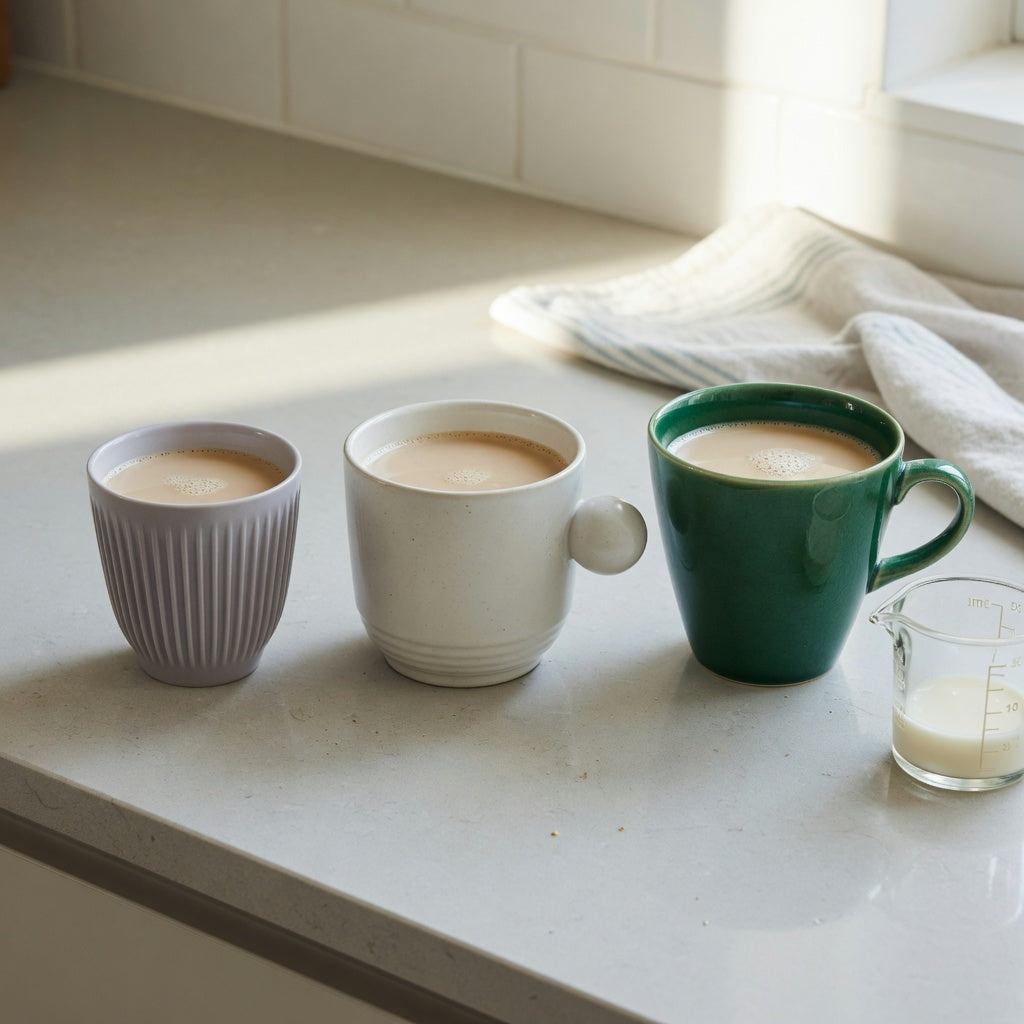
Flat White Cup Current Product Facts: Compare 200, 250 and 270 ml
Compare the verified CoffeifyMug listings: Pleated 200 ml, Ball Handled 250 ml, and Emerald 270 ml. See how nominal headroom changes by recipe and which material, dimension, and care facts remain u...
Read more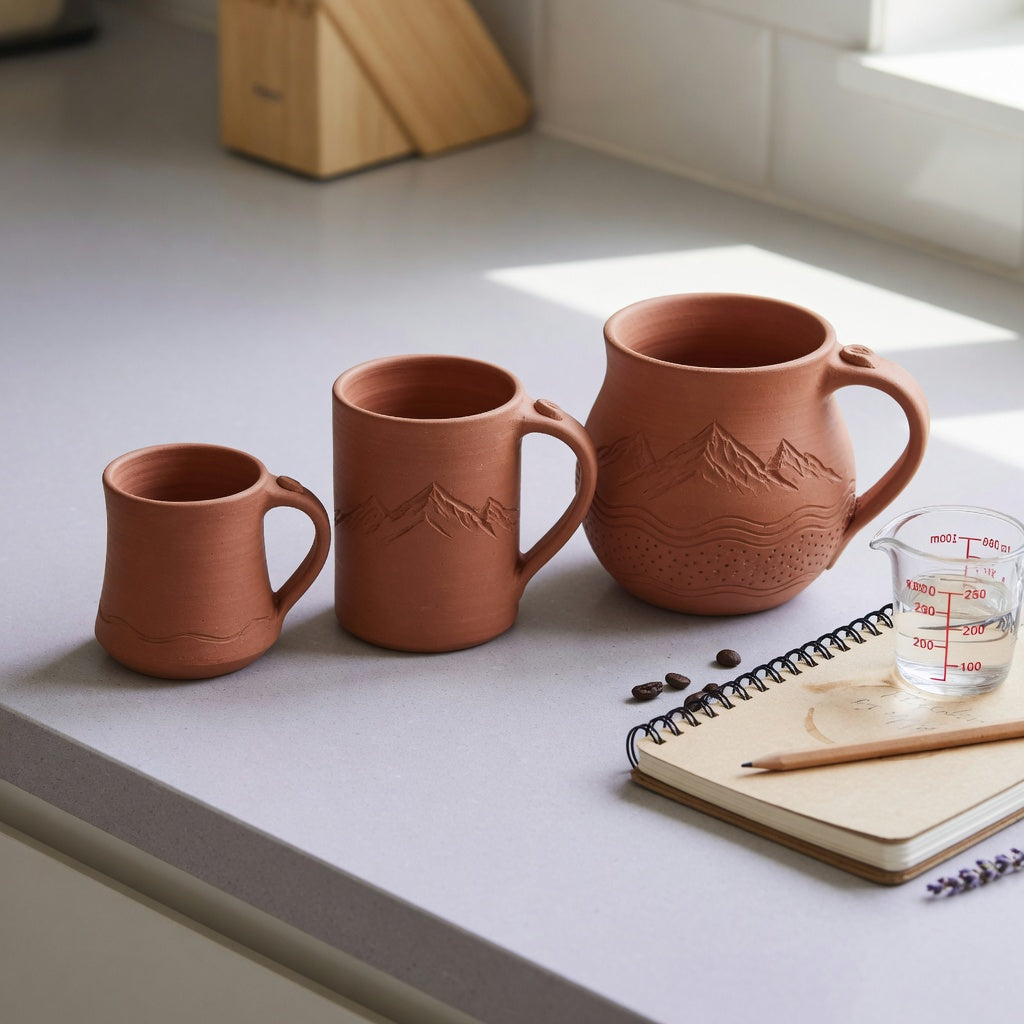
Clay Pottery Coffee Mugs Current Product Facts: Size and Shape
Compare the three current CoffeifyMug clay pottery listings by 200 ml, 270 ml, and 350 ml capacity, visible form, handle style, and design motif. We also identify missing dimensions and care claims...
Read more
Leave a comment
This site is protected by hCaptcha and the hCaptcha Privacy Policy and Terms of Service apply.