



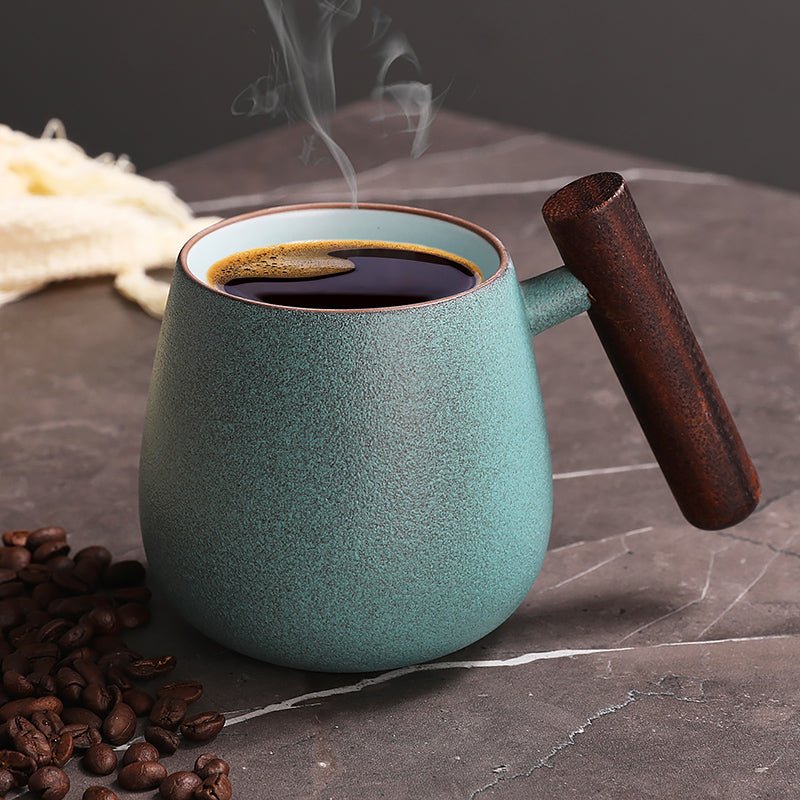
Coffee Tea Mug Size Checklist: 8, 12 & 16 oz Compared
Reading time: about 10 minutes
A customer emailed us this week: “The listing says 12 oz, but my morning latte barely fits.” Nothing was wrong with the mug. The 12 oz was measured to the brim, and a latte needs an inch of foam and carrying room above the drink. That gap between the printed number and what you can actually pour causes more returns in this category than chips or color mismatches do. So we built a coffee tea mug size checklist that starts with your real drink volume and works outward — headroom, handle room, full weight, brewer clearance, then care labels. Run it once and you stop guessing at ounces.
The coffee tea mug size checklist we run before recommending a mug
Work through these in order. The first two decide whether the mug holds your drink. The rest decide whether you still reach for it in a month.
- Measure your real pour once. Fill your current mug with water to the level you actually fill it with coffee, tip that into a measuring cup, and write the number down. That figure — not the label — is your target.
- Budget headroom. Roughly 2 cm (about ¾ inch) for plain coffee or tea, more for foam, ice, or a mug you carry between rooms.
- Check exterior height and rim diameter. Height decides brewer and cabinet clearance. Rim width decides whether the mug reads as a cup or a bowl in your hand.
- Measure the clear gap inside the handle — the space between the inner curve and the mug body, not the handle's outside length.
- Weigh it full. A 12 fl oz pour adds roughly 350 g before you count the ceramic. If you carry coffee up stairs or have grip issues, do the math before you buy.
- Measure the base. Coaster, desk, shelf footprint, car cup holder.
- Read the care line. Microwave, dishwasher, and whether any metallic trim is present.
- Ask about glaze documentation on anything handmade, imported, or heavily decorated.
One clarification before the numbers start: there is no official retail “standard” mug size. FDA guidance on ceramic hollowware describes cups and mugs as small hot-beverage vessels that normally, but not exclusively, hold about 240 mL or 8 fl oz — a food-contact regulatory category, not a shelf standard. Walk any store aisle and you will see 8, 11, 12, and 16 oz side by side with no shared logic.
Brim capacity vs. usable pour: how much headroom does your drink need?
Almost every mug is measured to the rim. That is the honest way to spec a vessel, but it is not how anyone drinks. Here is the headroom we would budget:
- Black coffee or plain tea: about 1.5–2 cm (½–¾ in). Enough to walk from kitchen to desk without a lap.
- Cappuccino or latte: 3–4 cm (1¼–1½ in). Foam rises, and a spoon needs somewhere to go.
- Iced coffee: ice displaces volume, so a mug that looks generous empty can overflow once you add a full scoop. Fill with ice first, then pour, then judge the mug.
- Tea you plan to re-steep: leave room to lift the infuser or basket out without dragging it across the rim.
The rule we give customers: if you routinely fill a mug to the top, buy one size up. A 12 oz mug used as a 12 oz mug is really a 10 oz mug with four sips of regret.
Milliliters vs. fluid ounces: convert before you compare
Half the catalog is metric and half is imperial, so a 350 mL mug and a 12 oz mug get treated as the same thing. They are not quite. One U.S. fluid ounce is 29.5735 mL, which makes 12 oz about 354.9 mL and 350 mL about 11.8 oz.
| Listed capacity | Exact U.S. fl oz | What it reads as on a shelf |
|---|---|---|
| 200 mL | 6.76 | between 6 and 8 oz |
| 237 mL | 8.01 | 8 oz |
| 250 mL | 8.45 | slightly over 8 oz |
| 300 mL | 10.14 | ~10 oz |
| 350 mL | 11.83 | just under 12 oz |
| 355 mL | 12.00 | 12 oz |
| 400 mL | 13.53 | ~13.5 oz |
| 473 mL | 15.99 | 16 oz |
| 500 mL | 16.91 | just under 17 oz |
Recipe books use looser figures — NIST lists 1 fl oz as 30 mL and 1 cup as 240 mL for kitchen purposes, and those roundings are deliberate. They are fine for cooking. They are not fine for deciding whether a 250 mL mug matches the 8 oz mug you already own, because it runs about 6% larger and your tea will taste thinner if you keep the same leaf quantity.
8 oz, 12 oz, or 16 oz — which size matches the drink you actually make?
Shoppers ask us to choose between 12 oz and 16 oz more than any other pairing. The answer depends entirely on what lands in the mug most mornings.
| Listed size (brim) | Drink it realistically holds | Good fit for | Where it falls short |
|---|---|---|---|
| 8 oz / 237 mL | 6–7 oz | Flat whites, 6–8 oz tea, short black coffee, re-steeping | Harder to find; too small for milk drinks or ice |
| 10–12 oz / 300–355 mL | 8–10 oz | Everyday drip, western-style tea, cappuccino | A safe default, so handle fit often becomes the deciding factor |
| 14–16 oz / 415–473 mL | 11–14 oz | Large lattes, iced coffee, long desk sessions | Heavy when full; often too tall for a brewer spout |
| 20 oz / ~590 mL | 16–18 oz | Travel-style servings, iced drinks, soup | An awkward sit-and-sip weight, and more surface area to cool |
Two reader situations map cleanly onto our own catalog:
- You drink 10–12 oz of drip coffee and western-style tea from the same mug. The Round Ceramic Coffee Mug is the shape most shoppers land on for that routine — a round ceramic body with a straightforward silhouette rather than a novelty profile. We deliberately do not quote a capacity here that the live listing may not state, so open the product page and check three lines before checkout: the listed capacity in ounces or milliliters, the exterior height, and the care instructions.
- You brew 6–8 oz of tea and re-steep the leaves two or three times. A smaller round vessel keeps the second infusion from going cold, and the wider opening gives a basket infuser somewhere to sit without wedging against the rim.
Buying a round mug is not the right move if you want a lidded commuter cup, or if your brewer sits under a low cabinet and you have not measured exterior height. A handled ceramic mug is a kitchen and desk object; it is not a travel vessel, and it will not keep coffee hot for an hour the way a double-walled tumbler will.
Tea drinkers: why 8–10 oz often beats a 12 oz mug
Western-style tea is usually dosed for a smaller cup, so pouring the same leaf quantity into 12 oz of water gives you a thinner brew rather than more tea. If you weigh your leaves, go up roughly in proportion to the extra water. If you eyeball a teaspoon per cup, add a little. The same logic works in reverse for milk-heavy drinks: a 16 oz mug gives a latte room to breathe, while a 12 oz mug makes a tight, foamy build that is easy to overfill on the pour.
If handle shape decides it for you before capacity does, browse the full unique coffee mugs collection and compare silhouettes side by side rather than judging them one product page at a time.
Why a 12-cup coffee maker never fills twelve 12 oz mugs
Brewers count in their own currency. Take the reservoir capacity printed on the box and divide it by the number of cup marks. A 25 oz reservoir sold as a 5-cup model works out to about 5 oz per mark — not 8. Scale that up and a machine labelled 12 cups holds roughly 60 fl oz, which is five 12 oz mugs rather than twelve.
That arithmetic is why people think their brewer is under-filling. It is not. The cup marks are simply smaller than the mugs in the cupboard. Measure your mug once, then divide the carafe capacity by that number before you plan servings for guests.
There is a second machine limit. Single-serve brewers and drip dispensers have a fixed spout height. A tall 16 oz mug with a narrow base may sit too high to clear it, or sit so far back that the stream hits the rim. Height before capacity, every time.
Will it fit? Handle room, full weight, height, and cabinet stacking
These four checks produce most of the “I like it, but I never reach for it” feedback we hear:
- Handle opening. Measure the clear gap between the inside curve of the handle and the mug body. Under about 2.5 cm (1 in) and most adults get two fingers rather than three. Sculptural handles photograph generously while the usable gap is narrower than the outer shape suggests; our ball-handled mug buying checklist walks through that geometry in detail.
- Full weight. A heavy stoneware body plus a 16 oz pour can put close to a kilogram in one hand. If you carry coffee up stairs, a 12 oz mug is the more honest choice.
- Height. Check exterior height against your brewer spout and the clearance under your upper cabinet. Tall, narrow mugs are the usual offenders, which is why our tall mug checklist treats height as the first check rather than a footnote.
- Stacking. Flared rims and outward-angled handles decide whether two mugs nest. Measure the shelf, not just the mug.
Microwave, dishwasher, and glaze: safety checks a size chart skips
Capacity gets all the attention, but these three labels determine whether a mug stays in rotation.
- Microwave. USDA guidance is blunt: use only cookware manufactured for microwave use, and microwave-safe glass and ceramic is normally labelled as such. China with metallic paint or trim is not safe. If a mug arrives unlabelled and you want to test it, microwave it for one minute beside — not touching — a cup of water; if the mug itself gets hot, it is not microwave safe.
- Dishwasher. Metallic bands and some printed decorations degrade over cycles even when the ceramic body is fine. Read the care line on the listing instead of assuming all ceramic behaves the same.
- Lead. FDA action guidance for leachable lead sets a limit of 0.5 micrograms per milliliter for cups and mugs, and the agency notes lead can leach from some ceramic food-contact surfaces. Handmade and imported traditional pottery is where FDA concentrates its consumer advice. If a home test kit indicates leaching, FDA's position is that the piece should not be used for food or drink.
None of this is a reason to avoid ceramic — properly made ceramicware containing lead can legally be sold in the U.S. It is a reason to ask for documentation on anything hand-decorated or unbranded. For a wider set of checks beyond size, our ceramic tea mug buying checklist runs through ten of them.
Frequently asked questions
Is a 12 oz mug big enough for a latte?
Usually, but tighter than the label suggests. A 12 oz brim gives you roughly 9–10 oz of drinkable volume once you leave room for foam and carrying. If you pull a double shot and add 6 oz of milk, a 12 oz mug works. If you like a tall, foamy build, go to 14–16 oz.
What is the standard coffee mug size in ounces?
There is no retail standard. FDA guidance describes cups and mugs as small ceramic hollowware that normally, but not exclusively, holds about 240 mL or 8 fl oz, but that is a food-contact category rather than a shelf rule. In practice, most everyday mugs sold today land somewhere between 11 and 12 oz at the brim, with 16 oz as the common large size.
Is 250 mL the same as 8 oz?
No. Using the exact factor of 29.5735 mL per U.S. fluid ounce, 8 oz is 236.6 mL and 250 mL is 8.45 oz. That is roughly 6% more liquid, which matters if you portion tea by weight and expect a consistent strength from cup to cup.
Will a 16 oz mug fit under a single-serve coffee maker?
Check exterior height and base width before anything else. Many 16 oz mugs are tall enough to foul the dispenser or sit too far forward for the stream to land cleanly. If the listing does not state height, treat it as unknown rather than assuming it clears.
How do I measure my mug's usable capacity at home?
Fill it with water to the level you would actually pour your coffee or tea — not to the rim — then empty it into a measuring cup. That figure is your usable capacity, and it is the number worth running through this coffee tea mug size checklist before you buy another mug in the same size.
Ready to pick your mug? Two ways to save on today's order:
Ordering 1–3 mugs? Get an extra 10% off your 1st order with code 10_OFF Apply 10% Off & Shop Wooden-Handle Mugs →
Gifting 4+ mugs? Buy 3, Get the 4th Free applies automatically at checkout (no code needed; offers do not stack) · Free standard shipping (Nov pre-Christmas delivery: 15–20 calendar days US) · Free replacement if chipped in transit.
Popular mug buying guides: Ceramic Tea Cups & Infuser Mugs · Ceramic Mugs with Lids Compared · Wooden-Handle Tea Infuser Mugs Compared · Christmas & Secret Santa Mugs 2026 · Espresso & Cortado Cups Guide · Cup & Saucer Gift Sets · All 25 Mugs Spec Table · Mug Size Guide · Shipping & Promo FAQ
FIRST ORDER 10% OFF (CODE: 10_OFF) · OR BUY 3, GET THE 4TH FREE


Read more
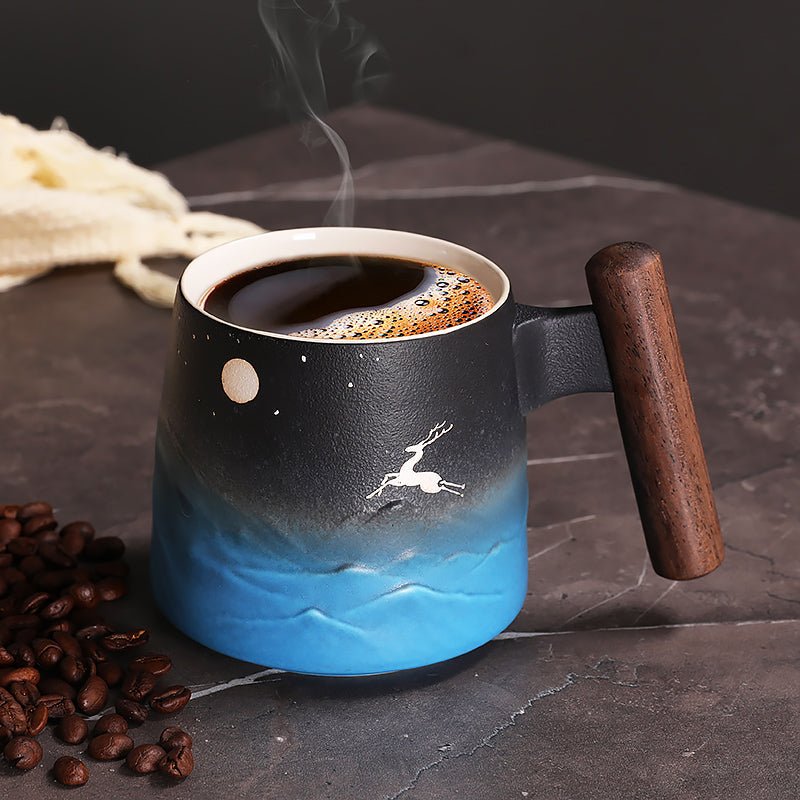
Coffee and Tea Mug for Home Office Decor: What Buyers Compare
A desk mug has to do two jobs: drink well through a long call and look intentional in a home office. We compare capacity, materials, microwave and glaze safety, and desk fit, including the details ...
Read more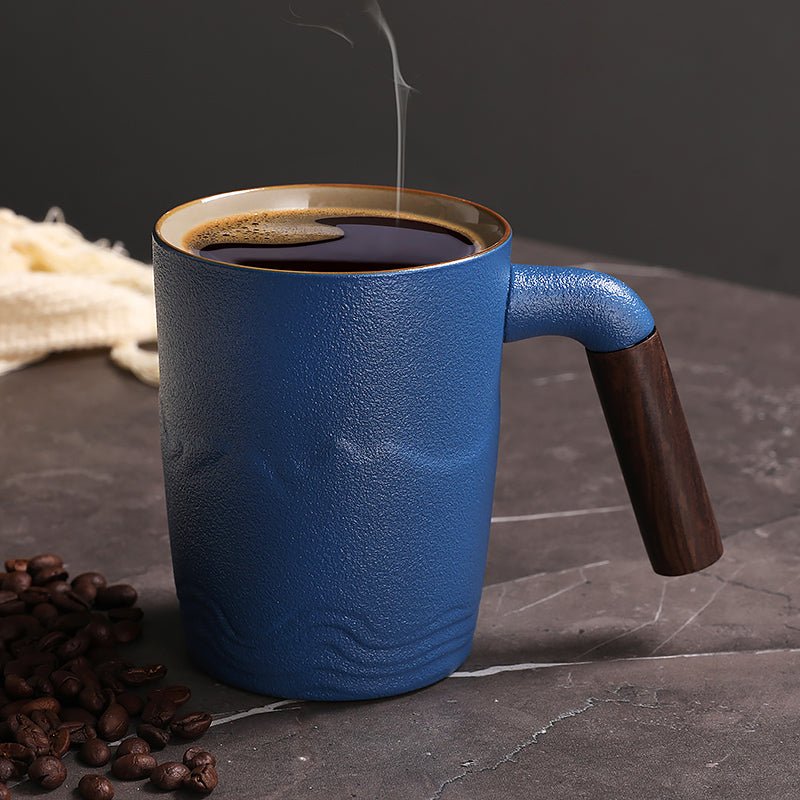
Landscape Ceramic Coffee Mug vs Tea Mug: Practical Buyer's Guide
Two mugs on the same shelf, one decision. We compare usable capacity, rim and handle geometry, glaze safety, and landscape decoration care so you buy one mug that works—or two that each do their job.
Read more
Leave a comment
This site is protected by hCaptcha and the hCaptcha Privacy Policy and Terms of Service apply.