



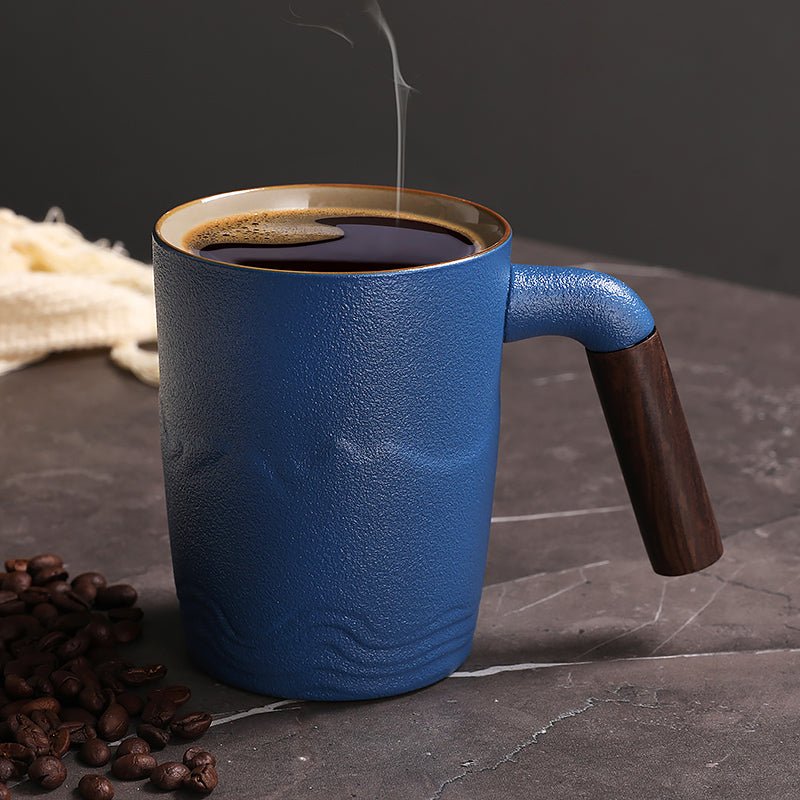
Landscape Ceramic Coffee Mug vs Tea Mug: Practical Buyer's Guide
Reading time: about 12 minutes
A customer set two mugs on our counter last week and asked the landscape ceramic coffee mug vs tea mug question in plain terms: could the mountain mug she liked hold her morning coffee and her afternoon oolong without buying a second piece? She had used the same thick stoneware mug for coffee for years, and the new tea habit was the only variable. That is the moment this comparison usually starts — not in a standards document, but at a kitchen counter with a mug already in hand.
In our store, we treat that as two decisions. First, is the landscape piece everyday drinkware or a decorative object shaped like a mug? Second, does its form suit the drink you make most often? Pull those apart and the shopping gets simpler.
Why the landscape ceramic coffee mug vs tea mug question splits into two decisions
No standards body draws a legal or technical line between a coffee mug and a tea mug. There is no official rim diameter, wall thickness, or ounce split. When a listing says tea mugs run 6 to 10 ounces and coffee mugs 10 to 16, treat that as a merchandising convention repeated across the category, not a rule you can hold anyone to.
The nearest official number comes from a test method. ISO 6486-1, which covers lead and cadmium release from ceramic foodware, describes a cup as small ceramic hollowware of roughly 240 ml with a handle, used for beverages such as coffee or tea. That is a lab category, not a shopping size. It does tell you something useful: in the standards world, coffee and tea share one vessel.
The practical differences sit in four places: usable capacity, rim and wall shape, how the landscape decoration was applied, and whether the glaze is intact and safe for hot drinks. Those four checks do more work than the label on the box.
Does the ceramic body matter more than the label on the box?
Ceramic is the umbrella term, and the mug on your shelf could be any of three bodies. They behave differently with hot liquid, and the difference often shows up in year two rather than week one.
- Earthenware. Fired lower and more porous. Often thicker-walled and warm in the hand, and it is a common body for hand-painted landscape majolica. A chip that exposes the unglazed body can take up liquid.
- Stoneware. Denser and fired higher, the default body for a heavy daily mug. It holds heat and tolerates dishwasher cycles, and it feels substantial when full.
- Porcelain. The most vitrified of the three. ASTM ties the porcelain label to water absorption measured by ASTM C373, so a true porcelain body takes up very little liquid. That is why it can be thin-walled without weeping. It is lighter in the hand at the same volume, but it carries less heat mass.
Water absorption matters to a drinker for a specific reason: a body that takes up water can hold yesterday's tea. Tannins and coffee oils live in the body, not on the glaze, and once they are in, scrubbing does not get them out. The failure mode to inspect is crazing — the fine web of cracks in a glaze. Some crazing is cosmetic and stable; if it reaches the body, liquid wicks in, the interior discolors, and the mug is finished as a daily drinker.
Three spots we check on every piece that leaves our store: the foot ring, the underside of the handle where glaze pools, and the inside bottom corner where a tooling ridge can trap coffee oils. A glazed or smoothed foot ring, a handle underside without a sharp glaze edge, and a rounded interior corner are small details that decide whether a mug is pleasant in month six.
How much of a 12 oz mug do you actually get to drink?
Listing capacity is measured to the brim. Almost nobody fills to the brim. That gap is the most common reason a mug looks bigger online than it feels on the counter.
Get the conversion straight once, using NIST figures: 1 U.S. fluid ounce equals 29.573 mL. A stated 12 oz mug is roughly 355 mL, and an 8 oz mug is roughly 237 mL. NIST's kitchen equivalencies also round 240 mL to 1 cup and 480 mL to 16 fluid ounces, which is fine for cooking but not precise enough for matching a mug to a coffee machine cycle.
Then subtract everything that is not the drink:
- Headroom. Leave a finger's width of clearance at the rim or you will wear the first mouthful.
- Milk or cream. A generous pour takes a real share of the usable volume.
- An infuser basket. It displaces liquid and needs extra clearance at the rim, which can effectively shrink a tea mug by a size.
- Foam. If you froth in the mug, budget for the foam, not just the milk.
That is how one mug can be ideal for black coffee and mildly irritating for a full cup of loose-leaf tea. It is also why the stated ounce rating is a starting fact, not a finish line. A 12 oz ceramic mug for coffee and tea is a reasonable middle ground for many routines, but only if the usable volume after headroom still covers your pour.
Which rim, wall, and handle shape suits coffee versus tea?
Shape conventions in this category are tendencies, not standards, and they often conflict with each other. Use them as a tiebreaker once you know your own routine.
| Attribute | Coffee-leaning form | Tea-leaning form | What it changes |
|---|---|---|---|
| Rim | Moderately flared, medium thickness | Wide bowl, thin lip | More surface area releases aroma and cools faster; a thin rim changes lip feel |
| Proportion | Taller than it is wide | Wider than it is tall | Tall and narrow holds heat longer; wide lets you smell the drink |
| Wall | Thicker, more thermal mass | Thinner | Thick walls stay hot longer but feel heavier when full |
| Handle | Large loop, room for three fingers | Small loop, or none at all | The handle has to work with the mug full, not empty |
| Interior | Rounded bottom corner | Rounded, flared lip | Cleaning ease and the last sip both depend on it |
Two conflicts worth knowing. A wide bowl cools tea quickly — right for a green tea you want to drink now, wrong for a black tea you sip over twenty minutes. A thick wall holds coffee heat longer, but it adds weight, which makes a small handle harder to grip at the bottom of a second cup.
Handle heat catches people out in the microwave. Customers have told us a handle was too hot to hold after a couple of minutes on high while the drink itself was only warm. No spec sheet carries that field. Look at the handle's cross-section — thick and short with a narrow opening is the shape to be cautious about — and treat it as a hold-it-in-the-store test.
Can the landscape decoration survive the dishwasher and microwave?
This is where landscape mugs vary most and where listings say the least. Four common decoration routes:
- Underglaze with a clear overglaze. The image goes onto the unfired body and is sealed under a glossy layer. Most durable, and the design is not the surface your lip touches.
- Overglaze decal. The image sits on top of the fired glaze and is fired again at a lower temperature. Crisper detail, more exposed to detergent and scouring.
- Metallic or luster accents. Gold rims, metallic snowcaps, silver highlights. Keep these out of the microwave regardless of what a listing claims.
- Surface-applied print or wrap. Cheapest route, least durable. Fading and flaking start at the rim, where lips and dishwasher racks do their work.
Two checks before the first dishwasher cycle: does the design cross the lip or the inside of the mug, and is there any metallic element anywhere on it? A design sitting under the glaze and away from the lip is the safer bet for daily use. If the listing only says dishwasher safe without naming a method, treat cycle one as a test — top rack, low heat, then look for dulling or a change in the glaze's sheen.
Is the glaze safe for hot coffee and tea?
The FDA sets an action level of 0.5 µg/mL leaching solution for lead from ceramicware cups and mugs under CPG 545.450. It is stricter than the levels listed for some other ceramicware categories, including flatware and small hollowware other than cups and mugs — a deliberate acknowledgment that a cup sits against your mouth.
The FDA also notes that lead may be present in glazes or decorations on some traditional pottery and, if a piece is not manufactured and fired properly, can leach into food or drink. The agency advises against using pottery that shows leachable lead for cooking, serving, or storing food and drinks, and it has stated that no safe level of lead exposure has been identified.
Then there is the labeling rule most shoppers never notice. Under 21 CFR 109.16, ornamental or decorative ceramicware that appears suitable for food use is treated as food-use ware unless it carries the required not-for-food-use labeling, including a permanent statement on the base. In plain terms: a landscape mug marketed as a decorative object, with a not-for-food-use sticker or base stamp, should not become your morning coffee mug no matter how good it looks next to the kettle.
One hard rule from the sales counter: if the food-contact surface is crazed, flaking, chalky, or powdery, stop drinking from it. That is a materials problem, not a cleaning problem.
Which shopper should buy the Landscape Coffee Tea Mug, and who should not?
If your routine is one coffee in the morning and tea in the afternoon, our Landscape Coffee Tea Mug is the natural starting point because the listing is positioned around both drinks. Before you commit, verify three things on the current product page: the stated capacity in ounces or millilitres, how the landscape decoration is applied, and whether the base carries care icons and a food-use statement. Those are listing facts, not assumptions we can make from the photo.
- Shared morning-coffee, afternoon-tea routine. Start with the Landscape Coffee Tea Mug, then confirm capacity and headroom. If you drink a full 16 oz coffee, a mug with unconfirmed capacity may not be enough.
- Loose-leaf tea, several small pours a day. A smaller wide-rim cup with a saucer is the better tool. Browse the unique coffee mugs collection to compare silhouettes rather than forcing a large mug to do a small cup's job.
- Desk microwave reheat. Decoration method is the whole decision. Confirm no metallic accents and that the design sits under the glaze; if that detail is missing, treat the mug as hand-wash only.
- Gift buyer. Check the base for care icons and a food-use statement before it is wrapped. A decorative-only landscape piece should be given as decor, not drinkware.
That last point costs us sales and we do not mind: a landscape mug that is beautiful but labeled decorative is not a coffee mug, and saying so is cheaper for everyone than a return. The same honesty applies if you want a delicate teacup for a gongfu session — a handled ceramic coffee mug is the wrong tool, and a small cup will serve you better.
A five-minute counter check before you choose one mug or two
- Convert the stated capacity to millilitres, then subtract a finger's width plus your usual milk or infuser.
- Look at the interior bottom corner and the underside of the handle for ridges and sharp glaze.
- Check the rim: thin and rounded for lip comfort, wide if you want aroma, narrower if you want heat retained.
- Read the decoration description. Underglaze with no metal is the safer daily-use route; overglaze and surface prints need more care.
- Inspect the base for care icons and a food-use statement, and for any not-for-food-use wording.
- Hold the handle as if the mug were full — three fingers is comfortable, two is a compromise.
If you want to run that checklist against real pieces rather than photos, the unique coffee mugs collection is the fastest place to compare silhouettes side by side.
Frequently asked questions
Can one ceramic mug handle both coffee and tea?
Yes. Most people use one mug for both, and no standard separates the two forms. The practical trade-off is residue: coffee oils and tea tannins both settle into a porous or crazed interior, so rinse promptly and check that the glaze is intact. If you drink both daily, a rounded interior and a fully glazed body matter more than the label on the box.
Is the landscape ceramic coffee mug vs tea mug comparison mostly about size?
No. Size is only one variable. The landscape ceramic coffee mug vs tea mug decision also turns on rim width, wall thickness, handle comfort when full, decoration method, and whether the piece is labeled for food use. Convert the stated ounces, then judge the shape against how you actually drink.
Will a printed landscape design fade in the dishwasher?
It depends on the decoration method, which many listings do not name. An image sealed under a clear glaze is the most durable; an overglaze decal or surface print is more exposed to detergent and heat. If the method is not stated, wash it on the top rack and watch for dulling over the first few cycles.
Is a landscape mug with gold or metallic accents microwave safe?
Treat metallic accents as not microwave safe regardless of a listing's general claims. Metallic luster and gold rims can arc, and they wear away with repeated heating. Keep those pieces for cold drinks, staging, or hand washing.
How do I convert a mug's ounce rating to millilitres?
Multiply by 29.573. A 12 oz mug is roughly 355 mL and an 8 oz mug roughly 237 mL, using NIST's fluid-ounce figure. Then subtract headroom and whatever you add to the drink.
Choose one mug or two based on the routine you actually have
If you want a single handled ceramic piece for coffee and tea, start with the Landscape Coffee Tea Mug and verify capacity, decoration method, and base labeling before checkout. If your tea habit is several small loose-leaf pours, compare smaller shapes in our unique coffee mugs collection instead of buying a large mug you will resent by Thursday.
More from our blog
Ready to pick your mug? Two ways to save on today's order:
Ordering 1–3 mugs? Get an extra 10% off your 1st order with code 10_OFF Apply 10% Off & Shop Wooden-Handle Mugs →
Gifting 4+ mugs? Buy 3, Get the 4th Free applies automatically at checkout (no code needed; offers do not stack) · Free standard shipping (Nov pre-Christmas delivery: 15–20 calendar days US) · Free replacement if chipped in transit.
Popular mug buying guides: Ceramic Tea Cups & Infuser Mugs · Ceramic Mugs with Lids Compared · Wooden-Handle Tea Infuser Mugs Compared · Christmas & Secret Santa Mugs 2026 · Espresso & Cortado Cups Guide · Cup & Saucer Gift Sets · All 25 Mugs Spec Table · Mug Size Guide · Shipping & Promo FAQ
FIRST ORDER 10% OFF (CODE: 10_OFF) · OR BUY 3, GET THE 4TH FREE


Read more
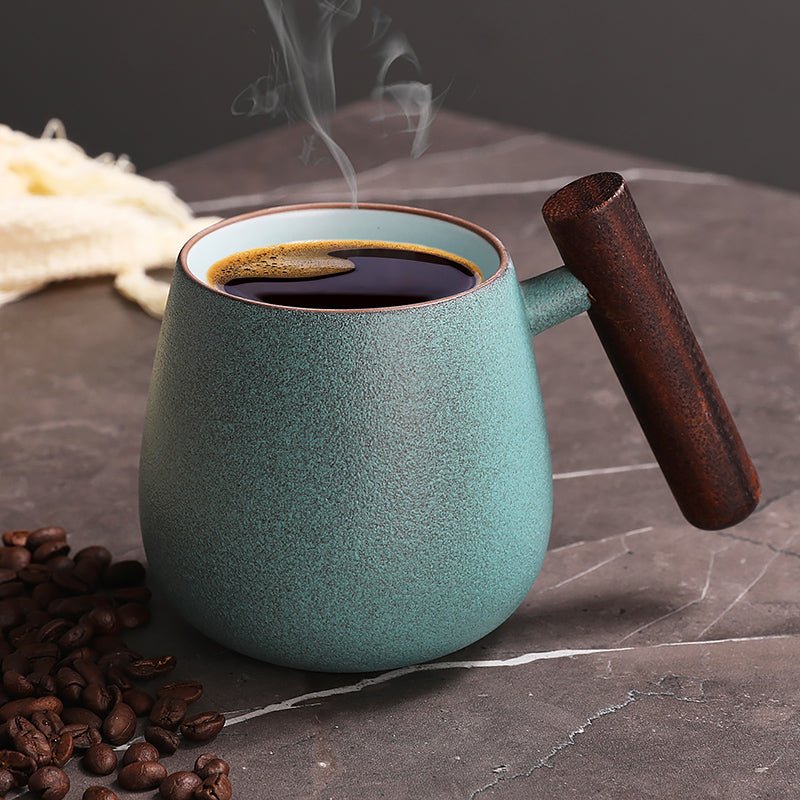
Coffee Tea Mug Size Checklist: 8, 12 & 16 oz Compared
A coffee tea mug size checklist from our store: how to read brim capacity against the pour you actually drink, why brewer cup marks are smaller than your mugs, and the handle, weight, height, and c...
Read more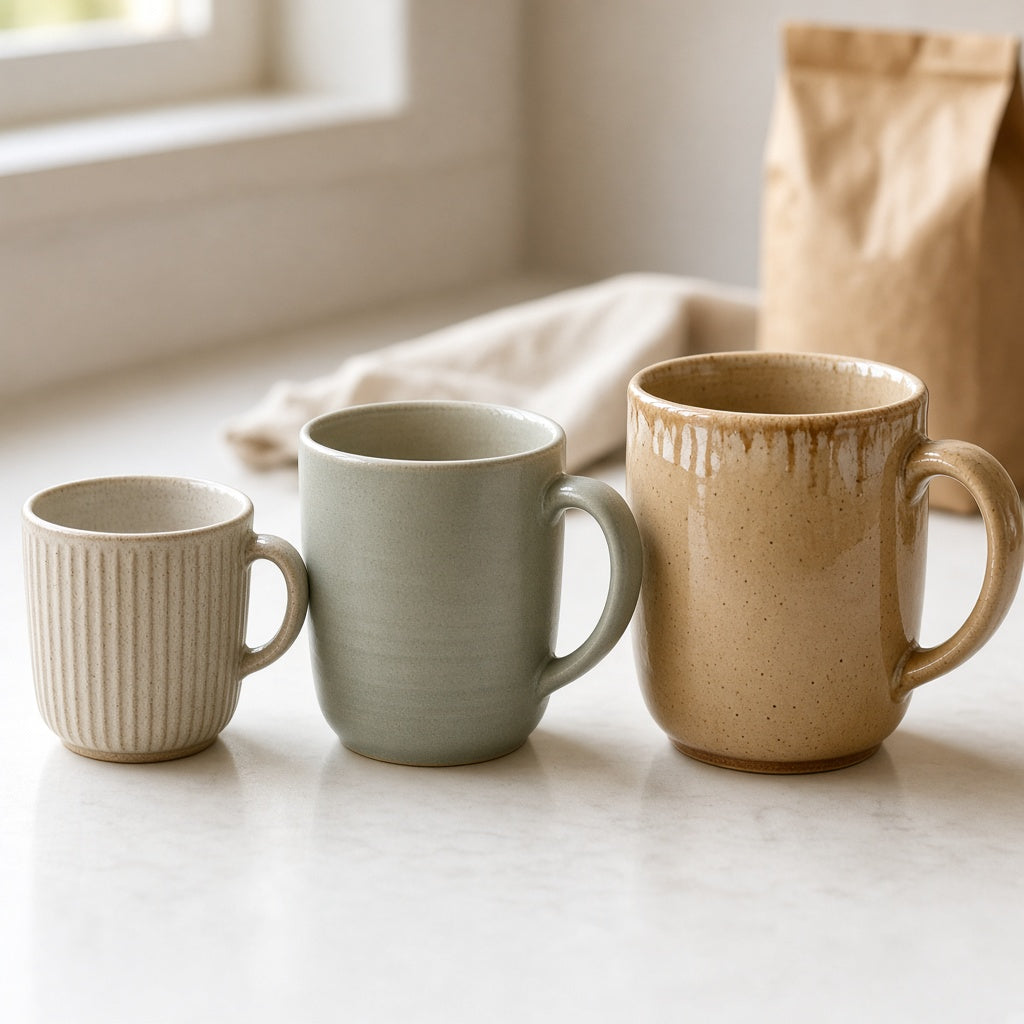
Coffee Mug Gifts Ideas Current Product Facts: 200, 400, 440 ml
A capacity-first comparison of our three ceramic mugs — Pleated at 200 ml, The Flow at 400 ml, and Morning and Night at 440 ml — with the listing details we can verify, the ones you still have to c...
Read more
Leave a comment
This site is protected by hCaptcha and the hCaptcha Privacy Policy and Terms of Service apply.