



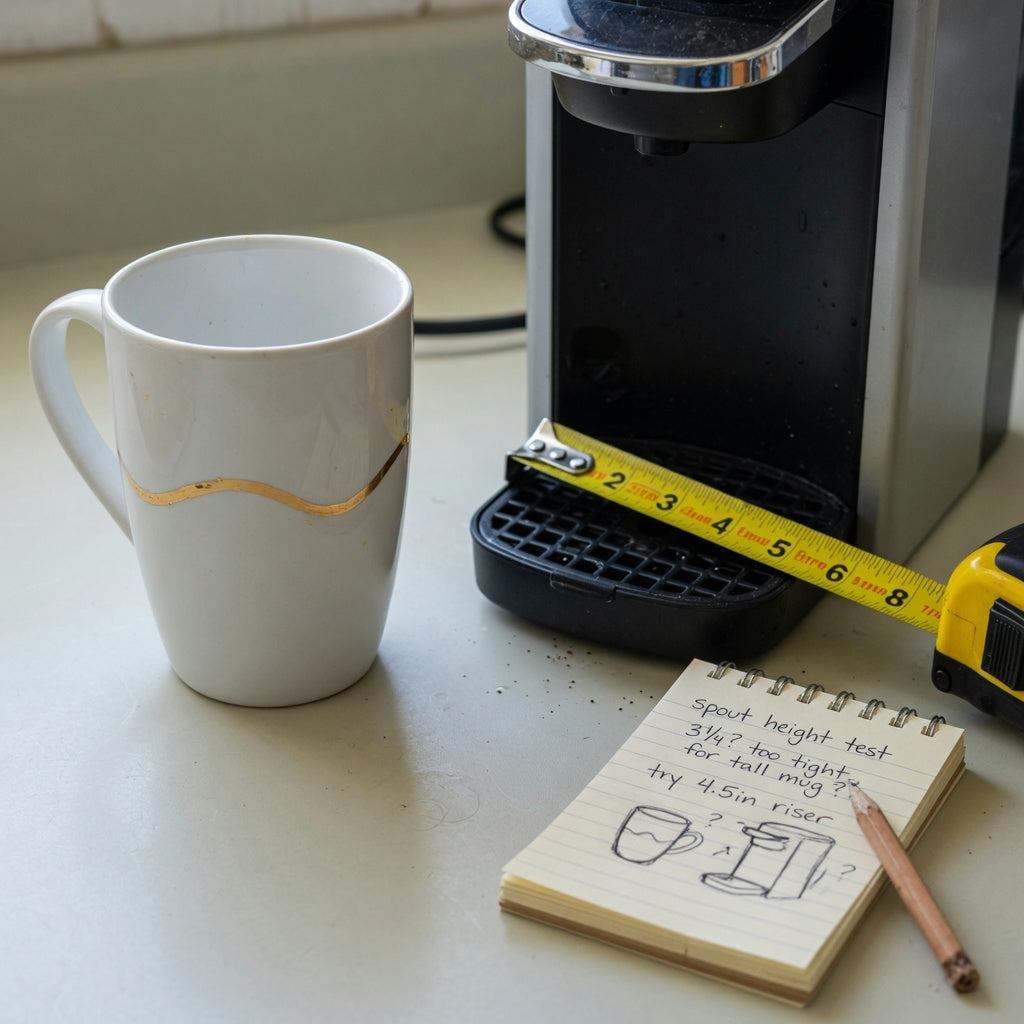
White Golden Waves Tall Coffee Tea Mug Buying Checklist
Reading time: about 13 minutes
A white mug with a gold wave photographs well on a gift table. On a weekday counter the questions get sharper. A shopper in our store parked one beside the sample brewer, checked the gap under the spout with two fingers, and asked whether that gold line could survive an office microwave and a shared dishwasher. Height, metal, and washing decide whether you own a daily cup or a shelf piece. The name is slippery too. Retailers use golden waves for a wave-shaped handle, a rippled body, a thin gold line, or printed ocean art. A white golden waves tall coffee tea mug buying checklist has to split those designs apart before any care advice means anything.
In our store that search lands on the White Golden Waves Large Coffee Mug. The catalog title says large. The page address describes a tall coffee and tea mug. Neither phrase is a measurement. Material, stated capacity, exterior height, and any care line have to come from the current listing. We will not borrow ounces, a bone-china claim, or a microwave promise from a lookalike photo.
Which golden-wave design is actually in the box?
We sort these requests into four builds. One care sentence cannot cover all four, and a mashed-together title is how people end up microwaving metal or hand-washing a plain cup they could have reheated.
- Wave-shaped handle. The body may be plain white. Comfort depends on finger room, and on whether a full mug tips toward the handle or away from it.
- Textured or ripple body. The wave is clay or glaze relief. Metal risk stays low unless a separate gold line is added. Ridges that catch the lip are a daily annoyance, not charm.
- Thin gold wave line. This is the luster or gilt band people picture on white china. If you can see metallic paint or trim, treat the mug as not microwave safe.
- Printed ocean-wave artwork. A picture of waves, sometimes in gold-colored ink. Color is not proof of metal, and it is not proof the print survives a dishwasher or belongs on a food surface.
If a listing truly names bone china, that category is translucent white china made with bone ash or calcium phosphate. The standard English body is described as strong, not easy to chip, and ivory-white. None of that becomes a spec for the mug on our page unless the current listing says bone china. When the page says ceramic, porcelain, or nothing, leave bone ash out of the decision. A thin china wall and a thicker stoneware wall do not hold heat the same way, and there is no single heat-retention number that covers every gold-wave style. Read the body name, then decide.
Shoppers who want a different handle, or a plain white body they can reheat, can compare shapes in our unique coffee mugs instead of forcing a gold wave to be a workhorse it is not.
White golden waves tall coffee tea mug buying checklist
People who write to us check in the same order. Run it on the product page first, then again when the carton is open.
- Daily driver or gift. A cup you reheat before noon needs a different finish than a piece that comes out for guests.
- Body material, as printed. Bone china, porcelain, stoneware, or a generic ceramic label. If the material is missing, that is an open question, not fine china.
- Stated capacity. Regulators describe a typical cup or mug as commonly about 240 mL (8 fl oz), usually with a handle, for coffee or tea served hot. Tall can mean that everyday pour or something much larger. Only the number on this listing counts. Large in a title is not an ounce count.
- Exterior height against your brewer. Measure from the counter to the spout with the drip tray installed, then include any foot or lid you actually use.
- Base and balance. A narrow foot under a tall wall tips more easily beside a keyboard or a stack of mail.
- Handle clearance. Knuckles should pass cleanly, including a larger hand, without lifting the mug by the rim.
- Where the gold sits. Exterior line, lip, interior, handle, print only, or no metal at all.
Buying for someone else needs a second pass. Ask whether they reheat the last inch of coffee, run everything through one dishwasher, or keep a hand-wash cup for tea. A gold wave is a poor surprise for the first person and a fair one for the third.
Where does the gold sit, and does it meet the drink?
This is the question we ask before anyone mentions a dishwasher. Gold on the lip meets every sip. Gold inside the bowl sits in the coffee or tea. An exterior wave can still be metal, so it still matters in a microwave even when it never touches the drink. A printed wave may be color in the glaze with no metal at all. Until you know which of those you have, a microwave assumption is a guess.
If you cannot point to the gold, on the lip, inside, on the outside, or nowhere, you do not have a care routine yet.
Shoppers also ask whether a gold line that was microwaved by mistake will flake into the drink. We cannot clear a blistered or shedding surface and send you back to the coffee. If luster cracks, bubbles, or leaves metal on a finger, stop using that mug for food. Decorative gold is not a sealed liner, and wiping it does not restore a fired-on finish.
The style is a weak choice for anyone who reheats every cup and will not hand wash. It fits slow coffee or tea at a desk, a host gift, or a second mug that never enters the microwave. If the kitchen needs a plain reheating cup, choose one with no metallic paint or trim and keep the gold-wave piece for drinks you do not reheat.
Will a tall wall clear the brewer and stay steady when full?
Tall is a silhouette, not a standard size. We have watched shoppers fall for the profile, then pull the drip tray out of a single-serve machine so the rim will slide under the spout. That workaround dies the moment someone slides the tray back in. Check clearance with the tray installed. Check again if you use a tea infuser or any lid. A product photo is not a tape measure on your machine.
Filled weight is the other half of the same problem. A tall wall can feel top-heavy when the handle is small, high, or narrow. Set the mug on the desk and see whether your wrist stays neutral once it is full. If the listing does not publish height, base width, or capacity, those stay open questions. Do not read large in a catalog title as extra ounces or extra stability.
Handmade work adds one more judgment. Slight variation in a thrown wall or a hand-painted wave can be normal. A rough lip, glaze you can catch with a fingernail, crazing that feels sticky, or gold that already dusts onto a tissue is a reason to reject the mug. Our team uses that line at unboxing. If the lip snags, it does not go out as a daily cup.
What do lead and cadmium limits mean for hot coffee and tea?
Hot coffee and tea are why cups and mugs have their own lead limit. FDA guidance sets an action level of 0.5 micrograms of lead per milliliter of leaching solution, judged on any one of six units. The pieces covered are small ceramic hollowware used for hot drinks, commonly about 8 fl oz, and made with a handle. Lead can move out of a food-contact glaze, and continued use is the exposure path that guide is written around. FDA states there is no known safe level of lead exposure. In adults, chronic exposure is associated with kidney dysfunction, hypertension, and neurocognitive effects. High exposure in pregnancy, infancy, and early childhood is linked with learning disabilities, behavior difficulties, and lowered IQ. Scrutinize the glaze. A pretty wave is not a lab result, and nothing here is a pass or fail for our mug.
Cadmium is separate. The action level for small hollowware is 0.5 micrograms per milliliter, again on any one of six units. Small hollowware means a capacity under 1.1 liters. Acid foods can pull cadmium from some ceramic surfaces, and that limit is about repeated use, not one sip.
Acidity and heat both matter. A published pilot discussion of the same federal cup-and-mug limit notes that coffee and tea are acidic, and that acidity plus higher temperature can increase how fast lead moves. Its results suggested some mugs inside the federal limit could still sit above California Safe Harbor levels. We do not sell under the action level as a personal health guarantee.
Lead free is a regulated phrase, not a mood. FDA has said ceramicware should not carry that label if extractable lead is still present, and it has reported traditional pottery marked that way that failed anyway, including pieces from kilns previously used for lead glazes. Handmade ware with a crude look or an irregular shape deserves a harder look. A glaze may contain lead to help particles melt, then fuse to the clay in the firing. You cannot see that in a product photo.
Ornamental ceramic is a different object. Ware that looks usable is treated as foodware unless it carries a conspicuous Not for Food Use warning and a permanent version of that warning on the base, or unless a hole is bored through the potential food-contact surface. A warning or a hole means you do not drink from it. Gold decoration does not cancel the mark. If the listing, the box, and the base are silent, silence is not a lab report.
Microwave and dishwasher rules once metal is in the glaze
USDA lists china with metallic paint or trim as not safe in a microwave. Microwaves do not pass through metal, and wrinkled foil can throw sparks. If you see arcing, stop the oven. The USDA check for an unlabeled utensil is specific: heat one cup of water on high for one minute beside the utensil. If the utensil comes out warm or hot, it is not microwave safe, because metal is in the material or the glaze, and the utensil or the oven floor might crack. Clemson extension guidance lists ceramic without metallic trim among containers that can be used. Its check is different: microwave the empty dish on high for one minute next to a cup of water, and reject the dish if the dish itself heats up. Use those checks only on ware that does not already show metal. Do not test a gold-trimmed mug by running it.
Care lines on white-and-gold pages conflict across the market. Some say microwave and dishwasher safe. Others say hand wash only. In our experience, a gilt line stays cleaner-looking when it is washed by hand and kept out of a heated dry cycle. If the current listing clearly says hand wash, hand wash. If the page is silent, silence is not permission to machine-wash visible metal. A cheerful hangtag on a different brand does not transfer to this mug.
| What you see | Microwave | Washing | Set it aside if |
|---|---|---|---|
| Wave handle, no metal | Only with no metal in the body or glaze, and a maker mark or a nonmetal heat check | Follow the maker | Handle rocks or the lip is rough |
| Ripple texture, no gold | Same rule: no hidden metal | Follow the maker | Sharp ridges at the mouth, or sticky crazing |
| Gold line, luster, or gilt lip | Do not microwave metallic paint or trim | Hand wash if you want the finish to last | Flaking, blistered gold, or gold crossing a chip |
| Printed waves | Only with no metallic ink or trim, and only if the maker allows it | Follow the mark; gold-colored ink can still be metal | Print rubs off, or the interior is cracked |
What a white-and-gold wave mug is not good for
We would rather lose the sale than put the wrong cup on a desk that microwaves everything.
- It is not a reheating mug if any gold or other metallic paint is on the piece.
- It is not a commuter cup. Do not assume a leakproof lid unless the current listing says one is included.
- It is not the automatic choice for long heat hold. Verify the body before you compare a thin china wall with thicker stoneware.
- It is not a casual everyday cup in pregnancy or for young children when the glaze history is unknown. Lead guidance is especially pointed about those years, and an unknown gilt surface is the wrong place to experiment.
- It is not foodware at all if it says not for food use or has a hole through the well.
It is a sound fit when you want a seated coffee or tea mug with a gold wave, washed by hand, or a gift for someone whose kitchen already matches that limit.
Frequently asked questions
What does a white golden waves tall coffee tea mug buying checklist actually check first?
Start with the design, not the adjective. Separate a wave handle, a ripple body, a real gold line, and printed wave art. Then confirm where any gold sits, the capacity and height printed on the listing, brewer clearance with the drip tray in, handle room, and whether the base feels stable. Food-contact marks and appliance wording come before you decide it is a daily cup.
Will the gold on a white mug flake off in the dishwasher or microwave?
Metallic paint and trim are not microwave safe under USDA guidance, and a microwave is the wrong place to discover whether a gold line is real metal. If gold blisters or comes off on your hand, stop drinking from that mug. Hand washing, away from a heated dry cycle, is the habit we trust for keeping gilt looking like itself. A silent product page is not a yes for the dishwasher.
Does a lead-free label mean the glaze is safe for hot coffee and tea?
Not by itself. FDA has said ceramicware should not be called lead free if extractable lead is still present, and some traditional pottery with that label has still leached lead. Cups and mugs are judged against a 0.5 microgram per milliliter lead action level because hot coffee and tea sit on the glaze. Reject anything marked not for food use, and do not treat a crude or damaged decorative glaze as a daily cup.
How can I tell whether a tall mug will fit under a single-serve brewer?
Measure from the counter to the spout with the drip tray installed, then compare that gap with the mug’s exterior height, including any foot. Pulling the tray out to force a fit fails as soon as the tray goes back. Also check that a full mug does not feel top-heavy in your hand. If the listing omits height, measure the mug when it arrives, before you commit it to that machine.
When should I stop using the mug even if it looks mostly fine?
Stop for food if the base says not for food use, if a hole is bored through the well, or if glaze or gold is flaking into the cup. A rough lip, a crack, or crazing you can catch with a fingernail is a reject for us when the piece is meant for hot drinks. A microwave spark is a stop for that piece and for that oven cycle, not a one-time exception.
Check the listing, then pick the mug that matches the kitchen
Keep the tab open and answer each line from the page, not from a similar photo.
- Name the design: handle, texture, gold line, or print.
- Point to the gold: lip, interior, exterior, or absent.
- Copy the stated material and capacity. If either is missing, ask, or skip.
- Compare height with your brewer, drip tray in.
- Read the listing for food-use, microwave, and dishwasher wording.
- On arrival, reject chips, a rough lip, felt crazing, a rocking base, and any gold that already dusts off.
If those answers match a hand-washed coffee or tea mug, finish on the White Golden Waves tall coffee and tea mug. If you need microwave duty, a shorter wall, or no metal at all, stay with mugs you can actually reheat and pick the body that fits the machine you already own.
More from our blog
Ready to pick your mug? Two ways to save on today's order:
Ordering 1–3 mugs? Get an extra 10% off your 1st order with code 10_OFF Apply 10% Off & Shop Wooden-Handle Mugs →
Gifting 4+ mugs? Buy 3, Get the 4th Free applies automatically at checkout (no code needed; offers do not stack) · Free standard shipping (Nov pre-Christmas delivery: 15–20 calendar days US) · Free replacement if chipped in transit.
Popular mug buying guides: Ceramic Tea Cups & Infuser Mugs · Ceramic Mugs with Lids Compared · Wooden-Handle Tea Infuser Mugs Compared · Christmas & Secret Santa Mugs 2026 · Espresso & Cortado Cups Guide · Cup & Saucer Gift Sets · All 25 Mugs Spec Table · Mug Size Guide · Shipping & Promo FAQ
FIRST ORDER 10% OFF (CODE: 10_OFF) · OR BUY 3, GET THE 4TH FREE


Read more
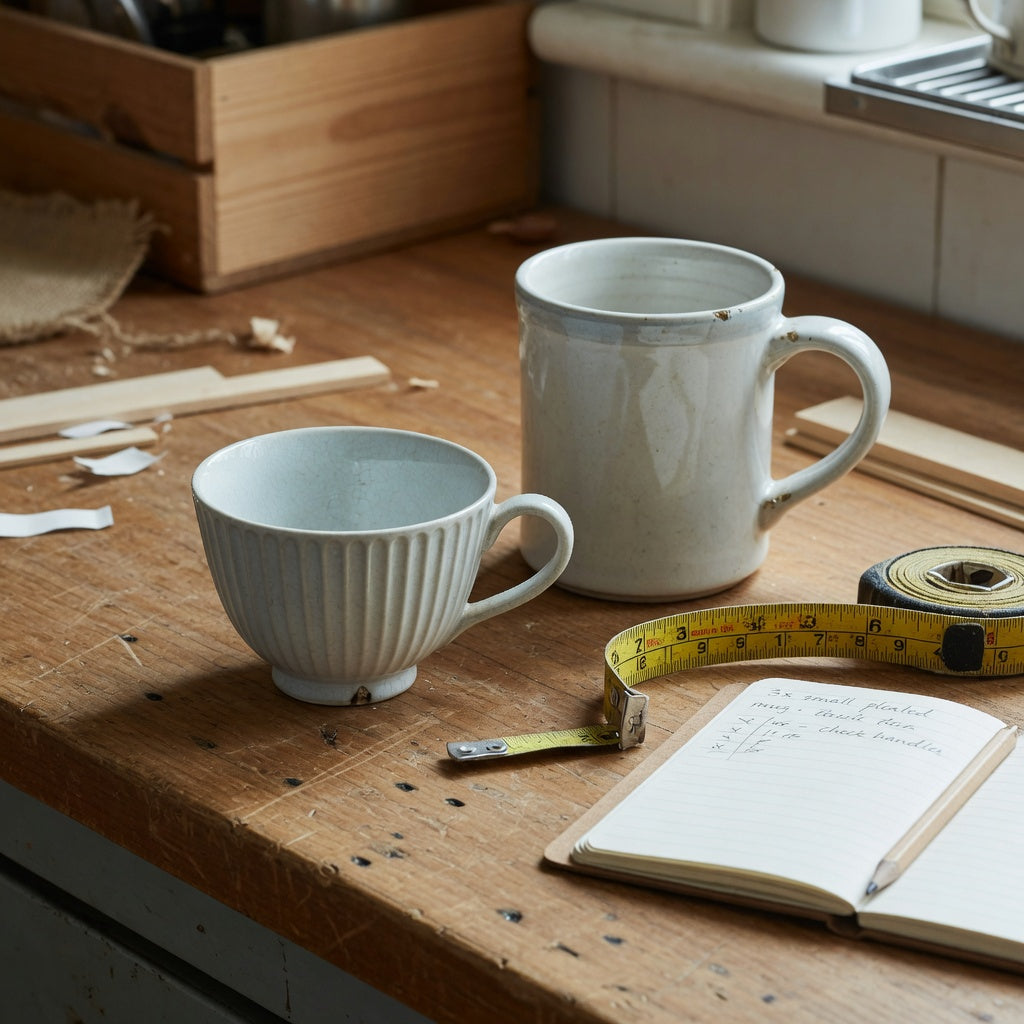
What Size Pleated Tea Cup? 5 oz, 6 oz, or 200 ml
Shoppers asking what size pleated tea cup usually land on a small formal cup near 5-6 oz, not a mug. We compare those conflicting labels with our 200 ml ceramic listing and say when a larger cup is...
Read more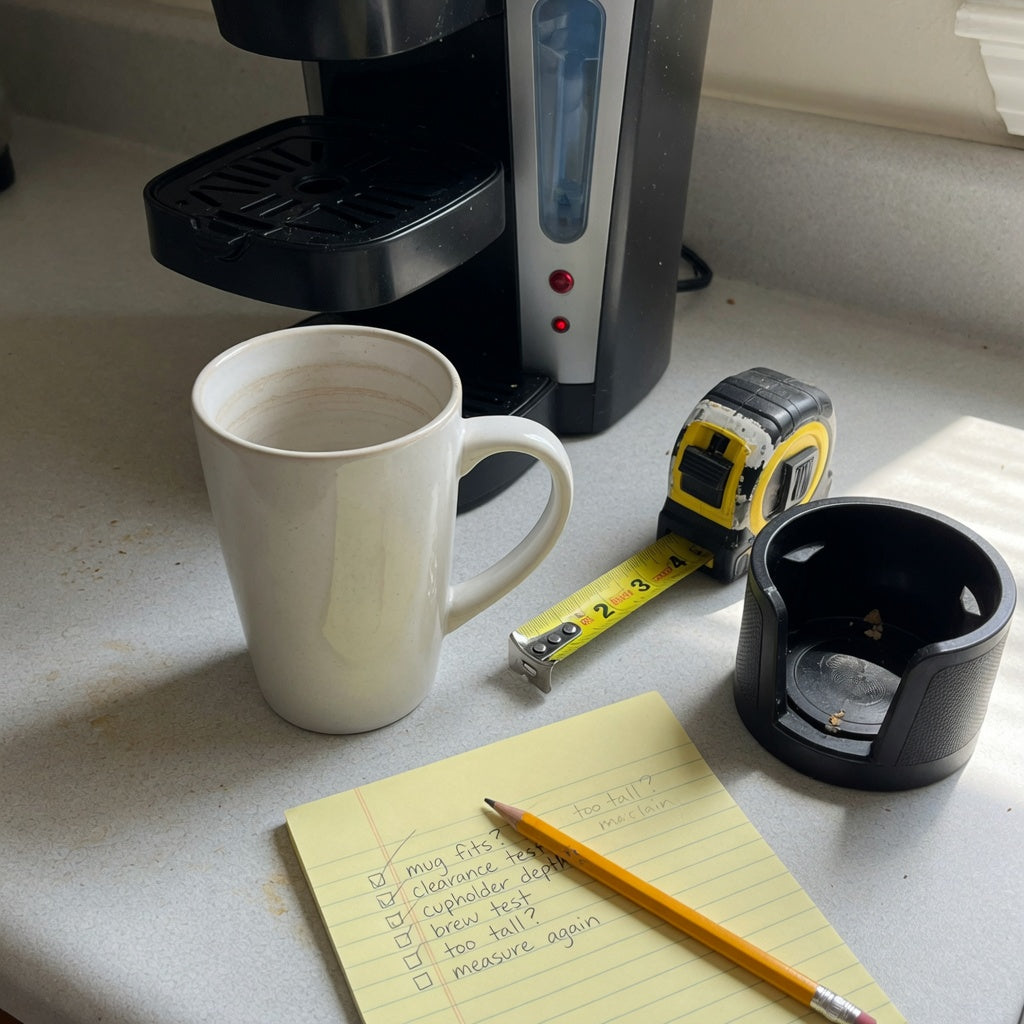
Tall Ceramic Coffee Tea Mug Checklist: What Buyers Should Compare
A store-side checklist for tall ceramic coffee and tea mugs: height, usable fill, foot and handle, glaze limits, and whether appliance claims cover the print and the lid. Measure your brewer and cu...
Read more
Leave a comment
This site is protected by hCaptcha and the hCaptcha Privacy Policy and Terms of Service apply.