



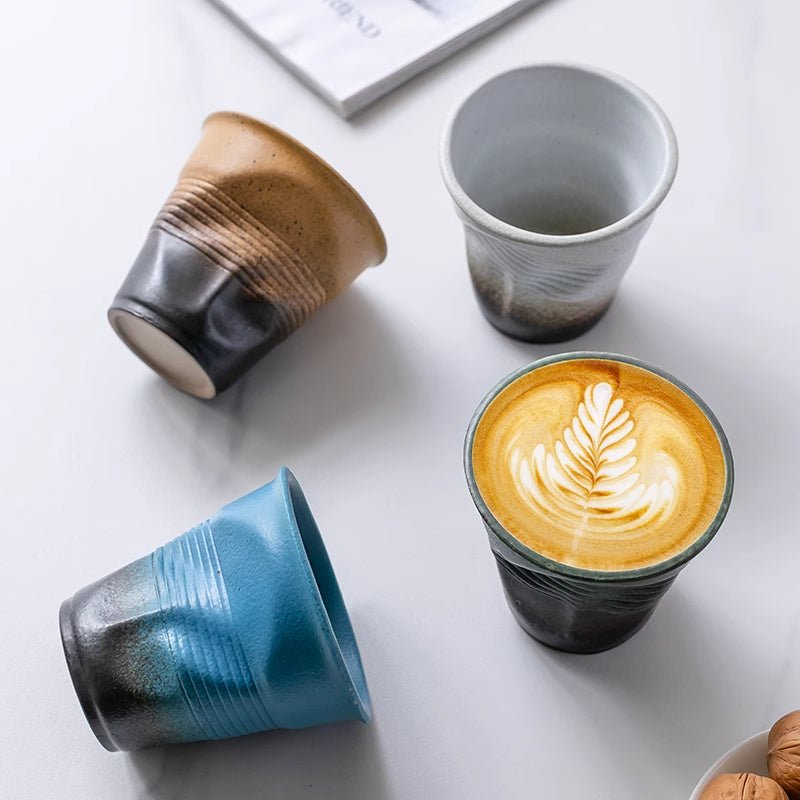
Coffee Mug Gifts Ideas Size Decision Guide: 200 vs 400 vs 440 ml
Reading time: about 10 minutes
A mug is the easiest gift to buy and the easiest one to get wrong. Every holiday season we watch the same pattern in our order notes: someone buys a handsome ceramic mug, the recipient smiles, and by February it is holding pens. The design almost never fails. The pour does.
That is why this coffee mug gifts ideas size decision guide leads with capacity instead of artwork. Our current range gives three honest reference points — 200 ml, 400 ml, and 440 ml — and each one solves a different problem for a different drinker. Pick the volume first, the finish second, and the gift gets used instead of stored.
Why the coffee mug gifts ideas size decision guide starts with the pour, not the print
Ask one question before you compare patterns: what does this person finish in a single sitting? Not what they order at a café — what they actually drink at 7 a.m. at their own counter, and how much they leave behind when the morning runs away from them.
Listed capacity is not the same as usable capacity. Every mug needs air below the rim, so a 200 ml cup pours a modest serving in real use and a 440 ml mug is generous by design. We would rather say that plainly than pretend a millilitre figure is a promise. Headroom is the most common reason a gifted mug feels exactly right on day one — or slightly off.
Three drinkers, three sizes: match the routine before the finish
In our experience, most gift buyers are shopping for one of three people:
- The one-mug-a-day drinker. Brews a full pot or a big drip, carries it to a desk, and wants it warm twenty minutes later. Capacity does the heavy lifting.
- The refiller. Drinks small amounts often and reheats more than they admit. A smaller cup suits them better than a giant mug that goes cold mid-session.
- The tea and milk-drink drinker. Needs headroom for a bag, a splash, or foam that would otherwise spill over the side.
Match the person to a lane and the size decision mostly makes itself. The hard case is the recipient you cannot place at all — we handle that at the end.
When a 200 ml cup is the smarter gift, and who should not get one
Our Pleated coffee and tea cup is listed at 200 ml. Small is a category here, not a compromise.
It works for:
- Espresso with a splash, or a cortado-scale drink.
- Loose-leaf or bagged tea, where the bag steeps without swimming.
- People who reheat — 200 ml warms twice without a noticeable drop.
- Tight kitchens and crowded desks, where a wide mug crowds out everything else on the counter.
- A low-commitment first gift: a small cup, a good tea, a folded note.
It is the wrong pick for someone who drains a large drip in one go, and it is not the mug for a heavy milk habit — you burn through the headroom fast. If the person's real drink is a cappuccino, size up.
400 ml vs 440 ml: does 40 ml actually change a gift?
On a shelf these two look close enough that shoppers assume the difference is cosmetic. It is not dramatic, but it is real. The Flow coffee and tea mug is listed at 400 ml. Morning and Night coffee and tea mug is listed at 440 ml.
What the extra 40 ml buys you:
- More milk or foam without eating into the coffee itself.
- Roughly one more sip during a meeting that ran long.
- More forgiveness at the fill line, because people overfill.
What it costs you:
- Weight. A fuller mug is heavier in the hand, which matters for anyone with grip or wrist trouble.
- Cabinet room. Bigger bodies take more shelf space and get pushed to the back first.
- Brewer clearance. Whether a mug fits under a low spout is a tape-measure question. Compare the listed dimensions against the gap under the machine rather than trusting a photo.
Our rule of thumb: plain drip at home, take 400 ml. Someone who says "these cups are too small," take 440 ml.
Handle, weight, and cabinet space: the size number no listing prints
Two mugs at the same capacity can feel completely different in the hand. What changes the experience has little to do with the millilitre figure:
- Handle proportions. A loop that takes three fingers feels stable when full; a small loop looks elegant empty and precarious loaded.
- Wall thickness. Thick ceramic holds heat and reads as substantial, but it adds weight and shrinks the usable interior.
- Rim thickness. A thin rim suits delicate tea; a thicker rim suits cocoa and milk-heavy drinks.
- Handedness. A strongly angled handle favours one side. For a left-handed recipient, look for a more symmetric loop.
None of that shows up in a capacity line, which is why we tell shoppers to ask before ordering when grip is a concern — or to size down rather than gamble. Weight in the hand, not volume, is what people complain about later.
When a bigger mug stops being a good gift
We sell these, and we still talk people out of the largest option sometimes. Skip it if:
- They already have a favourite. Someone with a trusted big mug does not need a second one — they need a small cup for a different drink.
- They have said out loud that they have too many mugs. Take them at their word, then make the gift specific: a design tied to a real interest, or part of a set.
- They drink espresso, tea, or small milk drinks. A big mug with a small drink in the bottom goes cold and looks forlorn on a desk.
- Counter or cabinet space is tight. The quiet dealbreaker that gift roundups skip.
- They have grip or wrist issues. Filled weight matters more than capacity every time.
The honest alternative: the 200 ml cup plus something consumable, or a browse through our unique coffee mugs collection for a design they would have chosen themselves. A mug is a gift when it adds a routine and clutter when it duplicates one. If you are weighing handmade or decorative pieces, our ceramic mug gift comparison covers the finish and safety side.
Dishwasher, microwave, and glaze: what to confirm before you wrap it
Two claims blur together on gifting pages: dishwasher safe and microwave safe. They are separate questions, and a mug can be one without the other. Metallic rims, luster, and some decals behave differently from a printed design, so do not treat the two as interchangeable.
Our listings carry the capacity figures above. For dishwasher and microwave suitability on a specific mug, read the current listing text for that exact piece instead of assuming from the photo — we will not promise a care claim a listing does not make. Our notes on comparing a ceramic morning coffee mug go into that side of the purchase.
On glaze safety, particularly with handmade, imported, vintage, or brightly decorated ware, the FDA guidance is worth quoting precisely:
- FDA sets an action level of 0.5 µg/ml of leaching solution for lead in ceramicware cups and mugs, under Compliance Policy Guide 545.450.
- Lead can be present in glazes and decorations on some traditional pottery and can leach into drinks if a piece is not made or fired properly. FDA notes that some pottery labelled "lead free" has still shown extractable lead at levels comparable to lead-glazed ware.
- Washing or boiling does not remove lead, and FDA advises against using pottery that tests positive for leachable lead to serve or store drinks.
- Under 21 CFR 109.16, decorative ceramicware that looks suitable for food use is treated as foodware unless it carries a conspicuous "Not for Food Use" warning or has a hole bored through the food-contact surface.
Plain version for gift buyers: commercially made everyday mugs are far less likely to be a problem than handmade, antique, damaged, or uncertain-origin pieces, and FDA flags bright orange, red, and yellow decoration on traditional pottery as a higher-concern look. If a mug arrives marked "not for food use," it is decor. Do not pour coffee into it.
What actually fits inside a 200, 400, or 440 ml mug
Size decides your filler, not the other way round. A 200 ml cup holds a small note, a couple of tea sachets, or a tiny tin — that is the whole payload. A 400 or 440 ml mug can take a 250 g coffee bag or a chocolate bar and still leave room for tissue.
| Mug | Listed capacity | Best fit | Skip it if |
|---|---|---|---|
| Pleated coffee and tea cup | 200 ml | Espresso, tea, small frequent pours, tight kitchens | They finish a large drip in one sitting |
| The Flow coffee and tea mug | 400 ml | The default gift when habits are unknown | They add a lot of milk or want a noticeably big mug |
| Morning and Night coffee and tea mug | 440 ml | Milk drinks, long desk sessions, big-pour drinkers | Grip issues, tight cabinets, espresso habits |
One finish note: these are ceramic bodies, so what you see is glaze over fired clay. That is where the weight and the solid feel in the hand come from, and it is a very different experience from a travel mug. Ceramic is better at a table and worse in a bag — if the recipient commutes with coffee in a backpack, this is the wrong category, and we would rather say so.
A 60-second check before you add to cart
- What do they finish in one sitting — small, medium, or large?
- Do they add milk or foam? If yes, lean larger.
- Any grip, wrist, or cabinet constraints? If yes, lean smaller.
- Will you fill it? A small mug means a small filler, so budget accordingly.
- Have they mentioned having too many mugs? Then pick a design they would choose themselves, or give something else entirely.
Once those answers are in, the pick is usually obvious. Start with the full ceramic mug range, read the listed capacity on the page you land on, and match it to the routine you just described rather than to the photo you liked best.
Frequently asked questions
What size mug is the safest gift when I don't know their habits?
Go with 400 ml. It sits in the middle of our range: enough for a standard home pour, not so large that a tea drinker feels handed a bucket. If you know they lean toward espresso or small servings, drop to 200 ml instead — and that single rule is the core of this coffee mug gifts ideas size decision guide.
Is a 200 ml cup too small for a coffee gift?
Not if it matches the drink. It is too small for someone who fills a large drip in one sitting, and perfectly reasonable for espresso, tea, or small frequent pours. Pair it with a coffee or tea sample and it reads as deliberate rather than skimpy.
Should I choose 400 ml or 440 ml?
Pick 440 ml if the person adds milk, drinks slowly across a long meeting, or complains that cups are too small. Pick 400 ml if they drink plain drip, have limited cabinet space, or you are buying for someone whose preferences you are not certain about.
Can these ceramic mugs go in the dishwasher and microwave?
Check the current listing for each individual mug rather than assuming — care guidance is specific to the piece, and dishwasher safe does not automatically mean microwave safe. Metallic rims and luster decoration are a separate case from a printed design.
Are handmade or vintage mugs safe for coffee?
Treat them as higher concern. FDA notes that lead can leach from glazes on improperly made traditional pottery, that washing or boiling will not remove it, and that "lead free" labelling has not always meant lead free in practice. Anything marked "Not for Food Use" should stay decorative.
More from our blog
Ready to pick your mug? Two ways to save on today's order:
Ordering 1–3 mugs? Get an extra 10% off your 1st order with code 10_OFF Apply 10% Off & Shop Wooden-Handle Mugs →
Gifting 4+ mugs? Buy 3, Get the 4th Free applies automatically at checkout (no code needed; offers do not stack) · Free standard shipping (Nov pre-Christmas delivery: 15–20 calendar days US) · Free replacement if chipped in transit.
Popular mug buying guides: Ceramic Tea Cups & Infuser Mugs · Ceramic Mugs with Lids Compared · Wooden-Handle Tea Infuser Mugs Compared · Christmas & Secret Santa Mugs 2026 · Espresso & Cortado Cups Guide · Cup & Saucer Gift Sets · All 25 Mugs Spec Table · Mug Size Guide · Shipping & Promo FAQ
FIRST ORDER 10% OFF (CODE: 10_OFF) · OR BUY 3, GET THE 4TH FREE


Read more
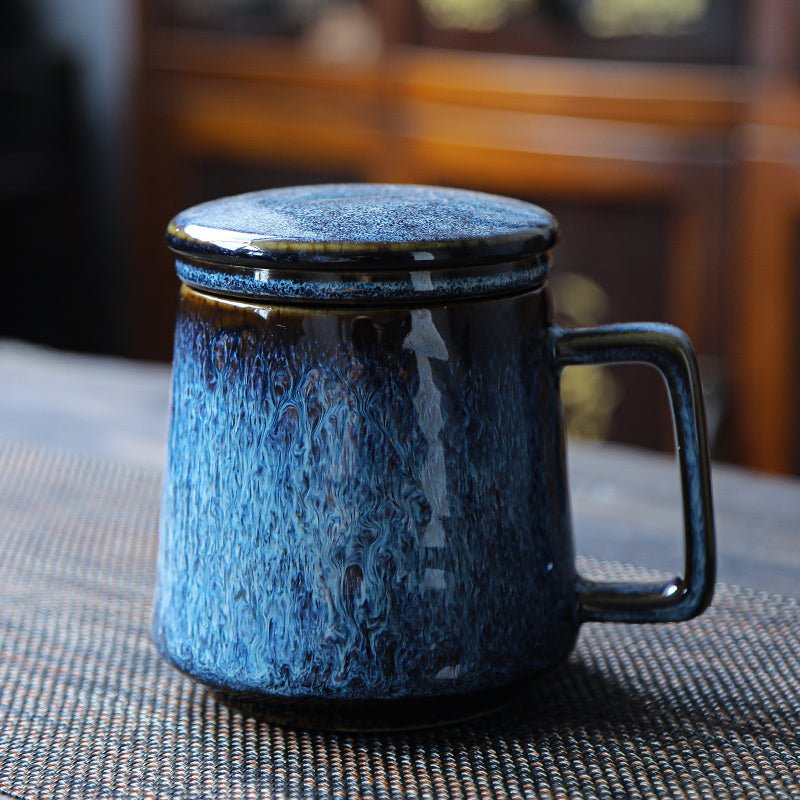
Coffee Mugs With Big Handles Size Decision Guide: 250, 400 or 480 ml
A practical coffee mugs with big handles size decision guide built on the two numbers that actually matter — listed capacity and how much room the handle leaves. Here is when the 250 ml, 400 ml or ...
Read more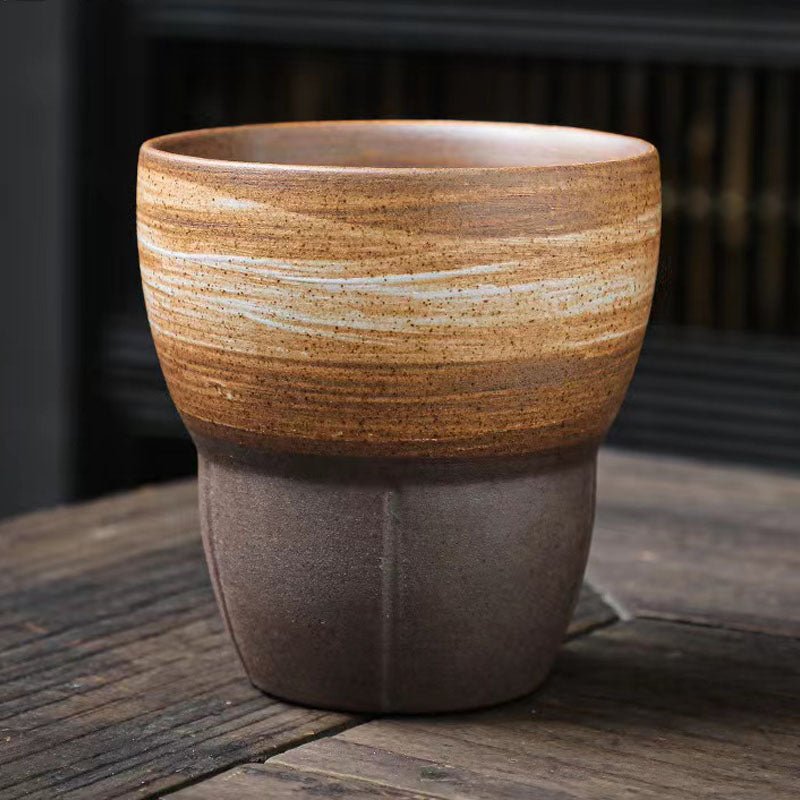
Pottery Tea Cups Size Decision Guide: 170, 200, or 250 ml?
A capacity-first comparison of the 170 ml, 200 ml, and 250 ml ceramic cups we stock — the pour styles each one suits, the trade-offs to expect, and the glaze check that matters more than size.
Read more
Leave a comment
This site is protected by hCaptcha and the hCaptcha Privacy Policy and Terms of Service apply.