



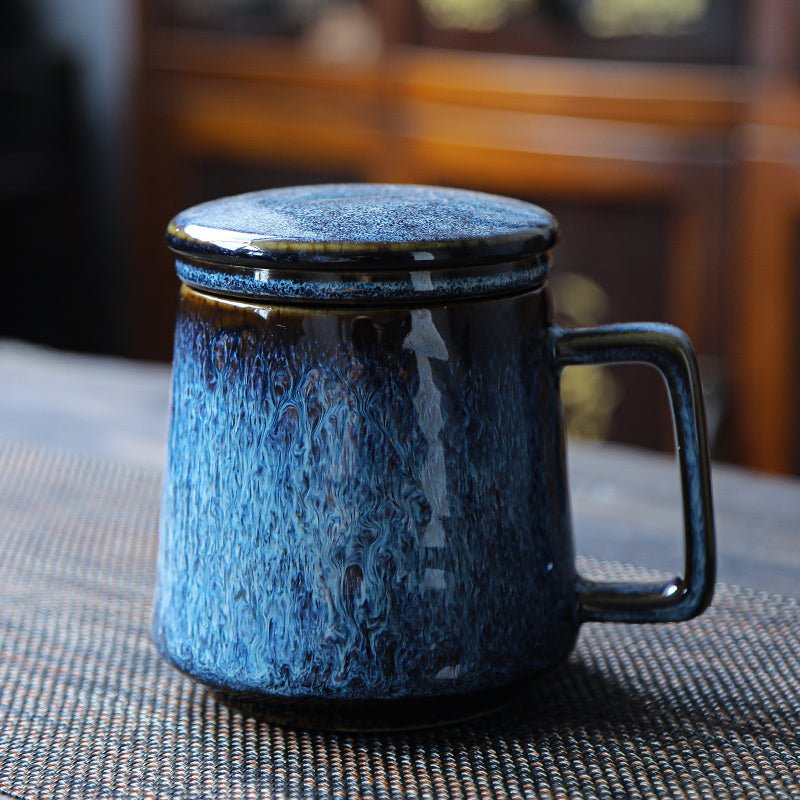
Coffee Mugs With Big Handles Size Decision Guide: 250, 400 or 480 ml
Reading time: about 10 minutes
Watch someone with large hands pick up a mug on a counter. They don't look at the pattern first. They turn it sideways, try to slide two or three fingers through the loop, and set it back down if the opening pinches. Four seconds, and the decision is made.
That four-second test is what this coffee mugs with big handles size decision guide is built around, because the two numbers that settle it are how much the mug holds and how much room the handle actually leaves. We carry three current sizes — 250 ml, 400 ml and 480 ml — and nearly every message we answer about them is the same question wearing two hats: will my hand fit, and will I actually drink that much?
Why a bigger handle doesn't automatically mean an easier grip
Opening size and filled weight pull against each other. A loop can look generous in a photo and still be awkward once the mug is full, or if the handle sits so far off the body that your wrist has to work to keep the rim level.
A 2023 study of cups for care-home residents put numbers on that tension. Participants preferred the cups that were light with a large handle, and the authors named cup mass, diameter, handle length and handle orifice area as the critical dimensions for people with reduced strength and dexterity. The designs that performed best paired lower mass with an opening wide enough for at least two fingers, while still letting the thumb and ring finger brace the cup and keeping wrist movement small.
The same paper, citing earlier hand-clearance work, put the minimum mean cross-sectional area at roughly 650 mm² for two fingers to pass through and about 950 mm² for three. Those are the numbers a handle has to clear. The word “large” in a product title is not one of them.
We can't quote those figures for our own mugs, because handle-opening area isn't a specification the listings publish. If it matters to you, ask before ordering and we'll measure current stock with calipers rather than let you guess from a photo.
Coffee mugs with big handles size decision guide: 250, 400 or 480 ml?
Three current options, three different jobs. The capacities below are the listed ones on each product page. Handle shape is something to study in the photos and confirm with us — we'd rather answer a sizing question than have you receive a mug that looks roomier than it feels.
| Model | Listed capacity | Where it earns its place | Where it gives something up |
|---|---|---|---|
| Ball Handle | 250 ml (about 8.5 fl oz) | Desk mug, second cup, shorter pours, smaller hands, safest gift guess | Empties fast if you sip slowly across a long morning |
| The Flow | 400 ml (about 13.5 fl oz) | One long cup instead of two refills; tea drinkers who top up | More than you may want on a five-minute break |
| The Rock | 480 ml (about 16.2 fl oz) | A single big pour, long desk or sofa sessions | The heaviest when full, and the size most likely to fail a clearance check |
In our experience the jump from 250 to 400 ml changes how often you get up for a refill. The jump from 400 to 480 ml changes how you lift the mug. Those are different decisions, and mixing them up is how people end up with a mug that holds the right amount and still feels wrong in the hand.
When the smaller option is the smarter buy: the 250 ml Ball Handle
The Ball Handle coffee and tea mug is the one we suggest most often to anyone shopping for someone else's hands. Less liquid means less mass to control one-handed, and a smaller body is usually easier to clear under a single-serve brewer spout and to slot onto a crowded desk.
It's the right choice if you:
- Refill on autopilot anyway, so a large pour is wasted on you
- Carry the mug between rooms and want a hand free for doors and banisters
- Have smaller hands and find wide loops harder to close around than tight ones
- Are buying a gift and can't measure anyone's grip span
It's the wrong choice if you drink one long, slow cup in a sitting, or if your daily frustration is the walk back to the kettle. Be honest about that part. A small mug that annoys you is still a small mug.
The 400 ml Flow: the size most routines actually land on
The Flow coffee and tea mug sits in the middle, and the middle is where most people stop looking. 400 ml covers one proper cup with a little headroom, so it doesn't need a mid-task refill, and it's still a sensible amount to hold while you're reading or typing one-handed.
Pick it when your morning looks like this: one cup while you work through the first stretch, maybe a top-up later, and no interest in a second brewing round. It also suits tea drinkers better than the small size, because leaf tea tends to get sipped slower than coffee and a small cup goes lukewarm before you finish it.
The trade-off is real. A mid-size mug is rarely the best answer to any single extreme — for minimum weight, go smaller; for maximum capacity, go bigger. It's the best answer to an average day, which is what most of us actually have.
The 480 ml Rock: buy it for capacity, then run three clearance checks
The Rock coffee and tea mug exists for people who want one big pour and no return trip. We sell it mostly to desk workers, night-shift readers, and anyone who has already accepted that a 250 ml mug means three refills before lunch.
Before it goes in the cart, run these three checks, because capacity is the easy part and fit is the part that disappoints people:
- Brewer clearance. A taller, wider body may not fit the recess under a single-serve machine. Measure the gap between the drip tray and the spout, then compare it to the mug's listed height.
- Warmer and cabinet clearance. Mug warmers have a usable plate diameter, and upper cabinets have a shelf gap. Both are small numbers for a reason.
- Filled weight. 480 ml of coffee or tea weighs roughly 480 g before you add the mug itself. That is the number to hold in your head, not the empty weight.
Who should skip it: anyone with limited grip strength who drinks one small cup a day, and anyone who has already noticed themselves tilting their wrist to keep a heavy mug level. A big loop on a heavy body doesn't fix a weak wrist — the research above is clear that mass matters alongside opening size, not after it.
Handle shape and grip span: what the research says about loop width
A thicker handle can be easier on stiff joints even though it narrows the hole. In a biomechanics study of people with rheumatoid arthritis using spoons, larger handle diameters were associated with less finger-joint flexion than a standard slender handle, and most participants chose a 1.50-inch built-up handle over a 1.00-inch option.
That leaves you balancing two goals whenever you read a listing:
- Opening area — can two or three fingers pass through, or does the loop force a pinch grip?
- Handle thickness and standoff — a thicker grip is gentler on knuckles, but a loop pushed far from a hot wall raises the load on the wrist.
One honest limitation: we don't sell two-handle mugs, T-handles or rotating handles. If tremor is the main issue, or you need to lift a full mug with both hands, those shapes may serve you better than any single oversized loop, and we'd rather say so before you order from us.
Four fit checks to run before you add to cart
- Ask for interior clearance in millimetres. Most listings publish capacity and skip the handle opening entirely. Two fingers need meaningfully more room than a product photo suggests.
- Separate stated capacity from usable capacity. The listed ml is the fill figure. Pour to the rim and you'll get more; leave room to carry it across a room and you'll get less.
- Think about the dishwasher rack position. Long or low-set handles change where a mug can sit without blocking the spray arm, and how it dries. Heavy mugs belong on the bottom rack.
- Measure the cup holder if it's a travel day. Handled mugs and insulated mugs with swivel handles are the usual failures here, and that dimension is rarely published.
What to verify about materials, heat and glazes
Two safety points are worth thirty seconds on any big-handle mug, whatever brand you buy.
Metallic coatings. The U.S. Consumer Product Safety Commission reported that certain ceramic mugs with a metallic coating can overheat or break when microwaved or filled with extremely hot liquid, creating burn and laceration hazards. A March 2024 recall covered about 440,500 Starbucks-branded holiday gift-set mugs, with 12 incidents and 10 injuries recorded. If a mug has a metallic rim or finish, read the care instructions before it goes anywhere near a microwave.
Lead in glazes. The FDA notes that lead in glazes or decorations on some traditional pottery can leach into food and drink if the piece isn't manufactured and fired properly, and that washing or boiling will not remove it. Factory-made commercial ware is described as much less likely to be a problem than handmade, antique, damaged or uncertain-source pieces. One trap worth knowing: ceramicware with extractable lead above FDA action levels shouldn't be labelled “lead free,” so that phrase alone proves nothing.
We won't call a mug microwave safe, dishwasher safe or lead free unless the listing says so, and each product page carries the material and care details we hold for that item. If a claim matters to you, ask and we'll tell you plainly whether we have the documentation or not.
One practical detail from handling stock all day: the joint where a handle meets the body is the thinnest section of any mug, and it's where chips and hairline cracks show up first — usually after a boiling pour into a cold, thick-walled body, or a hot mug straight into cold rinse water. Pre-warming with hot tap water is cheap insurance for any size.
Frequently asked questions
How do I actually work through this coffee mugs with big handles size decision guide?
Two steps, in this order. First decide how many fingers you need through the loop and ask us for the interior clearance, because a handle that pinches fails no matter how good the capacity is. Then choose the smallest capacity that gets you through your usual sitting — 250 ml for short, frequent cups, 400 ml for one long cup, 480 ml only if you've checked the clearances and you're comfortable lifting a full one.
Will a “big handle” mug actually fit four fingers?
Not automatically. Research puts the minimum opening area at roughly 650 mm² for two fingers and about 950 mm² for three, and most retail listings never publish that figure. Ask before buying — we can measure the handle opening on current stock instead of letting a photo decide it.
Is a 480 ml mug too heavy to lift safely when it's full?
480 ml of liquid weighs roughly 480 g before you count the mug itself, which is why filled weight is the number that matters rather than empty weight. If you've noticed yourself adjusting your wrist to keep a heavy mug level, drop to the 400 ml or 250 ml option. Ask us for a scale reading if you need a real empty weight before deciding.
Does a bigger mug make coffee go cold faster?
We haven't measured cooling rates on our mugs, so we won't quote a figure. Broadly, a wider exposed surface loses heat faster while a larger volume holds heat longer — the two effects pull in opposite directions. Pre-warming with hot tap water is the cheap fix that works at any size.
Which size should I gift if I don't know their hand size?
The 250 ml Ball Handle is the safer guess: less liquid mass to control, easier to store, and a smaller body tends to suit more hands than an oversized one. If you know they drink one long cup and hate refilling, go up to the 400 ml Flow instead.
Still deciding? Open the full unique coffee mugs collection and keep three numbers in view: the listed capacity, the interior handle clearance we'll measure for you, and the filled weight you're comfortable lifting. Match those to your real morning rather than to the photo, and the size question answers itself.
More from our blog
Ready to pick your mug? Two ways to save on today's order:
Ordering 1–3 mugs? Get an extra 10% off your 1st order with code 10_OFF Apply 10% Off & Shop Wooden-Handle Mugs →
Gifting 4+ mugs? Buy 3, Get the 4th Free applies automatically at checkout (no code needed; offers do not stack) · Free standard shipping (Nov pre-Christmas delivery: 15–20 calendar days US) · Free replacement if chipped in transit.
Popular mug buying guides: Ceramic Tea Cups & Infuser Mugs · Ceramic Mugs with Lids Compared · Wooden-Handle Tea Infuser Mugs Compared · Christmas & Secret Santa Mugs 2026 · Espresso & Cortado Cups Guide · Cup & Saucer Gift Sets · All 25 Mugs Spec Table · Mug Size Guide · Shipping & Promo FAQ
FIRST ORDER 10% OFF (CODE: 10_OFF) · OR BUY 3, GET THE 4TH FREE


Read more
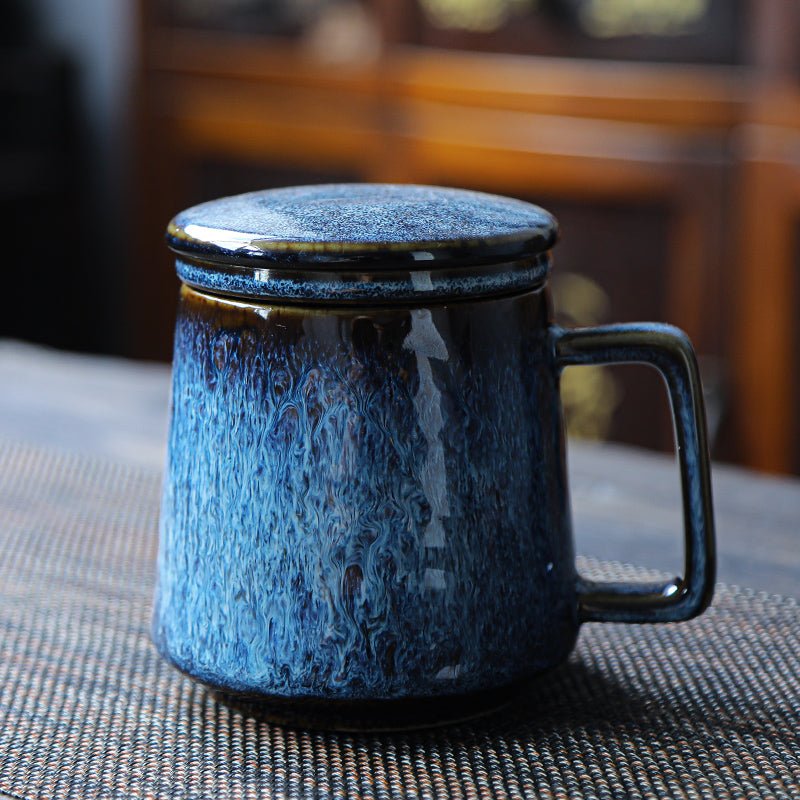
Latte Mugs Tall Size Decision Guide: 400, 440 or 480 ml
Our three tall mugs sit 80 ml apart, and that gap decides headroom, machine clearance, and whether a latte looks full. A practical size decision guide for 400, 440 and 480 ml pours.
Read more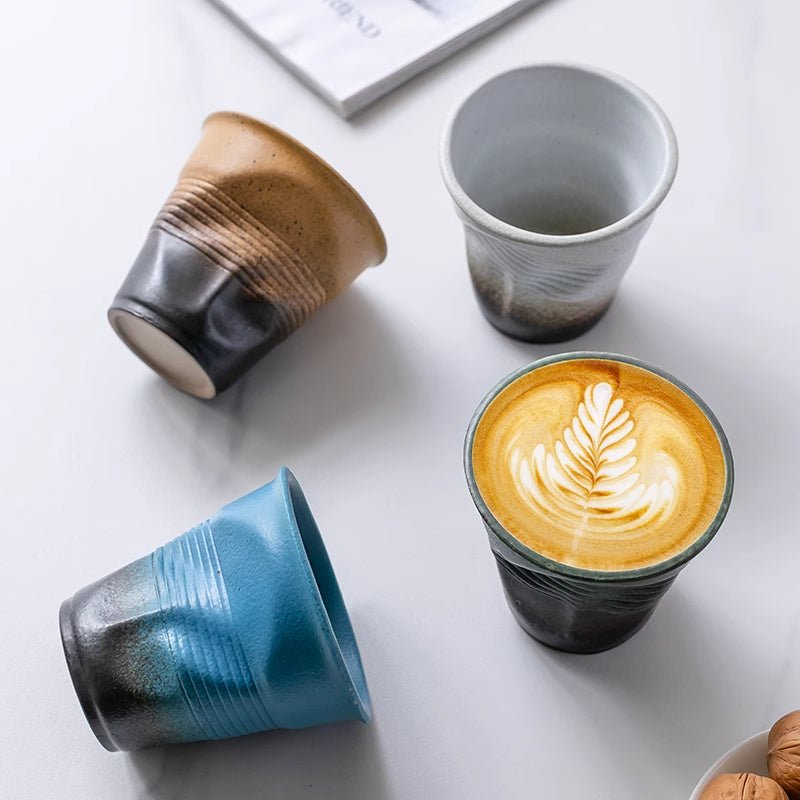
Coffee Mug Gifts Ideas Size Decision Guide: 200 vs 400 vs 440 ml
A 200 ml cup, a 400 ml mug, and a 440 ml mug solve three different gift problems. Here is how to match listed capacity to a real drink routine — and when the bigger mug is the wrong call.
Read more
Leave a comment
This site is protected by hCaptcha and the hCaptcha Privacy Policy and Terms of Service apply.