



Coffee Mug Gifts Ideas Shared Household Product Shortlist Guide
Reading time: about 10 minutes
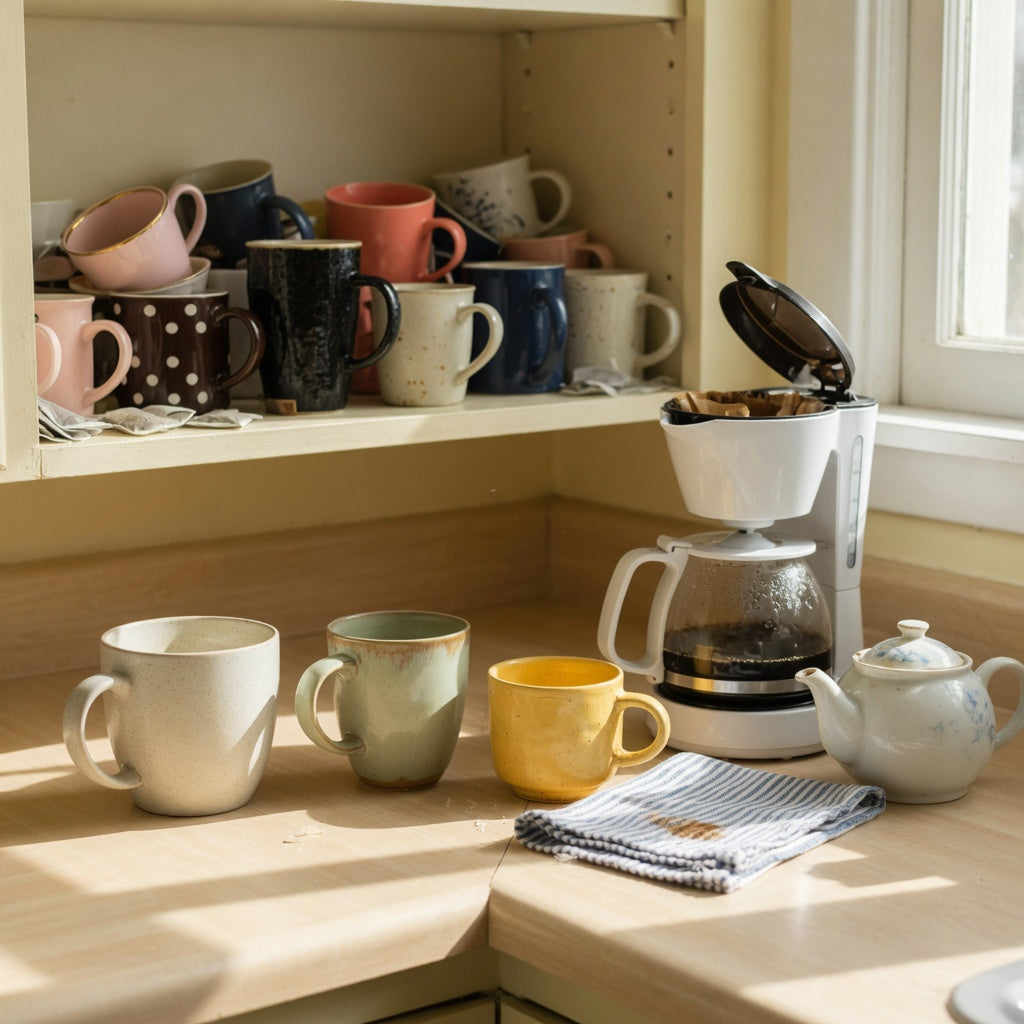
A shared kitchen is a bad place for a vague gift. Count the mugs on the shelf and the pattern is usually the same: three or four that get used every morning, and a row of well-meant gifts that never joined the rotation. The survivors are rarely the prettiest. They hold the right amount of the right drink for one specific person. That is the problem this coffee mug gifts ideas shared household product shortlist guide is meant to solve.
We stock three ceramic capacities — 200 ml, 400 ml, and 440 ml — and each one answers a different morning. Below you get the drinker each size suits, the kitchen it fits, and the honest reason to skip it. We sell these mugs, so read this as our reasoning rather than a neutral roundup. We would rather you bought one mug that gets used than two that get shelved. If you want to see the finishes together first, the unique coffee mugs collection lays them out side by side.
What makes a shared kitchen harder to gift than a solo one?
A single-person kitchen forgives novelty. Two people sharing one cabinet do not. Every mug you add competes for the same six inches of shelf and the same run through the dishwasher, and the mug that loses that competition gets quietly demoted to holding pens.
Four things decide who wins:
- Dishwasher volume, not dishwasher safety. Two people generate a full load fast. A mug that stacks badly or traps water in a heavy base gets pushed to the back even when the care instructions say it is fine.
- Handle side. A shared shelf usually has a left-hander and a right-hander reaching for the same mug. A handle that sits close to the body forgives both grips better than a wide decorative loop.
- Microwave queue. One person reheats at 7 a.m., the other at 9. A mug that is too tall for the shelf above the turntable becomes a small daily irritation.
- Duplicates. Two identical mugs cause mix-ups. Two wildly mismatched ones make the shelf look like a lost-and-found. Different capacities in a similar finish tend to be the compromise that sticks.
One planning note: our mugs are sold individually, not as sets. If you are buying for two people, you are choosing two separate mugs on purpose — which is actually the better way to do it.
The coffee mug gifts ideas shared household product shortlist guide at a glance
| Mug | Stated capacity | Best drink fit | Main limitation |
|---|---|---|---|
| Pleated coffee and tea cup | 200 ml | Espresso, cortado, a small afternoon tea, after-dinner coffee | Needs refills; frustrating for anyone who drinks large milk-based coffees |
| The Flow coffee and tea mug | 400 ml | Filter coffee, flat white, standard tea | Middle of the road — too big for espresso drinkers, short of a very long cup |
| Morning and Night coffee and tea mug | 440 ml | Long filter coffee, big mugs of tea, one-cup-and-done mornings | Heavier in the hand when full; more than some people want to finish |
Those are the stated capacities on each listing. What they do not tell you is usable fill. A mug rated 400 ml does not hand over 400 ml of drinking volume — you need headroom below the rim or the first sip goes over your knuckles. Plan on roughly a centimetre and a half of unused space at the top. In practice the 200 ml mug pours closer to a small cup, the 400 ml lands near a standard twelve-ounce coffee, and the 440 ml is a genuinely long drink.
Pleated 200 ml: the right gift only when the small cup is the whole point
The Pleated coffee and tea cup is the 200 ml option in a ceramic finish, with a pleated exterior that reads as texture rather than pattern — which matters on a crowded shelf, because it looks deliberate next to plainer mugs instead of competing with them.
Choose it if the person you are buying for drinks espresso or a small cortado, takes tea in the afternoon rather than by the litre, or has said out loud that big mugs go cold before they finish. It is also the better pick for a shared household where counter space is the real bottleneck.
Skip it if their morning is a 16-ounce drip coffee, if they routinely add a lot of milk, or if they work from home and refill all day — a 200 ml mug means four trips to the kettle instead of two. That is the trade, and it is a real one.
Care is worth checking rather than assuming. We keep dishwasher and microwave guidance on each individual product page rather than generalising across the range, because glaze and finish vary between mugs.
The Flow 400 ml: the safest single mug to buy for a household you do not live in
The Flow coffee and tea mug is 400 ml in a ceramic finish, and it is the size we point people toward most often when they are guessing. It sits in the band where most filter coffee, tea, and milk drinks actually land.
In our store, the question we hear most is some version of: I do not know what they drink, what do I buy? The 400 ml is our default answer because it is the least likely to be wrong in a two-person house.
Choose it if you do not know the recipient’s exact routine, if two people in the house drink different things — one coffee, one tea — and you want a mug that neither resents, or if the gift is going to a household where the mug will be shared equipment rather than personal property.
Skip it if the person has strong opinions. Someone who pulls espresso will find 400 ml half-empty and sloshy. Someone who measures their brew will want a specific volume the mug does not provide. A mug in the middle is a compromise, and some drinkers would rather have the extreme.
Morning and Night 440 ml: for the person who nurses one mug until it goes cold
The Morning and Night coffee and tea mug is the 440 ml option, the largest of the three, and it is built for the drinker who makes one big cup and works through it slowly.
Choose it if the routine is a large filter coffee at a desk, a long tea, or a single morning mug that has to last through a meeting. In a shared household it also solves a specific problem: the person who always reaches for the biggest mug on the shelf stops taking someone else’s.
Skip it if grip strength or hand size is a factor — a full 440 ml mug will generally feel heavier to lift than a 200 ml one — or if the recipient has a small sink and a crowded drying rack. It is also the wrong choice for anyone who genuinely prefers a hot drink that stays hot to the last sip, since more volume means more cooling time.
Where a ceramic mug is the wrong gift, even when it is a good mug
Three situations where we steer shoppers elsewhere instead of selling a mug:
- The commuter. If the mug has to travel in a bag, a lidded insulated tumbler is the right answer — ceramic in a backpack is a laptop story waiting to happen. If you go that route, check that the lid comes apart for cleaning and that the gasket is replaceable.
- The year-round iced coffee drinker. Ceramic holds temperature in both directions; a tall iced drink in a ceramic mug sweats onto the desk and dilutes fast.
- The person who already has too many. If they have said so, do not add a fifteenth mug. Pair a small consumable with a note instead, or pick a size that replaces rather than joins the shelf.
There is also a safety dimension that gift roundups usually skip. The FDA lists an action level of 0.5 µg/ml of leaching solution for lead in ceramicware cups and mugs under its pottery compliance guidance, and notes that lead can be present in glazes or decorations on some traditional pottery and can leach into drinks if a piece is not manufactured or fired properly. Washing or boiling does not remove lead. The FDA flags handmade pieces with crude finishes, antiques, damaged items, pieces of uncertain origin, and brightly orange, red, or yellow decoration as the higher-concern categories, while describing commercially made everyday pottery as much less likely to have lead problems. Two practical rules follow: avoid decorative ceramicware that carries a Not for Food Use warning or an ornamental-only marking (21 CFR 109.16 covers that labelling), and remember that a Lead Free label is not a certification — FDA guidance says ceramicware with extractable lead should not carry that term at all. That does not make every handmade mug unsafe; it means the maker and the listing should give you a clear food-use statement.
If you are still weighing finishes against capacities, start with the collection page and shortlist two mugs rather than five. Two is a decision. Five is a postponement.
What should you verify in the two minutes before checkout?
- Capacity in millilitres, not ounces. Convert before you commit — 200 ml, 400 ml, and 440 ml look similar in a photo grid and nothing alike on a shelf.
- The care line on that specific listing. Dishwasher and microwave claims belong to the individual mug, not the category. Do not carry a claim over from a similar-looking product.
- Decoration type. Metallic rims, lustre finishes, and some decals behave differently in a microwave than a printed design does. When a mug has metallic trim, do not microwave it.
- Handle clearance. Check whether the handle leaves room for a knuckle. Tight handles are the most common complaint we hear after a gift has been in use for a month.
- Who it is actually for. If the answer is the household rather than a person, buy the 400 ml as the shared default.
Write the care note on a card if the mug is a gift. A one-line instruction — hand wash, or top rack, or no microwave — is the difference between a mug that survives the first week and one that gets ruined by good intentions.
Frequently asked questions
How many mugs should I buy for a two-person household?
One per drink routine, not one per person. Treat this coffee mug gifts ideas shared household product shortlist guide as a filter: if both people drink filter coffee in the morning, two 400 ml mugs make sense. If one drinks espresso and the other drinks tea by the pint, a 200 ml and a 440 ml serve the house better than two identical mugs. Our mugs are sold individually, so you are never forced into a set.
Is 400 ml enough for a latte or a large filter coffee?
For most home filter coffee and a standard latte, yes — once you allow for headroom, a 400 ml mug pours roughly a twelve-ounce drink. It falls short for anyone used to a 20-ounce travel tumbler, and it is oversized for a cortado or a single espresso.
Will a 200 ml mug work for tea?
It works well for a small afternoon tea or a strong black tea taken in short pours. It is a poor fit if the person drinks tea by the pint through a working day, because they will be refilling constantly and the second half of every cup goes cold.
Can I put a ceramic mug in the dishwasher or microwave?
Check the care section on that exact product page rather than relying on the category. Dishwasher and microwave suitability varies with glaze, finish, and decoration, and a claim on one mug does not transfer to another. Anything with metallic trim or lustre should stay out of the microwave regardless.
What should I check on a handmade or imported ceramic mug before gifting it?
Look for a food-use statement, avoid pieces marked ornamental or Not for Food Use, and be cautious with antiques, damaged glaze, crude handmade finishes, and bright orange, red, or yellow decoration. Washing does not remove lead from a poorly fired glaze, and a Lead Free label on its own is not proof — FDA guidance discourages the term on ceramicware that shows extractable lead.
If you are ready to move from shortlist to checkout, start with the unique coffee mugs collection, pick the capacity that matches the drink each person makes most often, and confirm the care line on that specific listing before you buy.
More from our blog
Ready to pick your mug? Two ways to save on today's order:
Ordering 1–3 mugs? Get an extra 10% off your 1st order with code 10_OFF Apply 10% Off & Shop Wooden-Handle Mugs →
Gifting 4+ mugs? Buy 3, Get the 4th Free applies automatically at checkout (no code needed; offers do not stack) · Free standard shipping (Nov pre-Christmas delivery: 15–20 calendar days US) · Free replacement if chipped in transit.
Popular mug buying guides: Ceramic Tea Cups & Infuser Mugs · Ceramic Mugs with Lids Compared · Wooden-Handle Tea Infuser Mugs Compared · Christmas & Secret Santa Mugs 2026 · Espresso & Cortado Cups Guide · Cup & Saucer Gift Sets · All 25 Mugs Spec Table · Mug Size Guide · Shipping & Promo FAQ
FIRST ORDER 10% OFF (CODE: 10_OFF) · OR BUY 3, GET THE 4TH FREE


Read more
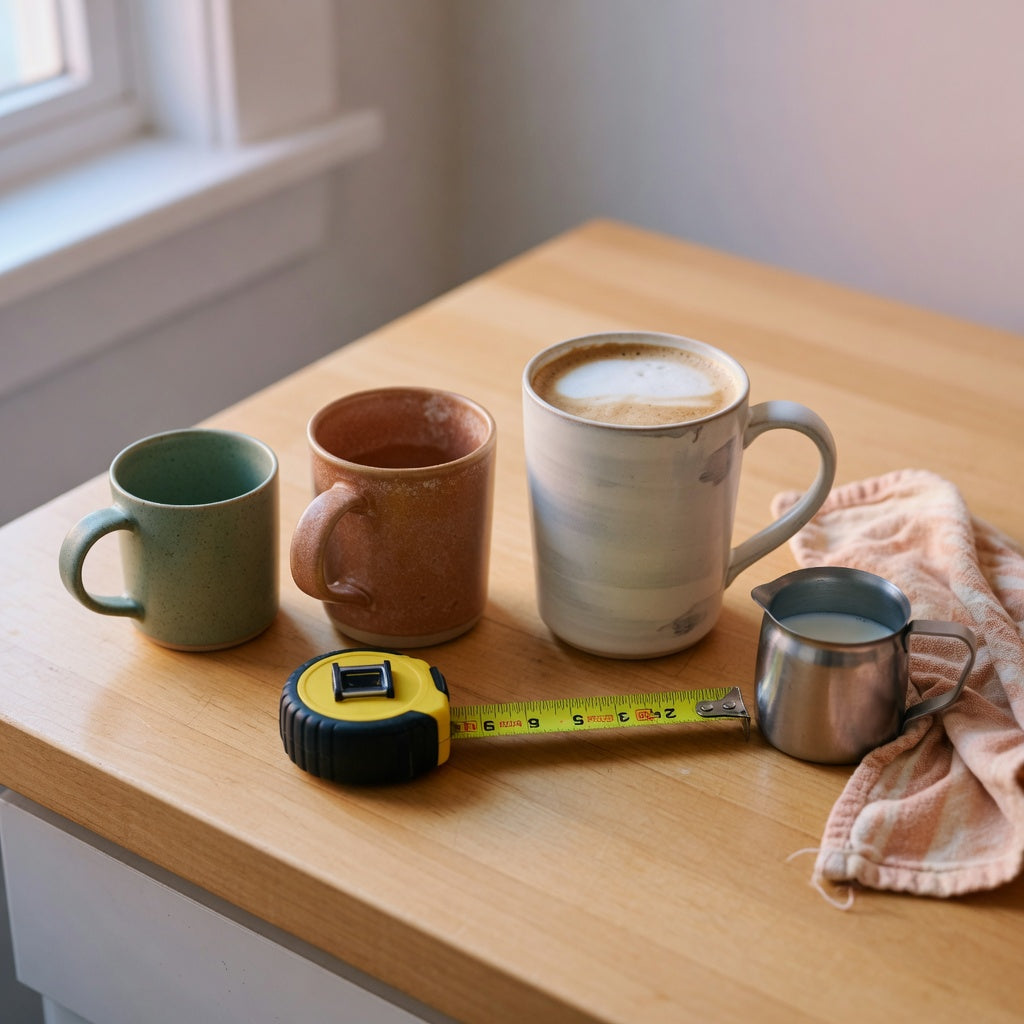
Latte Mugs Tall Shared Household Product Shortlist Guide: 3 Sizes
Three people, three latte habits, one cabinet that fits two mugs. We compare our 400 ml, 440 ml, and 480 ml tall mugs against real shared-kitchen habits, plus the clearance numbers and care checks ...
Read more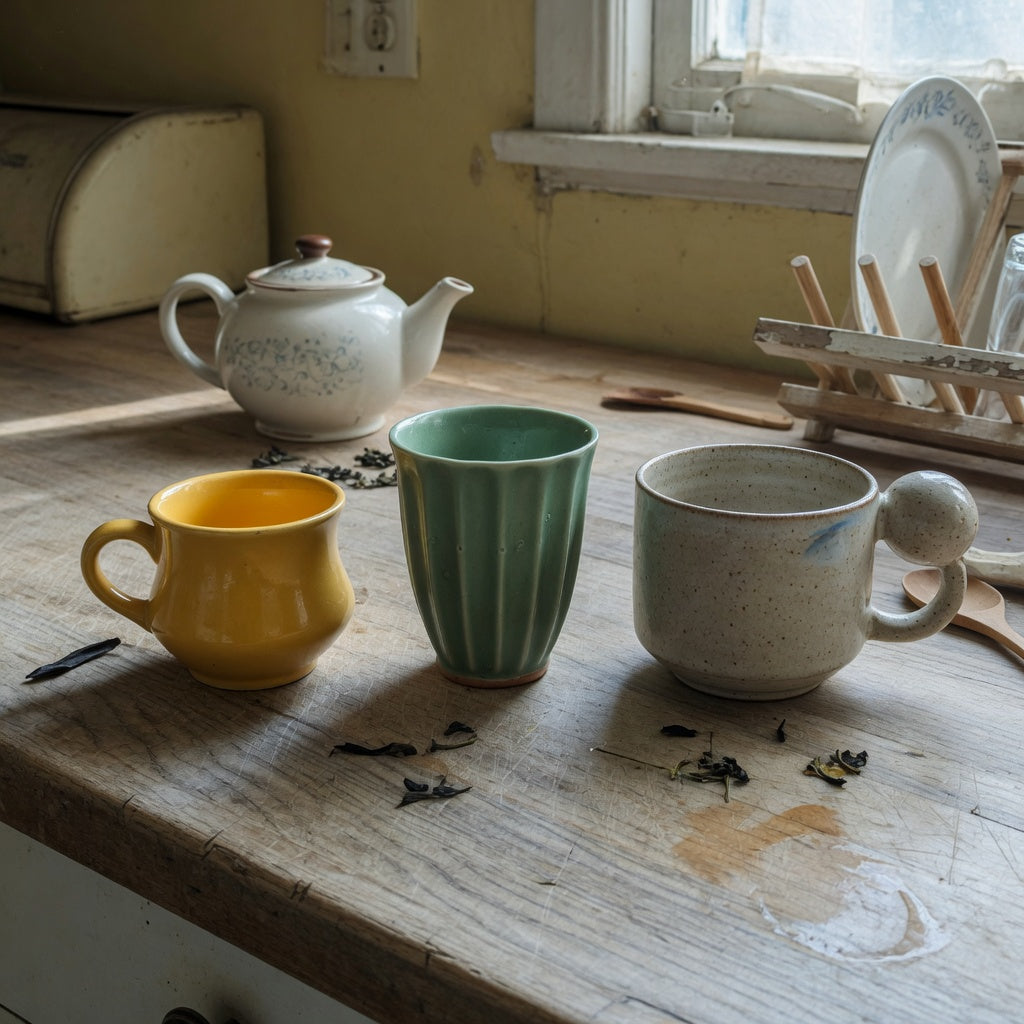
Pottery Tea Cups Shared Household Product Shortlist Guide (3 Picks)
A three-cup shortlist for homes where everyone drinks tea differently: which capacity fits which habit, what to inspect on the glaze, and when to skip a form entirely instead of buying a matched set.
Read more
Leave a comment
This site is protected by hCaptcha and the hCaptcha Privacy Policy and Terms of Service apply.