
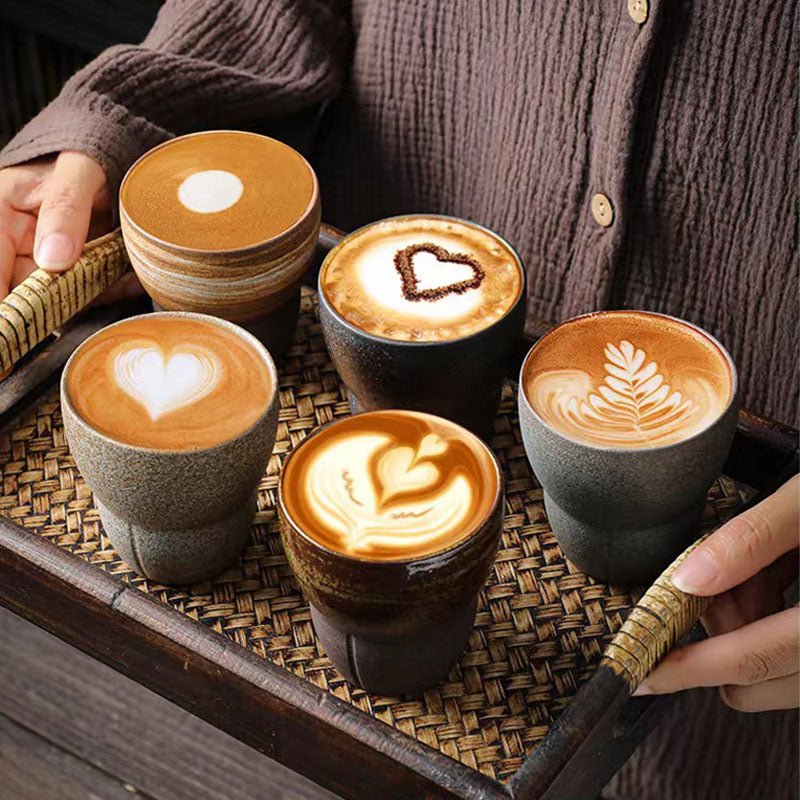
Cappuccino coffee mug shared household product shortlist guide
Reading time: about 10 minutes
At 7:15 a.m., one housemate pours a short coffee, another wants more room for milk, and a third carries a drink to a desk for the next half hour. A single cup size often serves one of those routines while frustrating the other two. This cappuccino coffee mug shared household product shortlist guide compares three separate options using the facts we can verify: Retro 170 ml, Pleated 200 ml, and Emerald 270 ml.
In our store, the useful comparison starts with each person's finished drink volume, not a style adjective. We compare these cups by listed capacity and everyday cup fit only. We do not claim that any of them was designed, tested, or certified for cappuccino, and we do not infer foam performance, heat retention, microwave or dishwasher safety, or barista use.
This is also a mix-and-match shortlist, not a recommendation to buy a packaged set. Each product has its own listing, so the practical goal is to match one person's routine to one suitable capacity.
Why do 170 ml, 200 ml, and 270 ml change the shared-kitchen decision?
The numbers are close enough to look interchangeable on a screen, but their differences become clearer beside a real morning pour. The Pleated holds 30 ml more by listed capacity than the Retro. The Emerald adds another 70 ml over the Pleated and 100 ml over the Retro.
Before opening product pages, we suggest running a quick portion check for each person in the household:
- Measure the complete drink, including any milk or added water, rather than measuring only the brewed coffee.
- Note how much empty space that person normally leaves below the rim. We do not have a verified working-fill or brim-fill definition for these cups, so comfortable headroom matters.
- Record whether the person usually finishes the drink quickly, returns for a refill, or carries it to breakfast or an office desk.
- Repeat the check on more than one day if serving size changes between coffee and tea.
| Product | Listed capacity | Capacity relationship | Household routine to test |
|---|---|---|---|
| Retro Coffee Tea Cup | 170 ml | Smallest option | Shorter finished drink or fresh refills |
| Pleated Coffee Tea Cup | 200 ml | 30 ml more than Retro | Moderate coffee or tea serving |
| Emerald Coffee Tea Mug | 270 ml | 70 ml more than Pleated | Larger single pour for breakfast or a desk |
Capacity does not reveal exterior height, width, weight, handle clearance, wall thickness, or stackability. If a shelf, cup holder, or crowded drying rack imposes a strict dimensional limit, confirm those measurements separately rather than assuming the 170 ml option has the smallest footprint.
Cappuccino coffee mug shared household product shortlist guide: three routines
We do not rank these cups from worst to best. We assign them a household role. The smallest listed capacity suits a person who consistently makes a short drink, the middle option covers a moderate serving, and the largest gives more room to someone whose finished drink exceeds 200 ml.
- Quick-finish routine: start with the Retro 170 ml and check that the normal pour leaves comfortable headroom.
- Moderate-serving routine: compare the Pleated 200 ml with the measured volume, especially if 170 ml has felt restrictive.
- Breakfast or desk routine: consider the Emerald 270 ml when the complete drink regularly needs more than 200 ml.
These are serving roles, not performance claims. A cup holding more liquid does not establish that it keeps a drink warm longer, and a smaller cup is not automatically a barista-style cappuccino cup.
Is the Retro 170 ml right for the quick-pour housemate?
The Retro Coffee Tea Cup with a listed 170 ml capacity is the smallest option in this comparison. It belongs on the shortlist for the person who consistently chooses a smaller finished drink and does not mind making a fresh refill later.
- Choose it if: the person's measured serving sits comfortably below the listed capacity, short coffee or tea portions are normal, and 200 ml would usually go partly unused.
- Skip it if: milk or added water brings the drink close to 170 ml, the person dislikes refilling, or their usual recipe already exceeds that volume.
We would not select the Retro solely because a shopper typed coffee cup for cappuccino into a search box. The deciding fact is the 170 ml listed capacity. We cannot claim a particular foam ratio, traditional serving proportion, or professional coffee use.
Does the Pleated 200 ml cover the middle ground?
The Pleated Coffee Tea Cup at 200 ml fits the clearest middle scenario: 170 ml is too restrictive, but 270 ml is more capacity than the household member normally uses. That 30 ml step above the Retro is modest, so it is worth comparing it with an actual finished drink rather than choosing by name alone.
- Choose it if: the measured portion needs more room than the Retro offers, coffee and tea servings tend to fall in a similar moderate range, or the person wants less unused capacity than the Emerald provides.
- Skip it if: the usual drink is already close to or above 200 ml, or the extra 30 ml over the Retro would not solve the household's recurring overflow or refill problem.
The word Pleated helps identify the product listing, but we do not use that name to infer grip, cleaning effort, exterior dimensions, or durability. Those details require current product information rather than assumptions about the style.
Is the Emerald 270 ml better for the desk-side slow sipper?
The Emerald Coffee Tea Mug with a listed 270 ml capacity is the largest option here. It makes sense for the housemate whose complete drink regularly exceeds 200 ml or who wants enough capacity for one larger breakfast or desk-side pour.
- Choose it if: the person's measured drink needs the additional 70 ml over the Pleated, they routinely return for an immediate top-up with smaller cups, or 170 ml and 200 ml both feel restrictive.
- Skip it if: the person prefers a compact serving, usually leaves larger mugs unfinished, or specifically wants a small-cup presentation.
The Emerald's larger listed capacity does not prove better heat retention. A slow drinker should choose it for serving volume, not on the assumption that the last sip will remain hot. We also cannot infer its weight, footprint, or handle comfort from capacity alone.
How should a shared kitchen verify material, care, and arrival condition?
Material and care requirements can remove a cup from the shortlist even when its capacity is right. If ceramic is non-negotiable, do not rely on the search phrase cappuccino cup ceramic as a specification. Check the current product listing or included instructions for the actual material and care guidance before buying or starting the first dishwasher cycle.
Our team uses the following category-level receiving check for drinkware. These are sensible unboxing checks, not claims that these products have known defects:
- Read before washing: verify the current instructions for hand washing, dishwasher use, and microwave use. If a required care method is not stated, do not assume compatibility.
- Inspect under side light: rotate the empty cup and check the rim for chips, the body for hairline cracks, any handle joins for visible separation, and the base for shipping damage.
- Check the base: wipe the bottom clean, place the empty cup on a flat, dry counter, and press lightly at several points around the rim. Persistent rocking should be investigated before the cup is used.
- Test the serving level: use room-temperature water and a measuring jug to recreate the person's normal volume. This shows whether the preferred headroom feels practical without making claims about hot-drink performance.
- Keep gift packaging briefly: if the cup is being given as a housewarming gift, inspect it before discarding protective packaging or presenting it to the recipient.
We will not invent a universal washing instruction to make the shortlist sound more complete. The live product page and included care information should control how a specific cup is cleaned and used.
Which household habits rule out all three sizes?
A practical shortlist must make rejection easy. A different style is likely to serve the household better in these situations:
- Everyone pours more than 270 ml: all three listed capacities are below the household's normal finished volume, so a larger mug is the more direct choice.
- Iced drinks are the default: a taller glass or tumbler may provide more useful room for ice and a straw than this small-to-moderate capacity group.
- An identical matching set is required: this guide compares three separate product listings with different capacities. It does not present them as one coordinated set.
- Exact stacking or shelf dimensions decide the purchase: capacity cannot answer those questions. Confirm dimensions before ordering.
- Machine care is mandatory: if dishwasher or microwave suitability cannot be verified for the selected product, pause the purchase instead of filling the gap with an assumption.
Households that need another size, shape, or visual direction can compare alternatives in our unique coffee mugs collection. Start with the required capacity and care details, then narrow by appearance.
How do you make the household shortlist without buying a set?
Use one line per person. A two-person kitchen may need only one or two of these options, while two people with the same serving habit may reach the same choice independently.
- Write each person's normal finished drink volume beside their name.
- Cross out any listed capacity that would not leave their preferred headroom.
- Choose between 170 ml, 200 ml, and 270 ml based on that person's routine, not the household average.
- Verify material, dimensions, and care details that are essential to the purchase.
- Open the matching individual product page and review its current information before ordering.
This method keeps the cappuccino coffee mug shared household product shortlist guide tied to real serving habits. It also prevents a common buying error: choosing three different cups simply because three options appear in the article.
Frequently asked questions
How should I use the cappuccino coffee mug shared household product shortlist guide?
Measure each person's complete drink, including milk or added water, and compare it with the listed capacities of 170 ml, 200 ml, and 270 ml. Remove options that do not leave comfortable headroom, then verify the current material, dimensions, and care instructions. Treat each product as an individual choice rather than part of a required trio.
Can the Retro 170 ml work as a coffee cup for cappuccino?
It may fit a shopper whose complete drink is comfortably within the cup's listed 170 ml capacity. We do not claim that the Retro was designed, tested, or certified for cappuccino, and we cannot confirm a particular espresso-to-milk ratio or foam result. Choose it by measured serving volume.
Should I choose the Pleated 200 ml instead of the Retro 170 ml?
Choose the Pleated if the Retro's listed capacity is too close to your finished drink volume or does not leave the headroom you prefer. The Pleated adds 30 ml of listed capacity. If your drink also approaches 200 ml, compare the Emerald rather than assuming the middle option is large enough.
Are the Retro, Pleated, and Emerald presented as one set?
No. This guide treats them as three separate product choices with different listed capacities. Review and select each listing independently based on the habits of the person who will use it.
Can I assume these cups are ceramic, microwave-safe, or dishwasher-safe?
No. Those details are outside the verified comparison facts used in this shortlist. Check the current product page and included instructions before purchase and before using a microwave or dishwasher.
Next step: measure each household member's normal finished drink once, assign 170 ml, 200 ml, or 270 ml only where it leaves practical headroom, and remove any option with an unverified must-have care detail. If none fits cleanly, use the broader collection rather than forcing one of these three capacities into the kitchen.
More from our blog
Read more
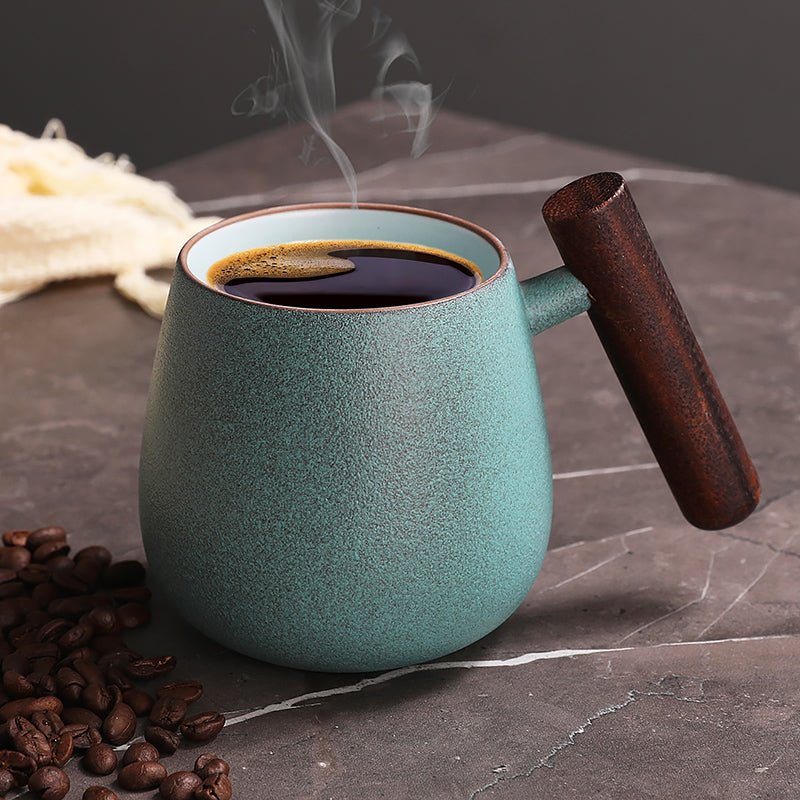
Ceramic Wide Bottom Coffee Mugs Weekend Coffee Product Shortlist Guide
Compare the Round, Spittoon, and The Rock Coffee Tea Mugs by table setup, opening profile, cabinet footprint, cleaning effort, and gifting fit. Each recommendation includes a practical reason to ch...
Read more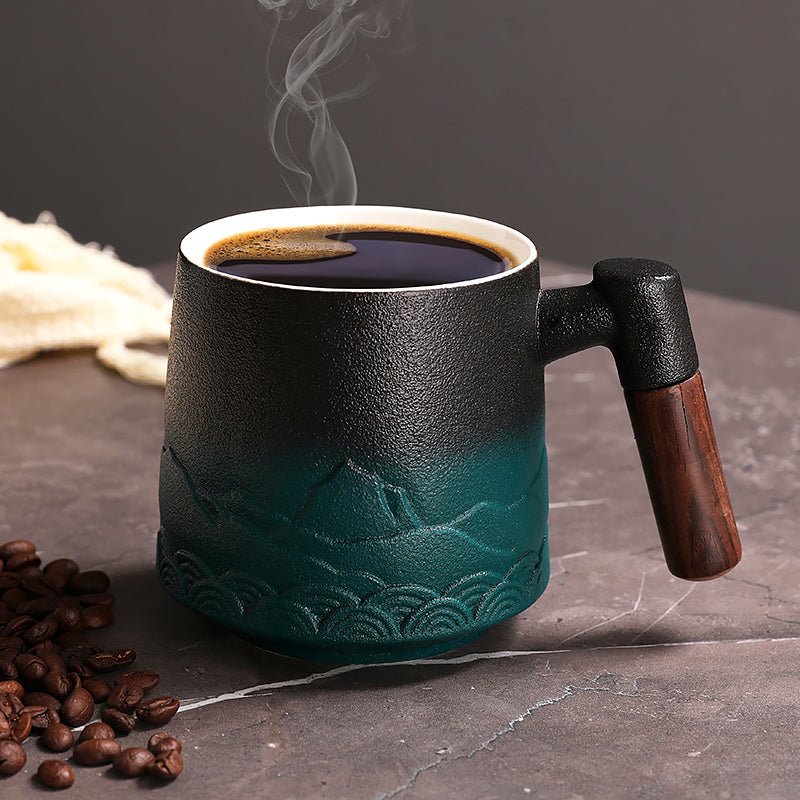
Coffee Mug Gift Idea Shared Household Product Shortlist Guide
A scenario-led shortlist for comparing Golden Waves Kio, The Crane, and Mountain Sea mugs. Match each design to drink routines, cupboard space, care habits, and the recipient's taste.
Read more
Leave a comment
This site is protected by hCaptcha and the hCaptcha Privacy Policy and Terms of Service apply.