



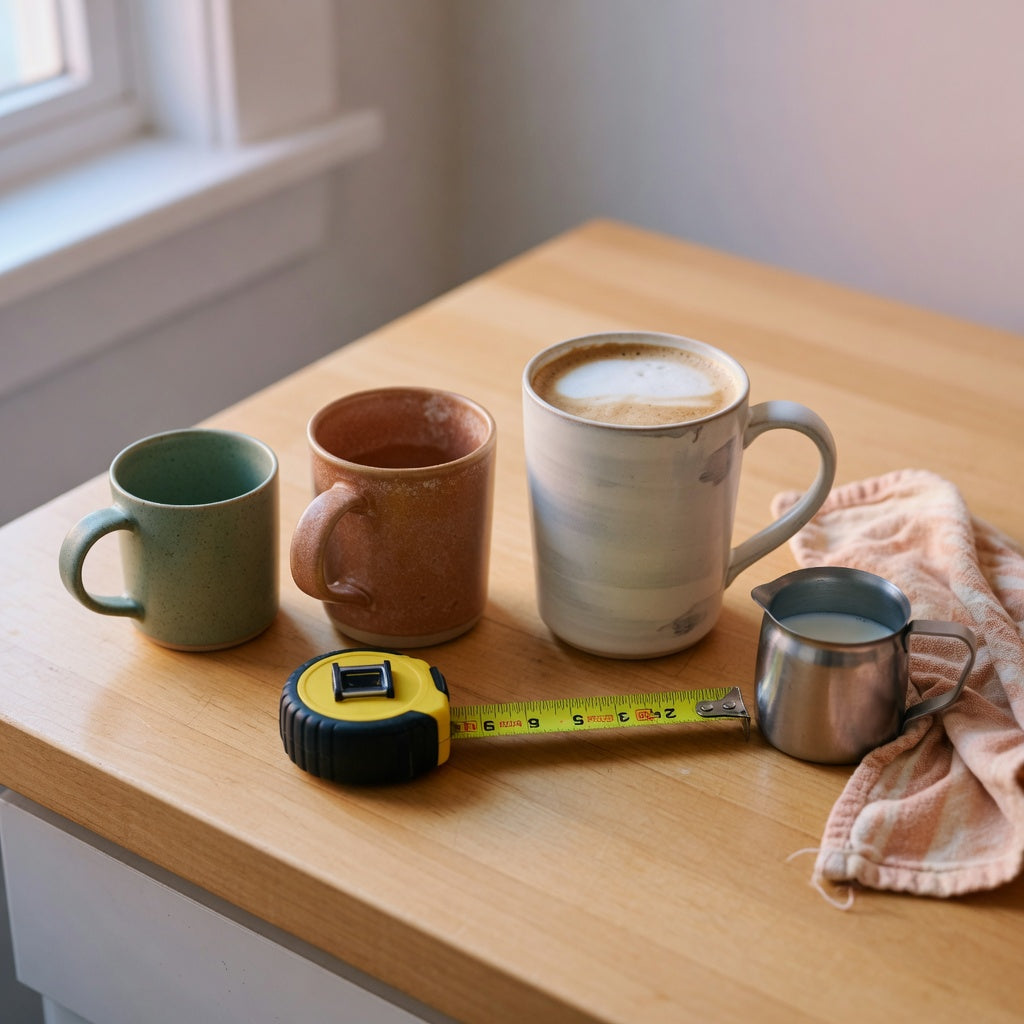
Latte Mugs Tall Shared Household Product Shortlist Guide: 3 Sizes
Reading time: about 10 minutes
A tall coffee mug, a cafe latte cup, and a conical gift mug are three different objects
Search the phrase once and you get all three back on the same results page: a tall straight-sided mug with a handle, a wide shallow cafe cup built for pouring rosettes, and a conical gift mug that is tall mostly because the printable panel is tall. They share a name and almost nothing else once steamed milk goes in.
- The tall handled mug is what most shoppers picture — a cylindrical wall, a side handle, height doing the work instead of width.
- The cafe latte cup is shorter and much broader, with a rim wide enough to pour into. It is a table vessel for latte art, not something you carry to a desk.
- The conical gift mug is the tallest and narrowest of the three, designed around print area first and drink performance second.
One regulatory note clears up a lot of confusion. FDA's ceramic guidance, which sets lead-leaching limits by vessel type, describes a cup or mug as small hollowware for hot drinks that normally holds about 240 ml (8 fl oz) and usually has a handle, with mugs given cylindrical sides and cups given a base and curved sides. That is a testing category, not a recommendation that a latte be eight ounces. No standard fixes latte-mug size, which is why a shortlist beats a spec sheet every time.
For the arithmetic: NIST's approximate factor is 1 US fluid ounce = 29.57 ml, so 400 ml is about 13.5 fl oz, 440 ml about 14.9 fl oz, and 480 ml about 16.2 fl oz. All of those are brim-full figures.
How much of a 400, 440, or 480 ml mug is actually drinkable?
| Mug | Listed capacity | Approx. US fl oz (brim) | What it tends to suit |
|---|---|---|---|
| The Flow | 400 ml | ~13.5 | A double shot with a modest milk pour and room left for foam |
| Morning and Night | 440 ml | ~14.9 | The middle size when a household cannot agree on one |
| The Rock | 480 ml | ~16.2 | One large morning drink instead of two smaller ones |
Brim capacity is a measuring number, not a drinking number. Steamed milk expands as it is aerated and the foam sits above the liquid line, so a mug filled to the very top photographs well and slops on the walk to the table. We pour to roughly a thumb's width below the rim, which quietly takes 30 to 50 ml off every figure above.
In our experience the pitcher is half the decision. A large pitcher holding a small amount of milk is harder to control than one sized close to the job, and households that bought a big pitcher for a 400 ml mug end up pouring two rounds into it and wondering why the texture changed.
Latte Mugs Tall Shared Household Product Shortlist Guide: three drinkers, three fits
Every mug below is a separate listing. A three-person house orders three pieces; nobody is splitting a boxed set. That distinction matters, because a shared-household shortlist is about matching people to vessels, not matching a whole household to one style.
The Flow, 400 ml — for the double-shot drinker who wants foam under the rim
- Choose it if the usual drink is a double espresso with a modest milk pour, and the foam should sit below the rim rather than crown above it.
- Choose it if counter space is tight and the mug lives under a low shelf gap.
- Skip it if someone in the house drinks 16-ounce coffees, or if you own a large pitcher and would be splitting one pour between two mugs.
- Skip it if latte art is the whole point — a smaller rim gives a pattern less room and forgives a rough pour less.
The Flow coffee and tea mug is the one we steer small-drink households toward first. Check the listed height and rim diameter against your machine before ordering; those two numbers decide the fit far more than 400 ml does.
Morning and Night, 440 ml — the mug guests and mixed kitchens keep reaching for
- Choose it if the household genuinely cannot agree. It sits between the other two, so it is rarely badly wrong and rarely perfect.
- Choose it if one person drinks closer to 12 ounces and another closer to 14, and you would rather not stock two size families.
- Skip it if someone is firm about small, dainty lattes, or firm about very large ones. Buy their size instead of the compromise.
- Skip it if the goal is identical mugs for everyone in one order — count the pieces first, then decide.
The Morning and Night coffee and tea mug is our most frequent recommendation for guest cups and kitchens where the pour drifts day to day, because a 40 ml gap from The Flow is small enough to stay flexible.
The Rock, 480 ml — for whoever drinks one genuinely big cup
- Choose it if the first coffee of the day is large and you would rather not refill mid-morning.
- Choose it if you make iced drinks where ice takes up volume a hot drink would not.
- Skip it if the espresso spout sits low — height rules this one out before capacity ever gets a vote.
- Skip it if the espresso dose stays the same and you simply add more milk. More milk in an unchanged drink tastes milkier, and that is arithmetic rather than a defect.
The Rock coffee and tea mug suits the one-big-mug drinker and fights a kitchen where everyone pulls a single shot and wants a 10 oz drink. If none of the three silhouettes matches how your house actually pours, start with our unique coffee mugs collection and narrow by silhouette before you narrow by capacity.
Spout clearance, shelf gap, rim width, base width: four numbers a capacity line hides
Height ends more mug purchases than any other measurement. A mug can hold exactly the right volume and still be unusable in your kitchen.
- Spout or group-head clearance: with the machine cold, measure from the drip tray up to the coffee outlet. That figure, not the ounce rating, decides whether the mug slides underneath.
- Cabinet shelf gap: subtract the listed height from the gap. Tall mugs rarely stack, so three of them need real vertical room.
- Rim diameter: sipping comfort and cooling speed live here. A wider rim gives a thinner sip and loses heat faster.
- Base diameter: stability on a saucer and fit in a car cup holder. A narrow base in a deep holder rocks at every set of lights.
- Handle clearance and full weight: knuckle room matters most for larger hands and for anyone with grip issues, and 480 ml of latte is roughly 480 g of drink before the mug is counted — a two-hand carry for some people.
Plenty of listings publish one capacity number and stop there. That is a gap in the category rather than a fault of any single mug, and asking the seller for height, rim diameter, and base diameter is a fair question before you order three.
Where a tall mug is the wrong answer
Tall is convenient, not superior. Pouring latte art depends on bringing the pitcher close to the surface and having a rim wide enough for the pattern to open; a narrow, tall mug makes that position harder, which is why the art-friendly cups in most cafes are shorter and wider than anything in our tall range.
The trade-offs run both ways. A taller, narrower vessel usually presents less surface to the air than a wide cup at the same volume, so it tends to hold heat longer and it shows drink layers nicely. A wide cup cools faster and is harder to carry across a room. If art is why you are shopping, buy the wide cup and accept a shorter drink; if the mug travels to a desk or a workshop bench, tall wins on handling.
Care and food contact when three people share one mug
Care claims belong to the individual product, and this is where a shortlist should slow down. USDA advises using only cookware manufactured for microwave use, notes that microwave-safe glass and ceramic are usually labelled as such, and lists china with metallic paint or trim as not safe. Their field test is blunt: heat an unlabelled piece for one minute beside a cup of water, and if the piece comes out warm or hot, it is not microwave safe.
Dishwasher safety works the same way — it is a maker's statement, not a property of ceramic in general. Our rule for a shared house is simple: if the live listing does not say microwave safe and dishwasher safe in plain words, ask us before that mug becomes the household default.
Food contact is the other conversation. FDA guidance flags extra caution with handmade or crude pottery, antiques, damaged or worn pieces, flea-market finds of unknown origin, and brightly coloured orange, red, or yellow decoration. For leachable lead, the action level for cups and mugs is 0.5 micrograms per millilitre in any one of six units tested, and washing or boiling does not remove lead from a badly fired glaze. Everyday factory-made pottery is described as far less likely to be a problem, but anything marked not for food use should never hold a drink.
Frequently asked questions
How do I size tall latte mugs when two people drink different amounts?
Match each mug to one person's habit instead of to the household average. In most shared kitchens that means a 400 ml for the small-latte drinker, a 440 ml as the flexible middle, and a 480 ml for whoever drinks the biggest cup — the exact split this latte mugs tall shared household product shortlist guide is built around.
Will a 480 ml mug fit under my espresso machine?
That depends on the machine, not the mug's capacity. Measure from the drip tray to the spout with the machine cool, then compare it to the height on the product page. When the gap is tight, a shorter 400 ml body is the practical answer rather than a smaller drink.
Are these mugs sold as a set for the whole household?
No. Each product page covers a single mug, so a household of three orders three pieces. That is also why we suggest checking height and rim diameter one mug at a time rather than assuming a group will behave the same way on the shelf.
Why does the same latte taste weaker in a bigger mug?
Because the espresso dose usually stays put while the milk goes up. Moving from 400 ml to 480 ml adds roughly 80 ml of milk unless you also pull more coffee, and more milk in an unchanged drink reads as a milkier cup.
Are these mugs microwave safe and dishwasher safe?
Check the wording on the current listing before assuming either, because care claims are product-specific and can change between batches. If it is not stated plainly, message us and we will confirm rather than have you find out after the first dishwasher cycle.
The sixty-second shortlist before you add to cart
- Write down the drink volume you actually make most mornings, in millilitres or ounces — not the volume you wish you drank.
- Measure spout-to-drip-tray clearance and the cabinet shelf gap once, with a tape.
- Check the base diameter against your car cup holder if the mug travels.
- Answer honestly whether latte art matters, because a yes points to a wide cup instead of a tall one.
- Confirm the microwave-safe and dishwasher-safe wording on the live listing, or ask us.
- Count heads and order one mug per person, sized individually.
If you want a single safe starting point, begin with the 440 ml Morning and Night mug and size the rest of the household around it. If you would rather see every silhouette side by side first, the full mug collection is the fastest place to compare shapes before you commit to a capacity.
More from our blog
Ready to pick your mug? Two ways to save on today's order:
Ordering 1–3 mugs? Get an extra 10% off your 1st order with code 10_OFF Apply 10% Off & Shop Wooden-Handle Mugs →
Gifting 4+ mugs? Buy 3, Get the 4th Free applies automatically at checkout (no code needed; offers do not stack) · Free standard shipping (Nov pre-Christmas delivery: 15–20 calendar days US) · Free replacement if chipped in transit.
Popular mug buying guides: Ceramic Tea Cups & Infuser Mugs · Ceramic Mugs with Lids Compared · Wooden-Handle Tea Infuser Mugs Compared · Christmas & Secret Santa Mugs 2026 · Espresso & Cortado Cups Guide · Cup & Saucer Gift Sets · All 25 Mugs Spec Table · Mug Size Guide · Shipping & Promo FAQ
FIRST ORDER 10% OFF (CODE: 10_OFF) · OR BUY 3, GET THE 4TH FREE


Read more
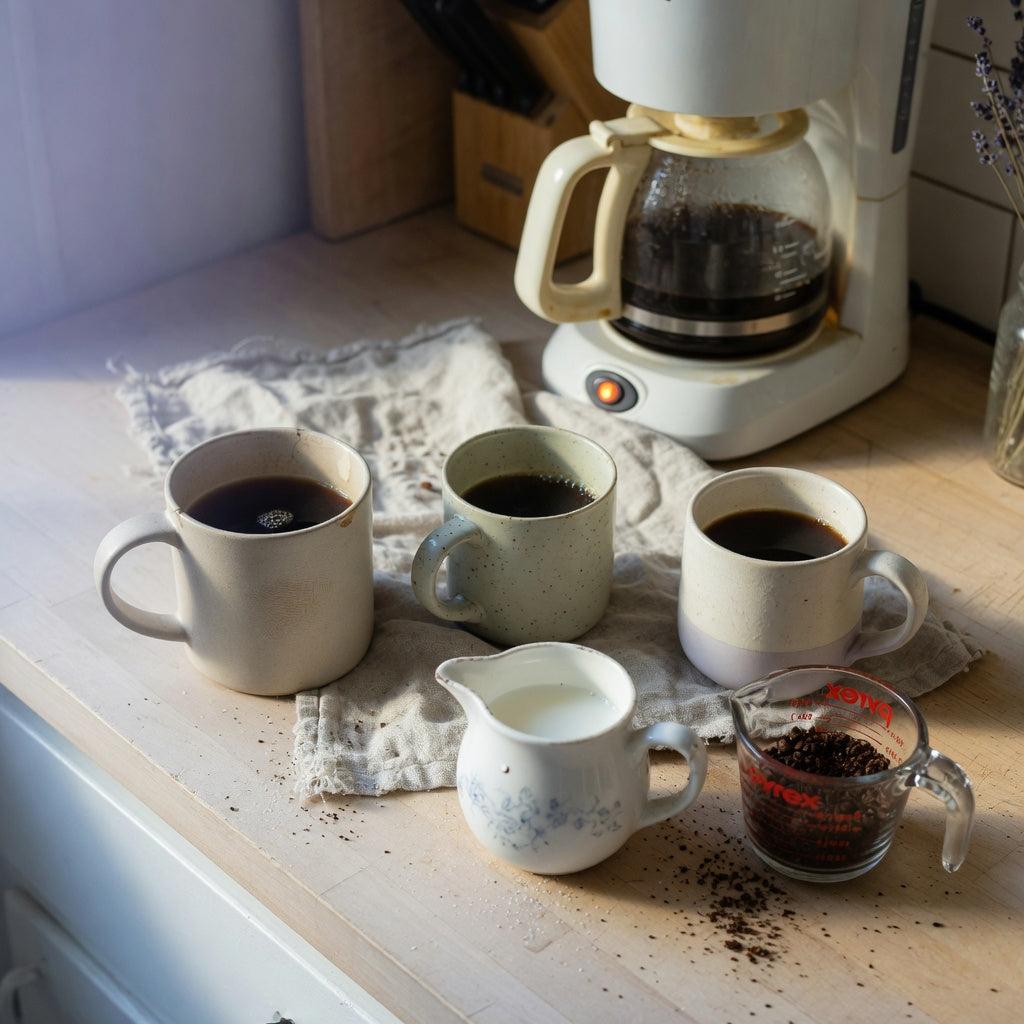
Large Round Coffee Mugs: Shared Household Product Shortlist Guide
A three-mug shortlist for households where everyone pours a different amount. We compare listed capacities, brewer clearance, handle comfort, and the care details to confirm before checkout.
Read more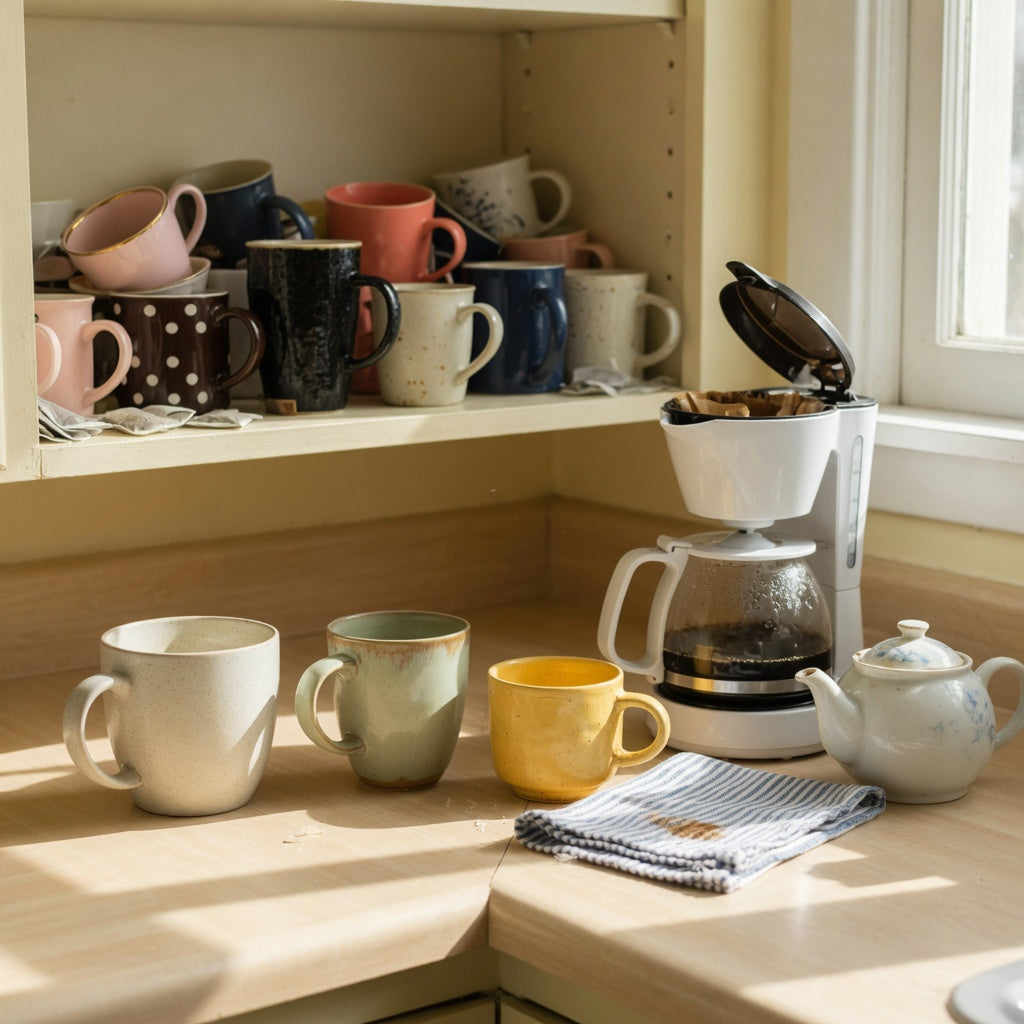
Coffee Mug Gifts Ideas Shared Household Product Shortlist Guide
This coffee mug gifts ideas shared household product shortlist guide matches 200 ml, 400 ml and 440 ml ceramic mugs to real drink routines in two-person kitchens, with a reason to choose or skip ea...
Read more
Leave a comment
This site is protected by hCaptcha and the hCaptcha Privacy Policy and Terms of Service apply.