
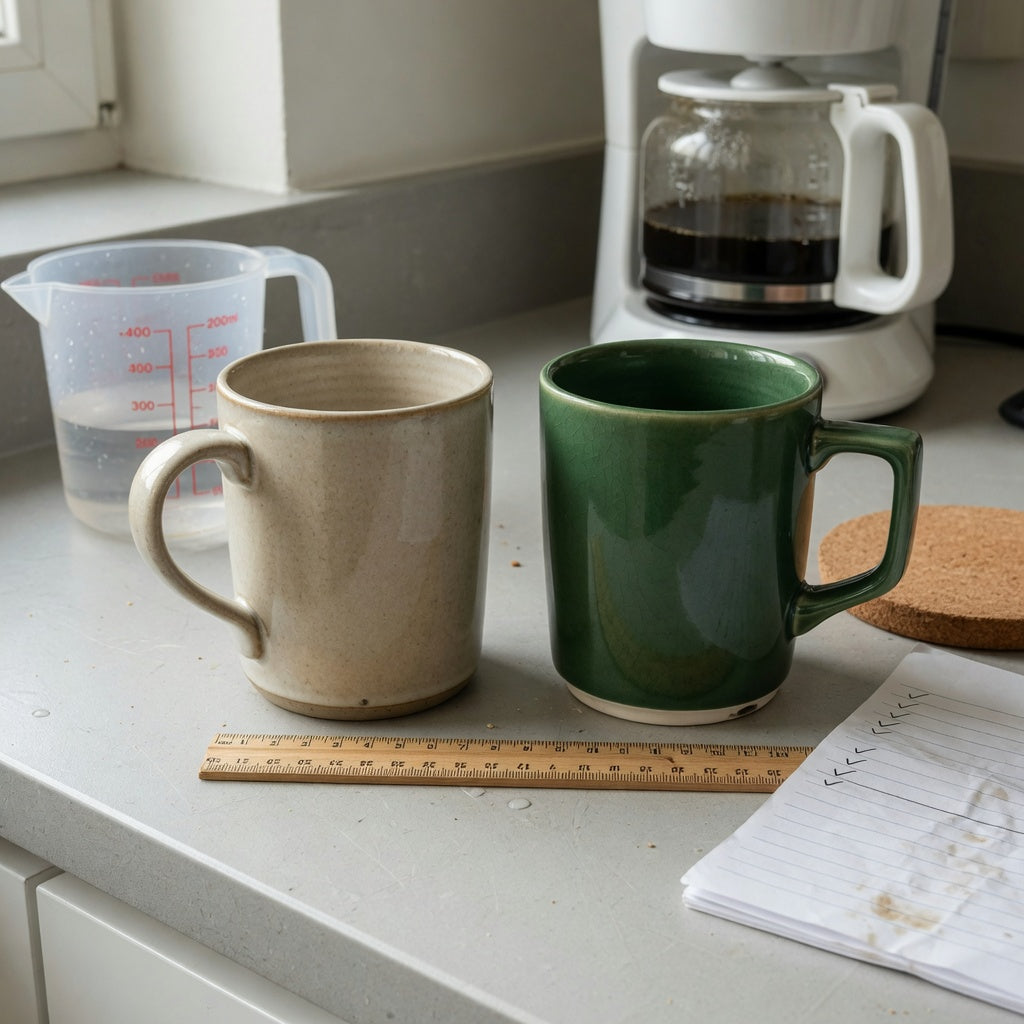
Ceramic vs Porcelain Coffee Mugs: Practical First-Time Buyer Checklist
Reading time: about 10 minutes
A mug can clear the coffee maker and still be a poor buy. The handle may crowd your keyboard, the comfortable fill may be smaller than expected, or the decoration may require hand washing when you planned to use the dishwasher. This ceramic vs porcelain coffee mugs first time buyer practical purchase checklist helps you identify those conflicts before checkout.
At CoffeifyMug, we handle mugs at the packing counter, where details hidden by a lifestyle photo become obvious: a rough foot ring, limited finger clearance, an uneven base, or a vulnerable rim. We also know where online evidence stops. A white glaze does not prove porcelain, and a product name does not confirm capacity, microwave use, dishwasher care, or gift packaging. General material guidance is separated below from product-specific details that must be confirmed on each live listing.
Does porcelain automatically make a better first coffee mug?
No. Porcelain is part of the wider ceramic family. A listing that says ceramic may refer broadly to earthenware, stoneware, porcelain, or another ceramic body unless the seller provides a more specific term.
Porcelain is generally associated with a refined, highly vitrified body, but the category name does not tell you how a particular mug will feel in your hand. Wall thickness, empty weight, rim profile, handle construction, glaze quality, and overall shape can matter more during a rushed breakfast or a long afternoon at a desk.
| Listing statement | What it confirms | What you still need to verify |
|---|---|---|
| Ceramic | The mug is in the broad ceramic category. | The exact body type, weight, dimensions, capacity, and care requirements. |
| Porcelain | The seller identifies the body as porcelain. | Wall thickness, handle comfort, chip resistance, usable capacity, and care. |
| Dishwasher-safe | The seller permits dishwasher cleaning under its stated instructions. | Any rack-position guidance and how decoration should be treated over repeated cycles. |
| Microwave-safe | The seller permits microwave use under its stated instructions. | Heating limits and how hot the body or handle may become. |
Do not use color, shine, or a delicate-looking rim as an online material test. If a listing only says ceramic, the precise ceramic body remains unknown. That is not evidence of poor quality, but it is not enough to support a porcelain-specific claim.
Your ceramic vs porcelain coffee mugs first time buyer practical purchase checklist
Give every listing detail one of three labels: confirmed, unknown, or not suitable. An unknown can be acceptable for a minor decorative preference. It should stop the purchase if it affects a requirement such as brewer clearance, dishwasher cleaning, microwave reheating, or comfortable grip.
- Material wording: Record whether the page states porcelain, stoneware, earthenware, or only ceramic. Do not upgrade a broad label based on appearance.
- Usable capacity: Look for ounces or milliliters and check whether the figure is a brim-full measurement. Your normal fill needs headroom for milk, foam, stirring, or ice.
- External dimensions: Verify height, body diameter, base diameter, and total width including the handle. One diameter cannot establish coffee-maker, coaster, or cabinet fit.
- Empty weight: A large drink added to an already heavy mug can be tiring for someone with a limited or sensitive grip.
- Handle geometry: Look for the opening dimensions, distance from the hot body, and both attachment points. Camera angle makes finger clearance difficult to judge.
- Rim and foot: Inspect close photos of the drinking edge and base. An unglazed foot ring is common, but it should not be assumed smooth unless the listing or clear imagery supports that conclusion.
- Glaze and decoration: Note whether the finish is described as glossy, matte, reactive, printed, textured, or metallic. Different finishes can require different care.
- Dishwasher and microwave instructions: Require explicit wording on the individual page if either feature is essential. Do not apply one mug's instructions to an entire collection.
- Included pieces: Confirm whether the order contains one mug, a cup and saucer, a lid, or another component. Props in product photography may not be included.
- Variation and returns: Check for disclosed differences in glaze, color, pattern placement, or shape, then verify the process for reporting a chip, crack, or incorrect item.
A must-have detail that remains unknown is a reason to ask before ordering. Missing information does not prove a negative claim, but it also cannot be treated as confirmation.
Which CoffeifyMug style matches your counter, desk, or gift?
Start with the buyer's situation, then use the design to narrow the options. The following links are style-based starting points. They are not claims about an unlisted material, capacity, care method, or included accessory.
| Reader situation | Why this is a sensible starting point | What to verify before checkout |
|---|---|---|
| You want a familiar profile that is easy to compare with a mug you already use. | Open the Round Coffee Tea Mug listing and compare its visible shape with your current cup. | Material wording, height, total width, capacity, weight, handle clearance, and care instructions. |
| You prefer a more tactile, texture-led cup. | Review the Pleated Coffee Tea Cup product details. | Do not assume the pleating improves grip or cleans easily. Confirm finish, dimensions, and care from the live page. |
| You are buying a design-led office mug or a visually distinctive gift. | Consider the Landscape Coffee Tea Mug listing. | Confirm how the decoration should be cleaned, what pieces arrive, and whether any gift packaging is stated. |
| You have not settled on a silhouette or finish. | Compare unique coffee mugs by shape and design, then open two or three candidates in separate tabs. | Use each individual product page for material, size, care, and package contents. Collection thumbnails are not specifications. |
This approach avoids a common first-purchase mistake: choosing porcelain or ceramic in the abstract before deciding what the mug must do. A dishwasher-dependent household, a compact office desk, and a gift recipient who drinks tea may need different answers even if they like the same design.
Which measurements prevent brewer, cabinet, and coaster problems?
Capacity is only one part of fit. Before buying, measure a mug that already works in your routine and compare the same points on the listing.
- Coffee maker clearance: Measure from the drip tray to the dispensing point. Compare that space with the candidate mug's overall height.
- Desk space: Check the base diameter and total width with the handle. A body may fit a coaster while its handle extends into mouse or keyboard space.
- Cabinet fit: Measure shelf height and usable depth. Do not assume secure stacking unless the product page states or clearly demonstrates it.
- Actual serving size: Fill your current mug to your normal drinking level and measure that water. Leave additional room for milk, foam, tea infusers, or iced coffee.
- Grip: Compare the handle opening with one you already find comfortable. A hand-held photo cannot provide a reliable finger-count estimate.
The material label alone does not guarantee heat retention. Mug mass, wall thickness, shape, drink volume, room temperature, and the absence of a lid all affect cooling. If keeping a drink hot for hours is the main requirement, an insulated lidded vessel is a more appropriate category.
Will the mug suit your actual cleaning routine?
In our experience, a care mismatch can cause more regret than the ceramic-versus-porcelain label. A porcelain mug is not automatically dishwasher-safe, and a broadly labeled ceramic mug is not automatically hand-wash only. Decoration and finish can change the instructions.
- Dishwasher users: Confirm dishwasher-safe wording on the exact product page. Printed artwork, metallic details, and specialty finishes may not share the care requirements of a plain glazed mug.
- Microwave users: Look for an explicit microwave-safe statement. Do not microwave metallic decoration unless the manufacturer specifically permits it, and remember that an approved handle may still become hot.
- Frequent tea or coffee drinkers: Rinse residue promptly and begin with a non-abrasive sponge. Aggressive scouring can mark some glossy, matte, printed, or textured surfaces.
- Temperature changes: Avoid taking a very cold mug straight to boiling liquid or placing a hot mug on a cold, wet counter unless the maker's instructions permit that treatment.
Know the defect terminology as well. Crazing is a network of fine cracks in the glaze and differs from an intentional crackle finish disclosed by the seller. Pinholes are small crater-like openings, while a glaze skip is an unintended bare area. These details are easiest to see around the interior, rim, handle joints, and foot.
What should you inspect before the first drink?
A gift unboxing or first dishwasher cycle should not happen before a basic arrival check. Use a bright light and a clean, flat counter.
- Keep the packaging and photograph the mug as received if the parcel or item appears damaged.
- Rotate the rim and interior under direct light. Check for sharp areas, chips, hairline cracks, pinholes, or undisclosed glaze skips.
- Inspect both handle joints for a crack, separation, or sharp edge.
- Set the empty mug on the counter and check for unexpected wobble. Feel the foot carefully for rough areas that could mark a shelf or desk.
- Compare the color, pattern placement, finish, and included pieces with the listing, allowing for any disclosed natural variation.
- Wash the mug only according to the stated instructions before drinking from it.
Do not use a mug with a body crack, shipping chip, loose handle, or sharp drinking rim. Document the condition and use the store's stated contact or return process before washing it.
When is neither ceramic nor porcelain the practical choice?
Both materials are breakable, and an open mug is not designed for every routine. A different vessel is a better fit if your priority is leak resistance during a commute, compatibility with a vehicle cup holder, reliable temperature control for several hours, or resilience in a drop-prone workshop or campsite.
Compact cabinets present another limitation. Buy a ceramic or porcelain mug only after confirming its dimensions and stackability if storage space is tight. Do not infer a lid, insulation, travel suitability, or secure stacking from the Round, Pleated, or Landscape product names.
Frequently asked questions
How do I use a ceramic vs porcelain coffee mugs first time buyer practical purchase checklist?
Mark material, capacity, dimensions, weight, handle fit, finish, care, and included pieces as confirmed, unknown, or not suitable. Pause if an unknown affects a must-have use such as microwave reheating, dishwasher cleaning, coffee-maker clearance, or gift presentation. Buy only after the essential details are confirmed.
Is porcelain always lighter and less likely to chip than ceramic?
No. A porcelain body can be made thin and refined, but a particular mug's weight and resistance to damage also depend on wall thickness, rim profile, dimensions, firing quality, and construction. Compare the actual listing details instead of treating the material name as a durability guarantee.
What coffee mug capacity should a first-time buyer choose?
Measure the amount you normally drink rather than choosing the largest stated capacity. Check whether the listing provides brim capacity, then leave headroom for carrying, stirring, milk, foam, an infuser, or ice. External dimensions still need to fit your brewer, desk, and cabinet.
Can I assume a ceramic or porcelain mug is dishwasher and microwave safe?
No. Care requirements can vary by ceramic body, glaze, printed decoration, and metallic detail. Require explicit dishwasher-safe and microwave-safe wording on the individual product page if those uses are essential.
Which CoffeifyMug option should a first-time buyer compare first?
Start with the Round Coffee Tea Mug for a familiar visual reference, the Pleated Coffee Tea Cup for a texture-led design, or the Landscape Coffee Tea Mug for a decorative desk or gift direction. Then verify the live material wording, measurements, capacity, care instructions, and included pieces. The style name alone does not confirm those specifications.
Open the CoffeifyMug unique mug collection, shortlist two designs, and run the checklist against each live product page. Choose the candidate whose essential details are confirmed, ask about any purchase-critical unknown, and move to another design if the required fit or care information cannot be established.
More from our blog
Read more
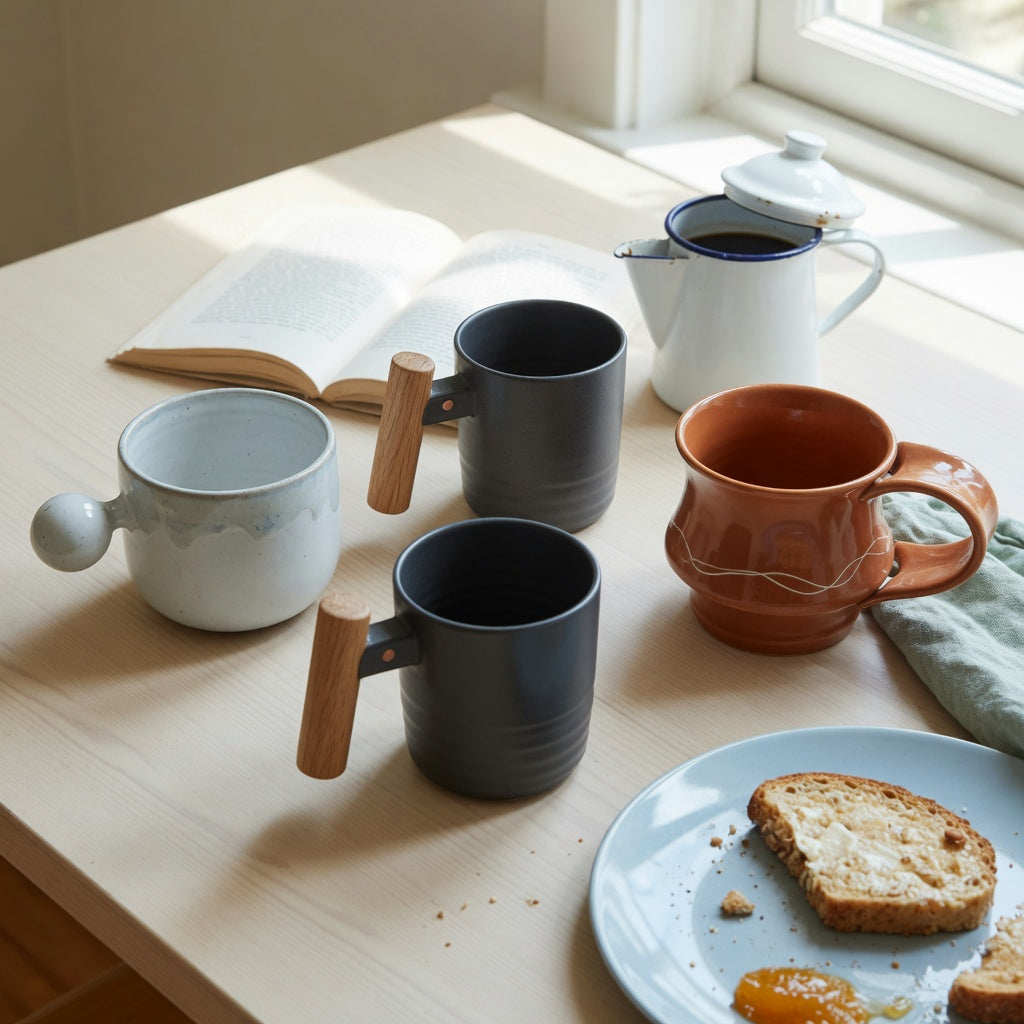
Ceramic Coffee Mugs With Large Handles: Weekend Coffee Shortlist Guide
Compare three distinct handle shapes for sofa reading, patio serving, shared-pot brunch, and gifting. See why each mug belongs on your shortlist, when to skip it, and what to verify for storage and...
Read more
Coffee Mug Wedding Gift Weekend Coffee Product Shortlist Guide
A scenario-based shortlist for couples who turn Saturday coffee into table time. Compare three mug styles by storage, serving rhythm, care checks, and clear reasons to choose or skip each.
Read more
Leave a comment
This site is protected by hCaptcha and the hCaptcha Privacy Policy and Terms of Service apply.