
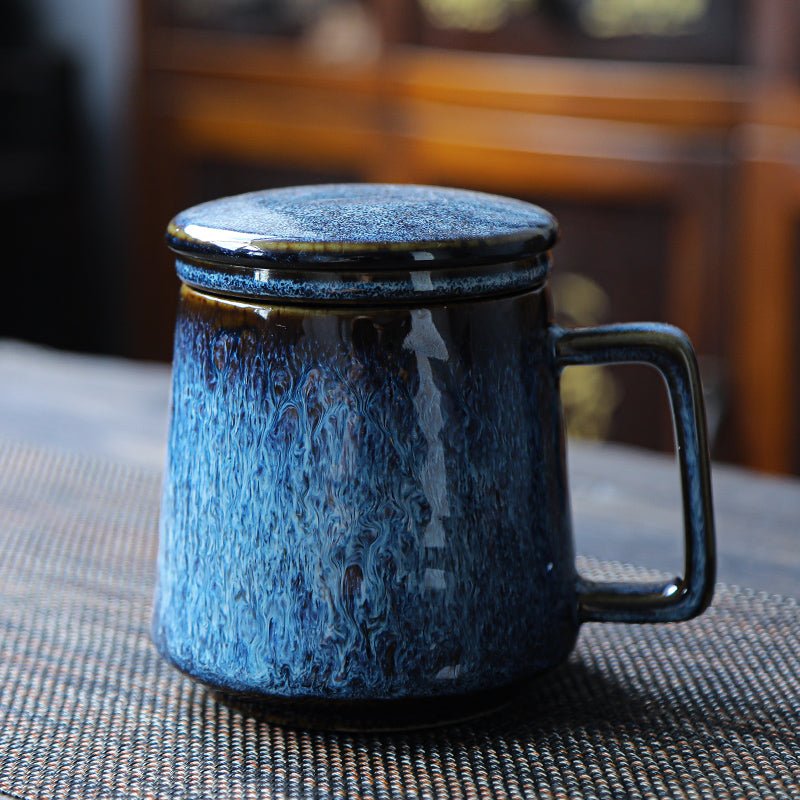
Ceramic Mugs Ideas for Desks and Gift Shelves: Capacity, Care, Fit
Reading time: about 11 minutes
A customer sent us a photo last month: three mugs lined up on a narrow home desk, and only one left room for a keyboard. Two were beautiful. Both were useless at 9 a.m. on a Tuesday.
That gap — between how a mug looks and how it performs — is where most ceramic mugs ideas lists fall apart. They show speckled glaze and hand-painted florals, then skip the details that decide whether you reach for the mug tomorrow: listed capacity, base footprint, handle fit, and whether the finish is actually cleared for hot drinks. In our store, we keep a tape measure and a 400 ml measuring cup behind the counter for exactly this comparison.
What does the listed capacity actually tell you?
Capacity is the only number you can compare across three listings without guessing. Product photos are shot at different angles with different hands, so a 400 ml mug can look smaller than a 300 ml one. Read the millilitre figure first, then subtract headroom.
- Small, roughly 150–200 ml: espresso, cortado, short tea, or a mid-morning top-up. Cools fast — good if you drink quickly, bad if you set it down and wander off.
- Mid, roughly 350–420 ml: the standard one-coffee size for drip and pour-over drinkers, with room for a splash of milk.
- Large, 450 ml and up: long blacks, iced coffee with ice, tea drinkers who refill once. Heavy when full, and it needs a wider shelf.
Our three current shapes map onto those bands directly. The Retro coffee and tea cup is listed at 170 ml — a small-cup mug for espresso, a strong short tea, or a desk where the mug sits beside a keyboard rather than in front of it. The Flow coffee and tea mug is listed at 400 ml, the middle band that covers most daily coffee and tea. The Rock coffee and tea mug is listed at 480 ml, the largest of the three and the one to reach for when the drink has to survive a long meeting.
| Mug | Listed capacity | Best fit | Trade-off to accept |
|---|---|---|---|
| Retro | 170 ml | Espresso, short tea, tight desk | Frequent refills |
| The Flow | 400 ml | Standard daily coffee or tea | Needs real desk space |
| The Rock | 480 ml | Long drinks, iced coffee, wide desks | Heavy when full |
One thing photos never show: headroom. Fill a 400 ml mug to the rim and you cannot walk with it. Leave 1.5–2 cm of space and you get a stable, drinkable pour. That is why a 400 ml mug often feels like the right size for a 350 ml drink.
The listing photos also show the ceramic finish — glossy, matte, speckled, or hand-painted. Use that as a visual clue, not a care label. A textured matte exterior usually needs gentler washing than a smooth glossy glaze, but the seller’s care statement is the only thing you can rely on.
Which ceramic mugs ideas suit a small home desk?
Desk mugs fail in three specific ways. They crowd the mouse hand, they tip when a wrist catches the handle, and they leave a ring on a wood finish. Before you pick a style, measure the free space to the right of your keyboard — most people have 10–12 cm, not 20.
- Base diameter beats height. A tall, narrow mug takes less desk than a short, wide one with the same capacity.
- Handle angle matters more than handle size. A handle set high and close to the wall lets you lift without moving your elbow.
- Weight when full. A heavy stoneware body feels good in the hand and tiring after the twentieth lift of the day.
- A saucer changes the footprint. It protects the desk but roughly doubles the floor space the mug needs.
For a tight desk, the 170 ml Retro cup is the obvious fit — it occupies a small circle and you refill rather than nurse. If you drink one large coffee through the morning, the 400 ml Flow is more practical despite the bigger base. The 480 ml Rock earns its place on a desk only if the desk is genuinely wide, because a full 480 ml mug is a two-handed object when you are also on a call.
To see the shapes side by side, our unique coffee mugs collection is organized by body shape rather than color, which is the order that actually helps when you are matching a mug to a surface. If you want the drink-first comparison — coffee versus tea temperature and capacity — our breakdown of ceramic mugs for coffee and tea drinkers goes deeper on that trade-off.
Does stoneware, porcelain or earthenware change the desk-mug decision?
Ceramic is a family, not a single material. The three bodies you will see most often behave differently on a desk:
- Stoneware: dense, usually heavier, and often fired to a higher temperature. It holds heat well, which is why so many daily mugs use it. The trade-off is full-mug weight.
- Porcelain: finer and often thinner-walled. A porcelain mug can feel lighter in the hand for the same capacity, but a thin rim is less forgiving against a sink edge.
- Earthenware: lower-fired and more porous unless fully glazed. It is common in decorative and traditional pottery. For daily hot drinks, the glaze and food-contact statement matter more than the body name.
In our experience, the body name on a listing tells you less than the wall thickness, the rim profile, and whether the base is glazed. A thick-walled porcelain mug can survive more desk abuse than a thin stoneware one. So do not buy by category alone — buy by how the mug is built and how it will be used.
If the mug is also going on a shelf as decor, our post on unique coffee mugs for home decor covers the display-versus-drinkware question.
Which ideas belong on a gift shelf rather than in daily rotation?
Not every pretty mug is drinkware, and this is the most common misunderstanding we see in gift season. Under 21 CFR 109.16, ceramicware that appears suitable for food use is treated as food use unless it carries a conspicuous "Not for Food Use" warning plus a permanent version on the base, or a hole is bored through the food-contact surface. A decorative piece without those markers is, legally and practically, a drinking vessel.
So the question is not "is it decorative?" — it is "does the maker treat it as drinkware?" Gift-shelf ideas that usually hold up:
- Plain or speckled glaze with a clean interior. Easy to inspect, easy to spot staining.
- Personalized names, initials, or dates fired under the glaze. The decoration is sealed — ask whether it was fired or applied on top.
- Matched pairs or sets for couples. Confirm every piece has the same care status; mixed sets often do not.
Ideas that need a warning attached: gold or platinum luster rims, craft paint that was never fired, painted interiors under an unglazed exterior, and sculptural novelty shapes where the drink sits in a narrow cavity. Those can be wonderful objects. They are just not the mug you hand someone filled with hot coffee.
If a personalized set is the goal, confirm timing before you promise a date. Made-to-order pieces can take weeks, and the care label on a personalized mug is not automatically the same as the blank it started from.
Is microwave safe the same as lead free?
No. They answer different questions, and conflating them is how people end up microwaving a mug they should not. A microwave-safe label means the vessel is built to tolerate microwave heating — no metallic decoration, no construction prone to thermal shock. It says nothing about what is in the glaze.
On lead, the FDA’s compliance policy for ceramic cups and mugs uses an action level of 0.5 micrograms of lead per millilitre of leaching solution, applied to any one of six units tested. FDA also states that ceramicware with extractable lead should not be labelled "Lead Free." For cadmium, the action level is 0.5 µg/ml for small hollowware and flatware and 0.25 µg/ml for large hollowware.
- You cannot judge by appearance. The California Department of Public Health says exactly that — an intact, shiny glaze is not proof of anything.
- Acidic drinks and heat raise the risk. CDPH notes that microwaving lead-bearing tableware and serving acidic foods increase the chance of leaching. Coffee is acidic.
- Damage changes the answer. Chips, crazing — the fine web of cracks in glaze — and worn rims expose the body underneath. A chipped mug is a different object from the one that passed a factory test.
If you buy handmade or imported low-fired pottery, especially traditional glazed terra cotta, CDPH advises using it for cooking only when it is labelled lead-free or "sin plomo." For anything you drink from daily, ask the seller for the food-contact and care statement instead of assuming. That applies to gift mugs too — a beautiful glaze is not a safety certificate.
What usually fails first on a working mug?
We handle returns, so we see the pattern. In rough order of frequency:
- Rim chips. Thin rims chip against sink edges and other mugs. Thicker rims feel heavier but survive longer.
- Handle joint cracks. The stress point is where the handle meets the body, not the handle itself. Lifting a heavy mug by two fingers is what kills it.
- Pinholes in the glaze. Tiny craters that do not reach the clay are cosmetic. Pinholes over a stained interior are worth watching.
- Crazing. Cosmetic in a well-fired body; a hygiene question if the interior is stained and cannot be scrubbed clean.
- Unglazed foot rings. Grippy, which is good — but they can scratch a lacquered desk or a wooden shelf.
None of this is a reason to avoid ceramic. It is a reason to match body thickness to the abuse the mug will take. A desk mug gets lifted, set down, and rinsed constantly. A gift-shelf mug gets handled twice a year.
How should you care for a ceramic mug so the finish lasts?
Check the current listing or the base stamp before the first wash, not after. Our product pages list capacity; for dishwasher and microwave suitability, confirm the live listing or the base stamp rather than carrying over an assumption from another mug in your cupboard.
- Metallic rims and luster decoration: hand wash, never microwave. This is a construction issue, not a quality issue.
- Textured or matte exteriors: hand washing keeps the surface from dulling, since dishwasher detergent is abrasive over hundreds of cycles.
- Any chip or crack in the food-contact surface: retire the mug from hot drinks.
- Thermal shock: do not pour boiling water into a mug straight off a cold winter windowsill, and do not plunge a hot mug into cold water.
Stacking is the quiet killer. Stacking rim-to-base with weight resting on the handles is how handles crack in storage. Stack two at most, or store them handle-out on a shelf.
Frequently asked questions
What size ceramic mug is best for tea versus coffee?
Tea drinkers usually do better with a smaller mug, around 170–250 ml, because tea is drunk hot and a large mug goes lukewarm before you finish. Coffee drinkers who take milk tend to want 350–400 ml for headroom. If you drink both, a 400 ml mug covers tea with a partial fill and coffee at a comfortable level.
Are ceramic mugs ideas like gold-rimmed or hand-painted designs safe for daily use?
Only if the maker says so. Gold and platinum luster is a metallic decoration and is not microwave-safe by construction. Hand-painted work is fine when the paint is a fired glaze or underglaze; craft paint applied after firing is decoration, not drinkware.
Is a chipped ceramic mug still safe to drink from?
Treat a chip on the rim or interior as a reason to retire the mug from hot drinks. The chip exposes the body beneath the glaze, and that surface has not been evaluated for leaching the way the finished glaze was.
Can a handmade ceramic mug go in the dishwasher?
Ask the maker. Food-safe glaze and dishwasher-safe are separate claims — a glaze can be perfectly safe for food contact and still dull or craze under repeated dishwasher cycles. When in doubt, hand wash it.
How many ceramic mugs ideas do you actually need for one desk?
Two. One in use, one clean. More than that and they become clutter that crowds the mouse hand and gets knocked over.
Before you buy, run a five-point check: listed capacity in millilitres, base diameter against your real desk space, handle fit with two fingers and a thumb, whether the decoration allows microwave use, and whether the seller publishes food-contact and care information. If any of those is missing, ask before you pay.
Then pick the shape that matches the job — the 170 ml Retro cup for a cramped desk or a short espresso, the 400 ml Flow mug for the one-coffee-a-morning routine, or the 480 ml Rock mug for long drinks and wide desks. Browse the unique coffee mugs collection and compare body shapes first, colors second.
More from our blog
Read more
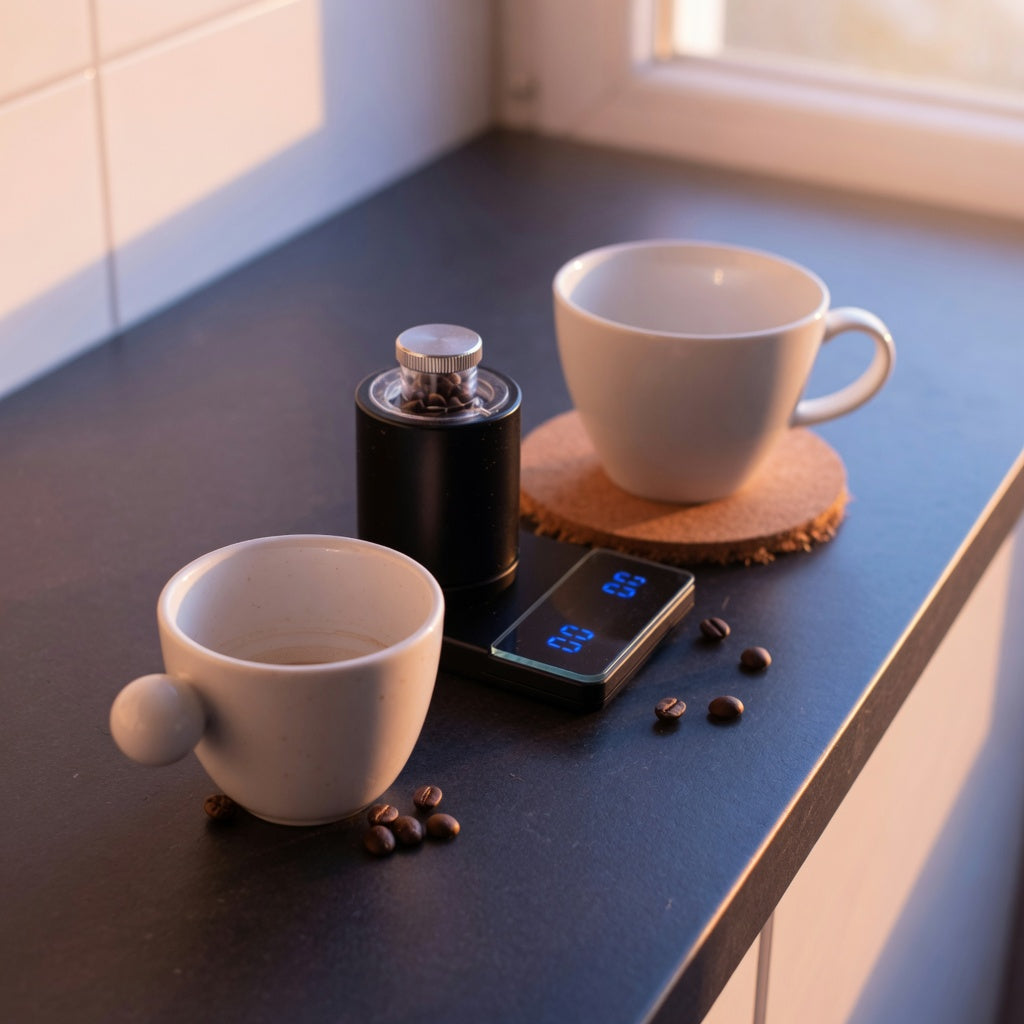
Ceramic Latte Cups for Small Coffee Setup: What to Compare
Counter depth decides which ceramic latte cups for small coffee setup survive daily use. We compare 250, 400, and 440 ml options by pour fit, handle clearance, glaze safety, and care.
Read more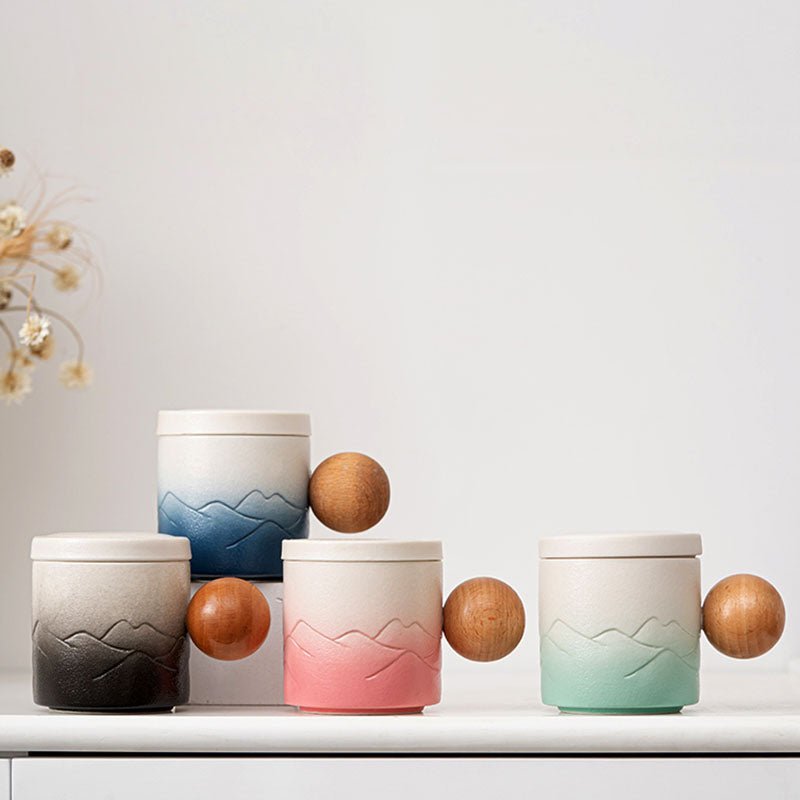
Cute Espresso Cups Shape and Handle Guide: 170, 200, 250 ml
Our three current ceramic cups — 170 ml Retro, 200 ml Pleated, and 250 ml Ball Handle — compared on listed capacity, handle form, crema visibility, and machine fit, including the cases where a true...
Read more
Leave a comment
This site is protected by hCaptcha and the hCaptcha Privacy Policy and Terms of Service apply.