

Ceramic Mug Shapes Buying Priorities: Capacity, Handle, Shelf Fit
Reading time: about 10 minutes
A 200 ml pleated cup, a 250 ml ball-handled mug and a 400 ml tall mug sit on our packing bench most weeks. None is defective. Each was bought for a routine it did not quite fit: a flat white that needed more room, a hand that needed a wider grip, an office machine with a low spout.
That is the pattern behind almost every question we get about ceramic mug shapes buying priorities. Shoppers compare glaze and colour first, then discover that listed capacity, visible silhouette and the space on the shelf were the decisions that actually mattered. Here is how we walk buyers through it at the counter.
How much do you actually pour? Start with listed capacity, not the silhouette
Pour your usual drink into a measuring jug once, not into the mug you already like. Eyeballing is unreliable; a jug settles it in ten seconds. Then compare that number with the listing.
U.S. FDA guidance describes cups and mugs as small ceramic hollowware for hot drinks that normally, though not exclusively, holds about 240 ml (8 fl oz). That is a useful anchor: a 240 ml pour is the middle of the market, not a large drink. If a page quotes millilitres and you think in ounces, NIST's approximate conversion is 1 fl oz = 29.57 ml, rounded to about 30 ml for kitchen maths.
| Mug | Listed capacity | Approx. US fl oz | Visible silhouette |
|---|---|---|---|
| Pleated Coffee and Tea Cup | 200 ml | ~6.8 | Pleated, vertically faceted body |
| Ball Handled Coffee and Tea Mug | 250 ml | ~8.5 | Body with a rounded ball handle |
| The Flow Coffee and Tea Mug | 400 ml | ~13.5 | Larger body, single-fill volume |
One caveat to check on any product page: listed capacity is sometimes brim-full and sometimes working volume with headroom for milk and foam. When a listing does not say, treat the number as brim-full and leave 20 to 30 ml spare. In our experience, buyers who measure first return fewer mugs. You can see how those numbers sit next to each other in our unique coffee mugs collection.
What the body profile changes at the lip — and what it does not
FDA guidance draws a line that matches what you see on a shelf: a cup normally has a base and curved sides, while a mug has cylindrical sides. That is a naming convention, not a quality ranking, but it explains why two vessels holding the same 240 ml can feel completely different to drink from.
Three things change with the body shape:
- Opening area. A wide mouth exposes more liquid surface. You get more aroma and faster cooling; a narrower mouth holds heat longer and is less likely to slop when you carry it to a desk.
- Rim geometry. A thin, slightly flared rim tends to meet the lip cleanly. A thick rolled rim feels softer but can dribble if there is no pour lip shaped into it. Potters talk about drip-free rims for a reason: it is a forming decision, not a glazing one.
- Interior profile. Straight walls are easy to rinse and easy to see into. Bellies and tapers hide residue at the shoulder if you only swill water around.
What a silhouette does not do, as far as the sources we reviewed are concerned, is change how sweet or acidic the coffee tastes. You will find sellers claiming a tulip shape opens up florals or softens acidity. We have not seen controlled evidence for that, so we do not repeat it. Temperature, fill level and opening area explain most of what drinkers actually perceive.
Handle geometry: the two-finger test, knuckle clearance and balance
Handles fail shoppers in two ways. The opening is too small for the knuckles, or the handle sits so close to the body that fingers scrape hot ceramic. Neither problem shows up in a photo taken straight on.
Our rule of thumb, and it is only a rule of thumb: you want two fingers plus the edge of your index finger through the opening, with a few millimetres of air between your knuckles and the body. We could not find a published ergonomic standard for mug handle openings; makers work from experience and customer feedback. If you have larger hands, a C-shaped strap handle with a tall opening usually gives more room than a small loop.
The Ball Handled Coffee and Tea Mug lists 250 ml and uses a rounded ball handle, which puts the grip on the pads of your fingers rather than across a flat strap. Whether a ball shape suits your hand is a try-it question. Some of our customers find it the most comfortable handle they own; others prefer a wider strap. That is a genuine trade-off, not a marketing gap.
Balance matters too. A 400 ml body carries noticeably more weight than a 200 ml one before you add the drink, so on larger mugs look closely at where the handle joins the wall. If handle size is your main constraint, our breakdown of ceramic coffee mugs with large handles goes deeper into opening size and finger room.
Will it fit? Shelf height, stacking and spout clearance
Space is the priority shoppers forget, and it causes the returns that have nothing to do with the mug itself. Three measurements catch most problems:
- Cabinet clearance. Measure shelf to shelf, then add the mug height plus a finger's width so you can lift it out without tipping.
- Spout clearance. If you brew under a machine spout, measure from the drip tray to the spout with the machine cold, then subtract the mug height. Tall 400 ml bodies and wide rims fail here more often than people expect.
- Stacking. Straight-sided mugs with handles that sit below the rim stack. Tall handles and wide bellies do not, and a mug that will not stack quietly doubles the shelf space it needs.
Storing mugs upside down keeps dust out, but only if they go away dry. A damp mug stored rim-down traps moisture and smells musty within a day or two, which is a storage problem rather than a ceramic one. If you are squeezing four mugs onto one shelf, our notes on minimalist ceramic mugs cover straight walls and low handles in more detail.
Where ceramic mug shapes buying priorities meet three real routines
Once you know your pour size, your hand size and your shelf gap, the choice usually collapses to one option. These are the three we get asked about most.
You pour 150 to 200 ml and drink it standing up
A small cup is the right call, and the Pleated Coffee and Tea Cup lists 200 ml with a pleated, vertically faceted body. That capacity suits a short milk drink, a cortado, or a tea top-up, and the facets give you something to grip if you drink without the handle. Be realistic about limits: 200 ml leaves very little headroom for a 240 ml pour plus foam, so this is not the mug for a full Americano. Check the current listing for rim and handle details if those matter to you.
You make one standard 240 ml coffee and grip the handle fully
This is the middle of the market, and 250 ml on the Ball Handled Coffee and Tea Mug covers a 240 ml pour with a little room to spare. The ball handle is the deciding feature here, not the capacity. If your fingers fit it, it is a comfortable everyday mug; if your knuckles are tight, a taller strap handle will serve you better.
You fill once and sit at a desk for an hour
The The Flow Coffee and Tea Mug lists 400 ml, roughly 13.5 fl oz. That is a single-fill desk mug for long black coffee, a big latte, or iced drinks where the ice takes up volume. Two honest caveats: a 400 ml mug is heavier when full, and it is the size most likely to clash with a machine spout or a low shelf. Measure before you commit.
Thick walls, thin walls and the heat claims we won't make
Heat leaves a mug three ways: through the walls, through the base, and off the open surface as evaporation. More exposed surface area and thinner walls mean faster heat flow, and a lid removes the evaporation path entirely. That is physics, and it holds whatever the mug is called.
What we will not do is rank named silhouettes as hotter. A wide bowl and a tall cylinder of the same volume and wall thickness lose heat at different rates mainly because of opening area, not because one shape is inherently better at holding heat. Buy for how you drink, then pre-warm the mug with hot water or use a lid if heat retention is the real goal.
Wall thickness changes feel and weight as much as temperature. A thick-walled diner-style body feels solid and takes longer to warm through; a thin porcelain wall warms fast and feels delicate at the lip. Thicker does not automatically mean tougher, either. Chips usually happen at the rim and at the handle join, which are thin on most mugs regardless of how chunky the body is.
Food-contact checks that outrank the shape
Before a silhouette wins you over, confirm the mug is sold as food-use ceramicware rather than decorative ware. FDA guidance for ceramic cups and mugs sets a lead guideline of 0.5 micrograms per millilitre of leaching solution across the six units tested, using methods that include ASTM C738. That standard describes its acetic-acid extraction as a severe test unlikely to be matched in ordinary use, and FDA also notes there is no known safe level of lead exposure, which is why a properly fired food-use glaze matters more than any shape claim.
Retail listings rarely publish those results, and shape itself does not change how a glaze leaches. If a page is silent on food-use status, ask the seller before you buy. That question is always worth the email.
Frequently asked questions
Is a 400 ml ceramic mug too big for a latte?
It is generous rather than wrong. A 400 ml mug is closer to a large takeaway size, so it will taste milkier unless you add more coffee. It also weighs more when full and is the most likely size to foul a machine spout.
Do I need a wide, bowl-shaped cup to pour latte art?
A wide, shallow opening gives you more surface to work with, which makes a simple heart or rosetta easier to place. A straight-sided mug still works with practice, and milk texture matters more than the body profile. Be sceptical of claims that a shape makes coffee sweeter or more floral; we found no controlled evidence for that.
How many fingers should fit through a mug handle?
There is no published standard. Two fingers plus the edge of your index finger, with a little clearance between knuckles and body, is what most comfortable handles give. Compare the opening height and handle-to-body gap on the listing, and size up if your hands are large.
Do ceramic mug shapes buying priorities change for tea?
Less than you would think. Capacity and rim matter more than the body profile: a 200 to 250 ml cup with a narrower opening keeps a small pour hot, and a thin rim is easier to sip from. What changes is the volume, not the logic. Our guide to ceramic tea mug buying priorities covers that trade-off in detail.
Will a pleated or faceted mug be harder to clean?
The outside facets are easy; interior corners and shoulders are where residue collects if you only rinse. Warm water and a soft brush once a week handles it. Check the listing for dishwasher guidance rather than assuming, because we do not state care instructions we cannot verify for a specific product.
Still deciding? Pour your usual drink into a jug, measure the gap between your shelves, and look at how much room your fingers have in the handle you use now. Those three numbers will point you at one mug faster than any photo will. Start with the unique coffee mugs collection and read the listed capacity before the glaze.
Read more
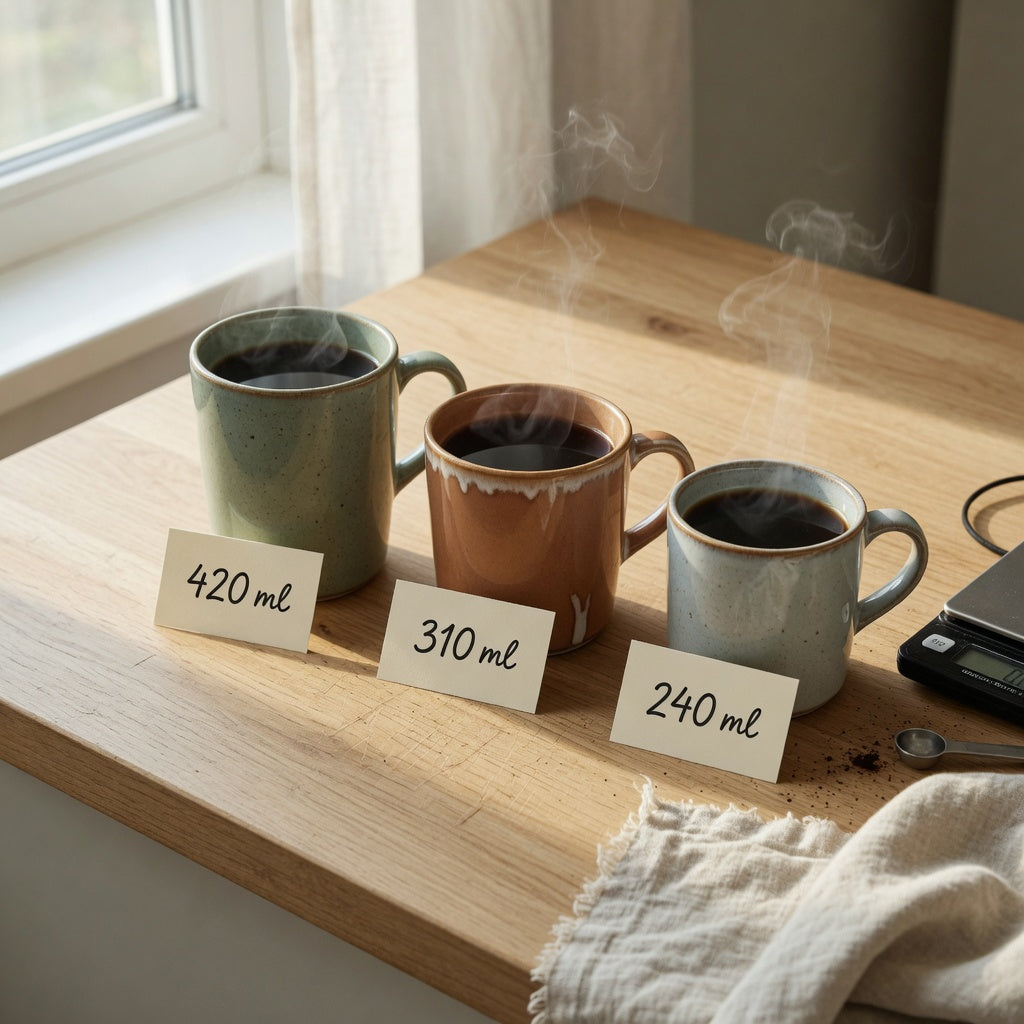
14 Oz Ceramic Coffee Mugs Current Product Facts: 400/440/480 mL
14 US fl oz is about 414 mL, and our three mugs land at 400, 440 and 480 mL. Here are the 14 oz ceramic coffee mugs current product facts we can state plainly, plus the details no photo confirms an...
Read more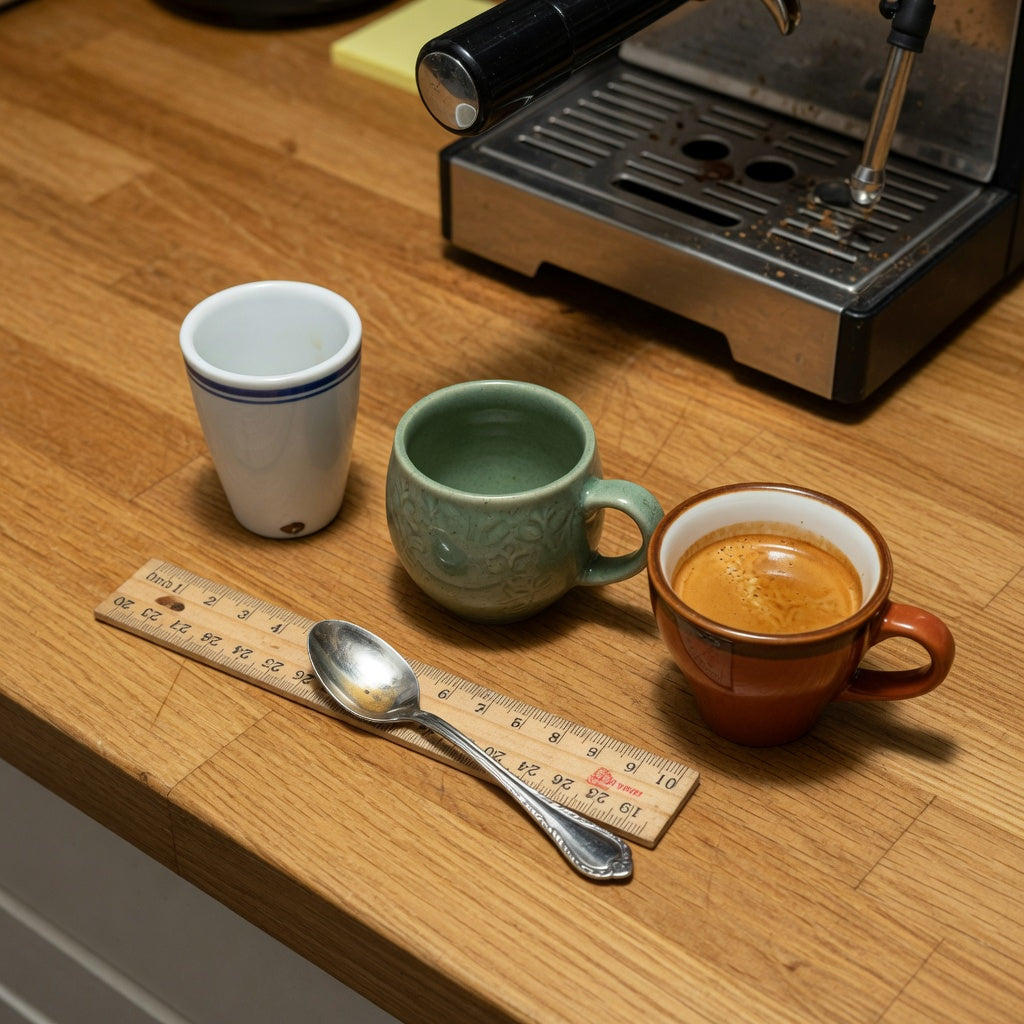
Unique Espresso Cups Buying Priorities: Capacity, Shape, Space
A beautiful cup with a sad little puddle at the bottom is the photo we see most often. Here is how capacity, rim shape, and counter space rank when you actually pull doubles and cortados.
Read more
Leave a comment
This site is protected by hCaptcha and the hCaptcha Privacy Policy and Terms of Service apply.