
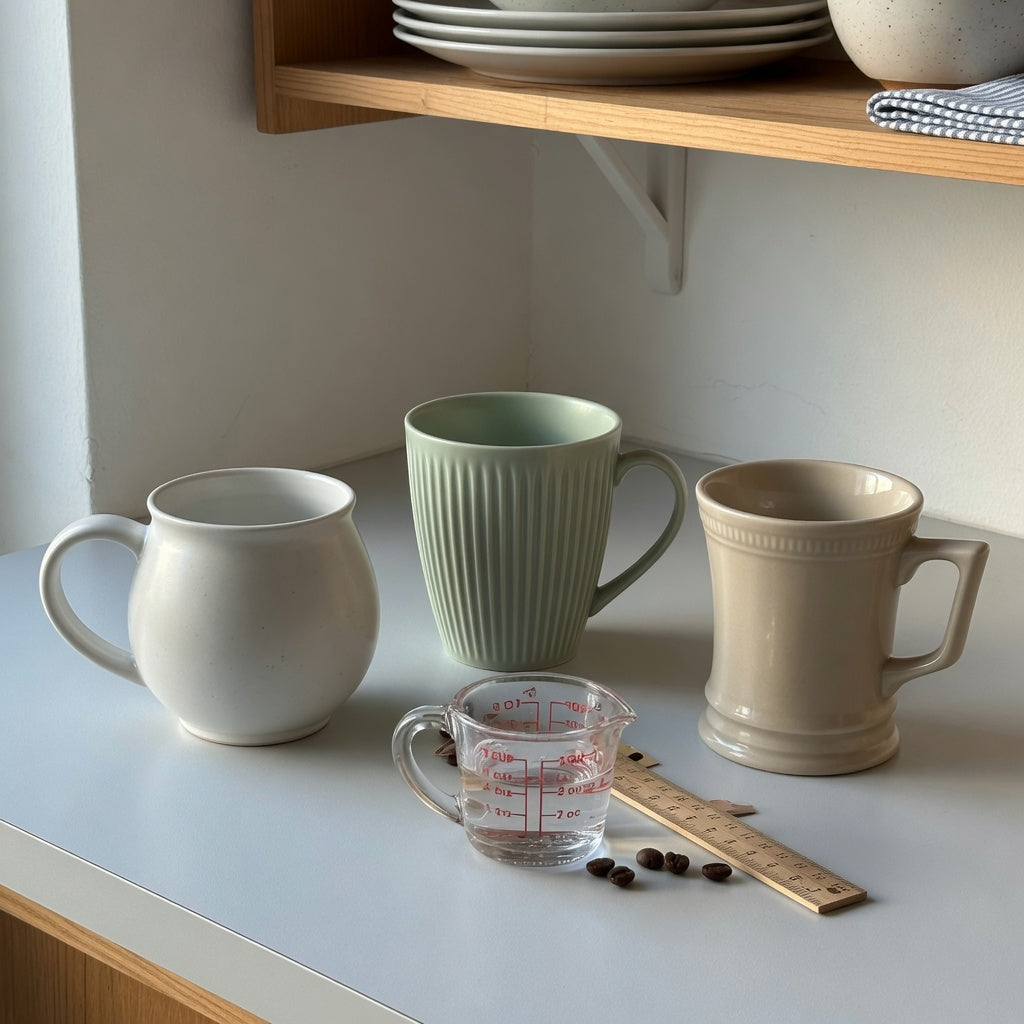
Minimalist Ceramic Mug Buying Priorities: Capacity, Shape & Space
Reading time: about 9 minutes
A mug can look perfectly restrained in a product photo and still be wrong for the spot where it will live. On a compact desk, the body may fit while the handle catches the monitor stand. On a kitchen shelf, the height may clear but the handle projects past the edge. In our store, those are the mismatches we try to prevent before checkout. The practical minimalist ceramic mug buying priorities are listed capacity, actual footprint, visible shape, and a handle configuration that suits the way you carry the cup.
We use minimalist as a shopper-facing description of the current visible forms, not as a formal design classification. We also keep our comparisons within what a product page can support: listed capacity, stated material, dimensions when provided, body shape, and the handle shown in the product gallery. We do not infer durability, dishwasher safety, microwave suitability, or other performance details that are not explicitly listed.
Minimalist ceramic mug buying priorities: which constraint comes first?
The right order depends on the part of your routine that cannot flex. A shopper with a narrow desk should settle the footprint before debating surface detail. Someone who makes one large milk-based coffee should start with capacity. If you carry a full mug down a hallway every morning, handle fit deserves more attention than how the cup looks on an open shelf.
- Drink volume first: Measure the finished coffee or tea, including milk, foam, or ice, and compare it with the current listed capacity.
- Available space first: Measure height, maximum body width, shelf depth, and overall width with the handle included.
- Grip first: Look at the handle opening and attachment position in the product gallery, especially if you carry the mug rather than leaving it at one station.
- Visible form first: Decide whether a smooth round outline, repeated pleating, or a more distinct retro profile suits the objects already in the room.
This order prevents a common buying error: selecting the cleanest-looking silhouette and trying to make the routine fit around it. A mug is used at arm's reach, often beside a keyboard, kettle, notebook, or cabinet edge. Physical fit has to come before styling preference.
What listed capacity matches your actual coffee or tea?
A listed capacity is a nominal volume, not a recommended fill line. Filling a mug to the rim leaves no practical margin for walking, adding milk, lowering a tea infuser, or moving the cup around a crowded counter. That distinction matters more than choosing the largest number shown on a product page.
- Prepare the drink as you normally serve it, not just the initial coffee or tea portion.
- Measure the finished amount with a marked measuring cup, including the milk or ice you regularly add.
- Compare that amount with the product's listed capacity and allow room below the rim.
- Repeat the check for your largest regular drink if the mug will serve both coffee and tea.
Do not use silhouette as a shortcut for volume. A wide-looking mug is not automatically higher capacity, and a taller cup is not automatically larger inside. Wall shape and proportions affect appearance, so the stated ounces or milliliters should remain the deciding figure.
If your starting preference is a smooth, rounded body, open the Round Coffee Tea Mug and compare its current listed capacity with your measured drink. The visible round form makes it a relevant starting point for shoppers who want a simple curved outline, but it is not a substitute for checking the actual volume and dimensions on the page.
Will the body, handle, and height fit your desk or shelf?
Shoppers often measure the main body and forget that the handle is part of the working footprint. For a round mug, the body measurement may be shown as diameter. For other shapes, look for maximum width. Overall width should include the handle, while height should be checked against the lowest shelf, cabinet, or desk accessory above the mug.
| Use location | Measurement to check | Common mismatch |
|---|---|---|
| Office desk | Free surface area plus handle clearance beside the keyboard, notebook, and monitor stand | The body fits, but the handle catches a nearby object during pickup |
| Kitchen shelf | Height, shelf depth, and the widest point of the complete mug | The mug sits on the shelf, but the handle projects past the front edge |
| Under a cabinet | Vertical clearance at the exact place where the mug is filled and set down | The cup clears the open counter but not a low cabinet or light fitting |
| Gift recipient's cupboard | Known shelf height and preferred drink volume | The shape is appealing, but the recipient has no practical storage spot |
A simple paper template helps with a tight workspace. Mark the listed maximum width and depth on paper, place it where the mug will sit, and leave enough room for your hand to approach the handle. Keep measurement units consistent; one inch equals 2.54 centimeters if the listing and your ruler use different systems.
Product photographs are useful for comparing proportion, pleating, and handle placement, but they do not establish exact scale. If a dimension is not listed and the fit is non-negotiable, do not estimate it from a styled image.
Round, pleated, or retro: which visible shape fits your routine?
These three current forms suit different visual priorities. None is universally more minimalist than the others. The useful distinction is how much shape or surface detail you want to see beside the objects you already use.
| Current option | Reader situation and fit | Trade-off to check |
|---|---|---|
| Round Coffee Tea Mug | You want a continuous rounded outline on a kitchen counter or desk. Its visible form is the most direct match for a shopper prioritizing curves over exterior pattern. | It is not the right starting point if you specifically want a straight-sided or visibly textured body. Confirm current capacity, material, height, and overall width with the handle. |
| Pleated Coffee Tea Cup | You want restrained surface detail rather than a completely smooth wall. The visible pleating introduces a repeated vertical pattern without requiring a printed design. | Skip it if an uninterrupted smooth exterior is central to your idea of minimalism. Pleating does not prove a smaller footprint or a better grip, so verify dimensions and handle configuration separately. |
| Retro Coffee Tea Cup | You want more profile character than a plain round form, perhaps for an office shelf or a gift where silhouette matters. The retro reference comes through the visible shape. | It may not suit a shopper seeking the strictest plain outline. Check the current product page for listed capacity, stated material, dimensions, and handle details before selecting it. |
These recommendations map visible form to a reader situation; they are not rankings for quality or performance. Capacity and footprint still have veto power. If the shape you prefer cannot hold your regular drink or fit the available surface, a different silhouette is the more practical purchase.
What should you verify about the handle, ceramic material, and care?
A product image can show the handle's shape, but it cannot prove comfort for every hand. If you normally carry a mug with two fingers through the handle, inspect the opening and compare any listed dimensions. If you cradle the body instead, consider how the visible surface shape meets your preference, but do not assume pleating or another texture guarantees a particular grip unless the listing says so.
We handle ceramic pieces during picking and packing, and the useful inspection points are specific. Check the mug before its first wash and before wrapping it as a gift:
- Look across the rim and foot ring under clear side lighting for chips.
- Inspect both points where a handle joins the body for visible hairline cracks.
- Place the empty mug on a flat, dry counter and check whether the base rocks.
- Compare the received shape, handle, and finish with the current product listing.
- Read the product or packaging care instructions before using a dishwasher or microwave.
A ceramic material description alone does not establish dishwasher, microwave, oven, or freezer suitability. We do not recommend a dishwasher cycle or microwave use unless that care attribute is explicitly stated for the current item. If a new mug arrives chipped, cracked, or unstable on a flat surface, set it aside rather than using it.
When is a different mug style the better purchase?
The round, pleated, and retro options are useful starting points, but they do not cover every routine. A different product category or shape makes more sense in several situations:
- You need a lid or reliable vehicle cup-holder fit. Choose an item that explicitly lists travel features.
- You need mugs to stack in a low cabinet. Look for confirmed stackability and dimensions rather than assuming the shapes will nest.
- You make a large iced drink. Let listed capacity eliminate undersized options before comparing appearance.
- You are buying a gift without knowing the recipient's shelf space or preferred serving size. A broader shape comparison is more useful than guessing.
If none of the three visible profiles matches the space or recipient, browse our unique coffee mugs collection for additional silhouettes. Use the collection to widen the visual shortlist, then verify material, capacity, dimensions, handle, and care on each individual product page. Do not assume every item in a broader collection shares the same specifications.
Which five checks belong on your product-page comparison?
- Record the volume of your finished everyday drink, not just the brewed coffee or tea.
- Compare that number with the current listed capacity and leave carrying room below the rim.
- Measure the available height, depth, body width, and handle clearance where the mug will live.
- Confirm the stated material and follow only the care methods explicitly provided.
- Choose among round, pleated, retro, or another visible form after the practical constraints are satisfied.
That sequence keeps minimalist ceramic mug buying priorities tied to a real routine. Open the relevant product pages side by side, eliminate any option that fails the volume or space check, and use visible shape as the final comparison rather than the first.
Frequently asked questions
What minimalist ceramic mug buying priorities matter most for a small desk?
Check the maximum footprint first, including the handle, then compare listed capacity with your finished drink. Height also matters if the mug sits under a monitor shelf or cabinet. Choose the visible shape only after those measurements fit.
Is listed mug capacity the same as a comfortable fill level?
No. Listed capacity is a nominal volume, while a comfortable fill should leave room below the rim for carrying, milk, foam, ice, or a tea infuser. Measure your normal finished drink rather than selecting a mug that would need to be filled to the top.
Is a pleated mug more minimalist than a round or retro mug?
Not objectively. A round mug offers a smoother continuous outline, a pleated cup adds repeated surface detail, and a retro cup places more emphasis on profile. In our store, we treat minimalist as a visual preference rather than a formal classification.
Can I assume a ceramic mug is dishwasher or microwave safe?
No. Ceramic describes the material category, but it does not by itself confirm dishwasher or microwave suitability. Follow only the care instructions stated on the current product page or packaging.
Where should I compare more mug shapes if these three do not fit?
Open the unique coffee mugs collection when you need a different silhouette or are comparing options for a gift. Shortlist by visible form, then return to each product page to verify capacity, dimensions, material, handle, and care before adding a mug to your cart.
More from our blog
Read more
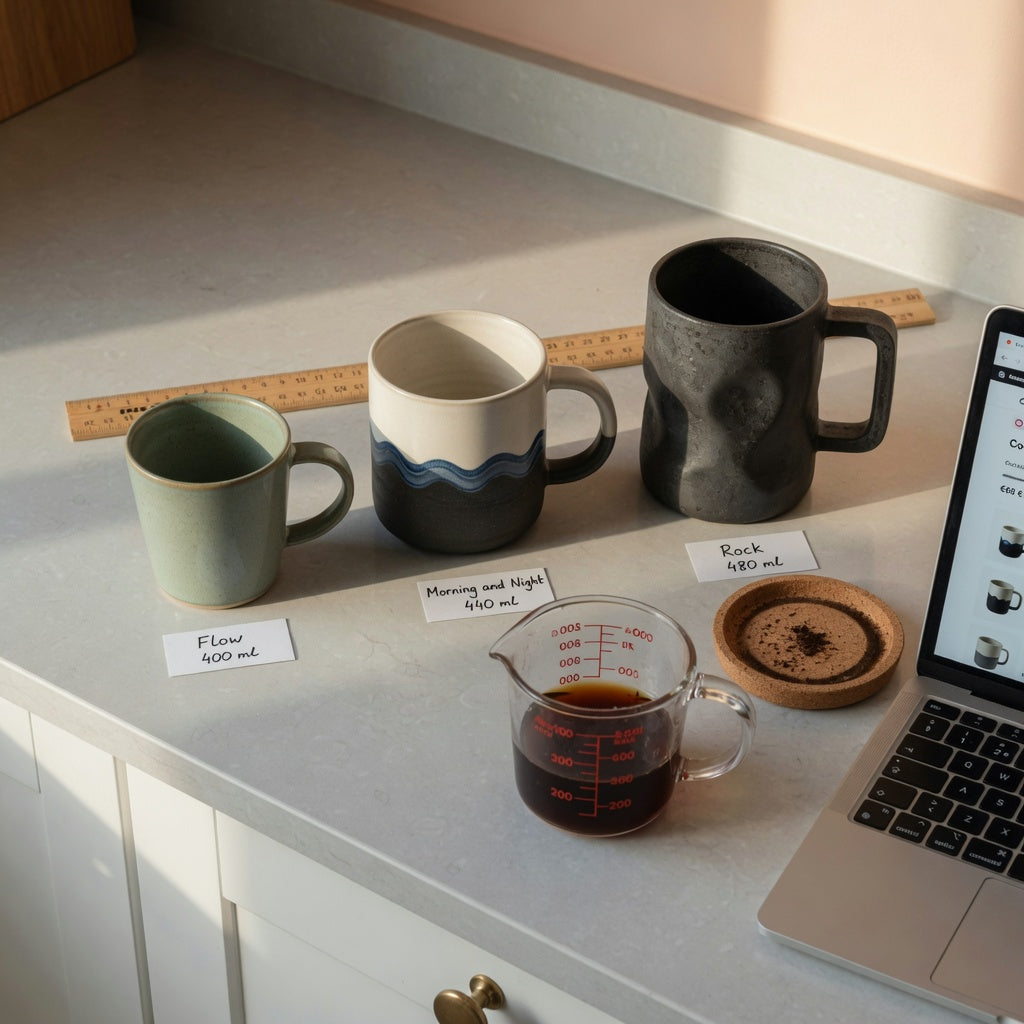
Cafe Au Lait Mug Buying Priorities: Capacity, Shape, Space
Compare CoffeifyMug's 400 ml, 440 ml, and 480 ml mugs by measured pour volume, visible shape, handle fit, and the space you actually have. See where each option fits and which details still need ch...
Read more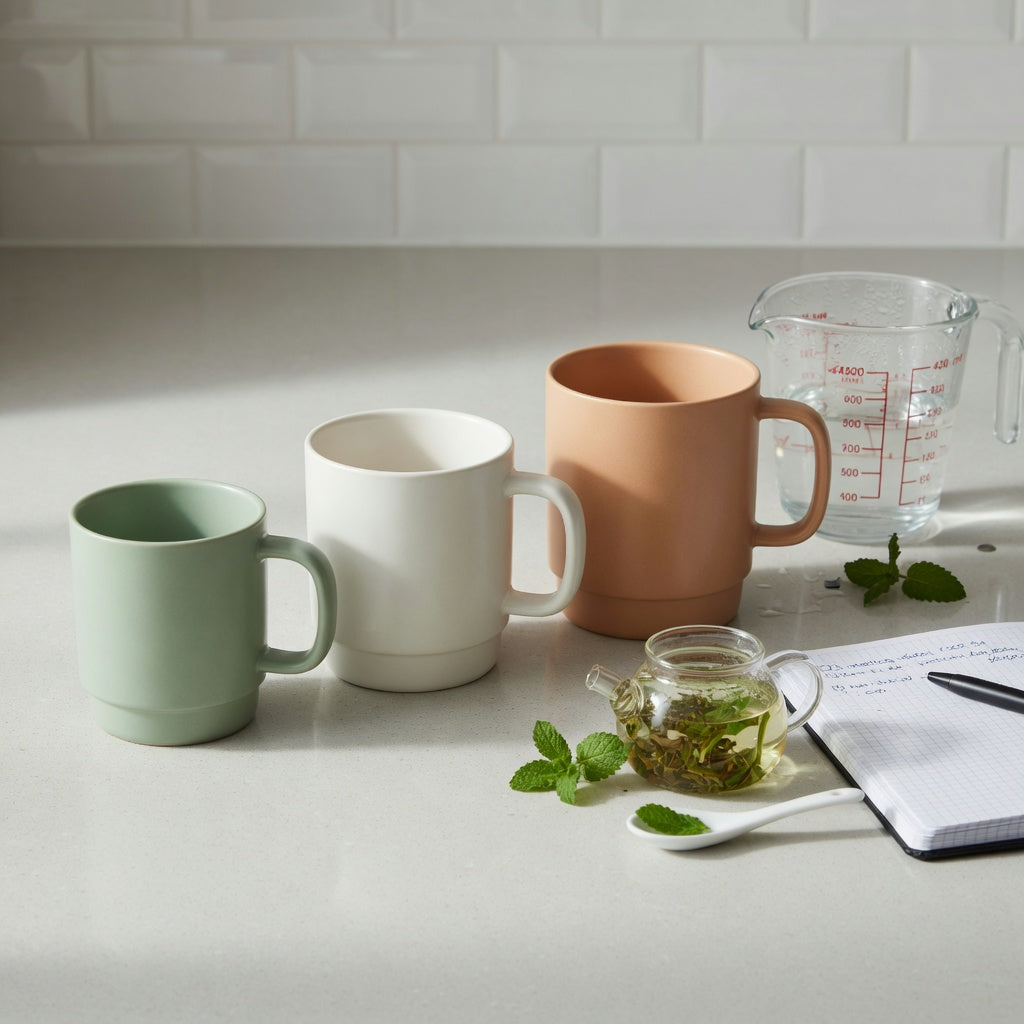
Peppermint Tea Mug Size Decision Guide: 400, 440 or 480 ml
Compare CoffeifyMug's current 400 ml, 440 ml, and 480 ml options using your normal pour, refill habits, carrying routine, and preferred handle feel.
Read more
Leave a comment
This site is protected by hCaptcha and the hCaptcha Privacy Policy and Terms of Service apply.