
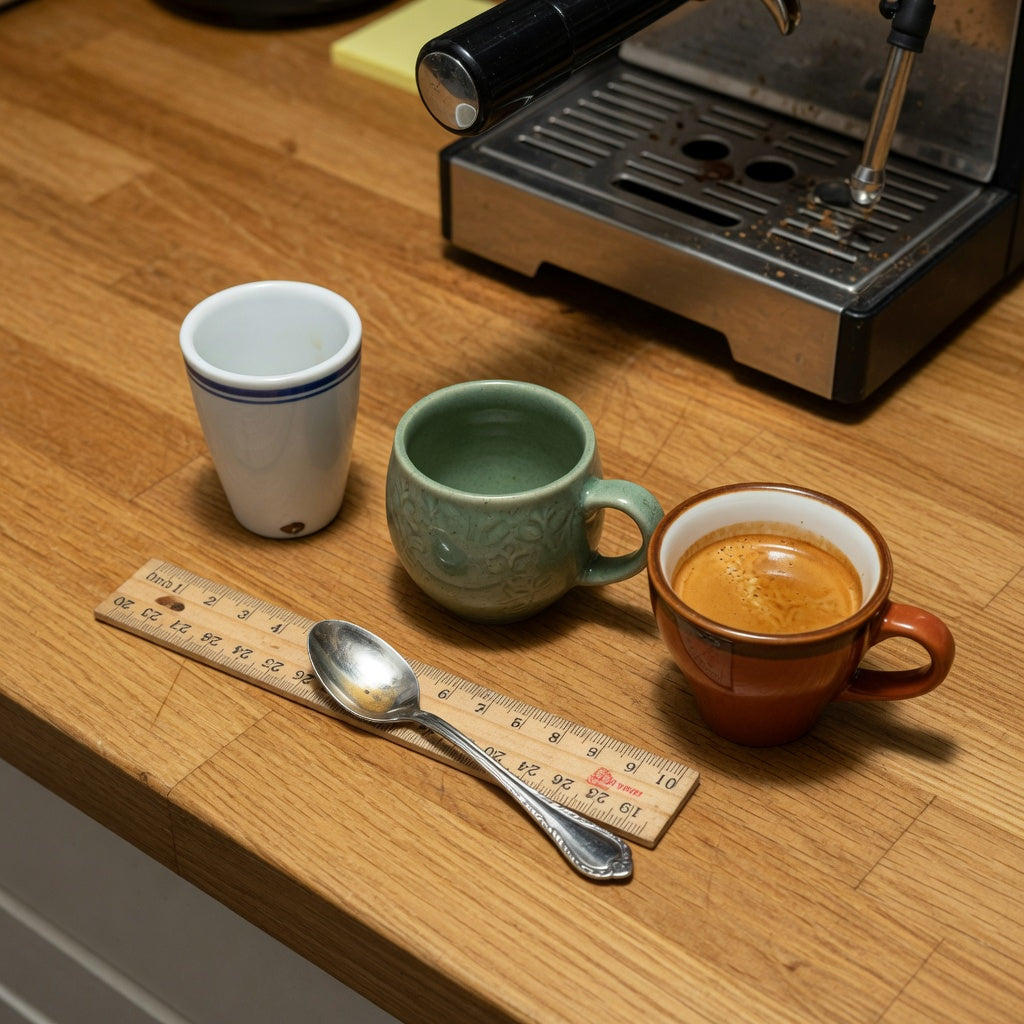
Unique Espresso Cups Buying Priorities: Capacity, Shape, Space
Reading time: about 9 minutes
A beautiful cup with a sad little puddle at the bottom — that is the photo that lands in our inbox most often. Someone bought a distinctive ceramic cup for the glaze, pulled a normal double shot, and the espresso vanished into the volume. The fix is not a new machine or a different bean. It is getting the three unique espresso cups buying priorities in the right order: listed capacity, the shape you actually drink from, and the space the cup needs under your group head and on your shelf.
We sell three compact ceramic vessels — the 170 ml Retro Coffee & Tea Cup, the 200 ml Pleated Coffee & Tea Cup, and the 250 ml Ball Handle Coffee & Tea Mug — and none of them is a miniature coffee mug with a pattern stuck on. They are small ceramic bowls sized around short, hot drinks. The whole trick is reading the listed number next to the drink you make most mornings.
Why does a 170 ml cup still look right next to a 25 ml shot?
Because the number on the listing describes the vessel, not the coffee. An Italian-certified espresso is defined at roughly 25 ml, and older specialty definitions have run 25–35 ml; the cup around it is usually somewhere in the 50–100 ml range. That gap exists for crema, aroma, and the headspace that keeps you from wearing the shot.
So a 170 ml cup is already generous for a straight espresso. It gives you room to pull a full double, let the crema settle, and lift the cup without sloshing. What it will not do is make a 25 ml ristretto look anything other than tiny at the bottom. That is not a defect — it is physics. If you only ever pull single ristretti, a true demitasse around 60–80 ml will feel more proportionate, and our three cups will read as small mugs by comparison.
The reverse mistake is just as common. Shoppers assume bigger is more useful and buy a 250 ml cup, then find that a single shot sits in a wide, cooling puddle that never fills the base. Volume is not the same as fit.
How do unique espresso cups buying priorities shift between a double shot and a cortado?
The drink reorders the list. For a naked double, compactness and rim feel win. For a cortado or a short milk drink, headspace and handle clearance move to the front, because you are pouring two liquids into a fixed volume and the foam needs somewhere to go.
- Straight double, no milk: start with the 170 ml Retro cup. The bowl stays compact enough that the shot and its crema still read as the main event.
- Cortado or a short milk drink: the 200 ml Pleated cup is the middle rung — more room to pour without jumping to the widest vessel in the group.
- Handle-forward hold or a longer milk drink: the 250 ml Ball Handle mug is the largest of the three, and the handle changes how the cup sits in your hand and on the tray.
- Desk or narrow kitchen counter: put outer base diameter and handle projection ahead of pattern. A cup that fits the machine but crowds the drip tray is annoying every single morning.
- Guest tray or housewarming gift: pick the silhouette that reads clearly on an open shelf, then confirm the care guidance before you hand it over.
Which listed capacity matches the way you actually pour?
Here is the whole lineup side by side, with the routine each one suits and the details worth confirming on the live listing before checkout. We hold our product statements to the listed capacity and the visible ceramic finish — height, base diameter, and care instructions belong to the exact product page, not to a general article.
| Cup | Listed capacity | Routine it suits | Confirm on the listing |
|---|---|---|---|
| Retro Coffee & Tea Cup | 170 ml | Double shot, ristretto with headspace, small cortado | Height, outer base diameter, care guidance |
| Pleated Coffee & Tea Cup | 200 ml | Double with more room, cortado, flat-white-ish pours | Rim finish, handle clearance, care guidance |
| Ball Handle Coffee & Tea Mug | 250 ml | Larger cortado, double with generous headspace, handle-led grip | Handle projection, total height, listed dimensions |
Does shape decide how the cup drinks, or only how it photographs?
Both, and the drinking part is harder to see online. Three shape details do most of the work:
Rim thickness. A thin, slightly flared rim delivers liquid cleanly; a thick rolled rim feels softer but can smear crema across your lip. Pleated or faceted exteriors are surface texture — what matters at the sip is the inside edge, which is worth checking in customer-style photos rather than studio shots.
Interior colour. A plain light interior lets you judge a shot at a glance: pale and blond versus a proper hazelnut layer. Dark or heavily patterned interiors hide that. If you like to read the crema before you taste, look for interior photos and ask before ordering.
Handle geometry. The handle is usually the widest point of a cup, and on a ball handle it projects further than a flat strap. That projection is what decides whether the cup slides under a low group head and whether it clears the drip tray grate.
One more shape-and-heat detail we pass on constantly: thick ceramic holds warmth beautifully once it is warm, but a cold thick wall pulls heat out of a 25 ml shot almost immediately. We keep a small jug of hot water on the counter and fill cups while the machine comes up to temperature. It costs five seconds and does more for a short drink than any warming button. If your routine is grab-and-go, a thin double-wall glass will feel hotter faster — that is a genuine trade-off against the handmade look.
Will the cup clear your group head, drip tray, and shelf?
Capacity tells you nothing about clearance, and clearance is where returns happen. Measure before you fall for a finish.
- With the machine cold, measure from the drip tray grate to the underside of the group head.
- Check the cup's outer base diameter against the tray — not the internal capacity, which is narrower.
- Account for handle projection; that side is often the widest dimension of the whole cup.
- Add the saucer to your height measurement if you plan to pull shots onto one.
- Decide whether the cups need to stack. One-off ceramic shapes generally do not nest, so plan shelf height accordingly.
If you are torn between the 200 ml Pleated and the 250 ml Ball Handle, measure the handle side first. If your cabinet clearance is the constraint, the 170 ml Retro is the safer starting point — and then confirm its listed height on the page.
What should you confirm about glaze, lead, and daily care before checkout?
Distinctive ceramics deserve more scrutiny than a studio glaze photo. The FDA notes that lead in ceramic glazes or decorations can leach into food or drink if the pottery is not properly fired, and that washing or boiling cannot remove lead from pottery. The agency's action level for lead leaching from ceramicware cups and mugs is 0.5 µg/ml of leaching solution. Under 21 CFR 109.16, decorative ceramicware that could plausibly be used with food must carry conspicuous “Not for Food Use” labelling or a hole through the food-contact surface.
The FDA also flags higher-risk pieces: handmade ware with a crude or irregular look, antiques, damaged or worn ware, items from flea markets or unknown makers, and ware brightly decorated in orange, red, or yellow. That is a reason to ask questions of a mystery maker, not a reason to avoid handmade ceramics entirely.
Two practical habits follow. First, ask for the food-contact statement on the exact piece — a confident seller will have it. Second, treat gold rims, metallic lusters, and hand-painted decoration as microwave-uncertain by default; as a category rule, metallic finishes are usually not microwave material, and dishwasher heat is unkind to them over time. For our three cups we keep claims to the listed capacity and the visible ceramic finish, so check the current product page or ask us directly about dishwasher and microwave guidance before ordering.
Which of our three cups is the wrong pick for you?
We would rather you skip a cup than keep one that fights your routine.
- If you drink ristretti or single shots only, all three lean large. The 250 ml Ball Handle in particular will swallow a 25 ml pour — it behaves like a small coffee mug, not a demitasse.
- If you want a cappuccino or a 10 oz latte, the 170 ml Retro is the wrong tool. Milk volume plus foam will hit the rim before you finish pouring; step up to the 250 ml, or look at larger formats in the unique coffee mugs collection.
- If your daily driver is a 12 oz drip coffee or an iced drink, compact espresso cups are simply not that product. Forcing one into a big-drink habit is how cups end up at the back of the cupboard.
- If you need stackable, machine-safe, everyday-battered dishware, a hand-finished ceramic silhouette with a projecting handle is a poor match. Buy it for the shelf and the sip, not for the dish rack pile.
Where all three do earn their keep is the double-shot and cortado range. That is the routine they were sized for, and it is where the capacity, the rim, and the handle all stop competing.
If you are still choosing between silhouettes, browse the full collection with a tape measure and your usual cup in hand, then open the specific product page to confirm height, base diameter, and care. Two minutes of measuring beats a return.
Frequently asked questions
Are unique espresso cups buying priorities different for a single shot and a double shot?
Yes. A cup that suits a single can feel cramped once crema and headspace need room, because the espresso is only about 25 ml of the fill. In our lineup the 170 ml Retro is the most compact starting point, while the 200 ml Pleated and 250 ml Ball Handle give more room for a double or a cortado.
Will the 250 ml Ball Handle cup fit under my espresso machine?
Capacity cannot answer that. Check the current listing for height, base diameter, and handle projection, then measure from your drip tray to the group head with the machine cold. If the handle side is the tight point, compare against the 170 ml Retro before ordering.
Can these ceramic cups go in the dishwasher or microwave?
Do not assume either from the word ceramic. Check the current product page or ask us for care guidance on the exact cup, and be especially careful with metallic or hand-painted finishes, which are usually not microwave material.
Are brightly glazed or handmade espresso cups safe for hot coffee?
Not automatically. The FDA notes lead in glazes or decorations can leach if pottery is not properly fired, and it flags bright orange, red, or yellow decoration and unknown-maker pieces as higher-risk. Ask for a food-use statement before buying decorative pottery.
What is the fastest way to choose between the three cups?
Match the drink you make most often: the 170 ml Retro for a compact double, the 200 ml Pleated for more headspace, and the 250 ml Ball Handle for a larger, handle-led cup. Then confirm current dimensions and care on the product page before checkout.
More from our blog
Read more
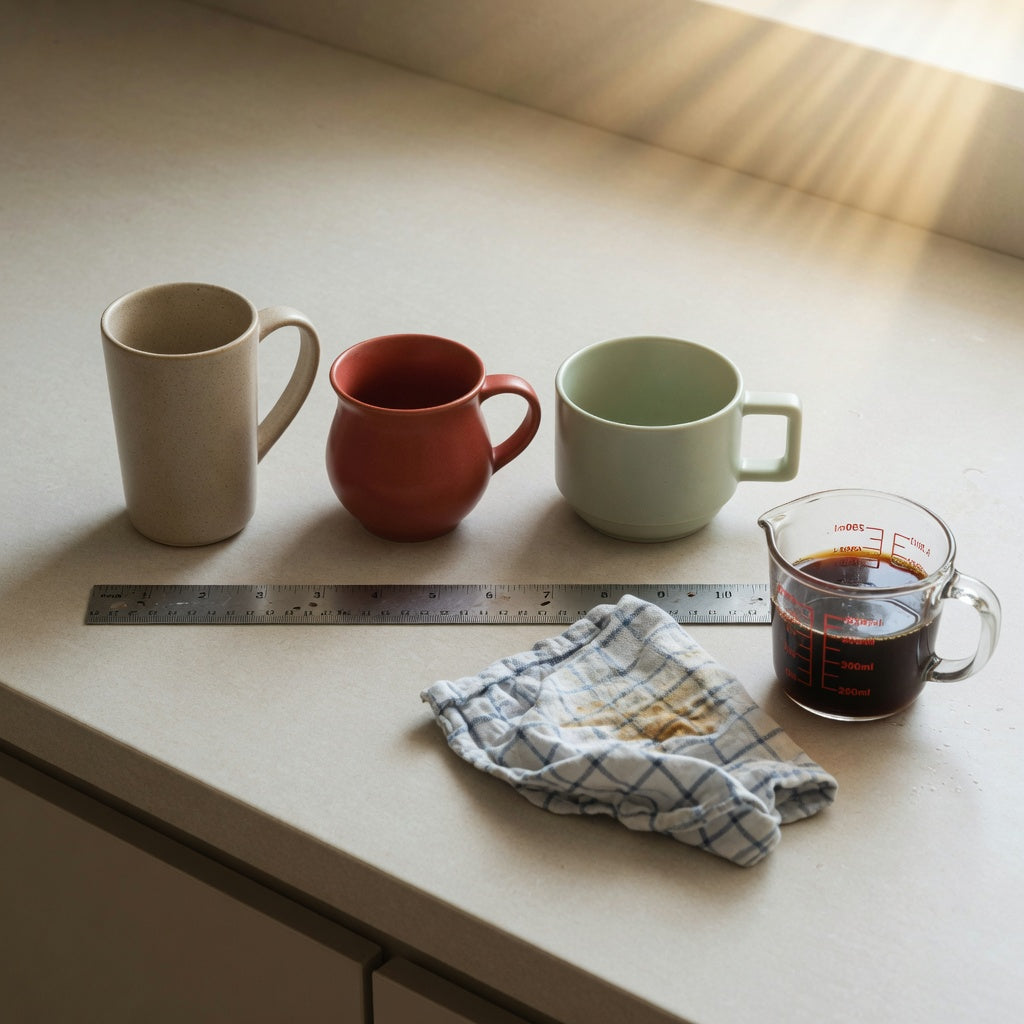
Ceramic Mug Shapes Buying Priorities: Capacity, Handle, Shelf Fit
Most mug mismatches trace back to three numbers and one silhouette: listed capacity, handle opening, shelf and spout clearance, and how the rim meets your lip. We walk through ceramic mug shapes bu...
Read more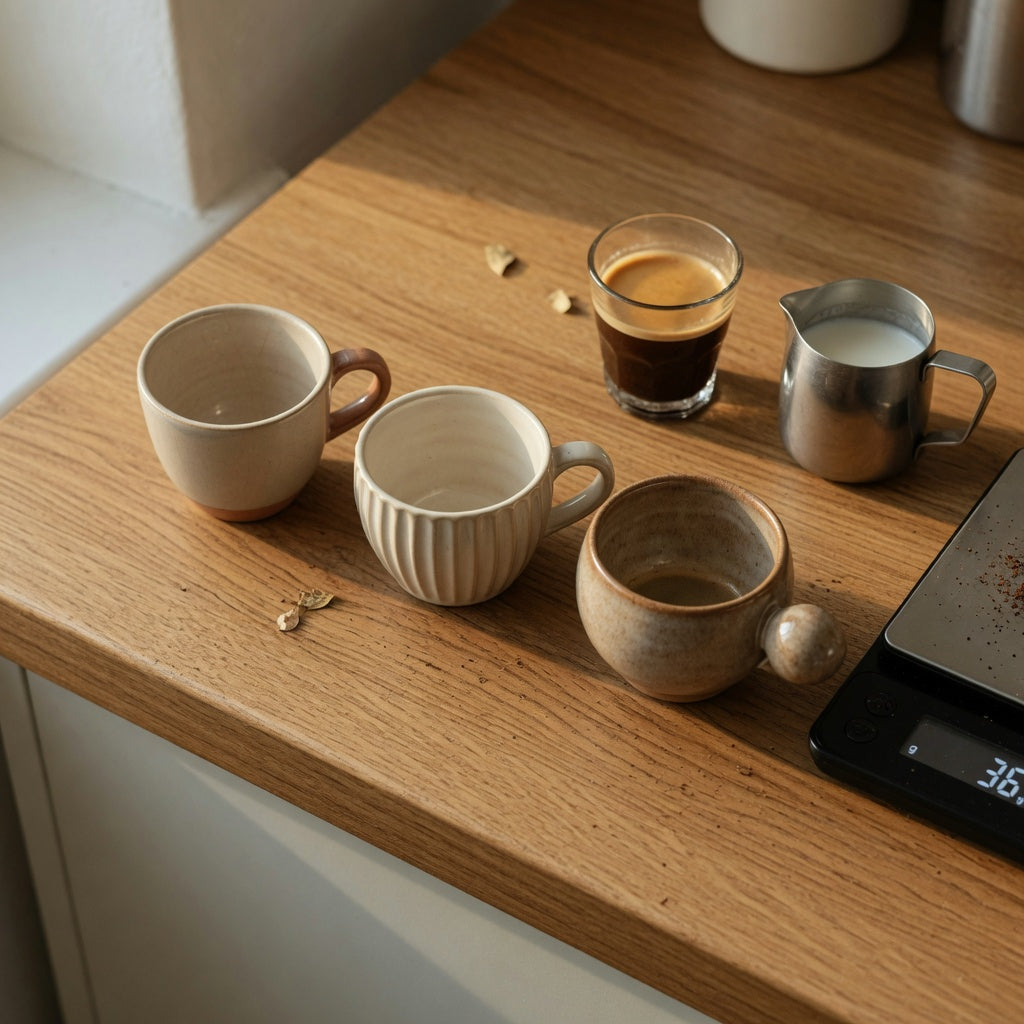
Unique Espresso Cups Current Product Facts: 170, 200 & 250 ml
The unique espresso cups current product facts we can actually confirm — 170 ml, 200 ml and 250 ml ceramic bodies — sorted by which drink each one really holds, plus the specs the listings leave bl...
Read more
Leave a comment
This site is protected by hCaptcha and the hCaptcha Privacy Policy and Terms of Service apply.