
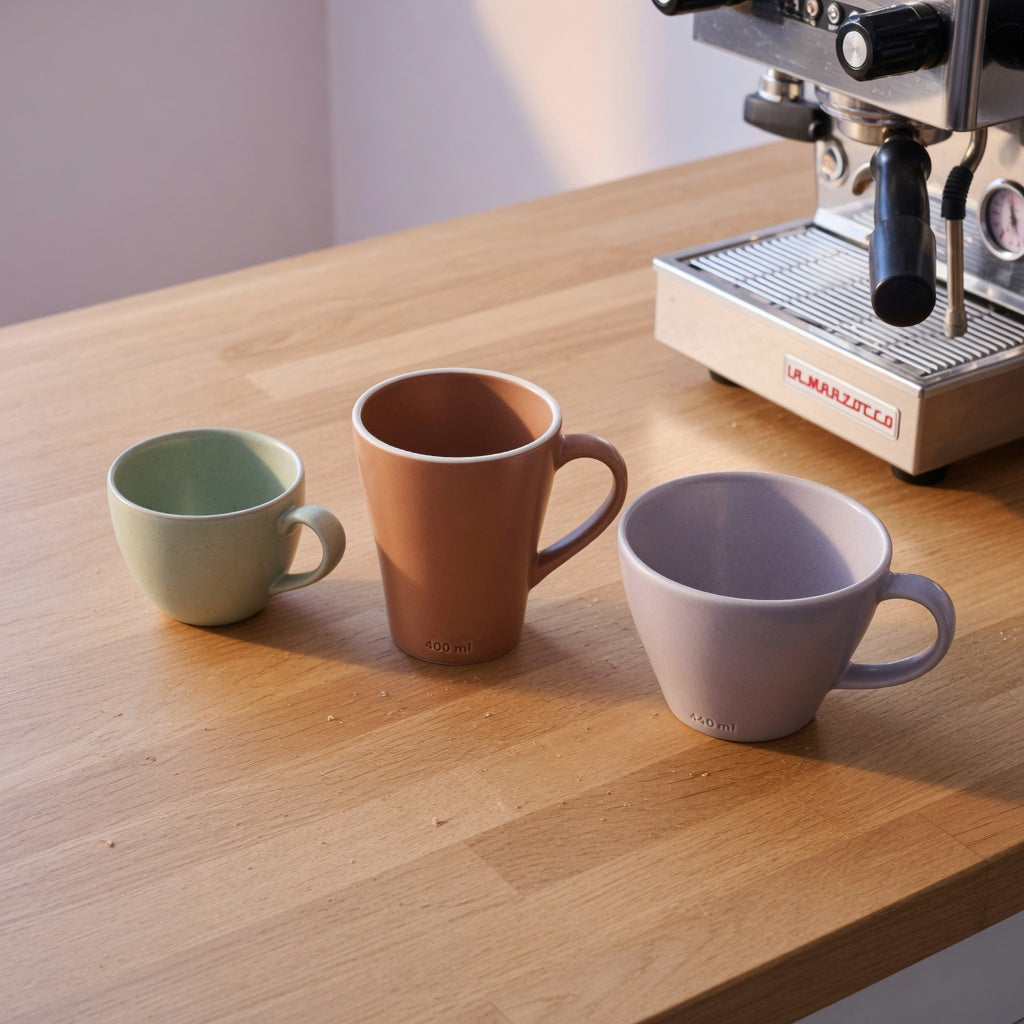
Ceramic Latte Cups Guide: 250 ml, 400 ml, and 440 ml Sizes
Reading time: about 9 minutes
A morning coffee routine falls apart quickly when your drink volume and your vessel do not match. Pour eight ounces of steamed milk and espresso into an oversized mug, and the drink loses its foam texture across an overly broad bottom before you finish your first email. Force twelve ounces into an undersized cup, and you end up tiptoeing across the kitchen trying not to spill hot liquid over the edge. In our store, we pack and inspect ceramic latte cups every day, and our team has found that shoppers often struggle to translate listed milliliters into real-world kitchen habits. Vessel shape, handle geometry, and desk footprint determine your daily satisfaction just as much as stated volume.
Our verified catalog includes three distinct sizes: 250 ml, 400 ml, and 440 ml. Each option supports a different drink ratio and workspace setup. This guide outlines how these capacities handle espresso and milk volumes, how their physical silhouettes balance on home office desks, and what practical variables you should check before ordering.
Comparing ceramic latte cups across 250 ml, 400 ml, and 440 ml sizes
Listed volume figures can feel abstract when browsing on a phone or laptop. The step from 250 ml to 400 ml represents a 60 percent jump in capacity, which dramatically alters the physical weight in your palm and the vertical clearance needed under your brewer. Moving from 400 ml to 440 ml provides a modest volume increase, but the accompanying changes in wall height and body taper alter how the cup rests in your hand.
| Model | Listed Capacity | Best Matched Beverage | Desk & Counter Fit |
|---|---|---|---|
| Ball Handle Mug | 250 ml (approx. 8.5 oz) | Single-shot flat white, traditional cappuccino, cortado | Compact footprint; fits under low portafilters |
| The Flow Mug | 400 ml (approx. 13.5 oz) | Standard double-shot latte, aerated milk pours | Medium circular base; balances well on coasters |
| Morning and Night Mug | 440 ml (approx. 14.9 oz) | Large latte, drip coffee with steamed milk | Taller vertical profile; check upper shelf spacing |
Selecting the right option means matching liquid volume to your physical environment. A cup that fits your preferred milk volume is impractical if its rim strikes the group head of your espresso machine or wobbles on your desk coaster.
How 250 ml ceramic latte cups serve compact morning pours
A 250 ml vessel holds approximately 8.5 fluid ounces. For drinkers who enjoy classic specialty coffee ratios, this size represents the sweet spot. A typical double shot of espresso occupies roughly 1.5 to 2 ounces, leaving six to seven ounces for dense, velvety steamed milk. In our experience testing drinkware ratios, this capacity keeps the espresso profile punchy and distinct rather than diluting the roast character under excessive milk.
Our Ball Handle Mug is listed at 250 ml, making it an agile choice for short milk drinks. Because the overall mass stays modest when filled, it feels nimble to lift and leaves plenty of space on crowded work surfaces. It also washes easily in shallow sinks and tucks neatly into compact dish racks.
This smaller capacity does come with clear operational trade-offs to keep in mind:
- No headroom for large additions: If you prefer making sixteen-ounce café-style drinks with extra syrups or high volumes of froth, 250 ml will overflow immediately.
- Brim-fill sensitivity: When filled to maximum volume, the liquid level sits close to the rim, requiring steady hands as you move from your brewing station.
- Distinctive grip requirements: Spherical or sculptural handle designs rely on a thumb-and-finger pinch rather than a multi-finger grip. We recommend reviewing listing photos to ensure the grip style matches how you like to hold your morning brew.
Why 400 ml represents the standard for everyday desk lattes
A 400 ml mug holds roughly 13.5 fluid ounces. This capacity is widely recognized as the everyday standard for home baristas who prepare 10- to 12-ounce lattes while leaving a reliable half-inch buffer beneath the lip. That empty margin keeps liquid safely contained while you walk across rugs or sit down at your workstation.
The 400 ml capacity of The Flow Mug allows sufficient internal surface area for combining double shots of espresso with generous servings of microfoamed whole, oat, or almond milk. The curvature of a 400 ml bowl gives steamed milk enough room to fold naturally under the crema without splashing against vertical walls.
A filled 400 ml ceramic mug carries noticeable heft. Dense ceramic clay adds to the weight of the liquid, which makes handle balance critical. When our team handles wider mugs at this volume, we look for ergonomic anchor points that distribute the leverage smoothly across your index and middle fingers, avoiding strain on your wrist during longer sips.
When a 440 ml mug makes sense for extended morning routines
At 440 ml, you enter the 15-ounce range. This size is built for drinkers who like a large morning drink that lasts through an extended meeting or focused reading session without requiring an immediate refill. It readily holds a double shot accompanied by ten or eleven ounces of steamed milk, or a tall drip brew cut with a warm pour of dairy.
The Morning and Night Mug features this full 440 ml listed capacity. If you take your time working through your drink over the course of forty-five minutes, this volume keeps you from having to pause your workflow for another trip to the kitchen.
Consider these physical trade-offs before choosing a 440 ml vessel:
- Increased cooling surface: A wider liquid surface exposed to open room air permits gradual heat loss. If you sip very slowly, the last few mouthfuls will cool down significantly before you finish.
- Vertical cabinet storage: Taller 440 ml mugs require extra shelf height. Check your cupboard clearances before ordering several pieces.
- Espresso machine spout clearance: Many compact countertop espresso machines have modest clearance between the tray and the portafilter spouts. Make sure your brewer setup can fit a taller mug directly beneath, or be prepared to pull your espresso into a shot pitcher first.
Vessel shape, handle geometry, and desktop footprint
While capacity determines beverage volume, physical geometry dictates your tactile experience every morning. In our catalog evaluations, we assess three primary physical traits:
Lip profile and wall construction
A refined rim allows milk to flow smoothly onto the palate, enhancing the sensory experience of microfoam. Thicker ceramic walls, by contrast, offer robust everyday durability when knocking against plates in the sink. Smooth, consistent glaze application along the lip prevents rough spots that might disrupt the sip.
Base diameter and center of gravity
Slender, tall mugs take up less room on a desk mat, but their higher center of gravity makes them more susceptible to tipping if your arm brushes against them. Cups with wider bases sit firmly on wooden desks and reduce accidental spills near electronics. If your desk is often packed with notebooks and gear, prioritize a grounded silhouette.
Finger clearance and handle leverage
The distance between the inside of the handle and the exterior wall determines whether your knuckles make contact with hot ceramic. If you have larger hands, shallow handle gaps can feel tight. Conversely, an oversized handle can pull the balance forward, making the cup feel front-heavy when full. Take time to check the product images to see how the handle aligns with the body.
If you enjoy comparing sculptural contours and expressive silhouettes, explore our broader unique coffee mugs collection to see how varied base footprints and handle geometries look across our selection.
Practical checks to perform before ordering ceramic latte cups
Because ceramic pieces undergo high-heat kiln firing, each piece exhibits its own unique character. Before finalizing your purchase, walk through these practical points:
- Check capacity terms: Confirm whether the listed number represents total brim capacity or recommended fill volume. We publish exact listed capacities (250 ml, 400 ml, 440 ml) so you can plan your daily pours accurately.
- Verify portafilter height: Measure the space beneath your machine spouts. If you dislike transferring espresso between vessels, ensure the cup height fits under the brew group.
- Review care instructions: While glazed ceramic cleans easily, regular dishwasher cycles can sometimes cause items to clatter against neighboring glassware. Always check the specific care guidelines on each listing rather than assuming dishwasher suitability.
- Measure your coasters: Many broad ceramic shapes exceed standard three-inch coaster circles. Check your base dimensions to avoid an awkward fit on your work desk.
Frequently asked questions
Are ceramic latte cups suitable for latte art practice?
Yes, especially ceramic latte cups with a rounded internal base in the 350 ml to 400 ml range. A smooth curved interior allows textured microfoam to roll under the espresso crema fluidly, whereas sharp right-angled corners can break the surface and disrupt delicate latte art designs.
How do I know if a 250 ml ceramic cup is large enough for my daily routine?
Pour your typical morning drink into a liquid measuring cup to calculate your exact volume before purchasing. If your combined espresso and steamed milk regularly exceeds seven or eight fluid ounces, a 250 ml cup will be too tight for comfort, making a 400 ml vessel the safer choice.
Why choose ceramic latte cups over glass or stainless steel alternatives?
Ceramic provides a neutral, non-reactive surface that never alters the taste of steamed dairy or delicate espresso notes. Additionally, ceramic drinkware provides a stable, substantial heft on wooden desks that lightweight single-wall glass cannot match.
Do these ceramic cups fit into car cup holders?
Most wide-bellied or rounded ceramic drinkware above 350 ml is designed for stable use on dining tables and office desks rather than automotive cup holders. Always inspect the stated base diameter on the product page if you plan to transport your drink in a vehicle.
Choosing the right vessel for your daily coffee ritual
The right mug turns your morning brew into an effortless, comfortable ritual. If you enjoy concentrated cappuccinos or cortados and want a compact footprint, the 250 ml Ball Handle Mug delivers precision in a smaller profile. If you make classic twelve-ounce café lattes and want reliable stability while working, the 400 ml The Flow Mug provides the ideal balance of volume and foam space. For long sipping sessions and generous pours, the 440 ml Morning and Night Mug gives you room to relax without interruption. Visit our unique coffee mugs collection to compare silhouettes and find the exact piece that complements your morning routine.
More from our blog
Read more

Vintage Style vs Vintage Pottery Mugs: A Practical Comparison
Two mugs can look equally old on a shelf and still be completely different purchases. One is a new mug built to look vintage; the other is period clay with a maker to trace and a food-safety questi...
Read more
Cute Espresso Cups for Compact Corners: Sizing & Glaze Guide
Tight coffee stations require careful sizing. We break down listed capacities (170 ml to 250 ml), ceramic finishes, and clearance needs to help you choose cute espresso cups that actually fit your ...
Read more
Leave a comment
This site is protected by hCaptcha and the hCaptcha Privacy Policy and Terms of Service apply.