
Ceramic Coffee Mug With Handle Capacity Guide: 350-480 ml Fit
Reading time: about 9 minutes
A half-finished drink beside a keyboard and a second trip to the coffee pot are opposite signs of the same mismatch: the mug's listed capacity does not suit the serving routine. This ceramic coffee mug with handle capacity guide compares the three current CoffeifyMug options using facts shoppers can check before ordering: ceramic material, listed volume, visible handle form, and vessel shape.
In our store, we handle these pieces and compare them side by side during product checks. We also keep the limits clear. A capacity number can help predict refill frequency, but it does not establish handle comfort, external dimensions, heat retention, strength, or care ratings.
Which listed capacities are in the current handled ceramic range?
The current comparison runs from 350 ml to 480 ml. All three products are listed as ceramic, but each combines its capacity with a different silhouette and visible handle design.
| Current product | Listed capacity | Visible handle form | Vessel shape |
|---|---|---|---|
| Ball Handled Coffee Tea Mug | 350 ml | Closed ball-form handle | Rounded |
| Round Coffee Tea Mug | 400 ml | Round-loop handle | Bulbous |
| The Flow Coffee Tea Mug | 480 ml | Elongated flow-style handle | Tapered |
Treat each listed capacity as a common comparison point, not an instruction to pour to the rim. Coffee, milk, foam, tea infusers, fruit, and ice all occupy space. The useful daily volume is therefore your complete recipe plus whatever margin you prefer for stirring or carrying the mug.
The figures also describe interior volume, not physical footprint. A 350 ml listing does not by itself tell you that a mug will fit beneath a particular coffee machine, inside a cupboard, or beside a tightly packed keyboard. Check current product information and your available space separately if those measurements decide the purchase.
The ceramic coffee mug with handle capacity guide: what is your real pour?
Start with the drink you actually prepare, rather than a general idea of a small or large coffee. Cup labels are inconsistent across homes, cafes, and coffee makers. Milliliters give you a repeatable comparison.
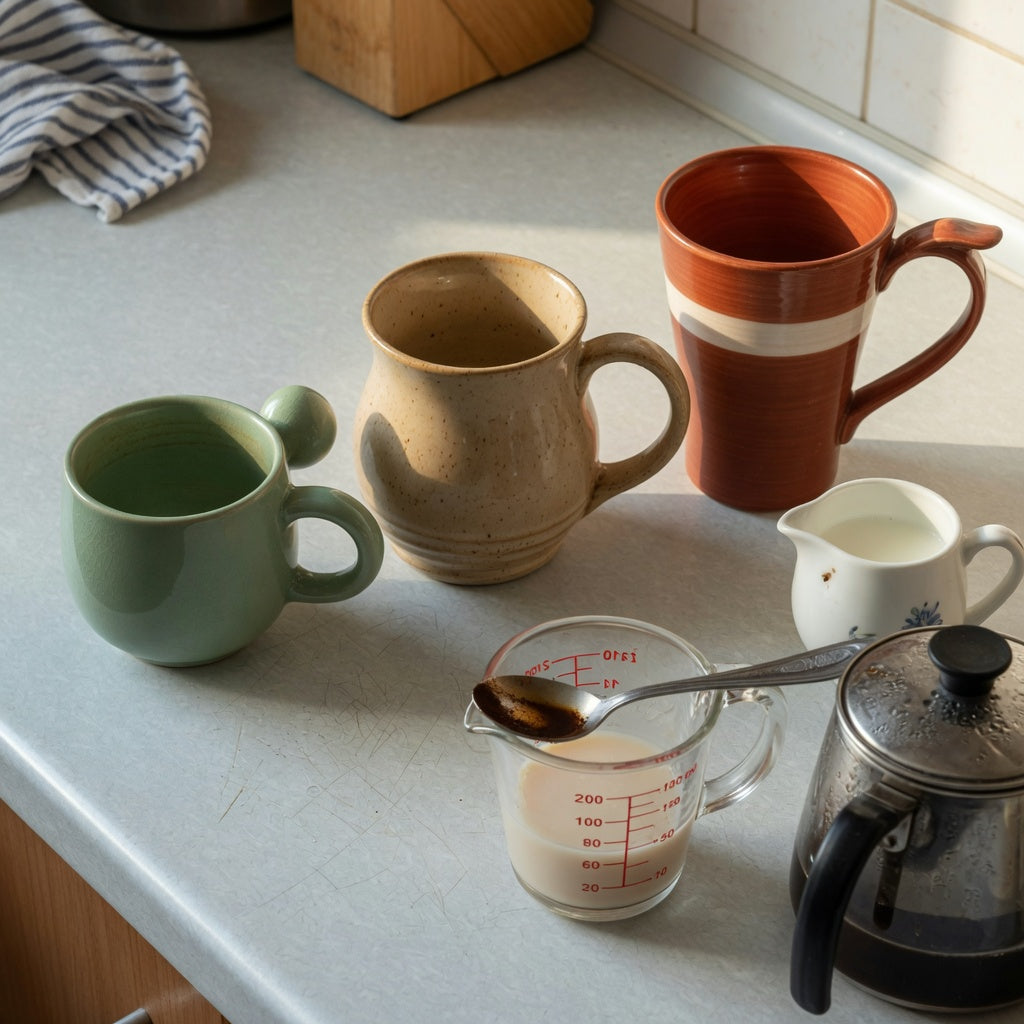
- Measure the base drink. Pour your normal coffee or tea into a suitable graduated measuring vessel and record the volume.
- Add liquid extras. Include the milk, creamer, syrup, or water you normally add. A 230 ml coffee with 70 ml of milk is a 300 ml drink.
- Allow for displaced volume. An infuser, ice cubes, or solid garnish takes up room even though it is not included in the measured liquid total.
- Choose your own headroom. Leave more unused capacity if you stir vigorously or carry the drink from the kitchen to another room.
- Compare the final occupied volume. Do not round down to a mug whose listed capacity merely equals the liquid recipe before add-ins and headroom.
The arithmetic quickly separates close choices. A 300 ml milk coffee leaves a nominal difference of 50 ml in the 350 ml mug, 100 ml in the 400 ml mug, and 180 ml in the 480 ml mug. Those differences are not guaranteed working headroom because this article does not establish the exact fill line used for each listing, but they show which options deserve a closer look.
Two 180 ml servings total 360 ml. On listed capacity alone, that rules out 350 ml, leaves a 40 ml difference at 400 ml, and leaves 120 ml at 480 ml. For iced coffee, build your normal recipe in a suitable measuring vessel with the usual amount of ice; 280 ml of liquid does not necessarily occupy only 280 ml once the ice is added.
Which mug fits frequent refills, one long serving, or added milk?
Capacity becomes useful once it is tied to a repeatable routine. Our product-selection logic is straightforward:
- Choose 350 ml for a smaller measured serving and planned refills. If your complete drink sits below 350 ml with the margin you want, the 350 ml Ball Handled Coffee Tea Mug gives you the lowest listed capacity in this group. It suits someone who works near the coffee pot or prefers making a fresh serving more often. The trade-off is an earlier refill during a long desk session.
- Choose 400 ml when 350 ml is too close but 480 ml is unnecessary. The 400 ml Round Coffee Tea Mug is the middle listed option. It fits a measured recipe that needs more room for milk, an infuser, or stirring without automatically moving to the largest vessel. It is not a universal default; a short black coffee may leave more unused capacity than you want.
- Choose 480 ml for a recipe that exceeds the 400 ml limit or combines smaller pours. The 480 ml Flow Coffee Tea Mug provides the most listed volume of the three. It can reduce refill trips when you intend to consume that amount. The trade-off is more beverage to finish and more beverage mass when fully poured.
Avoid selecting 480 ml solely because it is the largest. If you regularly leave part of a 350 ml or 400 ml drink unfinished, added capacity will not solve that routine. Likewise, a 350 ml mug is a poor match for a 360 ml recipe before any margin is added.
How should the ball, round-loop, and flow handles affect the choice?
Handle form and vessel shape can settle a visual preference after the capacity calculation. They should not be used as substitutes for measurements or a personal grip check.
The 350 ml Ball Handled Coffee Tea Mug pairs a rounded ceramic vessel with a closed ball-form handle. That combination has a distinct sculptural appearance, but the visible form alone does not prove finger clearance or suitability for a particular hand size.
The 400 ml Round Coffee Tea Mug uses a bulbous vessel and a round-loop handle. It is the most conventional handle outline in this trio, while the body remains visually fuller. We do not infer counter footprint, balance, or comfort from that outline.
The 480 ml Flow Coffee Tea Mug combines a tapered vessel with an elongated flow-style handle. Its profile is visibly different from the rounded and bulbous choices. The taper does not establish better heat retention or stability, and the elongated handle does not guarantee a particular grip experience.
If two capacities work for your measured recipe, compare their silhouettes in the unique coffee mugs collection. Pick by appearance only after confirming that the listed volume supports the drink you make most often.
What fits an office desk, kitchen counter, tea routine, or iced drink?
- Short coffee near the kitchen: A drink well below 350 ml and easy access to the pot point toward the 350 ml Ball Handled mug. Its lower listed volume reduces excess capacity, while the buyer accepts more frequent refills.
- One measured drink for a meeting: If the complete serving falls above your preferred margin in 350 ml but below that margin in 400 ml, the Round Coffee Tea Mug is the direct step up. Measure first; meeting length alone does not determine volume.
- Long work block away from the coffee maker: A planned serving that exceeds 400 ml can justify the 480 ml Flow mug. It is not the right answer if the drink usually goes unfinished or if a sealed travel vessel is required.
- Coffee with milk or foam: Add every liquid component before comparing capacities. A 300 ml finished recipe may suit 350 ml, while a larger milk drink can move the choice to 400 ml or 480 ml depending on the desired margin.
- Tea with an infuser: Account for both the water and the space occupied by the infuser. Capacity alone does not confirm that a particular infuser fits the opening, so check its dimensions against current product details.
- Iced coffee: Measure the occupied volume with your normal ice quantity instead of comparing liquid volume alone. Follow product-specific guidance before exposing ceramic to abrupt temperature changes; this capacity comparison does not establish thermal-shock resistance.
Gift buying needs the same discipline. Ask what capacity the recipient already uses or measure a favorite mug if you can do so without spoiling the gift. Choosing the 400 ml option merely because it sits in the middle can still miss someone who drinks short tea servings or builds a large iced recipe.
Which claims cannot be made from capacity and vessel shape?
We keep these boundaries visible because product photos and capacity labels cannot answer every buying question:
- A ball, loop, or flow-style handle does not establish ergonomic comfort or hand-size fit.
- A rounded, bulbous, or tapered vessel does not prove heat-retention performance.
- The ceramic material description does not establish impact strength, chip resistance, or a defect rate.
- This guide does not assign dishwasher or microwave safety ratings.
- Listed capacity does not provide height, width, handle clearance, shelf fit, or coffee-machine clearance.
- These handled ceramic mugs should not be treated as substitutes for a sealed travel cup when leak resistance is required.
Check the current product page and any included product instructions for details outside this comparison. If a required dimension, appliance rating, or care instruction is not confirmed, do not infer it from another ceramic mug.
Frequently asked questions
How should I use a ceramic coffee mug with handle capacity guide for my usual serving?
Measure the coffee or tea, add the volume of milk or other liquids, and account for space taken by ice or an infuser. Then compare that occupied volume with 350 ml, 400 ml, and 480 ml while reserving your preferred margin below the rim. Select the smallest listed option that still supports the complete routine.
Is a 350 ml ceramic mug enough for coffee with milk?
It can be if the finished drink and your chosen headroom remain within the mug's listed 350 ml capacity. For example, 230 ml of coffee plus 70 ml of milk totals 300 ml, leaving a nominal 50 ml difference. A larger milk recipe may point to the 400 ml Round mug instead.
Will a 480 ml mug hold two cups of coffee?
That depends on what one cup means in your routine. Two 200 ml servings total 400 ml and leave a nominal 80 ml difference in a 480 ml mug, while two 250 ml servings total 500 ml and exceed the listing. Measure one serving before using the two-cup label.
Does the handle shape tell me which mug will fit my hand?
No. The product names and photos show a closed ball-form handle, a round loop, and an elongated flow-style handle, but those visible forms do not establish comfort, clearance, or hand-size fit. Use the handle design as a style comparison unless confirmed measurements answer your specific requirement.
Are these ceramic coffee mugs dishwasher- and microwave-safe?
This capacity comparison does not establish either care rating. Review the current product page and the instructions supplied with the mug before using a dishwasher or microwave. Do not assume that one ceramic product's care guidance applies to another.
Use three numbers before opening the product page
Write down your base drink volume, the occupied volume added by milk, ice, or an infuser, and the margin you want below the rim. If that total stays within 350 ml, review the Ball Handled mug; if it exceeds 350 ml but works within 400 ml, compare the Round mug; if it exceeds 400 ml but fits within 480 ml, inspect The Flow mug.
If none of those listed capacities supports the recipe without forcing the numbers, return to the current unique coffee mug collection and compare a different style rather than ordering the nearest size by guesswork.
More from our blog
Read more
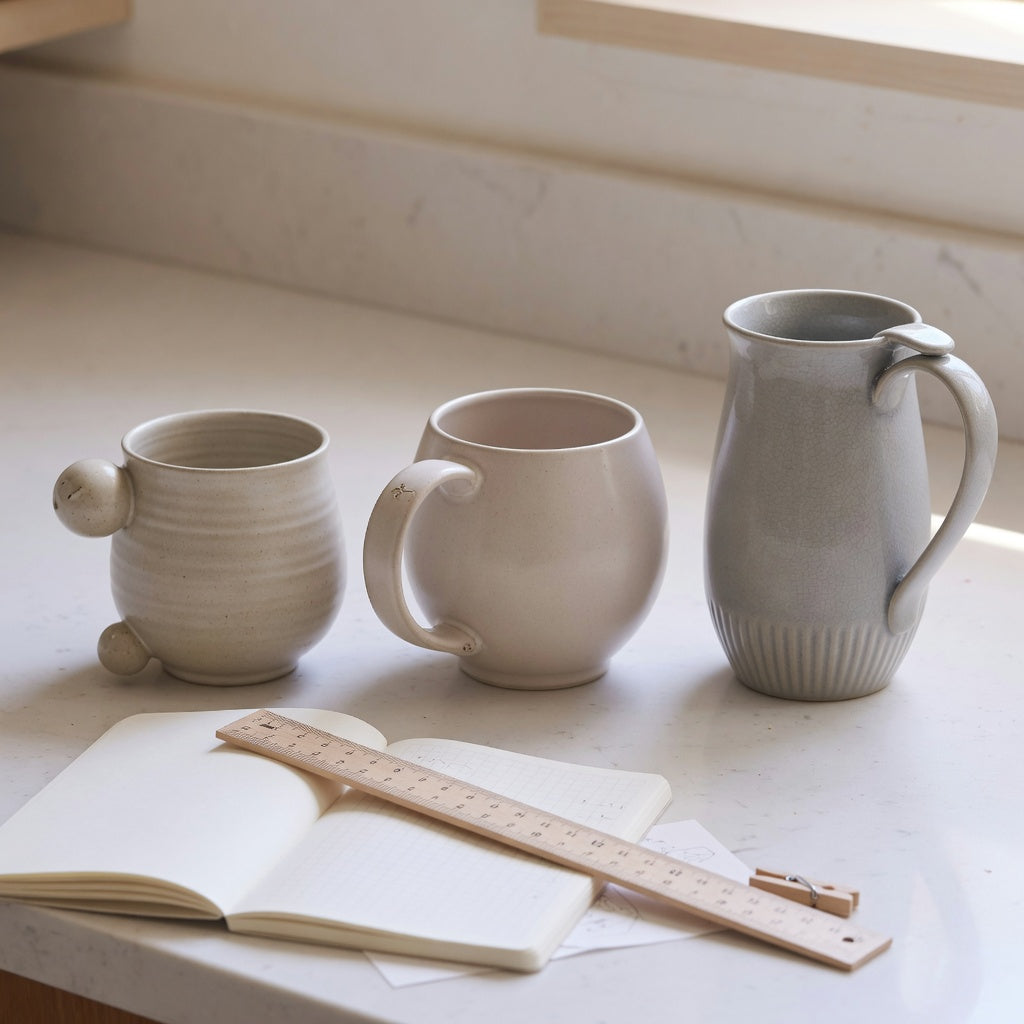
Ceramic coffee mug with handle shape and handle guide: 3 options
Compare the ball-handled, round, and Flow ceramic coffee tea mugs by visible vessel shape, handle form, listed capacity, and approximate dimensions. Use the trade-offs to choose a desk, kitchen, or...
Read more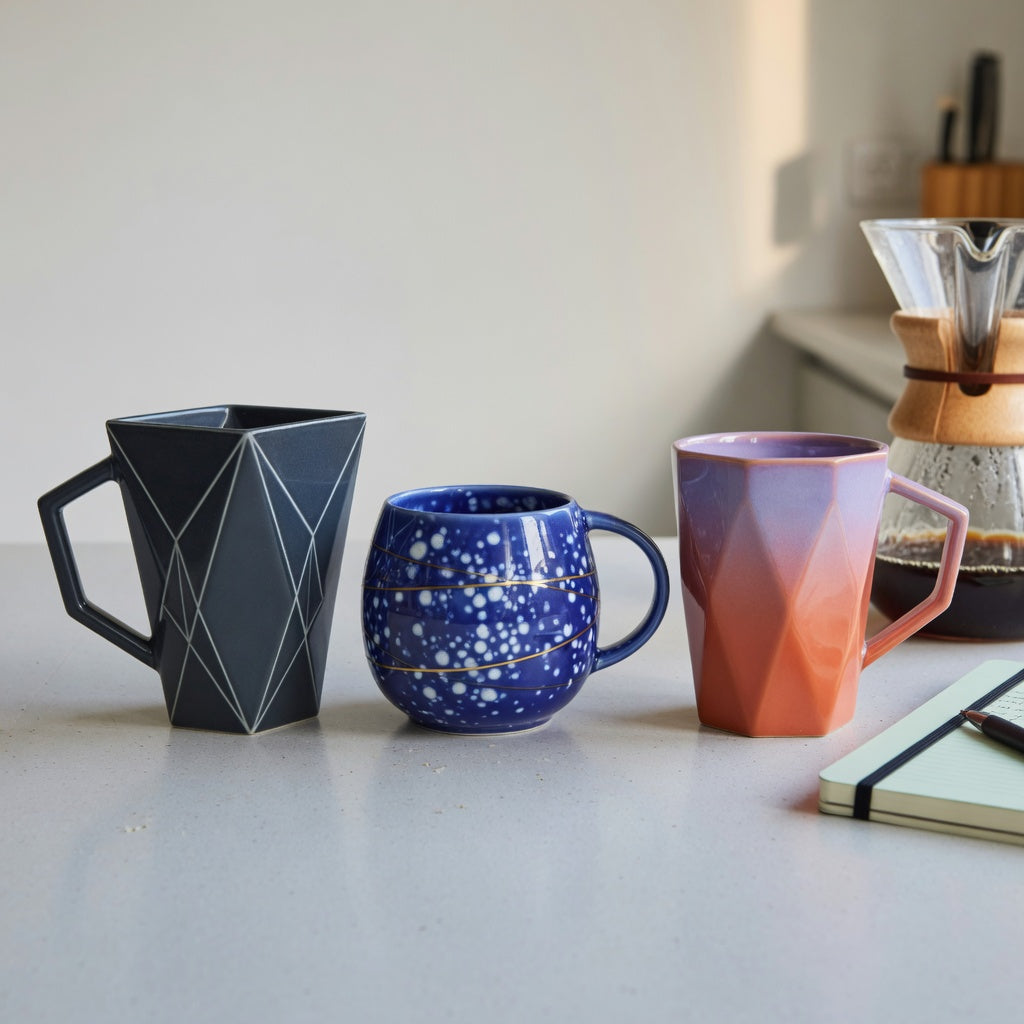
Geometric coffee mug comparison: Rhombus, Planet, or Gradient?
Compare CoffeifyMug's current Rhombus, Planet, and Gradient glazed ceramic mugs by listed capacity, visible shape, desk and kitchen fit, care, and gifting trade-offs. Match the mug to your actual p...
Read more
Leave a comment
This site is protected by hCaptcha and the hCaptcha Privacy Policy and Terms of Service apply.