
Vintage Style vs Vintage Pottery Mugs: A Practical Comparison
Reading time: about 10 minutes
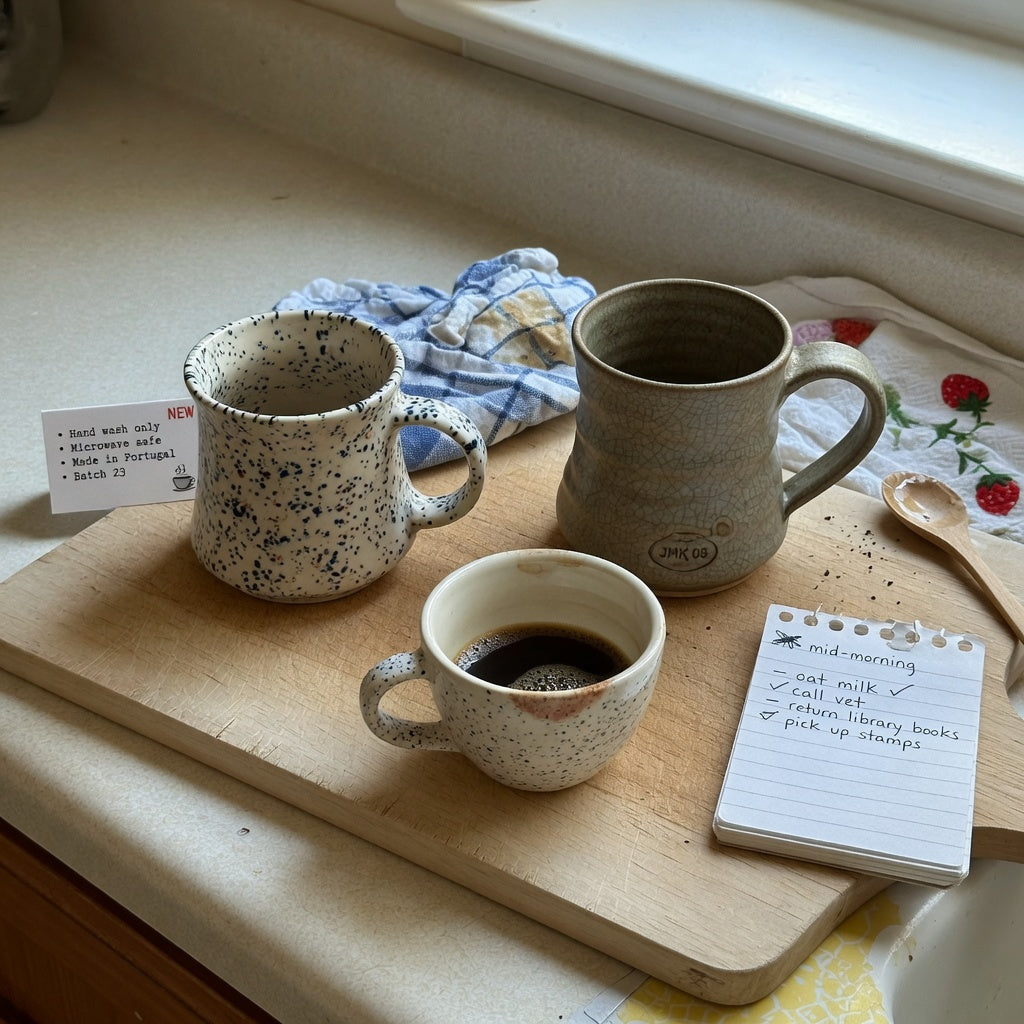
A shopper brought two speckled mugs to our counter recently and asked which was the better buy. One had a worn felt pad and a faint impressed mark on the base. The other still had half a barcode sticker stuck to the foot. Same palette. Same chunky handle. Two completely different purchases — and that gap is the entire conversation around vintage style vs vintage pottery mugs.
Vintage style vs vintage pottery mugs: the difference that changes your checklist
Vintage style describes a look. A mug can leave a factory this year and still carry a 1970s palette, a fat rolled handle, a speckled glaze, or a backstamp designed to feel older than it is. Vintage pottery describes an older clay mug — but “vintage” is a trade and shopping word, not a legal age bracket in the United States. The category U.S. Customs and Border Protection actually polices is antique: goods over 100 years old at import, with proof of age, under HTS Chapter 9706. Retro sits looser still — a style nodding at a past era, with no manufacture date attached to it.
| Term | What it tells you | What it does not tell you |
|---|---|---|
| Vintage style | A new or later mug made to look older | Age, maker, or food-contact status |
| Vintage pottery | An older clay mug, often collectible | A legal age cutoff or safety |
| Retro | A style inspired by a past era | When the mug was made |
| Antique | U.S. customs category for goods over 100 years old at import | That the seller has proof of age |
Those definitions set your expectations. A vintage-style listing is selling you a design decision. A seller advertising vintage pottery is asking you to trust an age claim — and age claims need evidence, not atmosphere.
Which one belongs on your daily coffee counter?
Daily use rewards different things than collecting does. A new vintage-style mug comes with a known supply chain and usually a care line you can read before you buy. A period piece may have hand-painted decoration, a porous earthenware body, or wear that quietly turns it into a shelf object. Neither is automatically the better mug.
- Choose vintage style if you want a specific look, easy replacements, and care instructions you can actually follow. It is the lower-risk route for office desks, guest cups, and households that run the dishwasher every night.
- Choose vintage pottery if you enjoy the hunt, care about maker marks, and will hand-wash and inspect. It is a poor fit if you need four matching mugs or something you can microwave without thinking.
- Skip both if you need documented food-service ware with no unknowns. Buy new from a listing that states material, capacity, and care — and read it before you fall for the glaze.
One caution we repeat constantly: thick walls and an uneven glaze make a mug feel old. They say nothing about firing temperature, glaze chemistry, or lead. Plenty of brand-new mugs feel like they came out of a 1950s kiln, and plenty of genuinely old ones feel thin and cheap in the hand.
If the retro direction is the draw, start with the retro coffee and tea cup in our range and read the current listing for material, capacity, and care. The product name does not confirm any of those.
How do you spot a reproduction when a seller says vintage pottery?
No single clue proves age. Build a case from small details, and walk away when the seller dodges basic questions.
- Backstamp and country wording. “Made in Japan,” “England,” or a pattern name can narrow a date range, but reproductions copy marks faithfully. A copyright year is a legal notice, not a manufacture date.
- Molded versus printed decoration. Raised relief and underglaze painting behave differently from a decal sitting on top of the glaze. Run a fingernail gently across an inconspicuous spot; a crisp lip or edge often means surface decal.
- Foot ring and honest wear. Real wear lands where the mug meets a shelf and where fingers grip. Uniform scuffing on an expensive piece is a warning sign, not a badge of age.
- Crazing. Fine glaze cracks develop with age, but they also appear on new pieces and after thermal shock. Treat crazing as a condition issue, not a date stamp.
- Price and story. A perfect mark, perfect gloss, and an “estate find, no history” line can coexist. Ask for daylight photos of the base, the handle join, and every chip.
Reproductions also copy pattern names and origin wording, so treat any single detail as a hint. Two details that agree are better than one dramatic clue.
Are vintage pottery mugs safe to drink from?
This is the question that should slow a purchase down. Lead can be present in the glaze or the decoration on some traditional pottery, and improper firing can let it leach into food or drink. The FDA flags higher concern for ceramicware that is handmade and crude or irregular, antique, damaged or heavily worn, bought at flea markets or from uncertain makers, or brightly decorated in orange, red, or yellow. Washing or boiling will not remove lead from pottery.
For scale, FDA compliance guidance for leachable lead sets a cups-and-mugs guideline of 0.5 micrograms per milliliter for any one of six units under the specified test — and defines that category as small hollowware for hot drinks, normally about 240 mL (8 fl oz) with a handle. That is a laboratory test on commercial ware, not something you can confirm from a listing photo. A home lead swab is a screening tool at best; it is not a leach test and it will not tell you whether a mug is safe for a daily latte.
Watch for ornamental ware too. Under 21 CFR 109.16, decorative ceramicware that looks food-suitable and entered interstate commerce on or after July 13, 1994 is treated as food-use ware unless it carries the specified “Not for Food Use” warnings or has a hole through the potential food-contact surface. A gold-rimmed display piece is decor, not a coffee mug, no matter how good it looks beside the kettle.
The honest trade-off: not every old mug leaches lead, and not every new vintage-style mug is automatically food-safe. What you cannot do is declare an unmarked older mug safe because of its style, its color, or a seller’s “vintage” label. If food-contact status can’t be established, treat it as display-first, and be extra careful with children and pregnant people.
Dishwasher, microwave, and acidic coffee: what changes with age?
Body and decoration matter more than the word vintage. Earthenware is pottery that has not been fired to vitrification, so it is slightly porous and coarser than stoneware and porcelain; it is usually glazed because unglazed earthenware is impractical for holding liquids. A denser body helps with staining, but it does not make every decoration dishwasher-safe.
- Crazing and chips. Glaze cracks and rim chips give coffee and wash water somewhere to sit. We retire chipped mugs from drinking duty rather than keep using them.
- Metallic rims and overglaze decals. Gold lines and surface decoration wear in a dishwasher and are usually a microwave risk. Hand-wash them and keep them out of the microwave unless the current listing explicitly says otherwise.
- Acidic drinks. Coffee and tea are mildly acidic. A stable, well-fired glaze is the barrier; a worn or underfired one is where we stop daily use.
- Thermal shock. Pouring boiling water into a cold, thick earthenware mug is harder on it than warming it first with tap water.
For our own products, we do not assume. Check the individual listing for care and microwave guidance rather than borrowing it from a similar-looking mug — including the Mountain Sea and Great Mountain cups below, which are separate listings with their own specifications.
Which mug fits your kitchen: a new vintage-style cup or a period piece?
Match the mug to the job, not to the mood board.
- Everyday counter mug in a dishwasher household: start with a new vintage-style cup whose listing states material and care. Verify those on this retro coffee cup’s product page before checkout.
- Gift for someone who likes a scenic, hand-thrown look: compare the Mountain Sea Coffee & Tea Mug against the Great Mountain Coffee & Tea Mug side by side. Check finish, capacity, and care on each page individually; similar names are not a guarantee of identical specs.
- Display shelf or a collector’s rotation: buy the period piece for the mark, the history, and the look, and keep a separate user mug for the coffee you actually drink.
- Office or shared rental kitchen: favor a replaceable new mug. You will not grieve if it walks off, and you will not be hand-washing someone else’s antique at the sink.
To compare silhouettes, glazes, and gift-ready shapes in one place, browse the unique coffee mugs collection. The limitation is blunt: a vintage-style mug is not an investment, and a genuine period piece is not the easy, dishwasher-friendly workhorse for a busy kitchen.
What should you check before you buy either style?
- Read the listing for material, capacity, food-contact status, and care — not just the photos.
- Ask plainly whether the mug is new vintage style or period-made. “Vintage” alone is not an answer.
- For period pottery, request daylight photos of the base, rim, handle join, and any chips.
- Decide display versus daily use before you fall for the pattern.
- If food safety cannot be established, buy it as decor or walk away. A mug you are scared to use is a bad purchase at any price.
One extra detail most listings skip: check the interior color at the bottom of the cup. A bright white interior makes staining easy to spot, while a dark or reactive interior hides coffee rings — useful to know if you drink two pots a day and rinse rather than scrub.
Frequently asked questions
In vintage style vs vintage pottery mugs, which is better for daily coffee?
For most routines, a new vintage-style mug is the lower-risk choice because you can read its material, capacity, and care on the current listing. A vintage pottery mug can be used daily, but only after food-contact safety is established and you accept hand-washing and inspection.
How can I tell if a mug is vintage pottery or a reproduction?
You cannot prove age from one clue. Compare the backstamp, country wording, molded versus printed decoration, foot-ring wear, and overall condition, then ask for clear daylight photos of the base and handle join. Reproductions copy marks and copyright dates, so each detail is a hint, not proof.
Are crazed vintage mugs safe to drink from?
Crazing is a glaze condition, not a safety verdict. Fine cracks can hold moisture and residue, especially alongside chips or worn glaze, so we move heavily crazed pieces to display duty unless their food-contact status is documented.
Can I put a vintage pottery mug in the dishwasher or microwave?
Do not assume either. Earthenware is porous, metallic rims and overglaze decoration can wear away, and older mugs often have no care label at all. Hand-wash when in doubt, and microwave only when the maker or the current listing explicitly says it is safe.
Does a gold rim or bright orange glaze mean the mug has lead?
Not automatically, but those are the decorations FDA names as higher concern, particularly on antique, worn, or irregularly made pieces. Color alone proves nothing either way — only a leach test tells you, and washing will not remove lead that is already in the glaze.
Start with the job, not the keyword: pick a documented new mug for the coffee you drink every morning, and let the hunt for period pottery stay a separate, slower hobby. Our full unique coffee mugs range is the fastest way to compare shapes and glazes, and each listing is the place to confirm capacity, material, and care before anything goes in your cart.
More from our blog
Read more
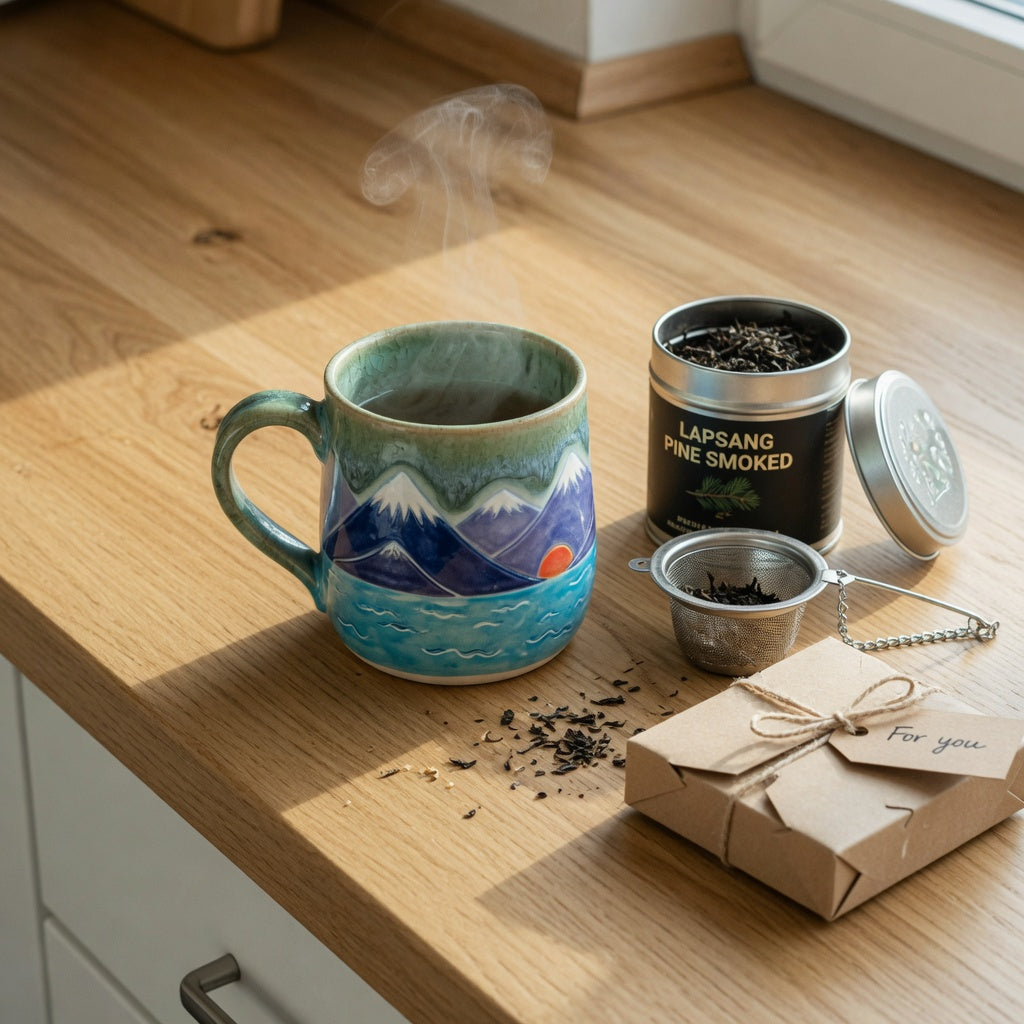
Gift Ceramic Mountain Sea Tea Mug: Buyer Comparison Checklist
A gift ceramic mountain sea tea mug can mean an infuser mug, a decorative landscape mug, or a travel tea set. Compare included parts, usable capacity, handle care, lead and cadmium questions, glaze...
Read more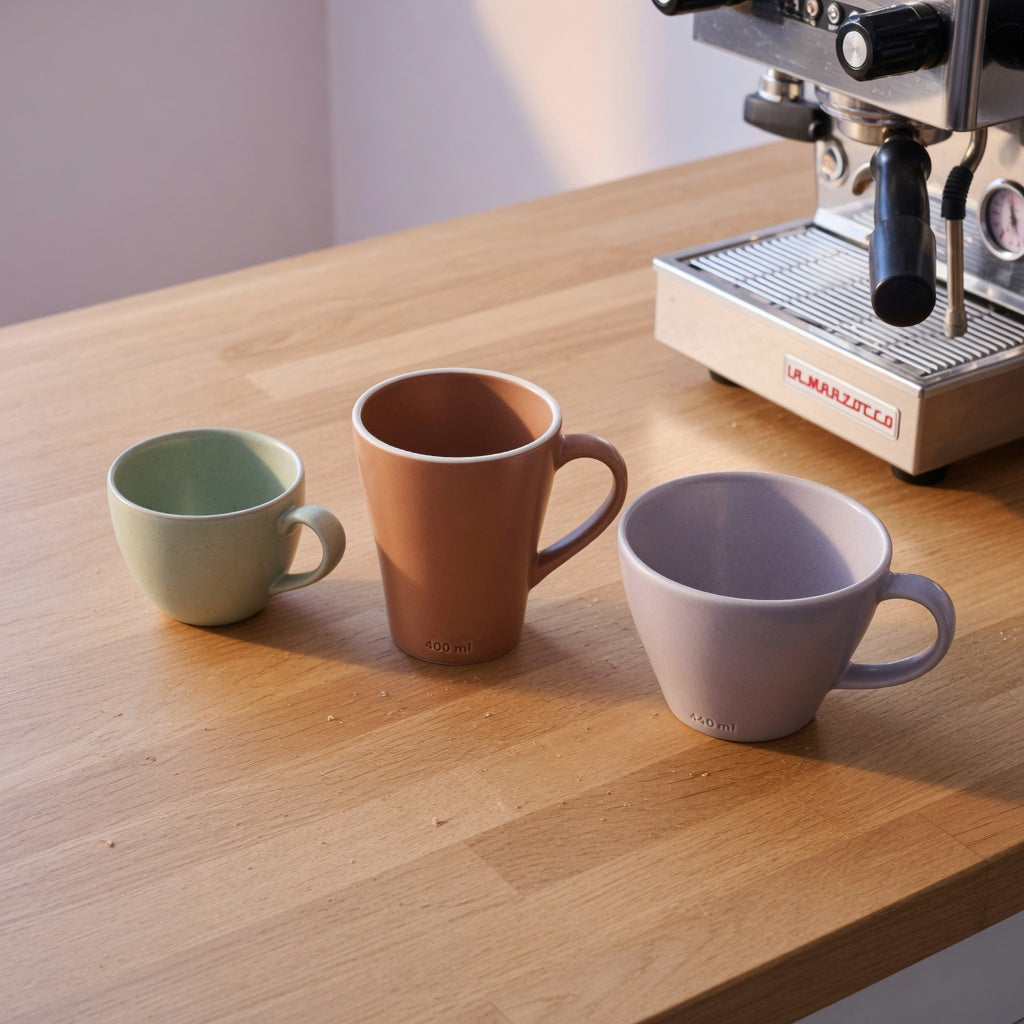
Ceramic Latte Cups Guide: 250 ml, 400 ml, and 440 ml Sizes
Compare ceramic latte cups across 250 ml, 400 ml, and 440 ml sizes. Learn how vessel shape, handle geometry, and desk footprint impact your daily coffee routine.
Read more
Leave a comment
This site is protected by hCaptcha and the hCaptcha Privacy Policy and Terms of Service apply.