
Ceramic Espresso Cup Storage Fit Guide for Shelves and Cabinets
Reading time: about 10 minutes
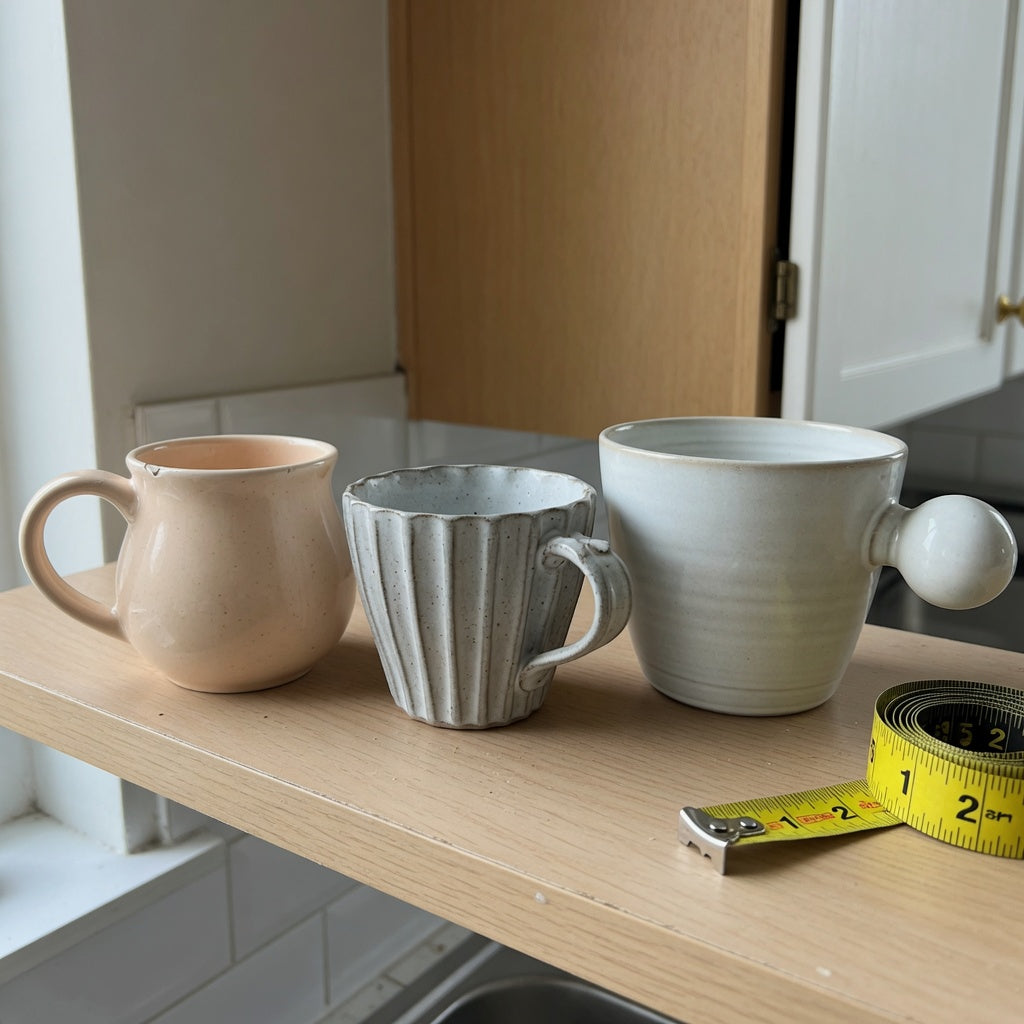
A cabinet can look roomy until a cup handle meets the door, hinge, or neighboring rim. Capacity alone will not warn you about that collision. This ceramic espresso cup storage fit guide compares CoffeifyMug's current ceramic shapes by their verified listed capacities, visible body and handle forms, and the shelf checks that matter before you order.
As the store selling these vessels, we separate confirmed catalog facts from assumptions based on appearance. The verified capacities are Retro 170 ml, Pleated 200 ml, and Ball Handle 250 ml, and all three vessels are ceramic. No verified exterior width, height, depth, or handle-projection measurements were supplied for this guide, so we will not invent them. These listed capacities may also be larger than what shoppers expect from a traditional single-shot demitasse, even though each can appear to be a small espresso cup in product photography.
Our ceramic espresso cup storage fit guide: which shelf measurements matter?
Start with the usable space, not the cabinet's advertised size. Hinges, shelf lips, door frames, and items already stored beside the cup can reduce the room that is actually available. Measure at the narrowest point and close the cabinet door during the check.
- Usable shelf width: Measure between cabinet walls, hinges, shelf supports, or neighboring items. Include the space required by the handle, not just the ceramic body.
- Closed-door depth: Measure from the rear panel to the inside face of the closed door. A handle facing forward can become the first contact point.
- Vertical clearance: Measure from the shelf surface to the shelf or cabinet structure above it. Capacity does not reliably predict cup height.
- Handle orientation: Decide whether handles will face forward, sideways, or alternate directions. The arrangement can change how many cups fit without touching.
- Retrieval space: Leave enough room to lift one cup without knocking its rim or handle against the next piece.
If a live product page provides exterior dimensions, compare the overall width including the handle with your usable width. A body diameter on its own is not a complete storage measurement. Product photographs can help identify a rounded body, pleated surface, or projecting grip, but they are not a dependable scale reference.
Retro 170 ml: is it the first shape to check for a tight shelf?
The Retro Coffee Tea Cup has the lowest listed capacity in this comparison at 170 ml. Its visible form uses a rounded cup body and a conventional loop-style handle rather than the more pronounced ball grip found on the 250 ml option.
For a shopper with a crowded upper cabinet, a narrow coffee nook, or several cups to place in one row, the Retro is the logical first product to inspect. The lower listed capacity and familiar handle form give you a less complicated silhouette to plan around. That is a selection starting point, not a guarantee that it has the smallest exterior footprint, because capacity does not establish exact width or height.
The trade-off is serving volume. At 170 ml, this ceramic vessel can still be larger than a traditional single-shot demitasse, so it should not be ordered on the assumption that it will fit a tiny demitasse rack. No nesting or stacking feature is listed either. Check the product page against your shelf measurements before choosing it for compact storage.
Pleated 200 ml: how does the textured form affect storage?
The Pleated Coffee Tea Cup sits in the middle of the three listed capacities at 200 ml. Its defining visible detail is the pleated ceramic exterior, paired with a loop-style handle.
This shape suits a shopper who has an open shelf or regular cabinet space and wants the textured body to remain visible. The loop handle is the primary side-clearance check, while the pleating makes contact between neighboring cups easier to notice. Leave enough room that the raised surfaces do not rub against another ceramic vessel as cups are removed and returned.
Pleating does not tell us the exact diameter, and it would be misleading to convert the texture into an unsupported measurement. It also makes this a poor choice for anyone expecting cups to nest closely. Open shelves can expose the grooves to dust, so the exterior may need more attention during routine wiping than a plain, smooth body. Current product care directions should decide how the cup is washed; dishwasher suitability is not confirmed by the facts used here.
Ball Handle 250 ml: how much side clearance should you plan for?
The Ball Handled Coffee Tea Mug has the largest listed capacity here at 250 ml. Its visible ball-shaped handle creates the most distinctive side feature in this group, making handle clearance the first storage question to answer.
This form makes the most sense for someone storing one or two cups on an open shelf, a spacious counter station, or an office desk with unobstructed room beside the vessel. The reason is straightforward: the ball handle is intended to be seen, and dense storage can place that projecting feature against a cabinet wall or neighboring ceramic piece. Review the product page and compare any current exterior measurements with your available space.
The Ball Handle is not the practical first choice for a narrow wall rack, a tightly packed row, or storage where every handle must sit flush with the cup body. We also cannot confirm clearance under an espresso machine, on a cup-warming tray, or inside a dishwasher basket. Those are separate equipment-fit questions requiring measurements that are not part of the verified product facts.
Current ceramic cup shapes compared by shelf demand
The table keeps confirmed details separate from the fit decisions you still need to make at home.
| Current cup | Verified catalog facts | Visible storage variable | Useful starting situation | Main limitation |
|---|---|---|---|---|
| Retro | Ceramic vessel, 170 ml | Rounded body with loop-style handle | Limited cabinet space or several cups in one row | Capacity alone does not prove the exterior footprint |
| Pleated | Ceramic vessel, 200 ml | Pleated exterior with loop-style handle | Open shelving or a cabinet with room between pieces | Do not assume the textured form nests or stacks |
| Ball Handle | Ceramic vessel, 250 ml | Prominent ball-shaped side handle | Single-cup stations or shelves with open side space | Handle clearance is critical for dense storage |
The ceramic espresso cup storage fit guide should therefore be read as a sequence: check listed capacity, study the visible silhouette, and then verify exterior measurements when they are available. Reversing that order often leads shoppers to treat milliliters as a shelf dimension, which they are not.
Which shape suits a cabinet, open shelf, or office coffee station?
- Glass-front upper cabinet: Check closed-door depth and hinge clearance first. The Retro 170 ml is the first shape to compare if you want a conventional profile, while the Pleated 200 ml works when there is room to keep its textured body away from neighboring pieces.
- Open floating shelf: Check that no part of the base or handle can extend beyond the usable shelf surface. The Ball Handle 250 ml can suit an uncrowded display, but its grip should not be pressed against a wall or another cup.
- Deep pantry or base cabinet: All three forms may be candidates if the verified exterior dimensions fit. Leave retrieval room so you do not have to slide one ceramic rim past another.
- Office coffee station: A single cup beside the machine gives the ball handle more lateral freedom. Machine height and tray clearance remain separate checks that this guide cannot confirm.
- Gift for someone else's kitchen: A less pronounced handle form is easier to plan around when you do not know the recipient's cabinet layout. The Retro or Pleated product pages are reasonable first comparisons, but neither comes with a universal fit promise.
If your shelf is built for tiny demitasses, nesting cups, or handleless forms, a different design may serve you better. Browse the unique coffee mug collection and compare visible silhouettes instead of forcing one of these three shapes into unsuitable storage.
How should ceramic rims, handles, and textured surfaces be stored?
Ceramic is rigid, so repeated contact with another hard surface can chip an exposed rim or handle. The vulnerable storage points are usually the lip, the handle joint, and any grip that extends beyond the main body. A clean shelf with stable footing and a small gap between pieces is more useful than packing in one extra cup.
- Lift each cup clear of its neighbors instead of dragging the rim or handle past another ceramic piece.
- Do not stack these cups unless the current product information specifically confirms that the form is designed to nest.
- Keep the Ball Handle grip clear of cabinet walls, doors, and other vessels.
- Wipe dust from the Pleated cup's visible grooves when it is stored on an open shelf.
- Follow the current care directions on the product page. Do not assume dishwasher compatibility from the ceramic material alone.
If dishwasher use is confirmed on the current listing, arrange the cup so its handle cannot strike another item during the cycle. That is a practical loading precaution, not a claim that any of these three products has been tested for a particular dishwasher rack.
What cannot be confirmed without exterior dimensions?
Listed capacity cannot tell us exactly how many cups will fit across your shelf, whether a cabinet door will close, or whether the vessel clears a specific espresso machine. It also cannot confirm stacking, dishwasher-rack fit, or compatibility with a demitasse holder. We would need current exterior measurements and the dimensions of your storage or equipment to answer those questions responsibly.
This limitation matters most with the 250 ml Ball Handle form because the grip is a major part of its visible profile. It also matters with the Pleated cup if your plan depends on tightly packed or nested storage. Use product photos to compare form, then use verified measurements for the final fit decision.
Frequently asked questions
What should I measure before using this ceramic espresso cup storage fit guide?
Measure usable shelf width, closed-door depth, vertical clearance, and the free space beside the intended handle position. Account for hinges, shelf supports, lips, and neighboring items. Compare those numbers with current exterior product dimensions when they are available.
Is the Retro 170 ml cup the same size as a traditional demitasse?
Do not assume that it is. Its listed 170 ml capacity may be larger than a traditional single-shot demitasse, and capacity does not confirm its exterior dimensions. Check your rack or shelf rather than relying on the word espresso alone.
Can the Pleated 200 ml ceramic cup be stacked?
No stacking or nesting feature is included in the verified facts for this guide. Store it individually unless the current product listing explicitly states otherwise. This also avoids rim and textured-surface contact between cups.
Does the Ball Handle 250 ml cup need extra side clearance?
Its visible ball-shaped handle makes side clearance a key consideration. The exact projection is not provided in the verified source facts, so we cannot assign a measurement. Confirm the current overall width and leave contact-free space around the grip.
Are these ceramic espresso cups dishwasher safe?
Dishwasher compatibility is not among the verified product facts used here. Review the current care instructions on the relevant product page before placing a cup in a dishwasher. Ceramic material by itself does not confirm a specific cleaning method.
Use this final fit check: record your usable width, closed-door depth, vertical clearance, preferred handle direction, and the number of cups you need to store. Then compare the Retro 170 ml, Pleated 200 ml, and Ball Handle 250 ml pages by visible form and any current exterior dimensions, or move to the mug collection if your cabinet needs a simpler profile.
More from our blog
Read more
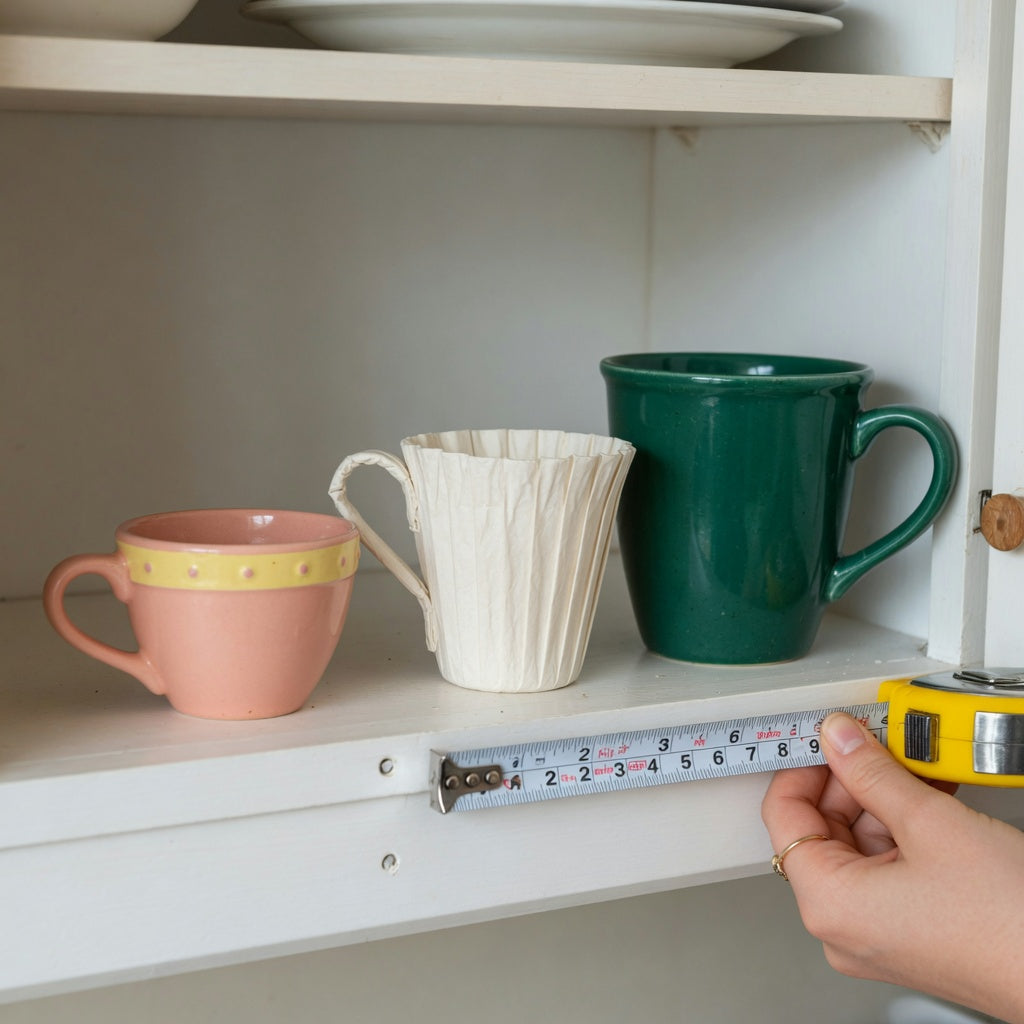
Ceramic Cortado Cup Storage Fit Guide: 3 Shapes Compared
Compare the verified 170 ml, 200 ml, and 270 ml capacities of CoffeifyMug's Retro, Pleated, and Emerald ceramic cups. See how visible shape, handles, cabinet depth, and non-nesting forms affect sto...
Read more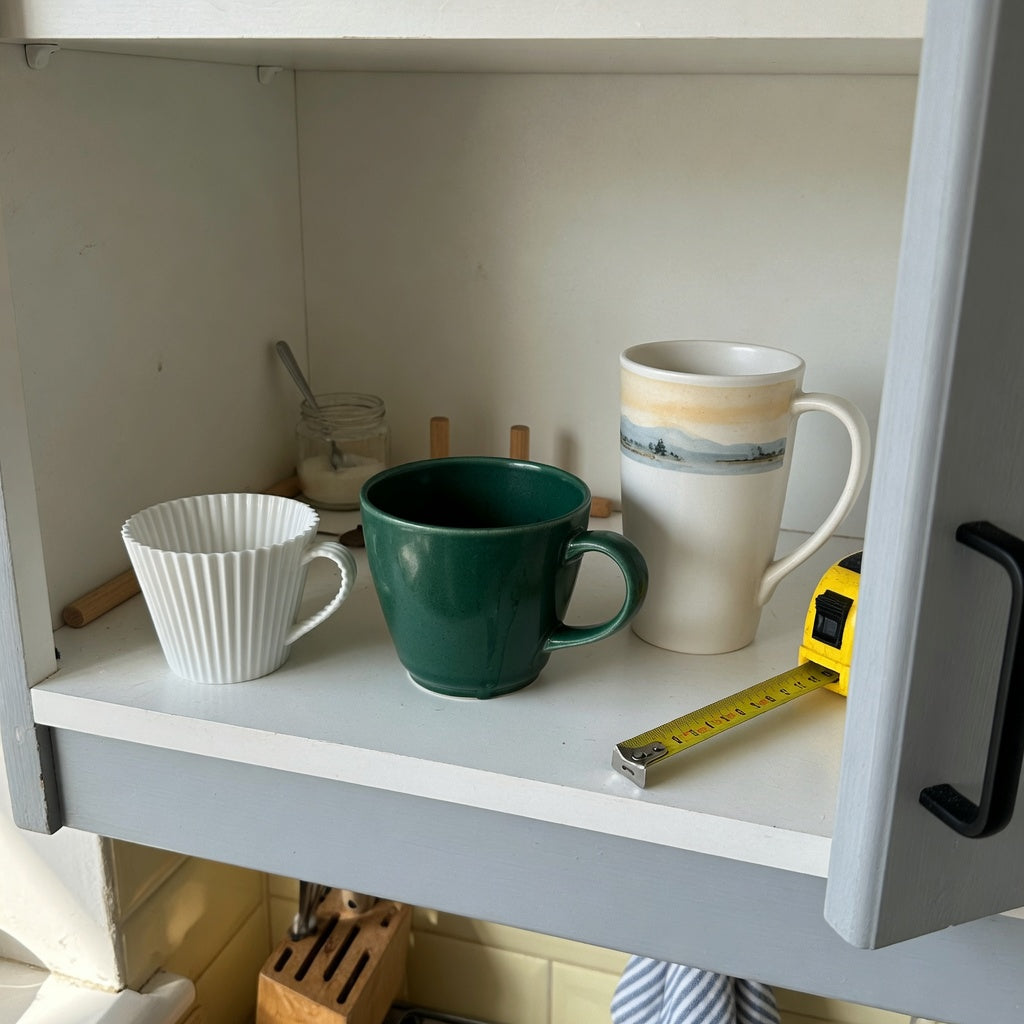
Americano Coffee Cup Storage Fit Guide: 3 Shapes Compared
Compare the Pleated 200 ml, Emerald 270 ml, and Landscape Tall 350 ml by visible form, headroom, handle clearance, and realistic cabinet or shelf checks. Includes a practical measurement checklist ...
Read more
Leave a comment
This site is protected by hCaptcha and the hCaptcha Privacy Policy and Terms of Service apply.