
Ceramic Cortado Cup Storage Fit Guide: 3 Shapes Compared
Reading time: about 9 minutes
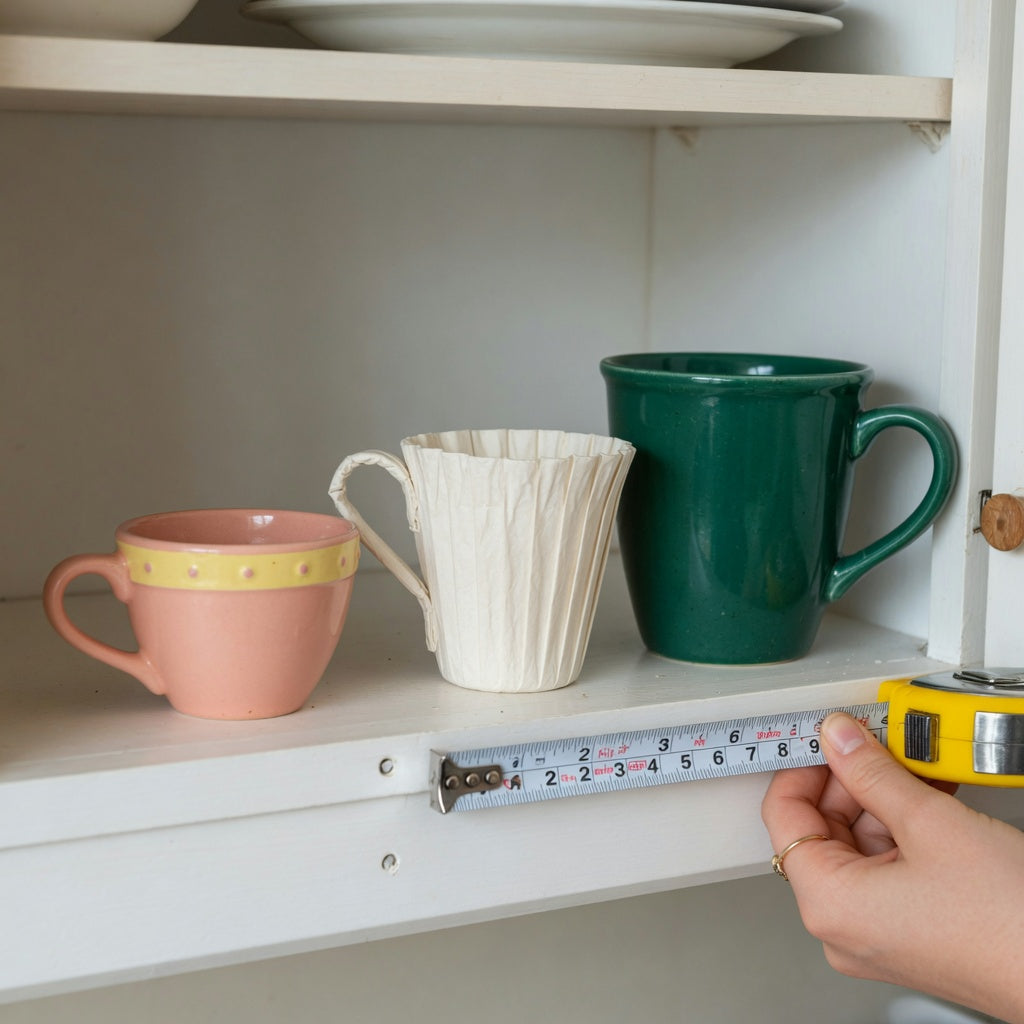
A cup can look compact online and still keep a cabinet door from closing once its handle faces forward. This ceramic cortado cup storage fit guide starts with that familiar kitchen problem: listed capacity tells you how much the vessel holds, but shelf fit depends on the outside silhouette, handle clearance, shelf lip, and space above the rim.
At CoffeifyMug, we handle and compare ceramic drinkware with those practical constraints in mind. The verified catalog facts for this comparison are the capacities: Retro at 170 ml, Pleated at 200 ml, and Emerald at 270 ml. No exterior measurements were supplied for this guide, so we will not convert capacity into an invented height, width, or handle projection. We will compare the visible forms, explain where to measure, and connect each cup to a realistic storage situation.
Ceramic cortado cup storage fit guide: what can you compare?
A useful fit check separates known facts from assumptions. Capacity is known. The product images also let you assess the general body shape, exterior texture, and presence of a handle. Exact cabinet compatibility remains unconfirmed until you compare listed exterior dimensions, when available, with your own clearances.
- Clear shelf depth: Measure from the rear wall or obstruction to the inside plane of the closed door, not just the nominal depth of the shelf board.
- Usable opening height: Measure through the cabinet opening. A face frame or shelf lip can reduce the lift-out space even when there is more room behind it.
- Handle projection: The handle may become the deepest or widest part of the cup depending on whether it faces forward or sideways.
- Retrieval room: A cup needs enough space for your fingers and enough vertical clearance to lift the rim over the shelf edge without knocking the shelf above.
This distinction matters in crowded kitchens. A cup can physically occupy an open spot yet remain awkward to retrieve during a rushed morning, especially if another ceramic rim or handle blocks the exit path.
How do 170 ml, 200 ml, and 270 ml affect shelf planning?
Capacity is not an exterior measurement. A manufacturer can gain volume through width, height, or a combination of both. It is still a useful first sorting point because it tells you which options deserve closer inspection for a compact shelf.
| Current option | Verified capacity | Visible form | Practical storage starting point |
|---|---|---|---|
| Retro Coffee Tea Cup | 170 ml | Compact-looking rounded cup with a handle | Start here when cabinet space is tight. Its smaller verified capacity does not prove it has the smallest exterior dimensions, so the handle still needs checking. |
| Pleated Coffee Tea Cup | 200 ml | Handled cup with a visibly pleated exterior | Consider it when you want a middle capacity and can leave enough side clearance that the textured body does not press against neighboring ceramics. |
| Emerald Coffee Tea Mug | 270 ml | Larger mug-like silhouette in the current imagery | Compare it for a deeper cabinet or open shelf when additional drink volume matters more than maximizing storage density. |
Practical cabinet headroom is the empty space required to lift and angle the cup out, not just the gap between its rim and the shelf above. The 170 ml Retro is the logical first comparison for a low opening, while the 270 ml Emerald deserves the most cautious clearance check. Those are planning priorities based on verified capacity and visible form, not claims about exact external size.
Which current shape makes sense for your shelf?
Retro 170 ml for the tightest starting point
If you have a short upper cabinet, store cups in one layer, and are comfortable with a 170 ml serving, the Retro is the first option we would inspect. It has the smallest verified capacity in this group and a compact-looking rounded form. The trade-off is drink volume: choosing it only to save shelf space will be frustrating if 170 ml does not suit the coffee or tea you normally prepare.
Pleated 200 ml for moderate capacity and visible texture
The Pleated sits between the other two capacities. It makes sense on an open shelf or in a cupboard with enough side room to appreciate the textured exterior rather than pressing it against the next cup. Pleating does not tell us the exact width, but it does create a less uniform contact surface, so we would avoid tightly packing it between other hard ceramic pieces.
Emerald 270 ml for more drink room and less restricted storage
The Emerald is the largest verified capacity and is listed as a mug. It is the relevant next step for someone who wants more beverage room and has a deeper shelf, a taller opening, or open storage. It is not the strongest first choice if every bit of cabinet clearance matters, and its 270 ml capacity should not be mistaken for an exterior measurement.
These comparisons use ceramic cortado cup as shopper size language. We do not claim that any of the three was purpose-built, tested, or certified for cortado preparation.
How should you measure shelf depth, handle clearance, and lift-out room?
In our experience, the dimension most often missed is the cabinet opening rather than the space behind it. A cup may clear the shelf once placed inside but catch on a hinge, face frame, door, or shelf lip while being removed.
- Measure clear depth. Start at the rear wall or nearest obstruction and stop at the inside plane of the door. Account for hinges that intrude into the storage area.
- Measure through the opening. Record the narrowest usable height and width at the front of the cabinet, not only the larger cavity behind the frame.
- Choose a handle direction. A forward-facing handle uses more depth. A sideways handle shifts that requirement into lateral space and may crowd the next cup.
- Allow for your hand. Leave enough room to grip the handle or body and lift the rim over the shelf edge without tilting into another cup.
- Check the current product listing. Use listed exterior dimensions if they are available when you order. If they are absent, do not infer them from the milliliter capacity.
An existing cup that fits can serve as a practical reference. Measure its body, handle projection, and the free space around it in the exact orientation you use. It will not prove that a new shape fits, but it shows how much tolerance your cabinet actually provides.
Which storage setups suit these cups, and where do they fall short?
- Shallow closed upper cabinet: Begin with the Retro because its 170 ml capacity and compact-looking form make it the most relevant candidate. Keep the handle sideways if forward projection interferes with the door.
- Open kitchen shelf: The Pleated is a practical middle option when you prefer 200 ml and want the exterior texture to remain visible. Leave room to lift it without scraping the adjacent cup.
- Deeper cabinet or open counter shelf: The Emerald is the clearer match when 270 ml suits your drink and the larger mug-like silhouette will not crowd the available space.
- Shared office cupboard: Retro or Pleated may be easier starting points when several people store cups together. Use a single layer and keep handles away from the shelf edge, where passing hands or containers can knock them.
- Gift with unknown cabinet space: Retro is the more conservative capacity choice, but storage should not override the recipient's preferred drink size. If they use larger servings, confirm their shelf space before moving to Emerald.
These handled ceramic forms are not good for a storage plan that depends on secure nesting, dense vertical stacks, or assumed hook compatibility. We have no verified stackability or handle-opening dimensions for this comparison. Forcing one cup into another can put hard ceramic contact at the rim or handle, where a small knock may cause a chip.
Store the cups in a stable single layer, return them to the cabinet fully dry, and lift them instead of dragging one ceramic surface against another. If you store cups rim-down to limit dust, use a clean, flat shelf and avoid placing weight on top. This article does not establish dishwasher or microwave safety, heat retention, extraction performance, certification, or suitability for cafe service.
If nesting, hanging, or a different handle shape is essential, compare the silhouettes in our unique coffee mugs collection. Treat each product's current listing as the source for its own specifications rather than assuming that every ceramic mug stores the same way.
A five-minute shelf check before you order
Use this ceramic cortado cup storage fit guide as a constraint check, then make the final decision in front of the cabinet where the cup will live.
- Record the clear shelf depth and narrowest opening height.
- Note any door frame, hinge, shelf lip, or neighboring plate that reduces access.
- Decide whether the handle must face forward, left, or right.
- Confirm that 170 ml, 200 ml, or 270 ml suits your usual drink.
- Reject any option that would require forced nesting or an unverified hanging hook.
- Open the relevant product page and compare every currently listed dimension with your notes.
For the tightest cabinet, inspect Retro first. Move to Pleated when 200 ml and exterior texture matter, or to Emerald when 270 ml is the priority and your shelf has more room. The best choice is the cup that meets both constraints: enough serving capacity and a retrieval path that does not put the rim or handle in contact with the cabinet.
Frequently asked questions
How do I use a ceramic cortado cup storage fit guide if exterior dimensions are not listed?
Use capacity and visible shape to create a shortlist, not to declare a guaranteed fit. Measure your clear depth, opening height, and preferred handle direction, then check the current product listing for exterior dimensions. If those dimensions are unavailable, treat the fit as unconfirmed rather than estimating from capacity.
Which CoffeifyMug cup should I check first for a shallow cabinet?
Start with the Retro 170 ml because it has the smallest verified capacity in this three-product comparison and a compact-looking form. That does not guarantee it is the shortest or narrowest externally. Confirm the handle and opening clearance before ordering.
Does turning the handle sideways save cabinet depth?
It can reduce the amount of front-to-back space used by the handle, but it transfers that requirement to the side. Check that the handle does not press against another cup and that your fingers can still retrieve it without knocking a ceramic rim.
Can I stack the Retro, Pleated, and Emerald or hang them from hooks?
Do not plan around either method without verified stackability and handle-opening specifications. The current forms have handles, and we cannot confirm secure nesting or hook compatibility from capacity and imagery alone. Single-layer shelf storage is the more defensible arrangement.
What should I compare if I need more capacity but only have a tight shelf?
Check the Pleated 200 ml after the Retro, then consider the Emerald 270 ml only if your measured opening and depth can accommodate its listed dimensions. If none of the three meets both your serving and storage needs, take your measurements to the unique coffee mugs collection and compare a different silhouette rather than forcing a poor fit.
More from our blog
Read more
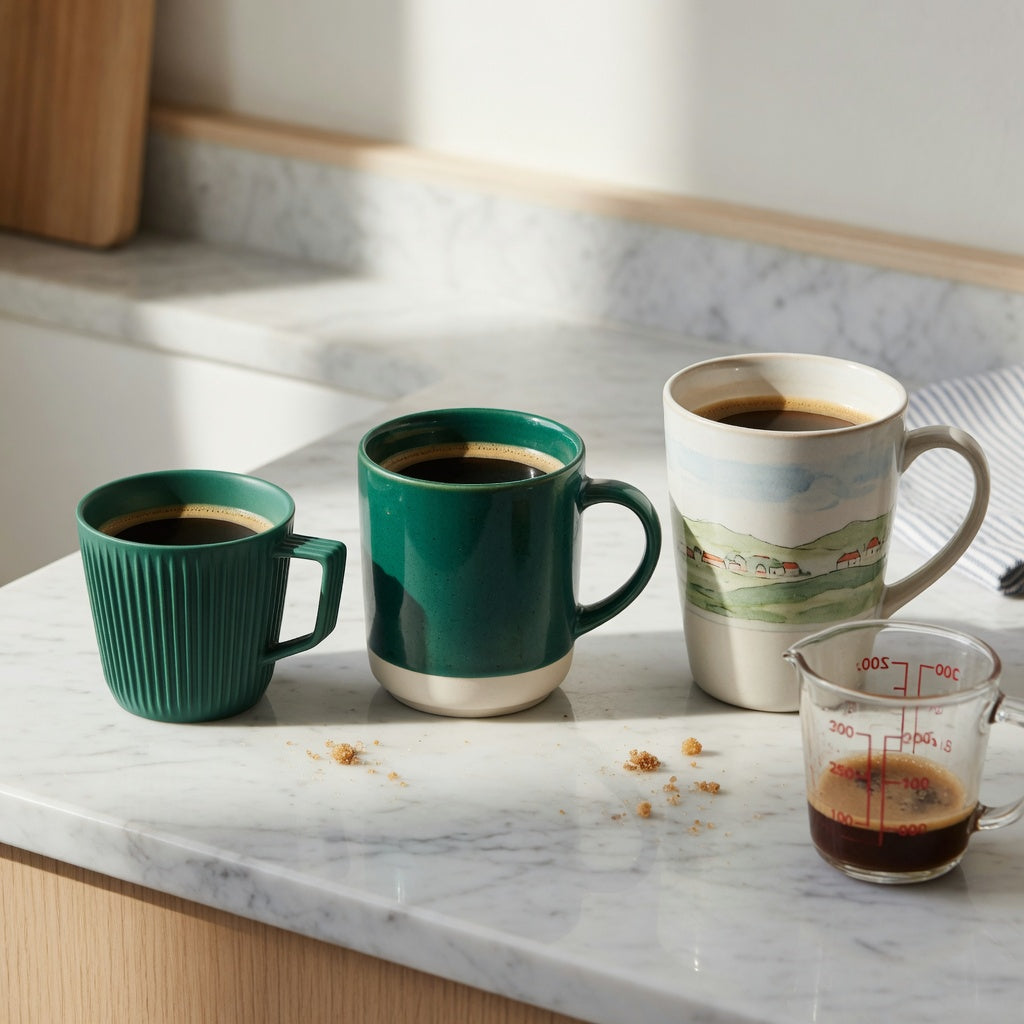
Americano Coffee Cup Size Decision Guide: 200, 270 or 350 ml
Use your actual pour volume to compare the 200 ml Pleated, 270 ml Emerald and 350 ml Landscape Tall. See how each capacity changes headroom for desk use, kitchen routines and gifts without assuming...
Read more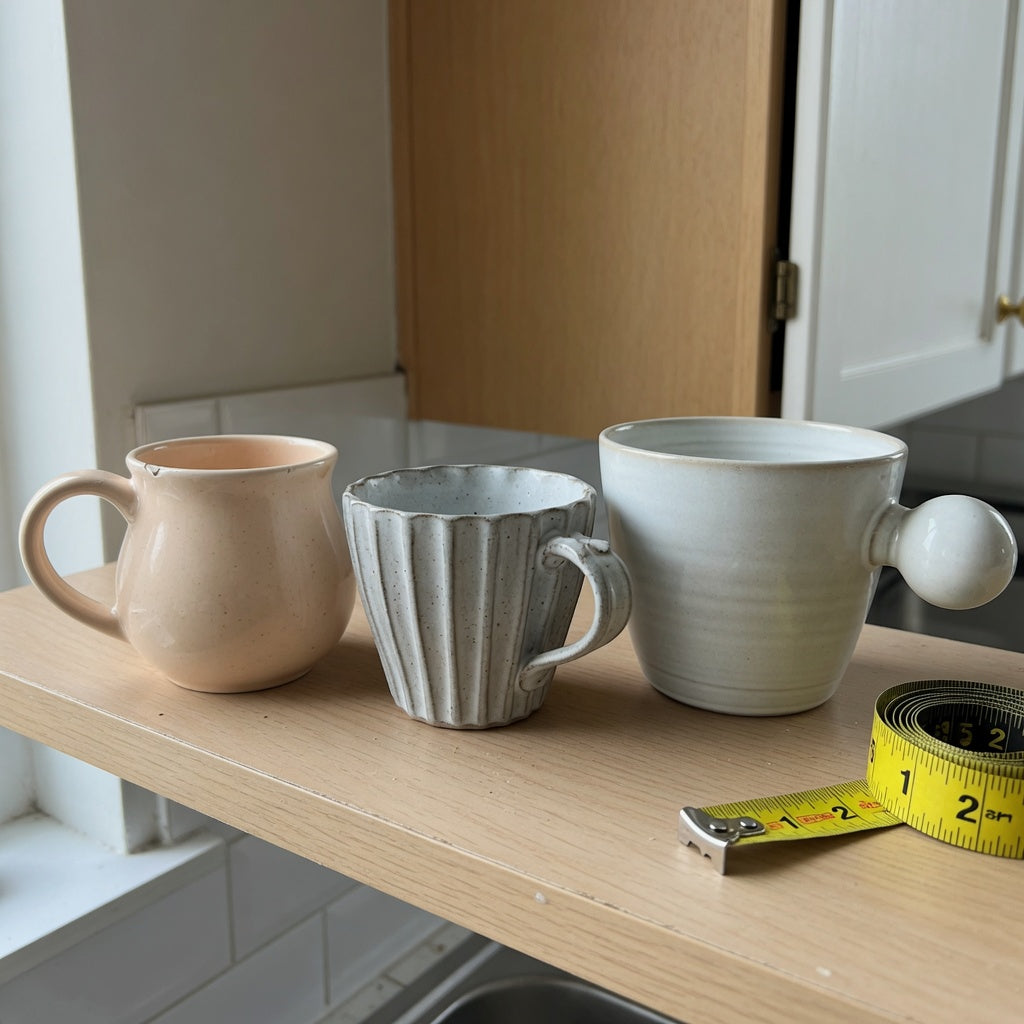
Ceramic Espresso Cup Storage Fit Guide for Shelves and Cabinets
Compare the verified capacities and visible forms of the Retro 170 ml, Pleated 200 ml, and Ball Handle 250 ml ceramic cups. This guide explains how to assess handles, shelf clearance, cabinet doors...
Read more
Leave a comment
This site is protected by hCaptcha and the hCaptcha Privacy Policy and Terms of Service apply.