
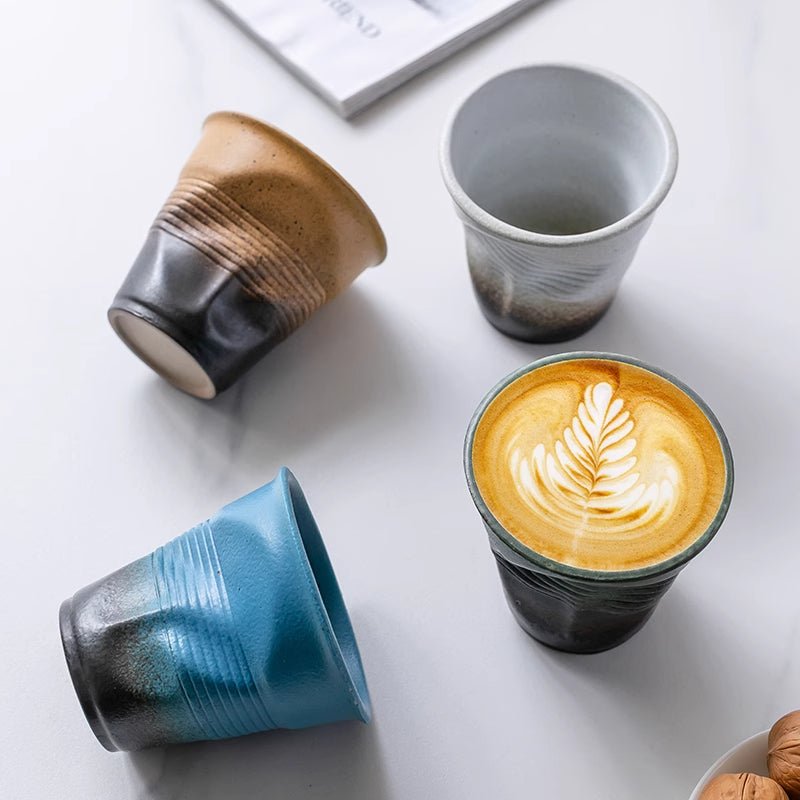
Ceramic Espresso Cup Shared Household Practical Purchase Checklist
Reading time: about 9 minutes
At 7:10 a.m., one person pulls a short espresso while another leaves room for milk, and both reach toward the same crowded drying rack. Matching cups may look tidy, but they do not solve different serving habits, limited cabinet space, or an unclear care routine. Our ceramic espresso cup shared household practical purchase checklist starts with those ordinary frictions because they determine which cup gets used and which one ends up behind the cereal bowls.
We work with ceramic drinkware in our store, and the useful comparison begins with facts rather than assumptions. The verified catalog details are straightforward: Retro is 170 ml, Pleated is 200 ml, and Ball Handle is 250 ml. All three are ceramic vessels. We do not assume included accessories, espresso-machine compatibility, stackability, dishwasher or microwave suitability, or tested drink-specific performance.
Measure the drinks your household actually makes
A label such as coffee cup for espresso does not establish one standard capacity. Before comparing styles, measure each person's usual finished serving. Fill the cup currently used with water to the normal drink line, then transfer that water to a marked kitchen measure. It is an approximation, but it is more useful than guessing from a product photo.
- Record the usual serving. Separate straight espresso or other compact servings from drinks with added milk or water.
- Leave practical headroom. A listed capacity is a comparison point, not an instruction to fill a cup to the rim.
- Count peak use. Note how many cups are normally on the counter, desk, or drying rack during the busiest part of the morning.
- Include secondary uses. A household member who also drinks small servings of tea may prefer more capacity than the person seeking a small espresso cup.
If two people prepare noticeably different amounts, one compromise cup can leave both dissatisfied. Mixed capacities often make more sense, but the products below should be treated as separate options rather than an assumed coordinated set.
170 ml, 200 ml, or 250 ml: which listed capacity suits each person?
These capacities are all larger than some shoppers expect from the word espresso. They may be larger than a traditional single-shot demitasse, especially the 200 ml and 250 ml choices. Compare the listed volume with the drink in front of you, not with the category name alone.
| Household situation | Catalog option | Why it may fit | Trade-off to verify |
|---|---|---|---|
| One person wants the closest of these three options to a compact serving | Retro Coffee & Tea Cup: ceramic, 170 ml | It has the lowest listed capacity of the three and a visible retro-style form. | It may still feel large beside a traditional single-shot demitasse. External dimensions and machine clearance are not established by capacity. |
| Two drinkers want a middle capacity, or one person adds a modest amount of milk | Pleated Coffee & Tea Cup: ceramic, 200 ml | Its listed volume sits between the Retro and Ball Handle options. The pleated exterior also gives it a visibly distinct form on a shared shelf. | The visible texture is a preference, not proof of easier cleaning or grip. Confirm current dimensions and care information. |
| One person regularly prepares the largest serving of the household and likes the ball-handle form | Ball Handle Coffee & Tea Mug: ceramic, 250 ml | It provides the highest listed capacity and the most visibly distinctive handle of these three options. | It is the furthest from a traditional demitasse scale. Handle comfort is personal, and no lid, insulation, or equipment fit should be assumed. |
A 200 ml cup is not automatically the universal answer. If one person prefers a compact serving while another uses substantially more milk or water, compare the 170 ml Retro with the 250 ml Ball Handle instead of forcing both routines into the middle. For more visible forms beyond these three, browse the unique coffee mugs collection and keep your measured serving volumes beside you.
One matching capacity or mixed sizes?
Both people prepare similar servings
Using the same listed capacity can keep expectations simple. If both people measured close to 170 ml, start with the Retro page; if both need a little more room, compare the Pleated page. Confirm the current quantity, exterior dimensions, and care details before ordering.
One person drinks compact servings and the other adds milk
Different capacities are usually the more practical choice. The 170 ml Retro gives you the lowest listed volume, while the 200 ml Pleated or 250 ml Ball Handle gives the other person more room. This is a household-specific combination, not a claim that the cups are packaged or sold together.
The cup also moves to a home-office desk
The 250 ml Ball Handle may suit the person who wants the greatest listed capacity, but it remains an open ceramic vessel. It is not a travel cup, and the supplied facts do not establish a lid, insulation, or spill-resistant construction. Choose another style if those features matter more than the visible ceramic form.
Use this ceramic espresso cup shared household practical purchase checklist
Run through these checks for each person, not once for the household. Two people can share a cabinet without sharing the same ideal cup.
- Usual drink volume: Compare the measured serving with 170 ml, 200 ml, and 250 ml while allowing room below the rim.
- Cabinet envelope: Measure shelf height, available base space, and the widest space available for the handle. Capacity does not reveal external dimensions.
- Espresso-machine clearance: Measure vertically from the drip tray to the lowest fixed point above it. Do not infer equipment fit from milliliters or a product photo.
- Handle preference: A ball-shaped handle is visibly different from a conventional cup handle, but different is not automatically more comfortable. Have the intended user try a similarly shaped object or cup if possible.
- Drying-rack space: Check where the cup will sit after washing. A shape that fits a cabinet can still crowd the rack when two people wash cups at once.
- Stacking expectations: Do not plan to nest or stack these cups unless the current product information confirms it and the cups sit securely without pressure on rims or handles.
- Care routine: Confirm dishwasher and microwave guidance from the current listing, packaging, or care mark. If that information is absent, do not assume compatibility.
- Ordering quantity: Read each product page and cart line carefully. The three linked products are comparison options, not an implied three-piece set.
- Breakage exposure: Ceramic is a poor match for a drop-prone sink area, outdoor commute, or bag. A break-resistant or insulated vessel would suit those situations better.
We use this order because style cannot compensate for a cup that misses the serving volume, fails to clear the machine, or has no workable place to dry.
How should you inspect and care for ceramic in a shared kitchen?
Arrival inspection on a clear counter
Inspect ceramic before the first hot drink and before discarding packaging. These are category-level checks we use around ceramic drinkware, not a statement that any linked cup has a defect.
- Rim: Move a clean fingertip around the drinking edge and look for a chip, sharp spot, or interrupted surface.
- Handle joins: Examine both points where the handle meets the cup under bright side light. Look for hairline cracks, but do not twist or stress the handle as a test.
- Foot and base: Check the contact ring for unusually rough grains, then place the empty cup on a flat counter to see whether it sits steadily.
- Body and finish: Inspect unexpected crack lines, deep pinholes, or impact marks. Photograph anything uncertain before using the cup.
- Room-temperature water check: Fill the cup with room-temperature water and place it on a dry paper towel for several minutes. Stop using it and contact the seller if unexplained moisture appears.
A care rule every housemate can follow
The supplied product facts do not establish dishwasher, microwave, freezer, or oven compatibility. Check the current product page, packaging, and base marking. If care status remains unclear, hand-wash with warm water, mild dish soap, and a non-abrasive sponge, then dry the cup fully before returning it to the cabinet.
Avoid sudden temperature changes, such as moving a very cold ceramic cup directly to a very hot drink. If dishwasher use is explicitly permitted, load the cup so it cannot knock against heavier items during the cycle. Do not force cups into a stack simply because they fit at the rim; unstable stacking can place pressure on handles and drinking edges.
When is an espresso-style ceramic cup the wrong fit?
- You want classic demitasse proportions. Even the 170 ml Retro may be larger than the traditional single-shot presentation you have in mind. Look for a purpose-made demitasse with confirmed dimensions.
- Your usual drink is much larger than 250 ml. A full-size coffee mug will reduce refills and provide more practical headroom.
- The cup travels in a bag or car. Choose a lidded, insulated travel vessel rather than an open ceramic cup with no verified travel features.
- Drops are routine. Ceramic can chip or break, so a break-resistant material may be the better household choice.
- You need guaranteed machine fit or stackability. Purchase only after confirming external measurements or an explicit compatibility statement. Capacity alone cannot answer either question.
The practical split is straightforward: start with Retro for the lowest listed capacity, Pleated for the middle capacity and visible pleated form, or Ball Handle for the highest listed capacity and ball-shaped handle. Move to another category if the household needs insulation, a lid, larger servings, or confirmed demitasse dimensions.
Frequently asked questions
What should roommates check before buying ceramic espresso cups?
Use the ceramic espresso cup shared household practical purchase checklist by recording each person's serving volume, measuring cabinet and machine space, and agreeing on care. Then compare handle form, drying-rack space, stacking expectations, and the quantity shown on each product page. Do not choose one capacity merely because matching cups look neater.
Is a 170 ml ceramic cup too large for a single espresso?
The 170 ml Retro is the lowest-capacity option in this comparison, but it may still be larger than a traditional single-shot demitasse. It can be considered by shoppers who accept extra space around a compact serving. Choose a purpose-made demitasse if exact traditional scale is the priority.
Will these ceramic cups fit under my espresso machine?
Equipment fit is not established by the supplied product facts. Measure from the drip tray to the machine's lowest fixed point, then compare that clearance with the current external height shown or confirmed for the cup. Milliliter capacity cannot tell you whether a vessel will fit beneath a specific machine.
Can these ceramic cups go in a dishwasher or microwave?
Dishwasher and microwave suitability are not among the verified facts used here. Follow the current product listing, packaging, and care mark for the specific cup. Hand-wash and avoid microwave use until compatibility is confirmed if the instructions are unclear.
Do the Retro, Pleated, and Ball Handle cups come as one set?
Do not assume that the three options are packaged together. They are presented here as separate product comparisons with listed capacities of 170 ml, 200 ml, and 250 ml. Verify the quantity and included items on each product page and in the cart before checkout.
Your next step: make each household member's usual drink once, measure the serving, and check the cabinet and machine clearances. Then revisit the unique ceramic cup and mug options with those numbers in hand, choosing only after the capacity, visible form, quantity, and confirmed care instructions suit the people who will use the cup.
More from our blog
Read more
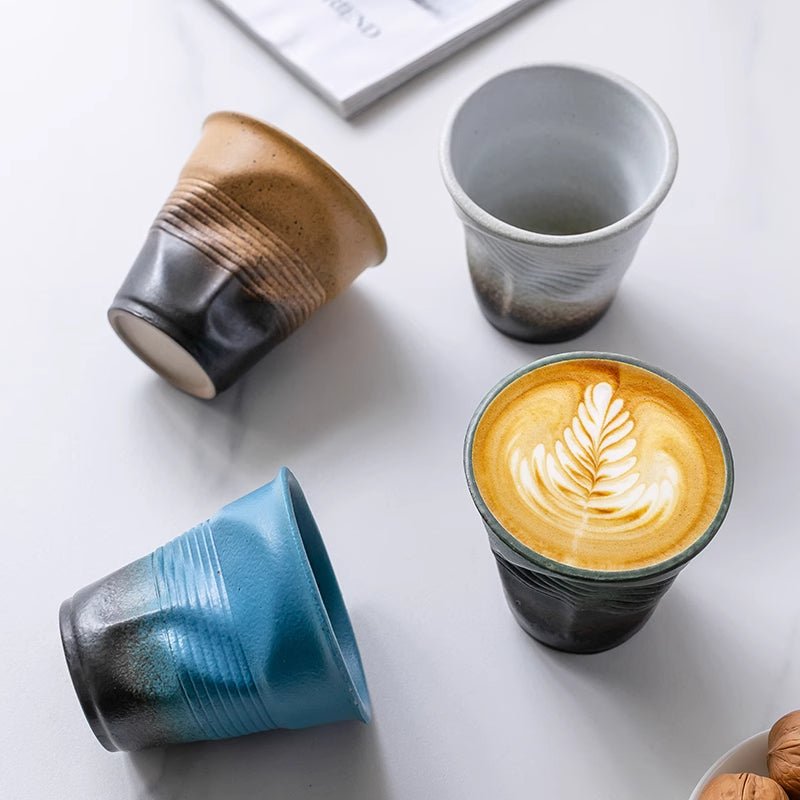
Cappuccino Coffee Mug Shared Household Practical Purchase Checklist
Compare the Retro 170 ml, Pleated 200 ml, and Emerald 270 ml by measured serving habits, cupboard constraints, care questions, and shared-kitchen routines.
Read more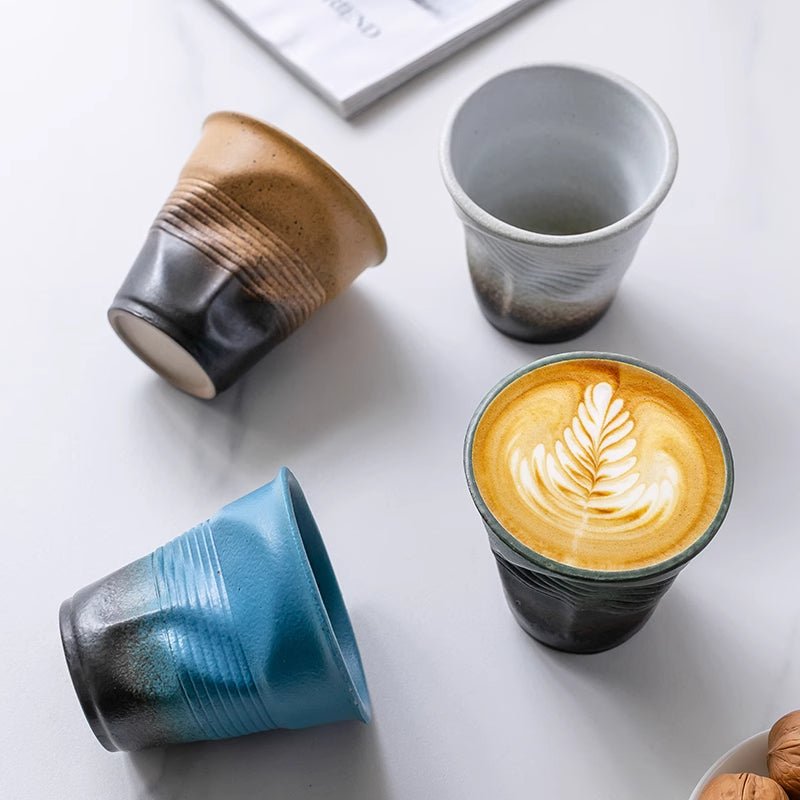
Affogato Cup Shared Household Practical Purchase Checklist: 3 Sizes
Compare the Retro 170 ml, Pleated 200 ml, and Emerald 270 ml by household serving pattern and visible shape. This checklist also identifies the specifications and care details to verify before orde...
Read more
Leave a comment
This site is protected by hCaptcha and the hCaptcha Privacy Policy and Terms of Service apply.