
Ceramic Espresso Cup Replacement Purchase Practical Purchase Checklist
Reading time: about 11 minutes
The cup beside your grinder is still usable only if you ignore the chipped rim, the hairline crack near the handle, or the fact that a single shot disappears in it. That is where a ceramic espresso cup replacement purchase practical purchase checklist should begin: with the limitation of the cup being replaced, not with a generic search for the prettiest small espresso cup. In our store, we handle this category and the questions that come with replacement purchases, so we start with the morning lift, the office desk landing spot, and the washing routine after the last sip.
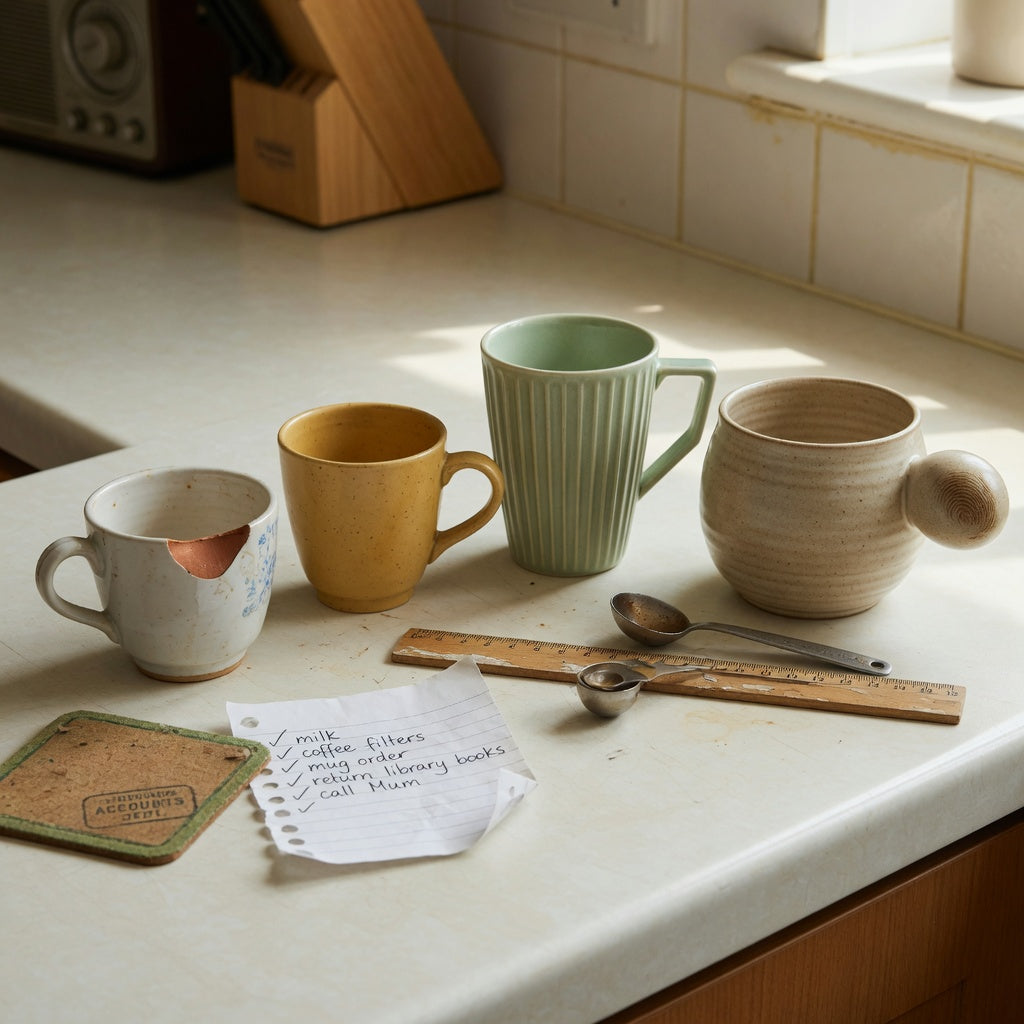
This comparison stays deliberately narrow. The three CoffeifyMug options covered here are ceramic vessels with listed capacities of 170 ml for Retro, 200 ml for Pleated, and 250 ml for Ball Handle. Each may be larger than a traditional single-shot demitasse. The listing information confirms the vessel, material, capacity, and visible form, but it does not establish exact external dimensions, dishwasher or microwave ratings, included accessories, equipment fit, or professional drink-service testing. Those are questions to verify, not claims to assume.
What did the old cup fail to do on the kitchen counter or office desk?
A replacement earns its place when it addresses the reason the first cup left the shelf. Inspect the old piece under a bright kitchen light and describe the failure in one sentence before opening product pages. The same category label, coffee cup for espresso, can hide very different replacement needs.
- Rim damage. A chip often appears where the lip meets a sink, dishwasher rack, spoon, or neighboring cup. Check how the old cup was stored and handled, and do not infer a thicker rim from a product name or photograph.
- Handle damage. Look at the handle-to-body join as well as the loop or knob itself. A crack can follow a knock or leverage from a one-finger lift; a different visible handle shape does not prove greater strength.
- Glaze and surface changes. Fine network lines in glaze are commonly called crazing. Coffee residue and scuff marks can also be mistaken for structural damage. If you find an actual chip or crack, retire the cup for serving rather than searching for a visual twin.
- Workflow mismatch. Maybe nothing broke: the old cup may be too small for a short milk drink, too large for a pure shot, or awkward beside a monitor or grinder. Measure the drink and the landing space separately.
That last distinction matters. Milliliters describe capacity; they do not describe the width of a base, the projection of a handle, or the height under a shelf. Record both sets of limits before comparing replacements.
Which listed capacity fits the espresso, milk, or tea you actually pour?
Capacity is the clearest known variable because the three listed numbers are different, while exact external dimensions are not established in the facts used here. Treat 170 ml, 200 ml, and 250 ml as catalog capacities, not as a promise about a preferred fill line or a particular machine dose. A traditional single-shot demitasse may be smaller than every option, so a replacement can look more generous even if the drink itself has not changed.
| Option | Listed capacity | Visible form | Replacement situation |
|---|---|---|---|
| Retro | 170 ml | Retro styling | Lowest listed capacity; the first comparison for a buyer trying to minimize the increase from a smaller cup. |
| Pleated | 200 ml | Pleated exterior | Middle capacity; relevant when one vessel also serves short milk drinks or tea. |
| Ball Handle | 250 ml | Ball handle | Largest listed capacity; relevant when more room and this handle form are intentional. |
Use water to measure the old cup to the level you normally serve, rather than filling it to the rim. A measuring jug, kitchen spoon, or scale used with water can give you a useful baseline. Write down that result and compare it with the three listed capacities.
- For straight espresso, ask how full you want the vessel to look. The 170 ml option can still feel spacious beside a traditional demitasse.
- For a short drink with steamed milk or a splash of water, the 200 ml or 250 ml option may leave more room, but it may also look less full when the added liquid is omitted.
- For iced coffee, check the volume of both ice and liquid. A 250 ml vessel may still be too small for a large iced drink, and its capacity does not establish insulation or leak resistance.
Capacity should decide the first cut. It should not be the final fit claim. A cup that holds the right amount can still be too tall for a shelf or too wide for the coaster at your office desk.
Which visible form should replace the old handle and exterior?
Once capacity narrows the field, visible form determines whether the replacement feels familiar on a morning tray or deliberately different in a gift unboxing. The names provide useful shorthand: Retro signals retro styling, Pleated identifies a pleated surface, and Ball Handle identifies the ball handle. We can describe what is visible; we should not turn a silhouette into a durability, insulation, or ergonomic-performance promise.
- Retro at 170 ml: If the old cup was a smaller vessel and the priority is the lowest listed capacity alongside retro styling, start with the Retro coffee tea cup. The 170 ml capacity explains why it is the first page to inspect; verify its external dimensions and care information before ordering.
- Pleated at 200 ml: If the replacement brief includes a visibly pleated exterior and a middle capacity for espresso, a little milk, or short tea, review the Pleated coffee tea cup. The texture is a visible style detail, not proof of easier cleaning, better grip, or heat insulation.
- Ball Handle at 250 ml: If a rounded ball handle is the feature you want and the largest listed capacity is acceptable, inspect the Ball handled coffee tea mug. The handle shape does not prove a stronger handle join, so compare the listing images with the way you lift and place the old cup.
In our experience, a replacement feels successful when it matches the buyer's actual hand preference and available space, not when a decorative feature is asked to solve an unrelated failure. If the old cup chipped because it struck the sink, handling and storage still matter after the reorder.
What care and clearance checks matter after the replacement arrives?
Dishwasher cycles are where many replacement assumptions become visible. Ceramic can chip at a rim, scratch against a rack, or experience glaze stress after abrupt temperature changes. The verified details for these options establish ceramic material, listed capacity, and visible form; they do not establish dishwasher, microwave, oven, freezer, or commercial-dishwasher ratings.
- Inspect before first use. Check the rim, handle-to-body join, and interior and exterior glaze under bright light. If you see a chip, crack, or unexpected defect, photograph it before washing and contact the seller.
- Reduce thermal shock. Do not move a very hot ceramic cup directly into cold water or onto a cold, wet surface. Let it cool gradually when practical.
- Prevent rack contact. If the current care instructions permit dishwasher use, arrange the cup so it does not strike metal or neighboring ceramics and so the rim is not the impact point.
- Store with clearance. Avoid forcing wet cups into a tight nested stack. Leave enough room that rims and handles do not press against one another.
- Measure the landing zone. Use a ruler to record the clear width and depth of the coaster or tray, plus the height under a shelf. Capacity does not reveal those external dimensions, so verify them on the product listing when they are provided.
These steps reduce avoidable contact and temperature stress; they cannot make ceramic impact-proof. On a kitchen counter, keep the handle clear of neighboring vessels. On an office desk, check the coaster and monitor stand before the first pour. During a gift unboxing, confirm what the listing says is included rather than assuming a saucer, lid, or matching accessory comes with the cup.
If you need to compare silhouettes for a replacement pair or gift, browse the unique coffee mugs collection first. Move to an individual product page once one capacity and one visible form clearly match the old setup.
When is a ceramic espresso cup the wrong replacement category?
A useful replacement checklist should allow you to reject a category that does not fit. These are ceramic vessels in compact sizes, but the listed facts do not make them universal espresso, tea, or iced-coffee equipment.
- Only a traditional demitasse will do: If you want a single small shot to fill the cup visually, 170 ml may already be more than you want, while 200 ml and 250 ml are larger still.
- Large iced coffee is the normal order: The 250 ml listing may not leave room for substantial ice and liquid. No lid, insulation, or leak resistance is established.
- Commuting is the main use: A ceramic kitchen or desk vessel is not automatically suitable for a bag or car. The supplied information does not confirm a seal, handle lock, or impact protection.
- High-volume service is required: There is no professional testing or commercial-dishwasher durability claim to rely on here. A category with documented commercial-ware requirements would be a better starting point.
- Machine fit is non-negotiable: Do not assume a cup fits under a portafilter, spout, warming shelf, or saucer without checking the relevant measurements.
Rejecting a poor fit is part of a good purchase. For home espresso, a short milk drink, or tea served on a stable counter or desk, ceramic can be a sensible match when capacity and form align with the old cup's actual use.
What should a ceramic espresso cup replacement purchase practical purchase checklist include?
Keep the damaged cup beside you while you make the decision. Use this ceramic espresso cup replacement purchase practical purchase checklist in order, so an attractive form does not distract you from the limitation that caused the replacement.
- Name the failure: record rim damage, handle or handle-join damage, glaze change, or a workflow problem.
- Measure the served volume: fill the old cup with water to its normal level and record the result.
- Compare the listed capacities: Retro is 170 ml, Pleated is 200 ml, and Ball Handle is 250 ml. Mark whether each is larger than the traditional single-shot demitasse you are replacing.
- Select the visible form: decide if retro styling, a pleated exterior, or a ball handle is genuinely useful to your daily routine.
- Measure the space: record coaster width, tray depth, shelf height, and handle clearance instead of guessing from capacity.
- Verify care: look for current dishwasher, microwave, and other appliance guidance. If a rating is not stated, treat it as unknown.
- Match the use: choose for straight espresso, a short milk drink, tea, or a small iced coffee; reject the category if travel, sealing, insulation, or commercial durability is the real requirement.
- Check the order brief: for a pair or gift, confirm quantity and listed contents, and choose one consistent form if matching hand feel matters.
Your answers should lead to one of four clear next steps:
- Lowest listed capacity: If the old cup was a small demitasse and you want the smallest option in this comparison, open the 170 ml Retro listing and verify fit and care details.
- Middle capacity: If one vessel must cover espresso and a modest milk or tea serving, review the 200 ml Pleated listing after measuring your normal pour.
- Largest listed capacity: If more room and the ball-handle form are intentional, check the 250 ml Ball Handle listing, then confirm the available clearance.
- Unresolved style choice: Use the collection of unique coffee mugs to compare the visible forms before committing to a replacement pair or gift.
Do not order until the capacity, failure point, landing space, and care question each have an answer. The remaining unknowns are reasons to verify a listing or ask the store, not reasons to guess.
Frequently asked questions
Is 170 ml too large for a single espresso replacement?
It can be. The Retro's 170 ml capacity is the smallest of the three listed options, but it may still be larger than a traditional single-shot demitasse. Choose it only if that extra space is acceptable or useful for a short addition of milk or water.
What belongs on a ceramic espresso cup replacement purchase practical purchase checklist?
Start with the old cup's failure, its normal served volume, and the space it occupies. Then compare the listed 170 ml, 200 ml, and 250 ml capacities, visible form, and verified care information. Keep missing dimensions or appliance ratings as open questions rather than filling them with assumptions.
Are the Retro, Pleated, and Ball Handle cups dishwasher safe?
The supplied facts confirm ceramic material and listed capacity, but they do not confirm dishwasher compatibility. Check the current product listing or ask CoffeifyMug before relying on regular cycles; until that is clear, wash gently, prevent rack contact, and avoid abrupt hot-to-cold changes.
Which option is the closest replacement for a small espresso cup?
Retro at 170 ml is the lowest-capacity option, so it is the first page to inspect if your old cup was a small demitasse. It may still be larger than the cup you are replacing, and external dimensions are a separate check. Choose Pleated or Ball Handle only when their visible forms and larger capacities match an actual use need.
Can I use the 250 ml Ball Handle cup for tea or iced coffee?
Its listed 250 ml capacity can be compared with the amount of tea or iced coffee you normally pour, but it does not establish insulation, a lid, leak resistance, or travel durability. It may suit a small serving on a stable kitchen counter or desk. For a large iced drink or commuting, a purpose-built category is a better fit.
Take the old cup to the counter, write down its failure point, measured serving volume, and available clearance, then use the matching product page or compare the silhouettes in our unique coffee mugs collection. That gives you a concrete reorder decision without assuming specifications the listings do not provide.
More from our blog
Read more

Apple Cider Mug Weekend Coffee Product Shortlist Guide: 400 ml vs 480 ml
Compare CoffeifyMug's 400 ml and 480 ml ceramic mugs for slower weekend coffee and apple cider routines. Match serving size, handle clearance, counter space, and care expectations with clear reason...
Read more
Unique coffee mugs for gifts weekend coffee practical purchase checklist
A slower Saturday changes the mug decision: grip, footprint, silhouette, storage, and care matter alongside the drink. This checklist compares CoffeifyMug's Handbag, Rhombus, and Crane designs and ...
Read more
Leave a comment
This site is protected by hCaptcha and the hCaptcha Privacy Policy and Terms of Service apply.