
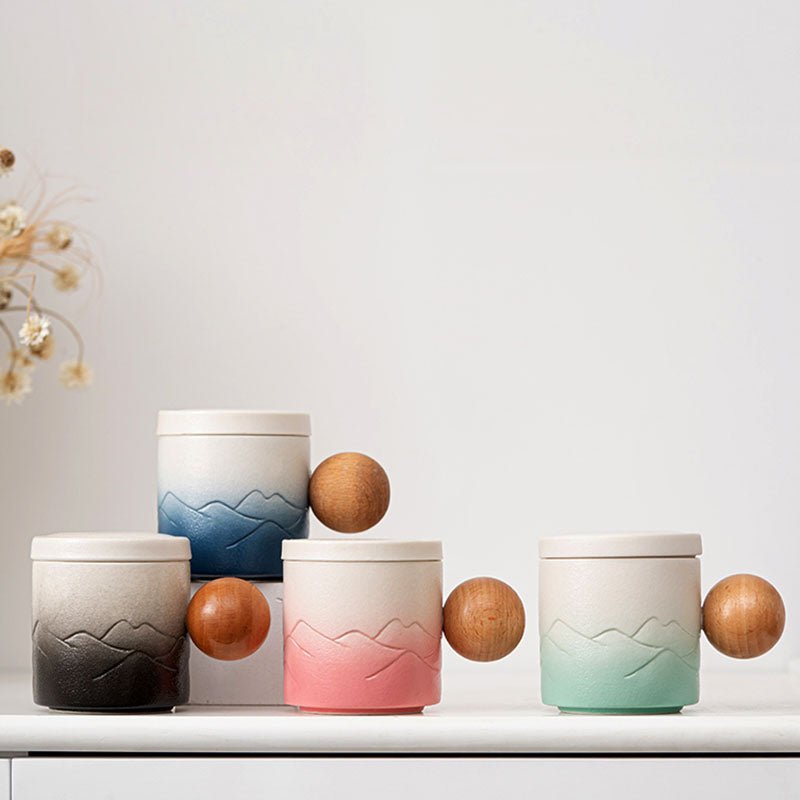
Ceramic Espresso Cup First Time Buyer Practical Purchase Checklist
Reading time: about 9 minutes
You pour your usual espresso into a new cup, and the drink sits much lower than it did in the cafe demitasse you had in mind. Nothing is necessarily wrong with the cup. The capacity expectation was wrong. Our ceramic espresso cup first time buyer practical purchase checklist starts with the three facts CoffeifyMug can verify: the Retro is listed at 170 ml, the Pleated at 200 ml, and the Ball Handle at 250 ml, and each vessel is listed as ceramic. All three may feel large beside a traditional single-shot demitasse.
As the store selling these designs, we separate confirmed product facts from assumptions. We can stand behind the listed material, capacity, and visible Retro, Pleated, or Ball Handle form. We do not use those facts to promise espresso-machine clearance, matching accessories, tested heat retention, dishwasher durability, or certified drink-specific performance.
170 ml, 200 ml, or 250 ml: what will your drink actually occupy?
The word espresso does not establish cup size. A small espresso cup for one shopper may mean a traditional demitasse, while another shopper wants room for added milk or water. Start with the total volume you pour, not the name of the drink.
- Fill your current favorite cup with water to the level you normally drink from.
- Pour that water into a marked kitchen measuring jug and record the result in milliliters.
- Decide how much empty space you prefer for lifting the cup from a kitchen counter or carrying it to an office desk.
- Compare that comfortable fill with 170 ml, 200 ml, and 250 ml rather than choosing from product photography alone.
The listed capacities convert to approximately 5.7, 6.8, and 8.5 US fluid ounces. Those conversions are only for orientation; the metric listing remains the source value. The available facts also do not tell us whether each number represents brim capacity or a recommended working fill. Do not plan a drink that uses every last milliliter unless the current product page explicitly explains how capacity was measured.
How do the three verified CoffeifyMug options compare?
| Product | Verified catalog facts | Practical starting situation | What the facts do not prove |
|---|---|---|---|
| Retro coffee and tea cup | Ceramic vessel, 170 ml, visible retro form | Your measured drink sits comfortably below 170 ml and you want the smallest listed capacity of these three | Traditional demitasse dimensions, machine clearance, or accessory inclusion |
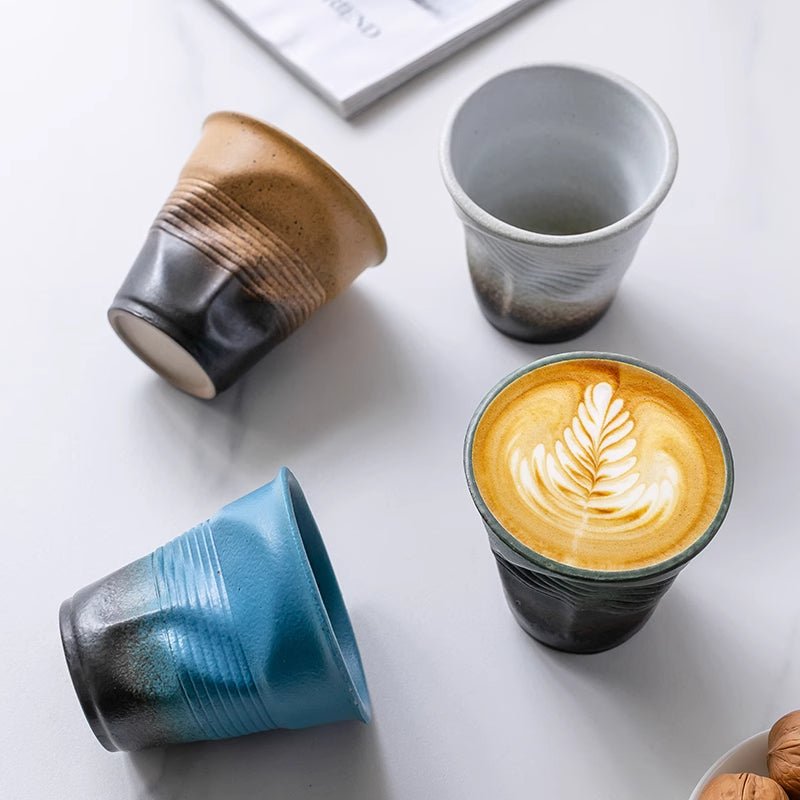
| Pleated coffee and tea cup | Ceramic vessel, 200 ml, visible pleated form | You want 30 ml more listed capacity than the Retro and prefer the pleated appearance | Grip performance, wall thickness, weight, or tested heat retention |
| Ball Handle coffee and tea mug | Ceramic vessel, 250 ml, visible ball-handle form | Your measured drink needs more than 200 ml and remains comfortably below 250 ml | Handle-opening dimensions, spill resistance, balance, or equipment fit |
The Retro is the smallest listed option here, but 170 ml can still be noticeably larger than a single-shot demitasse. The Pleated adds 30 ml over the Retro. The Ball Handle adds 50 ml over the Pleated and 80 ml over the Retro. These differences are useful for comparing drink volume; they do not tell you the vessel's height, width, weight, or usable space beneath an espresso machine.
Use this ceramic espresso cup first time buyer practical purchase checklist
Open the current product listing and work through these checks in order. A product photo can answer a visible-style question, but it should not be used as a measuring tool.
- Capacity: Confirm 170 ml for Retro, 200 ml for Pleated, or 250 ml for Ball Handle on the specific page you are ordering from.
- Normal drink volume: Compare the listing with your measured everyday fill, including espresso, milk, water, or tea rather than espresso alone.
- Headroom: Leave space for lifting and walking. The source facts do not provide a recommended fill line.
- Material: Confirm that the selected vessel is described as ceramic. Ceramic alone does not establish microwave or dishwasher suitability.
- Visible form: Review the current images for the retro, pleated, or ball-handle design you prefer. Do not estimate exact handle clearance or rim thickness from perspective photography.
- Exterior measurements: Look for height, width, base diameter, and handle projection if storage or machine clearance matters. Treat any measurement not stated as unknown.
- Care directions: Find an explicit microwave or dishwasher statement before using either appliance. Do not infer care compatibility from the material name.
- Package contents: Confirm every included item in the written listing. A saucer, spoon, lid, or other object used as a photo prop should not be assumed to come with the vessel.
- Main use: Decide whether you need a coffee cup for espresso, a short milk drink, a small tea serving, or a larger iced drink. Ice occupies space, so 250 ml may still be too small for your usual iced recipe.
This ceramic espresso cup first time buyer practical purchase checklist is deliberately strict about unknowns. If a detail affects daily use and the current page does not state it, ask before ordering or choose an option with the specification clearly published.
Which details cannot be settled by capacity or product photos?
Capacity is not a substitute for dimensions. Two ceramic vessels can hold the same amount while having different heights, base widths, and handle projections. That matters under a machine spout, inside a cabinet, and beside a keyboard, but no compatibility conclusion should be drawn without actual measurements.
The verified source facts for these three products do not establish the following:
- Overall height, body diameter, base diameter, weight, or wall and rim thickness
- Handle-opening measurements or comfort for a particular hand size
- Stackability or fit beneath a specific espresso machine
- Microwave, oven, freezer, or dishwasher suitability
- Performance after repeated dishwasher cycles
- Certified heat retention, professional testing, or cafe-service performance
- Inclusion of a saucer, lid, spoon, gift box, or other accessory
From our side of the product comparison, an honest unknown is more useful than a confident guess. Check the live listing because product information can be updated. If the answer still is not stated, make your purchase decision as though that feature is not guaranteed.
What should you inspect at unboxing and before the first wash?
Ceramic is rigid and breakable. At unboxing, compare the received form with the item ordered, then inspect the rim, body, base, and handle junctions under clear light. Look for chips, hairline cracks, rough points, or visible damage. Set the empty vessel on a dry, level counter to check whether that individual item rocks. Do not drink from a chipped or cracked vessel.
Care is another place where first-time buyers often overread the word ceramic. That material label by itself does not confirm how a particular surface treatment will respond to a microwave or repeated dishwasher cycles. Follow the current listing or product label. If no care method is confirmed, a conservative interim routine is hand washing with mild dish soap and a soft, nonabrasive sponge, followed by thorough drying. Avoid sudden temperature changes, and do not place the vessel in an appliance until suitability is explicitly confirmed.
For a gift unboxing, leave the product information available to the recipient. The recipient should still verify capacity and care rather than assuming the cup works like an existing mug. Keep the order details and packaging until the item has been inspected under the store's current process.
Which buyer situation points to each product?
Your everyday fill is well below 170 ml
Start with the Retro because its verified 170 ml capacity is the smallest of the three listed choices. It suits a buyer who wants the least capacity in this comparison and likes the visible retro form. It is still not a guaranteed substitute for a traditional single-shot demitasse, so compare the number with the cup you already use before choosing the 170 ml Retro ceramic cup.
You need more than 170 ml and prefer a pleated form
The Pleated is the logical middle comparison at 200 ml. It gives 30 ml more listed capacity than the Retro, and its visible pleated form is the relevant style difference we can verify. Choose it because those two facts match your measured volume and visual preference, not because texture guarantees grip or durability.
Your measured drink exceeds 200 ml
The Ball Handle is the largest of this set at 250 ml. It is the relevant next step when your normal fill is above the Pleated's listed capacity, remains below 250 ml with your preferred headroom, and you specifically like the visible ball-handle form. Its larger listed volume does not establish a wider base, greater stability, or more espresso-machine clearance.
You want a tiny demitasse or a large iced drink
None of these three is an automatic match. All may be larger than a traditional single-shot demitasse, while even the 250 ml vessel may be too small once a larger iced recipe and the ice itself are counted. Browse the unique coffee mugs collection for a different visible style, then repeat the same capacity, dimensions, contents, and care checks on the product you consider.
Frequently asked questions
Is a 170 ml ceramic espresso cup too large for a single espresso?
It may be larger than the traditional single-shot demitasse you are picturing, so the drink can leave substantial visible headspace. That does not make the vessel defective. Choose it only if the listed 170 ml capacity and retro form suit your measured pour and preferred presentation.
What should I check before buying my first ceramic espresso cup?
A ceramic espresso cup first time buyer practical purchase checklist should confirm listed capacity, ceramic material, visible form, normal drink volume, desired headroom, care directions, exterior measurements, and package contents. Anything missing from the current listing should remain an unknown. Do not convert a photo or material name into a performance claim.
Can the listed capacity tell me whether a cup fits my espresso machine?
No. Capacity describes volume, not exterior height or handle projection. Measure the available space from the drip tray to the dispensing point and compare it with published cup dimensions; if those dimensions are absent, machine fit is not verified.
Are the Retro, Pleated, and Ball Handle vessels dishwasher and microwave safe?
The verified facts supplied for this comparison do not establish dishwasher or microwave suitability. Check the current product page and any care label before using either appliance. Ceramic material alone is not enough to confirm those care methods.
What is the fastest final check before I place an order?
Measure the normal fill line of your current cup in milliliters, choose how much headroom you need, and compare that result with 170 ml, 200 ml, and 250 ml. Then verify the selected form, dimensions needed for your space, care directions, and written package contents on the live listing. Order only after each detail that matters to your routine is either confirmed or accepted as unknown.
More from our blog
Read more
Cute Ceramic Coffee Mugs Compact Kitchen Product Shortlist Guide
Measure the cabinet opening, handle clearance, lift-out path, and counter footprint before comparing three CoffeifyMug styles. This scenario-led shortlist explains why each option earns a place, wh...
Read more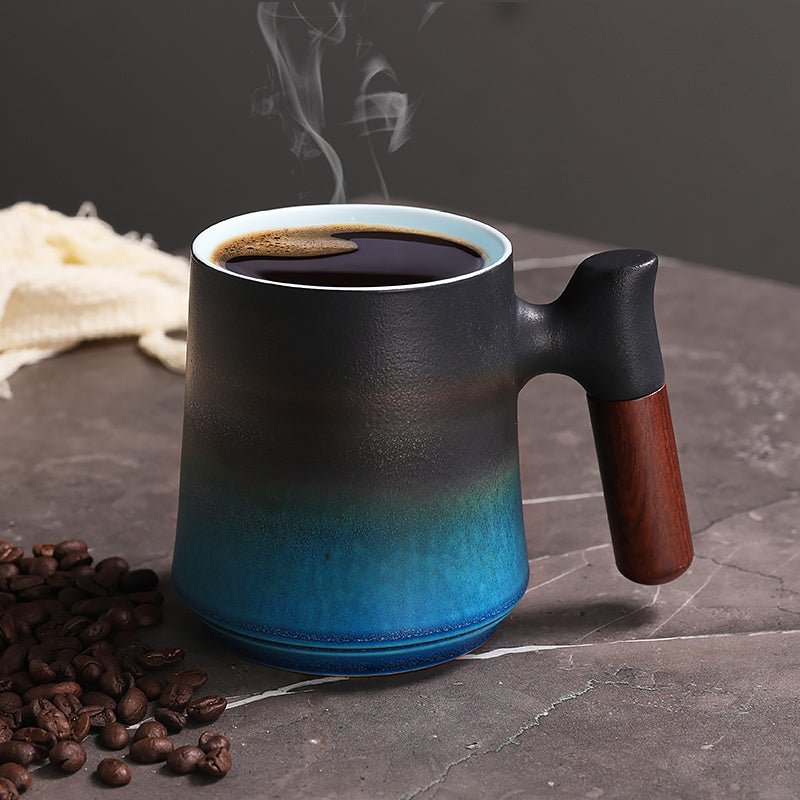
Ceramic Glazed Coffee Mugs Compact Kitchen Product Shortlist Guide
Compare three glazed mug designs using the constraints that matter in a small kitchen: closed-door shelf depth, handle span, lift clearance, counter space, and stated care instructions. Each option...
Read more
Leave a comment
This site is protected by hCaptcha and the hCaptcha Privacy Policy and Terms of Service apply.