
Ceramic Eggnog Mugs: What Buyers Should Compare Before Ordering
Reading time: about 8 minutes
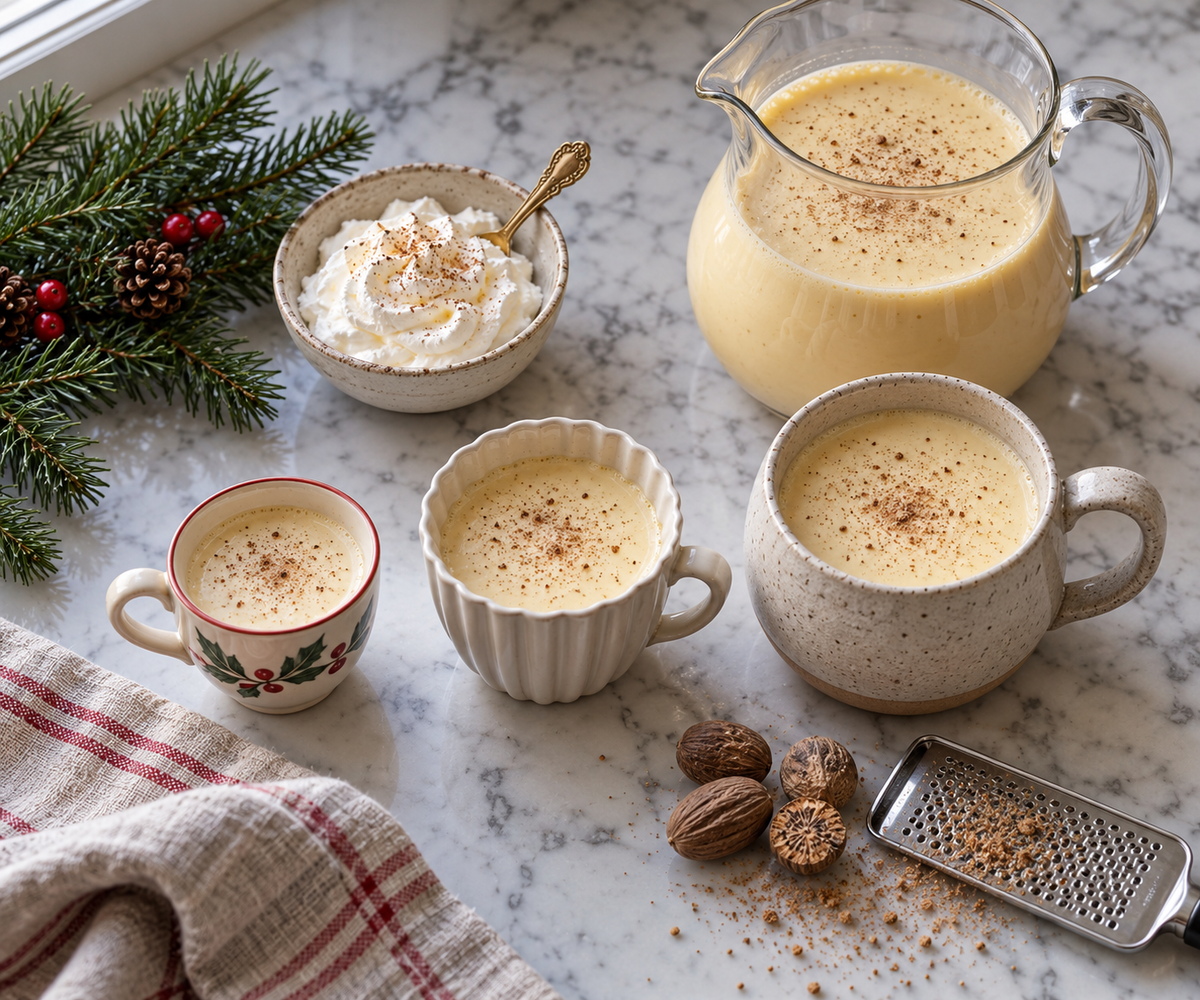
Every December somebody in our shop picks up the Retro cup, turns it over, and asks the same question: why is it so small? The answer is that eggnog is a dessert, not a beverage. It is dense, sweet, usually capped with whipped cream and grated nutmeg, and most adults stall halfway through a full-size mug of it. Ceramic eggnog mugs are compact on purpose — closer in spirit to a punch cup than to a latte mug — and once a shopper accepts that, the useful comparison begins: capacity, silhouette, glaze condition, and how many cups a crowd actually burns through.
If you already know the small format is what you want, start with the compact pieces in our unique coffee mugs collection, then use the milliliter targets below to narrow the field.
How many milliliters does an eggnog serving actually need?
Fewer than most buyers guess. Holiday pours run from a two-sip tasting portion to a generous spiked cup, and this category sits deliberately at the lower end of the drinkware scale. Three cups we carry cover that spread neatly:
| Cup | Capacity | Best suited for |
|---|---|---|
| Retro Coffee Tea Cup | 170 ml | Petite pours, kids' portions, tasting flights |
| Pleated Coffee Tea Cup | 200 ml | A classic punch-style serving with garnish room |
| Emerald Coffee Tea Mug | 270 ml | A generous adult pour or a spiked nog |
Convert those figures and the picture sharpens: 170 ml is about 5½ ounces, 200 ml about 7, 270 ml about 9. Buyers who expected a 12-ounce mug are sometimes startled by the numbers — that startle is exactly why the category exists. Eggnog is rich enough that a small cup feels like a portion, while a big mug feels like a chore.
One detail people miss: garnish eats headroom. Whipped cream and nutmeg sit on top of the pour, so fill the cup roughly three-quarters full before you decorate it.
A brim-full pour means the garnish — and part of the nog — ends up on your counter. Headroom makes a compact cup look fuller, not emptier.
A compact cup is also the wrong tool if your real goal is a big morning brew; the priorities there are nearly the opposite, and our guide to 16-ounce ceramic coffee mugs covers what to check instead. If you like the 170/200/270 ml spread but pour espresso drinks rather than nog, the same three capacities come up in our comparison of ceramic cappuccino mugs.
Punch cup, mini mug, or tall sipper: which silhouette suits your table?
Eggnog cups fall into three visible shapes, and each changes how the serving goes:
- Punch-cup style: short bowl, wide-ish mouth, easy to grate nutmeg over. Stable on a crowded buffet and forgiving for kids' hands.
- Tall, narrow sipper: Irish-coffee proportions. Shows off layers and holds the garnish on top, but tips more easily and wobbles on a loaded tray.
- Mini standard mug: the everyday shape scaled down. Familiar grip, cabinet-friendly, less festive on a dessert table.
Cold nog adds one wrinkle: a cup fresh from the fridge sweats, and a slick glazed exterior is genuinely hard to hold — a problem mostly for handle-less tumblers. Grip matters more with eggnog than with hot coffee for exactly that reason. Compare mouth width (whipped cream needs room) and, where a handle exists, the clearance a cold or ring-wearing finger needs; the photos on each listing tell you more than the spec sheet does.
Chilled or warmed: does serving temperature change which cup you buy?
Most eggnog goes straight from the fridge to the table, and ceramic handles chilled service without drama. Some households warm it mulled-style with cinnamon and clove, and ceramic generally takes warm liquids well. The failure mode to respect is thermal shock: a fridge-cold cup filled suddenly with near-boiling liquid is the classic way any ceramic cracks, whatever the brand. If warmed nog is part of your ritual, read the care notes on the listing or ask us before ordering — and give the cup a few minutes on the counter before the pour.
An honest limitation: none of these cups is insulated, and we make no heat-retention claims for any of them. A guest who nurses a warm mug for forty minutes will find the last third lukewarm. That is physics, not a defect. Chilled service sidesteps the issue entirely — one more reason compact cups suit eggnog so well.
Glaze condition and finish: the checks that separate a keeper from a cull
Two things decide whether a ceramic cup is fit for food: coverage and condition. Coverage means the interior glaze looks complete, with no raw or porous-looking patches where the wall meets the base. Condition means no crazing — the fine spiderweb of hairlines that appears in older or poorly fired glaze. Crazing is not just cosmetic; those micro-channels trap residue and are stubborn to sanitize, which matters when the residue is dairy and sugar.
Finish changes the care math. Hand-painted decoration and metallic rims, both common on holiday ceramics, often call for gentler washing than plain glaze. We would rather you verify than take our word for it: read the care section on each product page before checkout, and if a listing is silent on dishwasher or microwave use, treat the silence as a question to ask the seller, not a yes. In our experience the two spots ceramic chips first are the handle join and the foot ring, so run a thumb over both on any cup you inspect in person.
One cup per guest, plus a spare: sizing up sets for a holiday crowd
Count before you buy. A four-person dessert table burns through cups fast once guests refill or swap for a clean one, so most hosts we talk to plan one cup per guest plus a spare or two. Pricing trips people up too: some listings price per mug, others per set, so confirm what the figure actually covers before comparing deals — the cheapest-looking option is not always the cheapest per cup.
As a gift, a compact cup works because it solves a problem nobody's standard mugware addresses. The 170 ml Retro suits the host who pours tasting portions and wants guests coming back for seconds; the 270 ml Emerald suits the relative who “just tops it up”; the 200 ml Pleated sits in the middle as the classic punch serve. Paired with a jar of whole nutmeg and a carton of good nog, it stops being drinkware and becomes a present. More recipient-focused criteria live in our guide to ceramic mugs for birthday presents.
New ceramic eggnog mugs or vintage punch cups?
Vintage wins on charm — a mid-century set of eggnog punch cups on a sideboard does something no new product can. New wins on everything practical: consistent capacity, intact glaze, no mystery about fifty years of cupboard storage, and a listing that tells you exactly what arrives. Chips, hairline cracks, and crazing are the three condition checks that matter most on secondhand ceramics, and none of them photograph honestly in a marketplace thumbnail. If the cup will serve food to guests, we lean new. If it is destined for a shelf, vintage is hard to beat.
Frequently asked questions
What size should ceramic eggnog mugs be?
Between roughly 170 and 270 ml for most households — the span from a tasting portion to a generous serving. Our three compact options map onto it directly: the Retro holds 170 ml, the Pleated 200 ml, and the Emerald 270 ml. Beyond that, you are in coffee-mug territory, not eggnog territory.
Can you serve hot eggnog in a ceramic cup?
Generally yes — ceramic takes warm liquids well. The real risk is thermal shock, so never plunge a fridge-cold cup under near-boiling liquid; let it sit out for a few minutes first. Check the care notes on the specific listing for microwave guidance, and remember that plain ceramic is not insulated, so a warm drink cools over a long evening.
Are ceramic eggnog mugs dishwasher safe?
It depends on the glaze and decoration, and the answer can differ cup to cup. Plain glazed ceramics are usually the most forgiving; hand-painted or metallic-accented finishes often ask for hand washing. Read the care section on the product page before ordering rather than assuming, and message the seller if the page is silent.
Do eggnog cups earn their shelf space the rest of the year?
Ours do double duty by design: the Retro and Pleated are listed as coffee and tea cups, and the Emerald as a coffee tea mug. A 170–270 ml cup is a natural fit for a flat white, strong tea, or hot chocolate, so a holiday purchase does not have to sit idle for eleven months.
Before you order: the five-point check
- Capacity: match milliliters to the pour — 170 ml petite, 200 ml classic, 270 ml generous.
- Silhouette: a mouth wide enough for garnish and a grip that still works when the cup is cold and sweating.
- Temperature plan: chilled service is effortless; if you warm the nog, confirm the care guidance on the listing first.
- Finish: verify food-contact suitability and washing instructions on the product page, not in a review snippet.
- Count and pricing: check whether the price is per cup or per set, and add roughly one spare per four guests.
When the list is checked, line the three compact cups up side by side in our unique coffee mugs collection. The Retro, Pleated, and Emerald share a small footprint and differ mainly in the milliliters they hold — which makes choosing a serving size the easy part of shopping for ceramic eggnog mugs.
Read more
Breakfast Cup vs Mug Size: Oz, Ml, and Fill Levels Explained
A traditional breakfast cup holds about 284 ml — more than a teacup, less than many desk mugs. We compare breakfast cup vs mug size in ounces and milliliters, explain brim vs usable fill, and map o...
Read more
Cute Ceramic Tea Mugs: Glaze, Capacity & Care Compared
The comparison we walk every buyer through before they order: glaze and food-safety checks, capacity matched to your actual tea habit, microwave and dishwasher limits, handmade variation, and which...
Read more
Leave a comment
This site is protected by hCaptcha and the hCaptcha Privacy Policy and Terms of Service apply.