
Cute Ceramic Tea Mugs: Glaze, Capacity & Care Compared
Reading time: about 10 minutes
A customer emailed us recently about a character mug she'd bought for her morning jasmine tea. The photo had been honest about the frog. It said nothing about volume, and the mug turned out to hold roughly half of what her old one did — her one-cup ritual quietly became a three-trip morning. That gap, adorable in the cart and annoying at the sink, is exactly why we wrote this. Cute ceramic tea mugs get chosen with the eyes and then lived with every day, and after years of packing orders and fielding the questions that arrive once the box is open, we can tell you the design almost never decides whether an owner stays happy. Glaze, capacity, and care do.
Which cute are you shopping for? The five styles behind the search
“Cute” isn't one category. It covers at least five distinct mug personalities, and buyers who mix them up are the ones who end up disappointed. This is how we sort them in the store:
- Kawaii characters and animal faces — frogs, cats, fruit with expressions. The biggest gift reaction we see, but sculpted ears and snouts are the first things to chip.
- Japanese-style cups and hand-painted florals — quiet pastels and brushwork, sometimes with no handle at all. Beautiful, but sizing often sits closer to a tasting cup than a Western mug.
- Pastel and gradient glazes — the color does the work, not sculpting. Easy to clean around, and they photograph beautifully.
- Sculpted novelty shapes — a mug built to look like something else entirely. Maximum charm, maximum need to check the practical details.
- Pleated and textured forms — ribs, pleats, pinched walls. Tactile in the hand, with little surface decoration to damage.
| Style | Best suited to | Check before buying |
|---|---|---|
| Kawaii / character | Desk pick-me-ups, younger giftees | Sculpted parts chip first; capacity often runs small |
| Japanese-style / floral | Slow afternoon tea, minimal kitchens | Can be tasting-cup sized — confirm the ounces |
| Pastel / gradient | Color matching, photo-first buyers | Shade shifts between kiln batches and screens |
| Sculpted novelty | Gifts that get remembered | Handle clearance, filled weight, stability when full |
| Pleated / textured | Tactile, everyday drinking | Wall shape changes volume — confirm capacity |
If you shop by look first and logic second, you're in good company — that's how most people start. Our unique coffee and tea mugs collection gathers the designs shoppers actually come back for, and everything below is how to vet whichever one catches your eye.
Three of our mugs, matched to three kinds of tea drinkers
When someone messages us unsure what to pick, this is the matching we do. One house rule first: a photo can't carry capacity, material, or care details, so confirm those on the current listing before ordering — our lineup changes and so do listing specs.
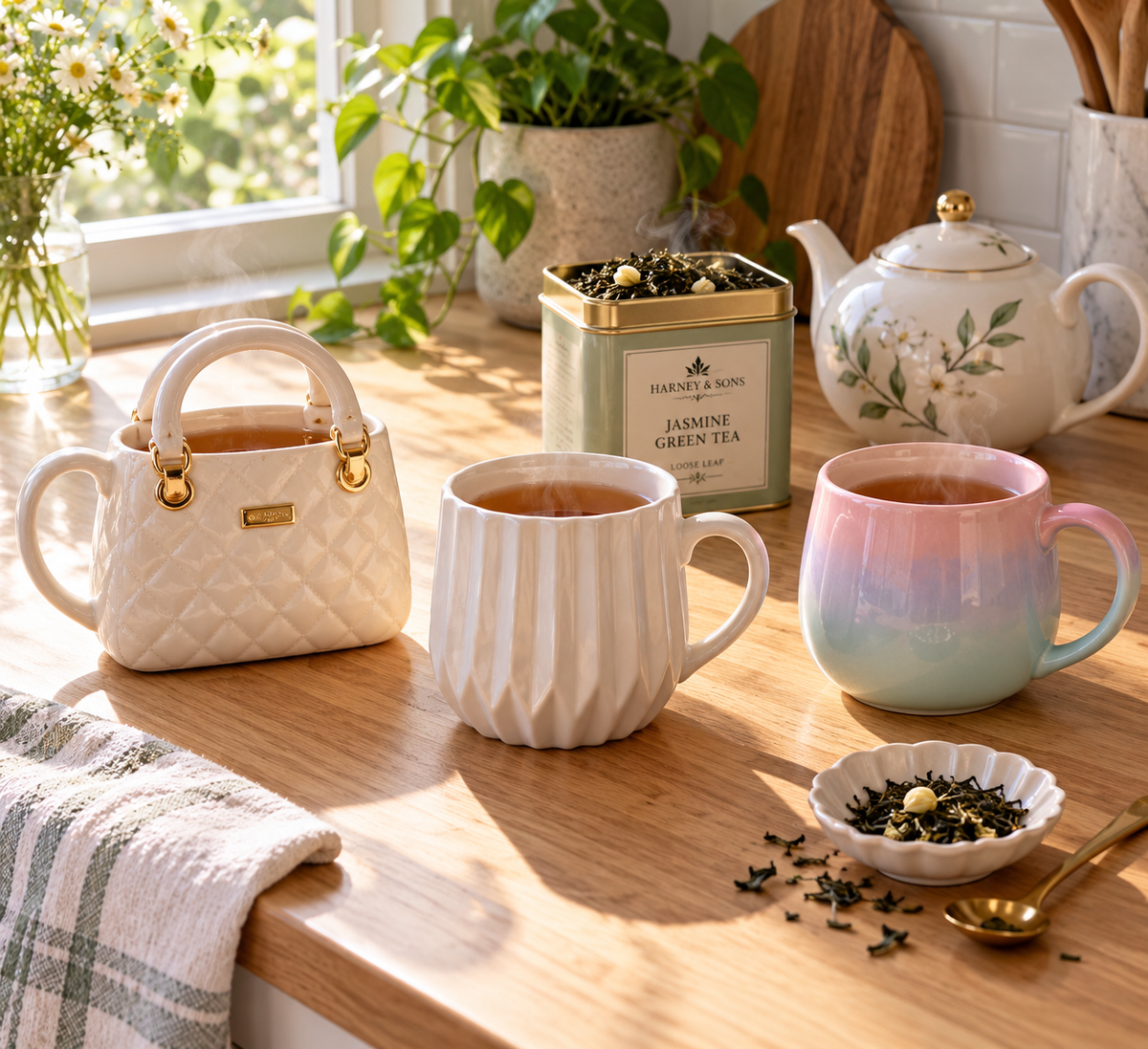
- The desk conversationalist. If the workday needs a laugh and you want the mug visitors ask about, the Handbag Coffee Tea Mug is the obvious pick — the handbag silhouette reads as a joke before it reads as drinkware. The honest trade-off with novelty shapes: they're rarely commute-proof or lidded, so check the listed capacity and picture your hand on that handle before committing.
- The quiet-afternoon minimalist. The Pleated Coffee Tea Cup suits someone who wants texture rather than a punchline. The pleated form is the whole point — it reads as quiet, tactile, and at home beside a teapot. Do confirm the listed volume, because pleated walls hold differently than a straight cylinder.
- The color-first brewer. The Gradient Coffee Tea Mug is for people who match the mug to the mood. Expect shade variation from piece to piece — that's how gradient glazes behave, and it's part of the appeal. If you need two that match exactly, message us before ordering rather than after.
Are cute ceramic tea mugs safe to drink from? Four glaze checks
Safety is the least photographed part of any mug and the most important. Ceramics get their color and gloss from glazes, and poorly formulated decorative glazes can involve lead or cadmium — metals that regulators such as the FDA restrict in food-contact ceramics. Most listings never mention it, so run these four checks yourself:
- Look for a food-safe glaze statement. Sellers who take drinkware seriously say so outright. If a listing is silent on food safety, treat that piece as a pen cup, not a teacup.
- Read a Prop 65 warning for what it is. California's label flags exposure to chemicals on that state's listed list. It isn't a ban — it's your prompt to ask the seller how the glaze is formulated and fired.
- Ask handmade sellers directly. A potter selling drinkable ware knows their glaze chemistry and firing temperature and will answer in one sentence. An evasive answer is your answer.
- Check the unglazed foot ring. The bare ring on the bottom, where the mug rested in the kiln, should be sanded smooth. A gritty foot scratches tables, and it usually signals rushed finishing everywhere else too.
One term worth knowing: crazing — the fine spiderweb lines that can appear in a glaze over time. On a modern mug it's usually cosmetic, but those lines hold tannin stains, and heavy crazing changes how the surface cleans. We'd retire a badly crazed mug from daily hot-tea duty rather than fight the staining forever.
How many ounces do you actually drink? Matching capacity to your tea habit
Capacity is where cute mugs most often fail their owners, because listings lead with the face, not the fill line. A rough map from what buyers reach for:
- 3–6 oz tasting cups — short-steeped gongfu sessions and dessert-table service. Charming, but a big-tea drinker will resent the refills.
- 8–10 oz — classic teacup territory, right for one strong cup alongside an afternoon snack.
- 10–14 oz — the everyday sweet spot for Western tea drinking. 350 ml is about 12 oz, and that size deserves its own scrutiny — we wrote a full comparison of 350 ml ceramic tea mugs covering size, glaze, and handle.
- 16 oz and up — latte-sized milk teas and anyone who carries one mug from desk to microwave all morning. The checks change at this size; our guide to 16 ounce ceramic coffee mugs walks through them.
Three details never make the listing photos. First, liquid weight: a 12-ounce pour of tea adds roughly three-quarters of a pound before you count the mug itself — real math for tired wrists and crowded desk edges. Second, handle clearance: larger knuckles need a finger of room, and sculpted handles rarely offer it. Third, lids and infusers: if you steep loose leaf, decide whether you'll use a separate infuser basket, and remember a wide mouth makes spent leaves far easier to scoop out than a narrow one.
Microwave, dishwasher, thermal shock: how cute mugs actually break
Mugs rarely die of old age. They die of care mistakes — we see it in the replacement questions that hit our inbox. Three rules cover most of it:
- Metallic decoration never enters a microwave. Gold and silver luster rims are everywhere on cute designs, and standard food-safety guidance is blunt about metal in microwaves.
- Respect thermal shock. Ceramic handles sudden temperature change badly. A mug fresh from a cold car, the fridge, or a freezer-to-microwave jump can crack when hot tea hits it. Preheating with warm tap water takes ten seconds and prevents the heartbreak.
- Hand-wash anything decorated. Repeated dishwasher cycles dull hand-painted detail and prints over months of use. Plain glazed bodies usually tolerate the machine well — but the care note on the listing always wins, so read it before the first wash, not after the first fade.
If the trim shines like metal, heat your water another way.
One bonus from our own sinks: white interiors show tea tannin stains fastest. A baking-soda paste and a soft sponge lift most of it without wearing down the glaze.
Handmade charm or factory consistency: which trade-off fits your kitchen?
Handmade mugs carry small irregularities — glaze pooling, pinholes, a rim that isn't perfectly round, capacity that wanders an ounce from nominal. That's the kiln's signature, not a defect, and it's why two “identical” handmade pieces never quite match. Mass-produced mugs trade that character for consistency: predictable sizing, stackability, and a price that stings less when one hits the tile floor. If you need four identical mugs for a shelf, the honest answer is that mass-produced is the safer buy. If you want each piece singular, handmade earns its keep. Color is its own expectation problem either way — soft pastels shift between screen and kiln more than buyers expect, so when an exact shade matters for a set or a kitchen palette, ask whether current stock matches the photos before ordering.
Gifting cute tea mugs: what makes it land — and what backfires
Mugs work for nearly everyone on a gift list, but cute designs raise the stakes because the design has to land with them, not with you. Three things make gifting smoother:
- Check packaging and set options. Gift-ready packaging saves a wrapping job, and a couple's set suits weddings and housewarmings far better than a single mug. The reverse is also true — one sculpted statement mug is a personal gift, not a couples' one.
- Match capacity to the recipient. Your big-mug habit isn't theirs; a dainty cup that delights a sipper disappoints a gulper.
- Pair it with tea. A mug plus a small tin of loose leaf turns a cute object into a ritual, and rituals are what people remember.
One caution from experience: delicate hand-painted pieces are a risky gift for someone who lives by an office dishwasher, and sculpted shapes suffer in commute bags. Our fuller breakdown of what separates a good mug gift from a shelf sitter is in Cute Ceramic Coffee Mugs For Gifts: What Buyers Should Compare — the comparison points carry straight over to tea.
Frequently asked questions
Are cute ceramic tea mugs microwave safe?
Not automatically — it depends on the decoration. Mugs with metallic gold or silver rims and details should never go in the microwave, while plain glazed bodies often can be. The care note on the listing is the final word, and when a listing is silent, heat your water separately.
What size tea mug do I actually need?
For everyday Western tea drinking, 10–14 oz is the comfortable range, with 350 ml (about 12 oz) the most common sweet spot. Smaller 3–6 oz cups suit short-steeped tasting sessions. Match the size to how many refills you'll honestly make.
How do I know a ceramic tea mug's glaze is food safe?
Look for an explicit food-safe or lead-free glaze statement, and read any California Prop 65 warning as a prompt to ask the seller about glaze formulation and firing. With handmade mugs, ask the maker directly — anyone selling drinkable ware can answer immediately, and an evasive answer is your answer.
Why does my handmade mug look slightly different from the photo?
Kiln temperature, glaze pooling, and small differences in forming mean handmade pieces vary in shade, size, and surface from batch to batch. It's normal, and it's part of what you're paying for. If you need a matched pair, ask before ordering rather than after.
Can I pour boiling water straight into a ceramic tea mug?
Into a room-temperature mug, generally yes. Into one that's cold from a car, the fridge, or a winter windowsill, you risk thermal-shock cracking. Swirl some warm tap water in it and give the ceramic ten seconds to equalize first.
The 60-second check before you order
Run any cute mug — ours or anyone's — through this list:
- Capacity confirmed on the listing, in ounces or milliliters, against your real tea habit.
- Food-safe glaze stated, or a seller who answers the question in one sentence.
- Care note read: microwave, dishwasher, and any metallic trim.
- Handle clearance and filled weight imagined for your hand, not the photo's.
- Color expectations set — pastels and gradients shift between batches.
Narrowed the style? Start in the unique mugs collection, shortlist two or three, and compare them against this list side by side. It beats falling for the first cute face and returning it a week later — and we would much rather answer the awkward questions now than process the return six weeks from now.
Read more
Ceramic Eggnog Mugs: What Buyers Should Compare Before Ordering
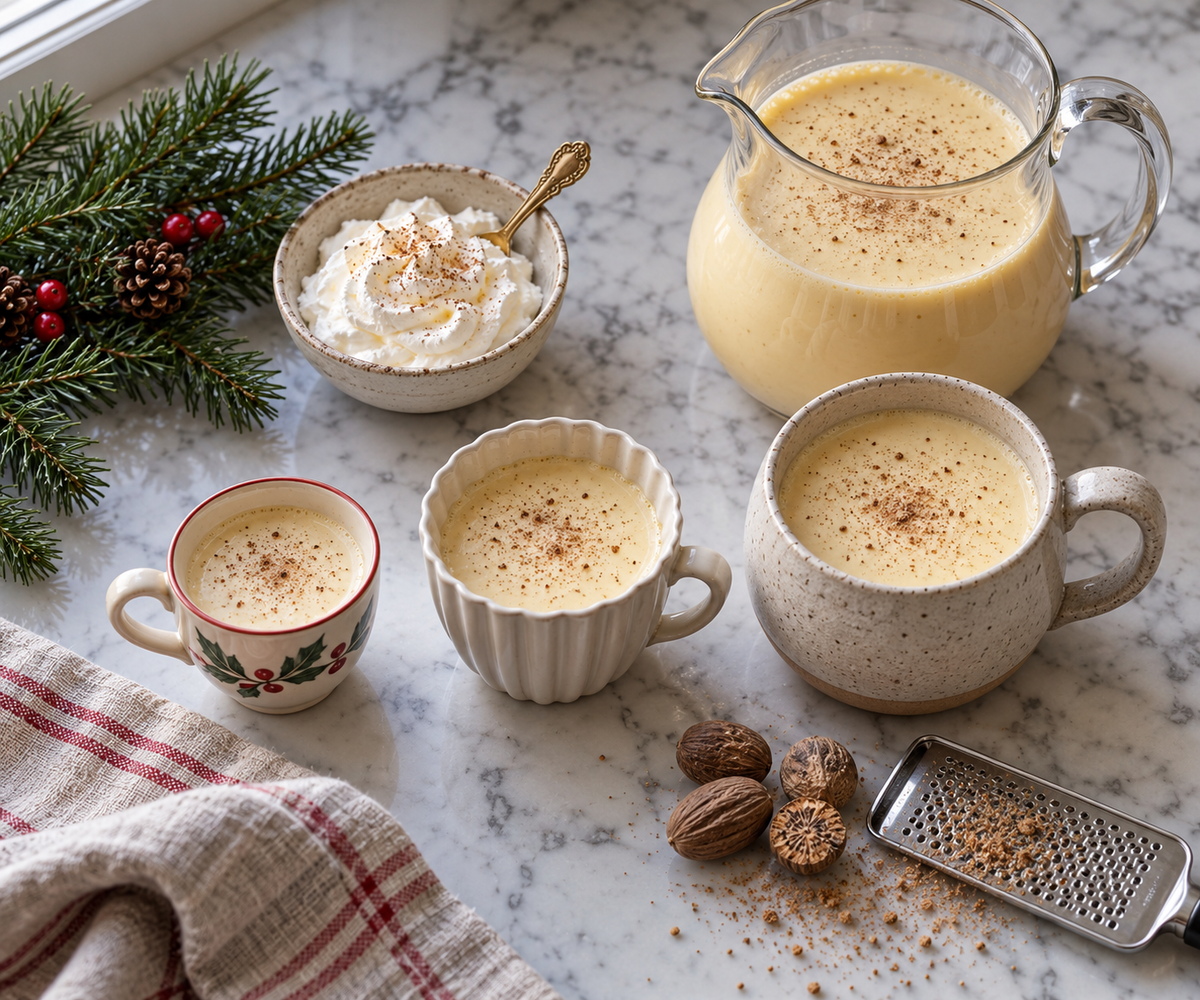
Eggnog pours smaller than coffee, so capacity, silhouette, and glaze condition matter more than shoppers expect. We compare 170, 200, and 270 ml ceramic cups and list the five checks to run before ...
Read more
Unique Coffee Mug Gift Ideas for Him: Size, Material, Care
Most gift guides list mugs; this one explains what to compare first — how much coffee he actually drinks, which material fits his microwave and campfire habits, and how to order personalization tha...
Read more
Leave a comment
This site is protected by hCaptcha and the hCaptcha Privacy Policy and Terms of Service apply.