
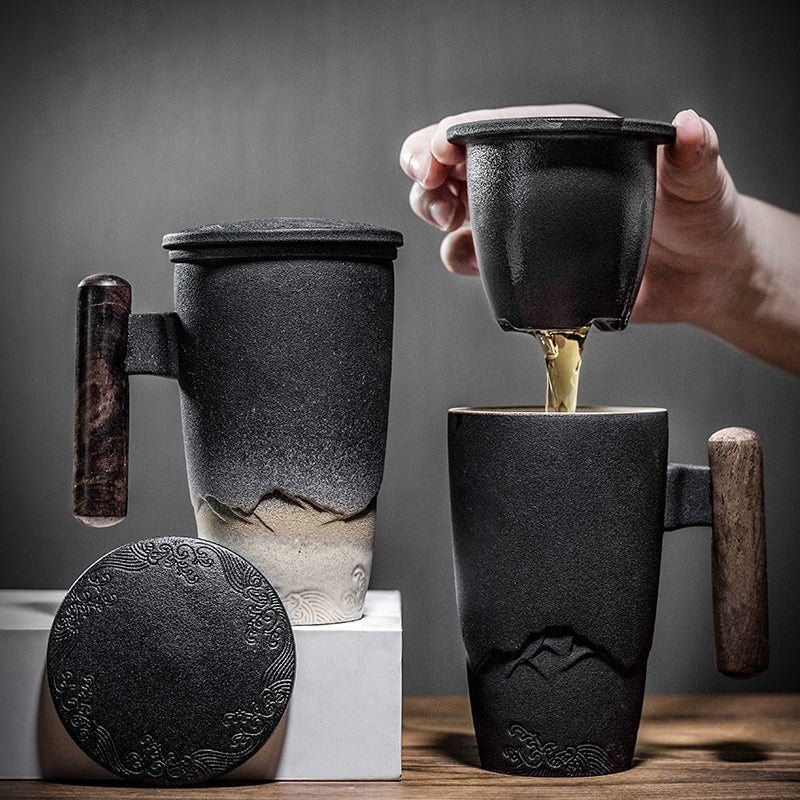
Breakfast coffee cup shared household practical purchase checklist
Reading time: about 9 minutes
At 7:15, one cup is empty before the toast reaches the table, another is still half full when breakfast ends, and a third person is standing at the coffee maker again. This breakfast coffee cup shared household practical purchase checklist addresses that everyday mismatch. The useful question is not which cup makes every place setting look identical. It is which listed capacity matches each person's normal pour, refill tolerance, and available table space.
When we help shoppers compare drinkware in our store, we begin with the facts we can confirm. The Retro is listed at 170 ml, the Pleated at 200 ml, and the Landscape Tall at 350 ml. Capacity is verified here, but capacity alone does not establish external dimensions, material, microwave compatibility, or dishwasher care. We keep those unknowns visible because guessing from a product photo can lead to the wrong cup for a crowded kitchen.
What does 170 ml, 200 ml, or 350 ml change at breakfast?
The three capacities create meaningfully different serving patterns. The Pleated holds 30 ml more than the Retro. The Landscape Tall holds 150 ml more than the Pleated and 180 ml more than the Retro. Those differences matter if one person likes a short pour while another wants to stay seated through the whole meal.
| Product | Listed capacity | Practical serving implication |
|---|---|---|
| Retro | 170 ml | Smaller pour with greater refill potential |
| Pleated | 200 ml | Middle capacity for a moderate serving |
| Landscape Tall | 350 ml | Largest listed pour and fewer-refill potential |
A listed capacity should not be treated as the amount everyone will actually drink. Most people leave carrying space below the rim, and milk, foam, or ice changes the amount of coffee that fits. Before choosing, fill a current favorite cup to the person's normal level and transfer that liquid into a measuring jug. That real serving measurement is more useful than estimating by eye.
The 170 ml option is not a good fit for someone whose main goal is avoiding refills. The 350 ml option can be unnecessary for a person who regularly leaves part of a large pour unfinished. The 200 ml option sits between those habits, but it may not satisfy either extreme.
Use this breakfast coffee cup shared household practical purchase checklist
- Count simultaneous drinkers. A table used by three people at once has different space constraints from a kitchen where everyone eats at a different time.
- Measure each usual pour. Record the liquid volume each person actually serves, not the capacity of the cup already in the cupboard.
- Ask about refills. Some people prefer a fresh small pour. Others find every trip back to the coffee maker disruptive.
- Recreate the occupied table. Put down the plates, bowls, cutlery, carafe, and other items that are normally present before measuring cup space.
- Check storage and cleaning limits. Record shelf height, usable cupboard depth, and dishwasher rack clearance if the product is confirmed as dishwasher-compatible.
- Verify unresolved specifications. Confirm material, exact dimensions, weight, and care guidance on the current product page before ordering.
Use one line per household member. A simple note such as 190 ml usual pour, dislikes refills, narrow place setting, low shelf quickly shows which facts still need checking. Used person by person, the breakfast coffee cup shared household practical purchase checklist prevents one person's habits from becoming the default for everyone.
How do you check cup footprint on a shared table?
Liquid capacity and external footprint are not interchangeable. A 170 ml cup can still have a broad body or a handle that projects outward, while a higher-capacity vessel may gain some of its volume through height. Without confirmed dimensions, we would not label any of these three products the narrowest by capacity alone.
Set the table as it normally appears, then place each person's current cup in position. Measure from the far side of the cup body to the outer edge of the handle. That full span, not just the base diameter, is the working footprint. Also note the space needed to lift the cup without striking the next cup, a plate, or a shared serving item.
The Landscape Tall name makes vertical clearance a specific checkpoint, but the name is not a substitute for an exact height measurement. Check the live listing before assuming it will fit beneath a low cupboard shelf or into a particular rack. The same caution applies to the Retro and Pleated: style names do not provide base diameter, handle projection, or stackability.
Which listed capacity matches each person's refill preference?
Short pour and refill-friendly routine: Retro 170 ml
A person who normally serves close to 170 ml, finishes quickly, and does not mind returning to the coffee maker has a clear reason to consider the Retro 170 ml coffee tea cup. Its listed capacity limits how much is poured at once. It is not the practical choice for a household member who wants one large serving or regularly carries coffee away from the breakfast table for a long work session.
Moderate serving without jumping to 350 ml: Pleated 200 ml
The Pleated 200 ml coffee tea cup fits the person whose measured pour exceeds 170 ml but does not approach 350 ml. That 30 ml increase over the Retro can matter when a regular serving includes milk or when a small cup feels slightly restrictive. Its limitation is equally clear: 200 ml may still mean a refill for a long-breakfast drinker.
Largest listed serving and fewer-refill priority: Landscape Tall 350 ml
The Landscape Tall 350 ml coffee tea mug is the first option to examine for the person who serves the largest amount and strongly prefers fewer trips back to the pot. It offers 75 percent more listed capacity than the 200 ml Pleated, but that extra volume only helps if the person uses it. It is not ideal when cupboard height is tight, the table is crowded, or the drinker routinely leaves a large serving unfinished. Confirm its exact dimensions before treating the tall format as suitable for the available space.
Should everyone at the table use the same cup?
No functional rule requires a shared household to use one capacity. These are individual product options, not a claim that the cups are sold as a set. A mixed table can be the more practical result when people have different serving habits.
- One short-pour drinker and one long-pour drinker: compare the 170 ml Retro with the 350 ml Landscape Tall instead of forcing both people into the middle size.
- Several moderate drinkers: the 200 ml Pleated gives everyone the same listed capacity without moving up to 350 ml.
- Breakfast that continues at an office desk: compare the Pleated and Landscape Tall by normal pour, desk footprint, and refill access.
- Very limited table or cupboard space: obtain exact external measurements before choosing. Capacity does not settle this scenario.
Matching appearance may still matter to the household, but it should come after serving volume and physical fit. Our collection can help with the style comparison once each person's capacity range is established.
Which material, care, and damage checks belong before checkout?
Material and care cannot be confirmed from the three capacity facts alone. Porcelain, stoneware, other ceramic bodies, and glass can appear similar in online photography while having different weights, finishes, and care requirements. We do not assign a material or cleaning method unless the current product listing states it.
- Read the material field. Do not infer the cup body or finish from color and surface appearance alone.
- Confirm dishwasher and microwave guidance separately. A product being described as a coffee cup does not automatically establish compatibility with either appliance.
- Check exact dimensions and weight. These details affect shelf clearance, handle comfort, table footprint, and the effort of carrying a full cup.
- Review what is included. A saucer, spoon, food, drink, or other photography prop should not be assumed to accompany the cup unless the listing explicitly says so.
- Inspect before first use. Look at the rim, the handle joint, and the base under good light. Rim chips, hairline cracks near a handle, and an uneven contact surface are useful category-level inspection points, not claims that these products commonly have defects.
For gift unboxings, we recommend doing that inspection before wrapping the item. For daily household use, follow the stated care instructions and avoid exposing drinkware to sudden temperature changes unless the product guidance permits it. This comparison does not establish travel-lid compatibility, insulated heat retention, stacking performance, commercial dishwasher suitability, or hospitality testing. A shopper who requires one of those features should choose a product that specifically documents it.
What should be written down before you order?
- Write each drinker's usual serving in milliliters.
- Mark each person as refill-friendly or fewer-refills preferred.
- Measure the working space at each place setting, including handle clearance.
- Record the maximum cupboard height and any relevant cleaning restrictions.
- Open the matching product page and verify every specification that remains unknown.
This turns the choice into a direct comparison. A measured pour near 170 ml points toward the Retro, a moderate pour near 200 ml points toward the Pleated, and a substantially larger pour points toward the 350 ml Landscape Tall, subject to dimensions, material, and care checks.
Frequently asked questions
Which breakfast coffee cup size is best for someone who dislikes refills?
The Landscape Tall has the largest verified capacity at 350 ml, so it is the strongest starting point among these three for reducing refill frequency. That does not guarantee one pour will last all morning. Measure the person's normal serving and confirm that the mug's external dimensions suit the table and cupboard.
Does 170 ml mean the Retro has the smallest table footprint?
No. Capacity measures internal liquid volume, not base diameter, body width, or handle projection. Check the current product dimensions before choosing the Retro solely for a tight place setting.
Can one shared household choose different CoffeifyMug cup styles?
Yes. One person can choose the Retro, another the Pleated, and another the Landscape Tall according to individual serving habits. This article compares individual options and does not imply that they are bundled or sold with other tableware.
How do I use the breakfast coffee cup shared household practical purchase checklist?
Measure each person's normal pour, note refill preference, and recreate the occupied breakfast table. Match the resulting capacity range to 170 ml, 200 ml, or 350 ml, then verify the selected product's current dimensions, material, and care instructions.
Can I assume these cups are dishwasher-safe or microwave-safe?
No. Those care claims are not established by the verified capacity information used in this comparison. Read the current product page and ask our store before ordering if the required care detail is not shown.
Start with each person's measured pour and available place-setting space. Then compare those notes with our unique coffee mugs for different household routines, opening each relevant product page to confirm dimensions, material, and care before placing the order.
More from our blog
Read more
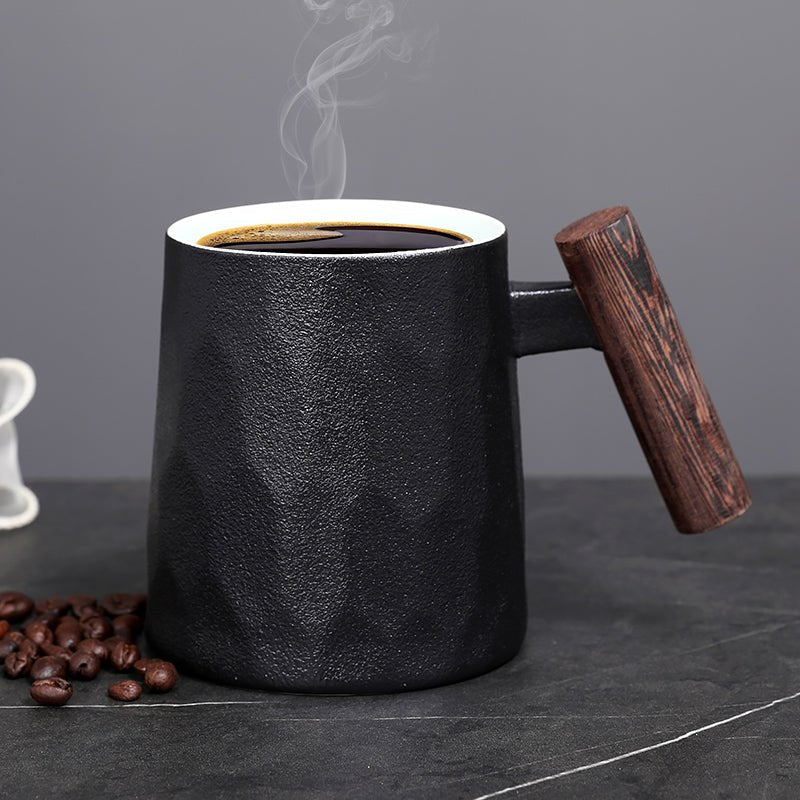
Peppermint Tea Mug Shared Household Practical Purchase Checklist
Compare The Flow 400 ml, Morning and Night 440 ml, and The Rock 480 ml using measured serving volume and a simple grip test. This checklist separates verified capacity facts from personal handle co...
Read more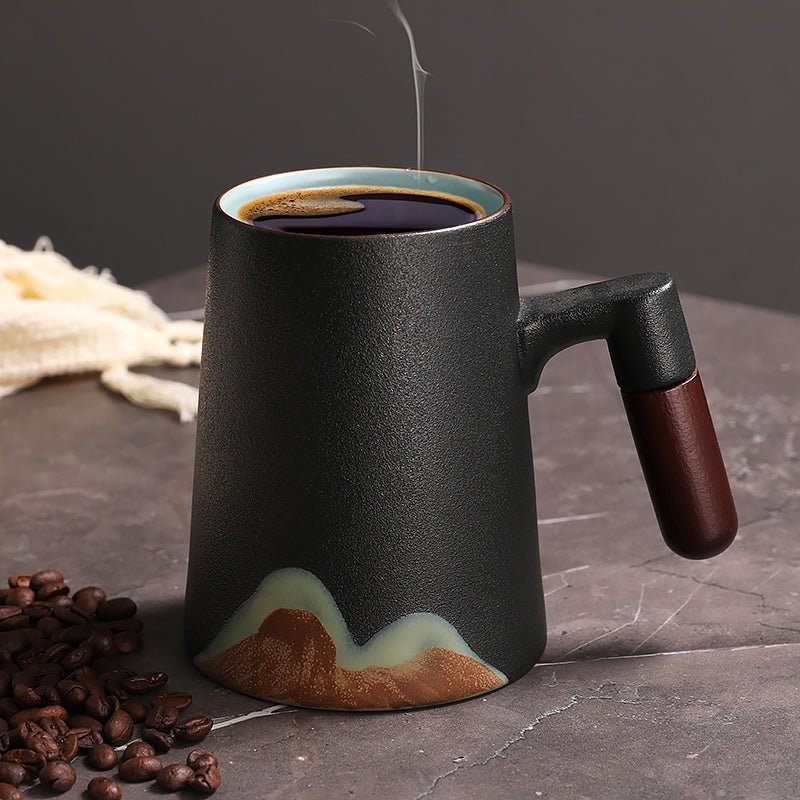
Chai Tea Mug Shared Household Practical Purchase Checklist: 400-480 ml
Compare CoffeifyMug's 400 ml, 440 ml, and 480 ml tea-ready options by finished pour, headroom, carrying weight, storage, and care requirements. This checklist helps each person in a shared home cho...
Read more
Leave a comment
This site is protected by hCaptcha and the hCaptcha Privacy Policy and Terms of Service apply.