
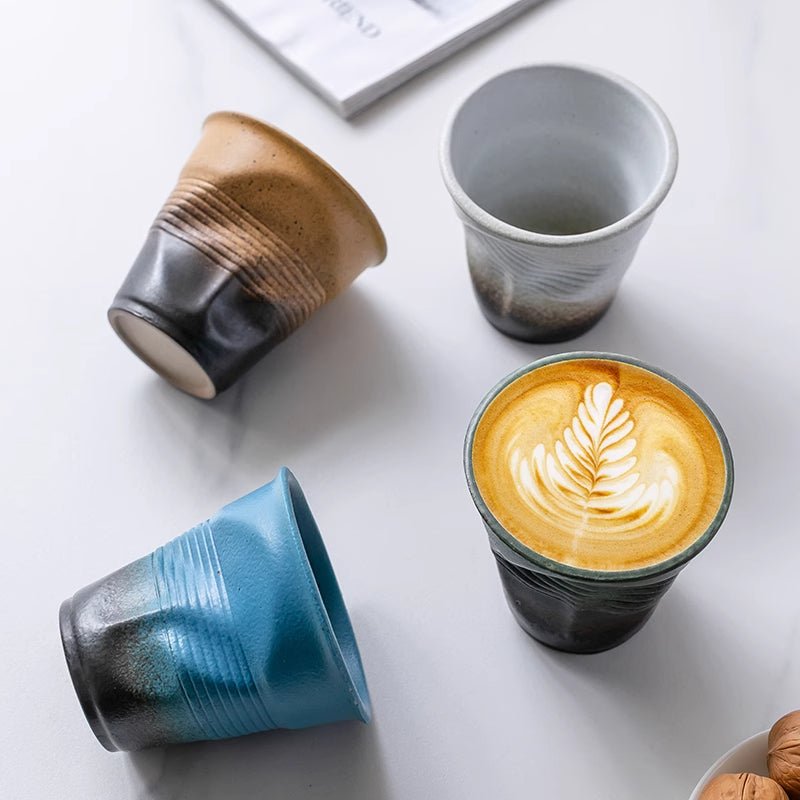
Ceramic Cortado Cup Shared Household Practical Purchase Checklist
Reading time: about 9 minutes
Two adults can share one coffee station and still need very different cup volumes. One stops at a compact milk coffee; the other adds enough milk or water that the smaller cup becomes awkward to carry. That is why our ceramic cortado cup shared household practical purchase checklist starts with the finished drink each person actually takes from counter to table, not with one household-wide idea of the best cup.
At CoffeifyMug, we keep this comparison inside the catalog facts we can verify: the Retro is 170 ml, the Pleated is 200 ml, and the Emerald is 270 ml. They are individual product choices, not a promised set. We do not claim that any is purpose-built, tested, or certified for cortado, and we do not infer extraction performance, heat retention, microwave or dishwasher safety, or cafe use. The useful decision comes down to capacity, practical headroom, and whether the unanswered care and storage questions work for your household.
Use the ceramic cortado cup shared household practical purchase checklist: measure first
Before opening product pages, measure each person's usual finished drink. Use the cup already in the cabinet: fill it with room-temperature water to the person's normal level, then transfer that water to a marked measuring jug. This avoids handling a hot drink and gives you a repeatable number based on the serving size someone actually prefers.
- Record the usual volume: Include the milk or water normally added, not just the coffee portion.
- Allow for ordinary variation: Note what happens on a day when someone adds an extra splash rather than following an exact recipe.
- Consider the carry: A cup moved from the kitchen counter to an office desk benefits from more practical space below the rim than one placed beside the machine.
- Keep one line per person: Do not average a 140 ml drinker and a 210 ml drinker into one theoretical household preference.
In our experience, this short measurement prevents a common shared-kitchen mismatch: buying identical capacities for people with different routines. The catalog gives listed capacity, not a separate comfortable-fill measurement, so leave a margin instead of planning to fill any cup to its maximum.
How much nominal headroom do 170 ml, 200 ml, and 270 ml leave?
Headroom is the unused capacity between the finished drink volume and the listed maximum. For a simple comparison, assume each person prepares a 150 ml finished drink. The arithmetic below helps with shortlisting, but it does not establish a marked fill line or guarantee how close to the rim someone will be comfortable carrying the cup.
| Product | Verified capacity | Nominal headroom after 150 ml | Practical reading |
|---|---|---|---|
| Retro coffee tea cup | 170 ml | 20 ml | The tightest margin. Shortlist it for a consistent compact drink, not one that regularly grows with extra liquid. |
| Pleated coffee tea cup | 200 ml | 50 ml | It provides 30 ml more total capacity than the Retro, giving a changing small drink more room. |
| Emerald coffee tea mug | 270 ml | 120 ml | The largest margin. It better matches a person who wants more liquid, though a 150 ml serving leaves substantially more unused capacity. |
These headroom figures are subtraction, not product performance claims: 170 minus 150 equals 20, and so on. If the normal finished drink is 180 ml, the Retro is ruled out by its listed capacity, the Pleated leaves 20 ml nominally, and the Emerald leaves 90 ml. That scenario often clarifies the purchase faster than subjective labels such as small or large.
Which capacity matches each shared-household routine?
A shared household rarely needs one universal answer. Match each person to the closest sensible capacity, then check whether the remaining margin accommodates their normal additions and carrying habits.
- A consistent drink near 150 ml: Compare the 170 ml Retro option. Its capacity is the closest fit of the three, but the trade-off is only 20 ml of nominal room at that serving size.
- A compact drink that often changes: The 200 ml Pleated option offers 30 ml more total capacity than the Retro. It is the more practical shortlist when an extra addition or a walk to another room makes a tight fill undesirable.
- A finished drink around 180 to 200 ml: Start with the 270 ml Emerald mug. At 200 ml, it leaves 70 ml of nominal capacity. Choose it for that volume difference, not because we claim a particular cortado specification.
- Different routines under one roof: Select individual pieces rather than forcing everyone into one capacity. The unique coffee mugs collection lets you compare current options without implying that the Retro, Pleated, and Emerald are bundled together.
The same logic applies to a gift for roommates or a couple. Write down each recipient's usual serving volume first. A mixed-capacity gift is practical when it reflects real routines, while buyers who require coordinated packaging or a matched set should confirm those details separately before ordering.
What should housemates verify at the cabinet, sink, and desk?
Capacity settles only one part of the decision. Shared households also need agreement about storage, cleaning, ownership, and where each cup will normally be used.
- Cabinet fit: A 170 ml capacity does not reveal the exact external height, width, handle projection, or stackability. Measure the available shelf space and review the current product-page information rather than assuming volume establishes the footprint.
- Sink routine: Our verified catalog facts do not establish dishwasher or microwave safety. If everyone expects drinkware to go directly into a dishwasher, unresolved care information is a valid reason to pause and confirm before buying.
- Office desk use: Additional headroom can leave more distance between the drink and the rim, but an open ceramic cup is not spillproof. Someone who requires a lid or sealed travel vessel needs a different style.
- Cup recognition: Assign each piece by product name and capacity. Review current product images if the household plans to distinguish cups by color, surface, or silhouette, because those details should not be assumed from a name alone.
- Checkout quantity: These links lead to individual products. Select the quantity deliberately and do not expect multiple models or several pieces to arrive as one set.
A useful checklist leaves unknowns visible. The purchase is not decision-ready if everyone agrees on volume but nobody has checked shelf fit, cleaning expectations, or the quantity shown at checkout.
What should you inspect on ceramic before the first drink?
A brief arrival inspection is worthwhile for any ceramic drinkware, especially in a shared home where one person may unpack the order and another may wash it. Keep the packaging until each piece has been checked in good light.
- Inspect the rim: Look for chips, sharp spots, or an unexpectedly rough drinking edge. Use a cloth rather than a bare fingertip if an area appears damaged.
- Check the body and base: Look for hairline cracks, then place the empty cup on a flat, dry counter to check that it stands steadily.
- Examine joined areas: If the design has a handle, inspect where it meets the cup body for visible cracks or gaps.
- Review the glaze: Check for unexpected sharp points, exposed ceramic body, or crack lines. Contact our store before use if a mark appears different from the product imagery and you are unsure about it.
- Find the care information: Check the base, packaging, and current product page before choosing a dishwasher cycle or microwave setting.
We do not have verified dishwasher or microwave claims for these products. Until product-specific guidance is confirmed, a conservative routine is to hand-wash with mild dish soap and a nonabrasive sponge, then dry the piece before storage. Avoid using a dishwasher or microwave as an experiment, and avoid abrupt temperature changes. Those are cautious general ceramic-handling steps, not certifications for the Retro, Pleated, or Emerald.
Where do these compact ceramic capacities stop making sense?
A ceramic cup in this range is not the right answer for every person in a shared home. Rule these options out early if the household needs something they do not document or provide.
- If someone's usual finished drink exceeds 270 ml, all three verified capacities are too small. Choose a larger mug.
- If the main drink contains a substantial amount of ice, remember that ice displaces liquid volume. The 170 ml and 200 ml choices may become restrictive quickly.
- If the priority is a travel lid, verified insulation, or nonbreakable drinkware, select a different format or material.
- If the buyer needs a matched set of identical pieces, do not treat these three individual product pages as a set listing.
- If verified heat retention, extraction behavior, microwave safety, dishwasher safety, or cafe-use performance is mandatory, the available facts are insufficient to support the purchase on those grounds.
For a household that needs a larger capacity or a different style, use the unique ceramic coffee mug selection as the next comparison step rather than trying to make a compact option serve every routine.
Frequently asked questions
How should I use the ceramic cortado cup shared household practical purchase checklist?
Measure each person's finished drink, add the amount of practical buffer they want, and compare that total with 170 ml, 200 ml, and 270 ml. Confirm external dimensions, care information, and checkout quantity as separate steps. Do not average different preferences or assume the products form a set.
Is a 170 ml ceramic cup too small for a cortado?
That depends on the finished volume you prepare rather than the drink name alone. A 150 ml serving leaves 20 ml of nominal capacity in the Retro, while any finished drink over 170 ml exceeds its listed capacity. We do not certify the Retro as purpose-built for cortado.
Should I choose 200 ml or 270 ml for someone who adds milk?
Measure the drink after the milk is added. At 180 ml, the Pleated leaves 20 ml of nominal capacity and the Emerald leaves 90 ml; at 200 ml, the Pleated has no nominal margin while the Emerald leaves 70 ml. The 270 ml option is the more practical shortlist if the amount frequently varies.
Are the Retro, Pleated, and Emerald dishwasher or microwave safe?
We do not make either claim because those care properties are not included in the verified catalog facts. Check the product page, packaging, and markings on the base before use. If specific guidance is unavailable, use conservative hand-washing rather than treating an appliance cycle as a test.
Are the three ceramic products sold as a set?
No. The Retro, Pleated, and Emerald are presented as individual product choices. This allows a household to select different capacities, but buyers should confirm the quantity of each item in the cart before checkout.
Your one-minute checkout check for each drinker
- Write the person's name, usual finished volume, and largest ordinary variation.
- Choose a listed capacity that leaves a practical margin instead of matching the drink to the maximum.
- Verify current dimensions, care information, imagery, and quantity on the relevant product page.
- Reject these options if the person needs more than 270 ml, a lid, nonbreakable material, a matched set, or verified performance claims.
Open the Retro 170 ml cup for a compact and consistent measured drink, compare the Pleated 200 ml cup when 30 ml of additional total capacity solves the household's variation, and move to the Emerald 270 ml mug for the larger routine. Make the final choice person by person, with the measured volume beside the product page.
More from our blog
Read more
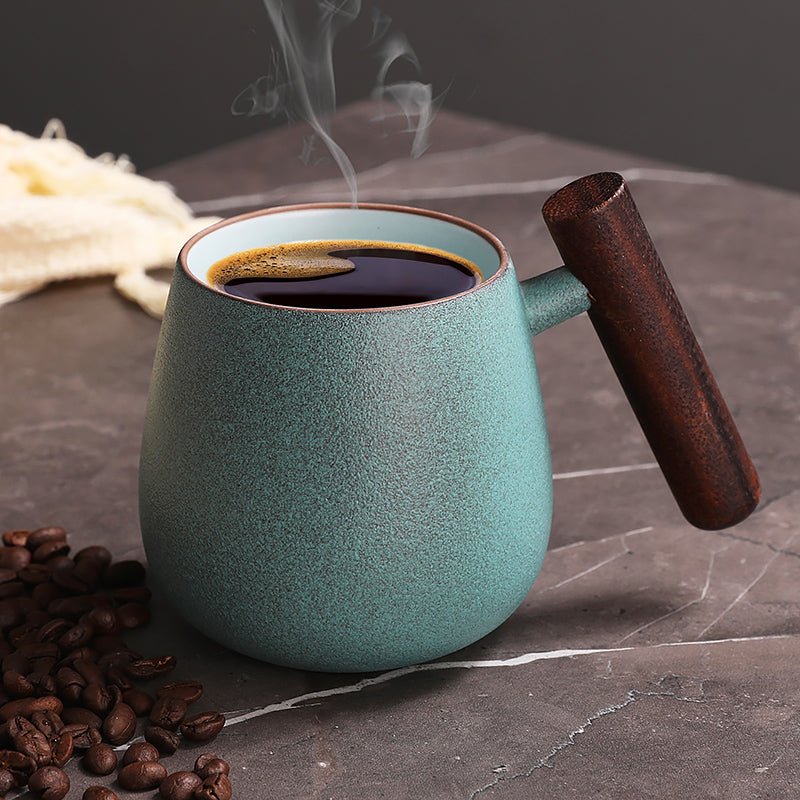
Ceramic Wide Bottom Coffee Mugs: Weekend Purchase Checklist
Use a table-to-cabinet checklist to compare ceramic wide-bottom mugs for slower weekend refills. It covers footprint, handle and rim inspection, care unknowns, gifting, and CoffeifyMug's Round, Spi...
Read more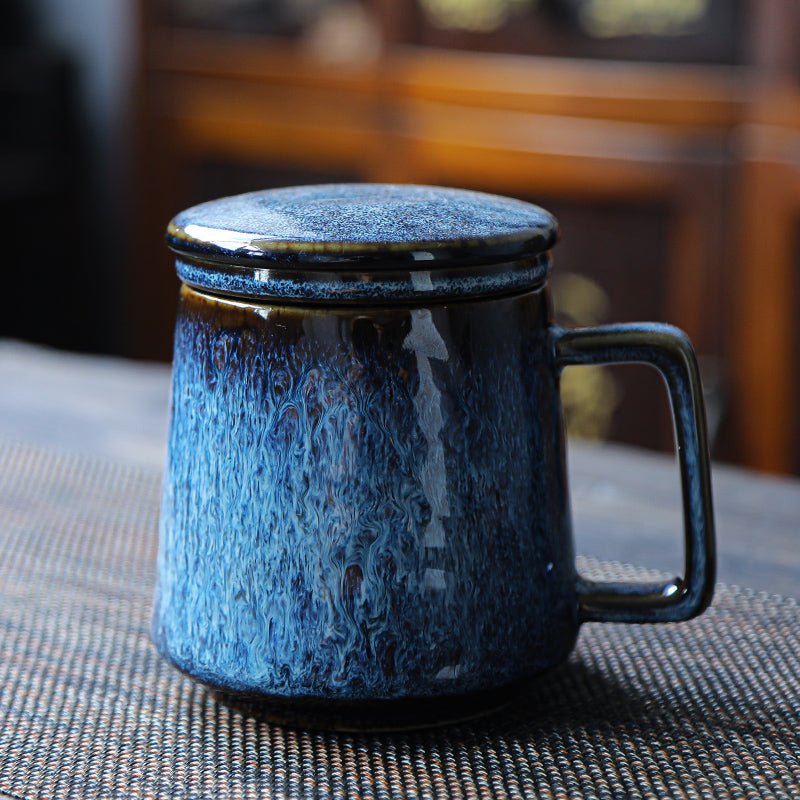
Large Decorative Coffee Mugs Morning Routine Product Shortlist Guide
Build a shortlist around your usual pour, refill tolerance, brewer clearance, desk space, and care habits. We map three CoffeifyMug designs to the mornings they suit and the reasons to skip them.
Read more
Leave a comment
This site is protected by hCaptcha and the hCaptcha Privacy Policy and Terms of Service apply.