



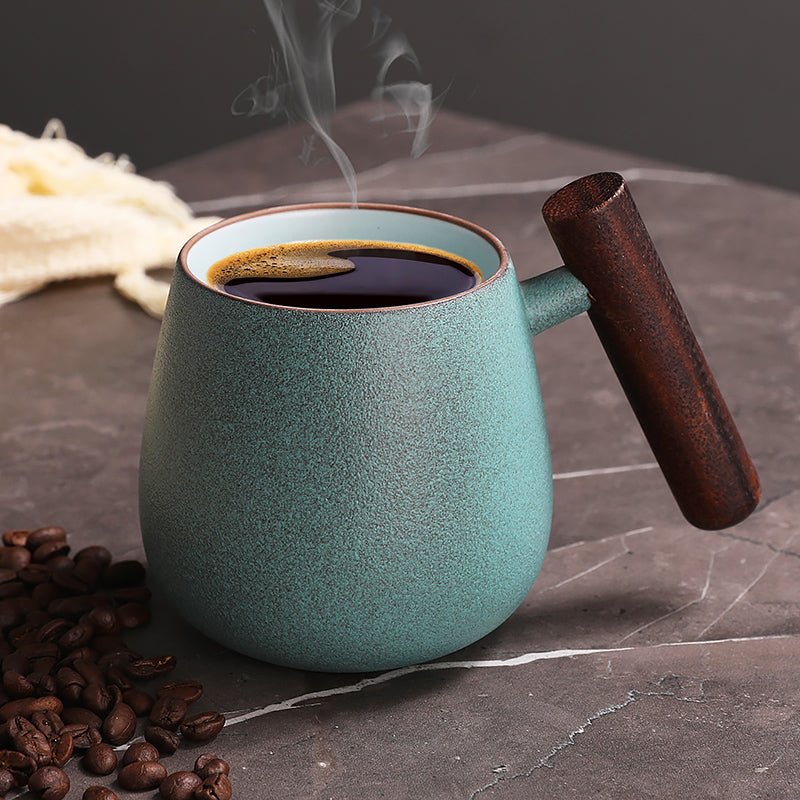
Best Size Ceramic Mug for Breakfast Nook Coffee Tray: What to Compare
Reading time: about 11 minutes
The best size ceramic mug for breakfast nook coffee tray setups is almost never the biggest one you can fill. It is the one whose base and handle still leave a clear patch of tray for the pot, the sugar bowl, and a hand reaching across at 7:40 in the morning. We pack and handle these mugs in our store every week, and the pattern holds: shoppers who measure the tray first keep what arrives, while shoppers who buy by ounce count alone often come back for a second, narrower mug.
On a table, a mug's height and looks dominate. On a tray, its footprint dominates — and the footprint is the flat circle under the foot ring, not the rim you see from above. Two mugs that hold the same pour can cost you very different amounts of tray.
What changes when a mug moves from a kitchen counter onto a nook tray?
Everything about clearance, and almost nothing about the coffee. A nook tray is usually shallow, often narrower than a serving board, and frequently parked under a window or a shelf. Three things start to matter that never come up on a wide kitchen island:
- Base spread. The wider the foot, the more tray you surrender — and the less room a creamer has to sit without overhanging the edge.
- Handle projection. The handle sticks out past the body, which sets both collision risk and which way the mug has to face.
- Vertical headroom. A shelf or upper cabinet above the tray turns a tall mug into a mug you have to angle in.
None of that shows up in a product photo shot straight on. It shows up the first time you slide the tray forward and the sugar bowl slides with it.
How do 8, 10, and 12 ounce mugs behave once the pot and sugar bowl land on the tray?
Most nook-tray buying conversations settle in the 8 to 12 ounce band. Here is how the three bands behave in a real arrangement rather than on a spec sheet.
| Size band | What it suits on a tray | What to watch |
|---|---|---|
| Around 8 oz | Espresso-length coffee, cortados, tea for one, tight trays shared with a creamer and a sugar bowl | Refills — a two-cup morning means two pours or a second mug on the tray |
| Around 10 oz | The middle option: a full mug of drip coffee with room for milk, still leaving space for a small pot | Height clearance if the nook has a shelf or cabinet above the tray |
| Around 12 oz | One long coffee that needs to stay warm, or tea with a large infuser basket | Base width and full weight — the heavier footprint is what tips a crowded tray |
No band is correct in the abstract. The band that works is the one that leaves your tray with space to actually set something down.
Two people, one small tray: which mug size actually fits?
For two people sharing one compact tray, the practical answer usually lands around 8 to 10 ounces per mug. Not because bigger mugs are worse, but because of arithmetic: a 12-ounce mug tends to be wider at the base, and two of them side by side plus a pot plus a sugar bowl is a lot of ceramic on a surface that is closer to a serving board than a table.
Two 8-to-10 ounce mugs leave a deliberate gap in the middle. That gap is where the pot goes, and it is also what stops a handle from knocking the creamer when someone reaches across.
Single-drinker trays flip the math. With one mug, no pot, and a small dish for a pastry, a 12-ounce mug is comfortable and often the better call — you pour once and the coffee stays hot through a slow morning. The mistake is assuming the two-person answer scales up to the one-person answer. It does not, and it does not scale down either.
There is a visual variable too. Nook trays are shallow, so mug height reads louder there than it does on a countertop. A tall, narrow mug can look precarious next to a squat pot even when it is perfectly stable — and how it looks affects how confidently you carry the tray.
Which measurements beat capacity every time you reload the tray?
- Base diameter. Measure the flat underneath, not the widest point of the body. That number determines how much tray you actually lose.
- Handle projection. The overhang past the body is what hangs off the edge or collides with a jam jar.
- Overall height. Check clearance under any shelf, and check the mug sits below the spout of your French press or pour-over so you are not lifting and tilting to pour.
- Weight empty and full. Ten fluid ounces of coffee adds roughly ten ounces of mass on top of the mug. A tray carried one-handed to the sofa feels every bit of that.
- Foot ring finish. A rough or unglazed foot ring will mark a painted or wooden tray over time. A linen liner or four small felt pads solves it cheaply.
- Wall thickness. Thick walls hold heat longer but take more cupboard depth and feel heavier in the hand; thin walls warm fast and cool fast.
If fit is your main worry, measure from the tray side as well as the mug side — the clear run of empty surface after the permanent residents are placed is your real budget, not the tray's total width.
Round or pleated: matching our two shapes to your tray situation
Two shapes in our catalog come up most often for nook trays: the Round Coffee & Tea Mug and the Pleated Coffee & Tea Cup. They solve different problems, and neither is right in the abstract.
The round mug is the quiet option. A round body sits calmly in a crowded arrangement and does not compete with a patterned tray or a busy linen. If you want the pot and the food to read first and the mug to recede, start there. Two numbers decide whether it works on your tray — capacity and base diameter — and both belong on the current product page. Check them before ordering, because a photo cannot tell you whether the base clears your run of empty tray.
The pleated cup runs the other direction: a fluted body catches window light and gives a small tray a focal point. Textured walls come with two practical checks. Feel the pleats with a damp hand when it arrives — grooves give grip but also break up the contact surface. And look at how glaze sits in the grooves; a soft brush rather than a sponge keeps residue from collecting there over months of use. Neither point is a defect. It is simply how textured ceramic behaves, and it is worth knowing before you commit.
Material matters on a tray for one unglamorous reason: mass. A heavier ceramic body holds heat through a long breakfast better than thin porcelain and shrugs off the small knocks that come from lifting and setting a tray down repeatedly. Confirm the body material and care notes on the individual listing rather than assuming every mug in a category behaves the same. If you want to compare silhouettes side by side, browse the unique coffee mugs collection with your tray measurements already written down.
When a 12 ounce mug still beats a smaller one on a small tray
Bigger is not automatically wrong. A 12-ounce mug earns its footprint when you drink one long coffee, when the nook is a solo spot, or when the tray holds only a mug and a small dish. On cold mornings a thick-walled large mug stays drinkable far longer than an 8-ounce one that goes lukewarm before the toast is buttered.
It loses when any of these is true:
- The tray also carries a pot, a creamer, and a sugar bowl.
- A shelf or upper cabinet limits vertical clearance.
- Two people use the tray at the same time.
- The tray gets carried rather than parked — a full large mug plus a pot is a two-hand lift.
Small mugs have limits too, and we say so plainly. An 8-ounce mug is a poor fit for someone who drinks 16 ounces before the school run, or for a tea drinker whose infuser basket needs headroom. In that case a larger mug on a tray with fewer companions is the better setup, not a smaller mug with more refills.
How do you test tray fit in five minutes before ordering?
- Set the tray on the table and place the pot, sugar bowl, and anything else that lives there permanently. Do this before you shop, not after.
- Measure the clear run of empty surface left over. That number, not the tray's total width, is your budget.
- Trace the base of a mug you already own onto paper, cut the circle out, and slide it around the tray. Crude, and better than any product photo.
- Check vertical clearance with a mug standing in place — shelf, cabinet, or window frame above the tray.
- Then check handle swing. Set the paper circle down and see whether a handle would overhang the tray edge or bump a neighbour.
Five minutes with a ruler and a pair of scissors prevents most of the returns in this category.
Care, weight, and the wear points a small tray exposes
Dishwasher tolerance is the question we get most, and it is the one we refuse to answer generically. Care instructions vary by glaze and by foot-ring finish, so read the specific listing for the mug you are buying instead of assuming all ceramic behaves the same. Two habits are safe regardless: do not pour boiling liquid into a mug that has been sitting in a cold pantry, and do not stack mugs rim-down against each other in a shallow nook cabinet where the handles collide.
Weight is the other thing a small tray exposes. A full mug is heavier than an empty one in a way your wrist notices once the tray also holds a pot. If you carry the tray from the kitchen to the nook each morning, lighter wins. If the tray never moves, heavier wins on heat retention. Decide that trade-off before you fall for a shape.
Over months, hot cycles and detergent can dull a glossy glaze — cosmetic, not a hygiene issue, and it shows up fastest on a light-coloured mug photographed beside a window. If your tray is wood or painted, a linen liner or four felt pads protect both the tray and the mug bases from a rough foot ring.
Frequently asked questions
What is the best size ceramic mug for breakfast nook coffee tray setups that seat two?
Usually 8 to 10 ounces per mug, assuming the base is not unusually wide. Two mugs in that range still leave a centre gap for a small pot and a sugar bowl. Measure the flat base rather than the rim — that is the number that decides fit.
Is a wider mug or a taller mug better on a shallow tray?
Wider bases spread weight and resist tipping, but they consume tray surface. Taller mugs save surface but can look top-heavy next to a squat pot and may foul a shelf. On a shallow nook tray, a moderately wide and moderately short mug is the safer compromise.
Can these ceramic mugs go in the dishwasher?
Check the care instructions on the specific product page before you commit — glaze and foot-ring finishes differ, and a blanket rule for ceramic does not apply across the board. For textured or fluted shapes, hand washing keeps glaze from collecting in the grooves.
How do I know a mug's base will fit before it arrives?
Get the base diameter from the current listing and compare it to the clear run of tray surface you measured after placing the pot and sugar bowl. If the listing does not state a base measurement, treat it as unconfirmed and ask before ordering rather than guessing from the photo.
How many mugs should one breakfast nook tray hold?
Two is the practical ceiling for a compact tray that also carries a pot, and only if both mugs are in the 8-to-10 ounce range. Beyond that, move the pot to the table and let the tray carry cups and condiments only.
Your next step: write down three numbers, then choose a shape
Before you shop, write down the clear surface left on your tray after the pot and sugar bowl are placed, the vertical clearance above the tray, and the base diameter of the mug you reach for most often. Those three numbers narrow the field faster than any size chart, and they are the ones we ask about first when a customer cannot decide.
Then pick by shape. If you want the mug to sit quietly inside a full arrangement, look at the Round Coffee & Tea Mug and confirm its capacity and base measurement on the listing. If you want the tray to have a focal point, the Pleated Coffee & Tea Cup does that job, with the wet-hand and glaze checks above. Still torn between silhouettes? Browse the unique coffee mugs collection with your three numbers in hand — that is how most of our customers land on the right tray mug the first time.
More from our blog
Ready to pick your mug? Two ways to save on today's order:
Ordering 1–3 mugs? Get an extra 10% off your 1st order with code 10_OFF Apply 10% Off & Shop Wooden-Handle Mugs →
Gifting 4+ mugs? Buy 3, Get the 4th Free applies automatically at checkout (no code needed; offers do not stack) · Free standard shipping (Nov pre-Christmas delivery: 15–20 calendar days US) · Free replacement if chipped in transit.
Popular mug buying guides: Ceramic Tea Cups & Infuser Mugs · Ceramic Mugs with Lids Compared · Wooden-Handle Tea Infuser Mugs Compared · Christmas & Secret Santa Mugs 2026 · Espresso & Cortado Cups Guide · Cup & Saucer Gift Sets · All 25 Mugs Spec Table · Mug Size Guide · Shipping & Promo FAQ
FIRST ORDER 10% OFF (CODE: 10_OFF) · OR BUY 3, GET THE 4TH FREE


Read more
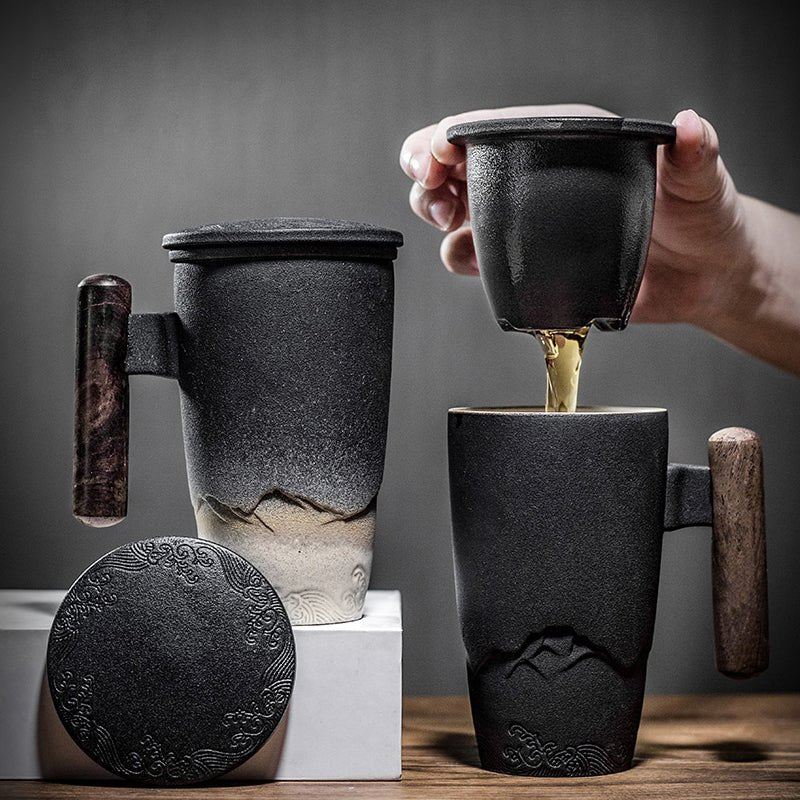
Best Size Ceramic Mug for Apartment Counter Coffee: 8–16 oz Fit Guide
A practical comparison of mug height, base diameter, handle projection, and glaze care for small apartment counters — plus a five-minute footprint test and which listings to verify before you buy.
Read more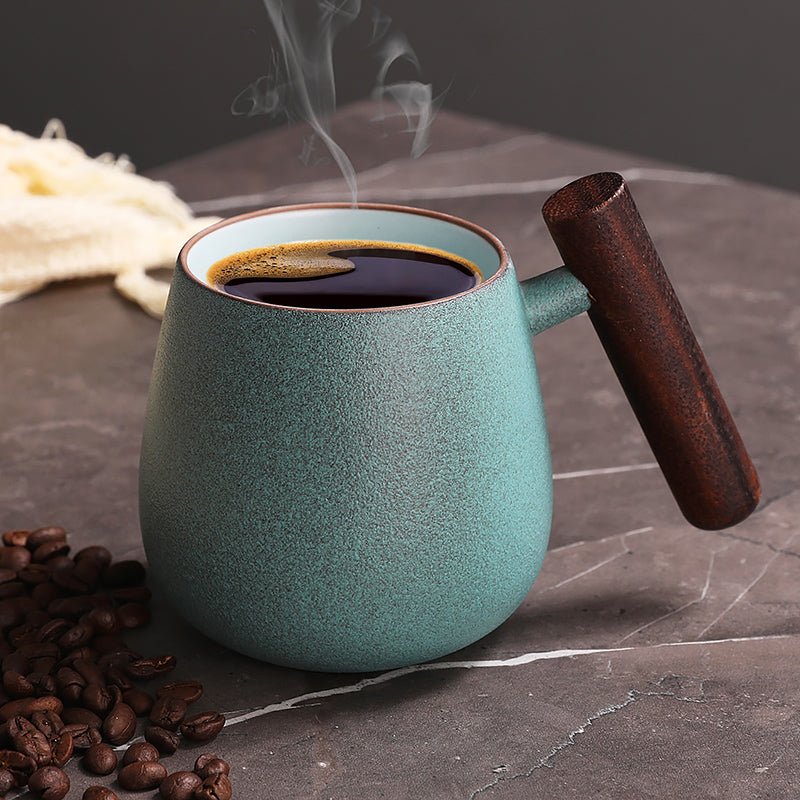
Best Round Ceramic Mug for Table: What Buyers Should Compare
Base diameter, foot-ring finish, and handle clearance decide whether a round ceramic mug behaves on a set table. A practical comparison from a store that handles these mugs daily.
Read more
Leave a comment
This site is protected by hCaptcha and the hCaptcha Privacy Policy and Terms of Service apply.