



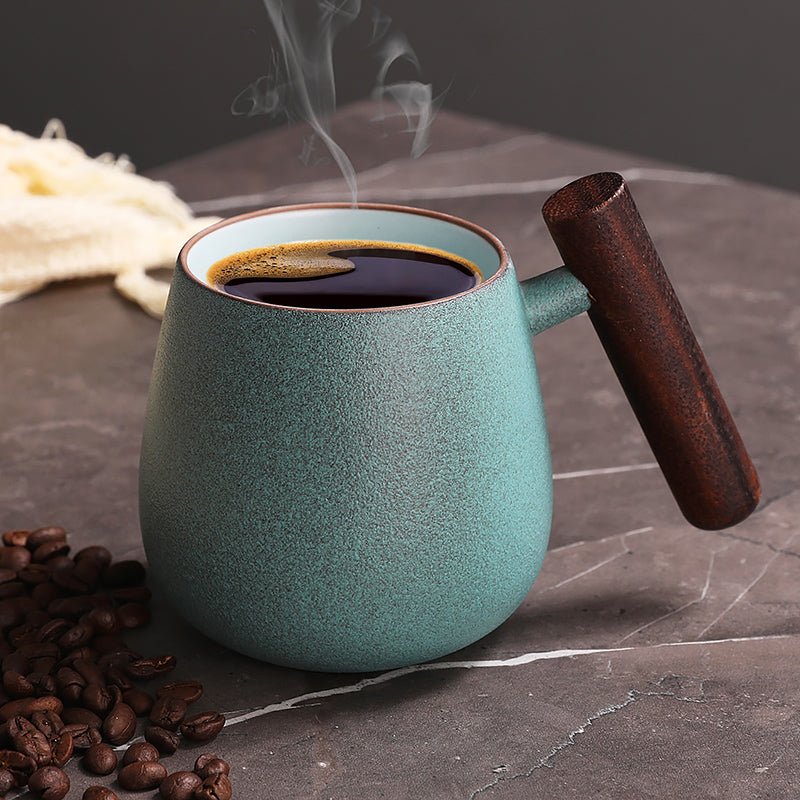
Best Round Ceramic Mug for Table: What Buyers Should Compare
Reading time: about 9 minutes
Set four mugs on a tablecloth and give the table a light nudge. Three stay put. One rocks, and you find out at the worst possible moment — mid-pour, with a full cup. We hear that complaint more than any other about drinkware, and the mug is rarely defective. Its base was designed for a desk or a bedside shelf, not for a table crowded with plates, napkins, and elbows.
So the best round ceramic mug for table use is usually not the one that photographs best. It is the one whose foot ring is flat and wide enough to spread load, whose handle leaves room for a water glass, and whose glaze survives a year of dishwasher cycles without turning chalky. Below is how our team compares round mugs before recommending one for a set table — including the cases where a round mug is genuinely the wrong pick.
Why does a round mug that felt steady in your hand wobble on a table?
Two things change the moment a mug leaves your hand: the surface, and the load. A hand grips and self-corrects. A tablecloth compresses unevenly, and a placemat edge often sits exactly where the base wants to rest.
- Round bodies with a continuous foot ring spread weight around a full circle and leave no corner to catch on a runner. This is the core mechanical advantage of the shape.
- Square and rectangular mugs look sharp on a modern table but concentrate stress at the corners — which is also where glaze chips appear first after a few knocks against a plate stack.
- Bell-shaped or flared cups put a wide rim over a narrow base, raising the center of gravity so a resting spoon or a bumped elbow tips them more easily.
Round is not a guarantee, though. A small foot ring under a wide body still rocks on fabric. The first proportion we check is foot-ring diameter against body diameter: when the ring is much narrower than the body, expect a tipping point near the rim. The second is the foot's finish. A polished glazed foot slides on lacquered wood and glass. An unglazed foot grips better but can dull a soft finish over years of use. If your table is a family piece, plan on coasters whatever you buy.
Is the best round ceramic mug for table use always the widest one?
No. Width buys stability and spends table space. Four wide mugs can crowd four dinner plates and force the glassware off to the side. Match the base to the setting instead of defaulting to the largest option on the page.
| Your table situation | Check first | The trade-off to accept |
|---|---|---|
| Brunch on a tablecloth | Flat, continuous foot ring | Fabric hides a wobbly base until the first pour |
| Full dinner setting with plates and stemware | Handle clearance plus overall diameter | A wide body crowds a standard dinner plate |
| Everyday kitchen counter or breakfast bar | Handle grip and empty weight | Heavier ceramic resists sliding but tires smaller hands |
| Cupboard with limited shelf height | Height with the handle attached | Tall mugs may not clear the shelf above |
| Stacking several mugs | Rim-to-foot nesting | Wide, thin rims stack poorly and chip at the lip |
Weight deserves its own note. A mug holding 12 ounces carries roughly three-quarters of a pound of liquid before the ceramic is counted at all. That is why a mug feels fine empty and heavy by the third cup — and why a handle that barely fits one finger is a warning sign, not a style choice.
What should you confirm on the listing before you order?
Product photos flatter a mug; specs are what you live with. Run this list and treat any blank field as a question for the seller before checkout:
- Base diameter. The single most useful number for table use. Trace your coaster or placemat opening on paper and compare.
- Foot-ring width and finish. Glazed, unglazed, or polished. This drives both grip and whether the mug can mark furniture.
- Handle clearance. We like at least a finger's width between handle and body, so the mug can sit beside a plate without being turned sideways.
- Capacity in ounces. Tea drinkers often want a smaller cup; anyone ordering a large one should check height against cabinet shelf spacing.
- Rim profile. A rolled rim feels softer on the lip; a thin, straight rim reads more like a tasting cup and sheds heat faster.
- Care instructions. Dishwasher and microwave guidance has to come from the listing text for that specific mug, never from a guess based on how it looks.
We would rather answer a base-diameter email than process a return, so an incomplete listing is a prompt to ask, not a detail to assume.
How do glaze and foot ring behave after a year of dishwashing?
Two failure modes show up again and again with ceramic drinkware, and neither is visible in a product photo.
- Crazing is the fine web of cracks that develops in some glazes over time. On a well-made mug it is largely cosmetic, but it makes the surface harder to keep clean — which matters if you drink milky coffee daily, because residue settles into the lines.
- Thermal shock happens when boiling liquid hits a cold, thick-walled mug, or when a hot mug goes straight into cool rinse water. Thick stoneware holds heat well and is also the most likely to crack under a sudden temperature swing. Pre-warm it with tap-hot water first.
Dishwasher detergent is the quiet third factor. High-alkalinity detergent dulls gloss and can leave a chalky film on dark and matte glazes over months. Hand washing with a soft sponge takes about ten seconds per mug and protects the finish that made you buy it. Deliberately crackled glazes are decorative rather than damaged, but they stain faster in tea and coffee, so treat them as hand-wash pieces.
How do you match a round mug to brunch, dinner, or a work desk?
The setting should choose the mug, not the other way around. Three common situations and what we point people toward:
Brunch on a tablecloth with shared plates. You need a flat foot ring, moderate capacity, and enough handle clearance that the mug does not knock the sugar bowl. Our Round Coffee & Tea Mug is the natural starting point for a classic round silhouette at a set table — confirm capacity, base diameter, and care wording on the current listing, since those three decide fit and we keep them in the spec text rather than buried in a photo caption.
A table where the cup is part of the look, and you hand-wash anyway. The Pleated Coffee & Tea Cup leans on its pleated body for texture and grip. Be honest about the cost: grooves collect rinse water and tea stain, so it wants a brush rather than a wipe, and a fluted silhouette is less strictly round, which makes an exactly matching set harder. Check the listing for its care guidance and dimensions before committing to four.
Mixed silhouettes across one table. Browse the full unique coffee mugs collection and put two or three shapes side by side — a shared table usually looks better with contrast than with four identical cups.
If guests are involved, our note on round ceramic mug brunch shapes goes deeper on grip and table fit for a shared setting.
When is a round ceramic mug the wrong choice for your table?
We would rather you buy the right thing than the thing we stock. Skip a round ceramic mug when:
- The table is slatted or uneven, like a patio table. A round foot bridges the gaps unevenly and rocks; a flat-bottomed tumbler is more forgiving outdoors.
- Small hands are pouring. A tall, heavy round mug full of coffee is a poor match for a child or anyone with a weak grip. A smaller cup with a generous handle is safer.
- Cupboard space is tight. Round mugs with wide rims and pronounced handles stack badly. A low, straight-sided shape stores better.
- You drink iced coffee at a bare wooden table. A ceramic mug sweats, and a glazed foot can trap a ring of condensation where it sits. Use a coaster or an insulated vessel.
- The mug has to earn its place on open shelving. Shape and glaze then matter as much as function. Our comparison of round ceramic coffee mug home decor covers that balance of looks and upkeep.
How do you stack and store round mugs without chipping the rims?
Most chipped rims are storage injuries, not pouring accidents. Keep stacks to two mugs, set the upper mug so its foot ring sits inside the rim below rather than resting on the lip, and lift stacks instead of sliding them across a hard shelf. In a deep cupboard, a folded cloth between layers removes almost all the contact rattle.
Buying four or more to match? Our round ceramic coffee mug buying checklist is worth a read first, especially on matching glaze lots across a set.
A mug that fits your hand and your coaster gets used every morning. A mug that only looks good in a photo becomes cupboard clutter.
Frequently asked questions
What makes the best round ceramic mug for table use different from a desk mug?
Stability and clearance. A desk mug only has to survive a flat, empty surface, while a table mug shares space with plates, glasses, and fabric. Base diameter, foot-ring flatness, and handle clearance matter far more at a table than on a desk.
Does a round ceramic mug need a coaster on a wooden table?
Yes, in most cases. A glazed foot can slide on lacquered wood, and heat through a thin base can leave a pale ring on soft finishes. An unglazed foot grips better but may scuff the surface over time. Coasters solve both problems.
Is a heavier round mug better for a table setting?
Heavier mugs resist sliding and tipping, which helps on a crowded table. The cost is hand fatigue and slower pouring, especially for anyone with a weaker grip. Medium weight with a wide foot ring is the safer compromise for most households.
Can I put a round ceramic mug in the dishwasher?
Only if the listing for that specific mug says so. Metallic trim, crackle glazes, and unglazed feet often need hand washing, and repeated cycles dull gloss even on sturdy pieces. Check the care text before the first wash, not after.
Should coffee and tea use different round mugs?
They can, and often should. Tea is frequently served in smaller cups that cool at a comfortable rate, while coffee drinkers tend to want more volume and better heat retention from a thicker wall. If one set must serve both, choose a mid-size mug with a moderate rim.
Before you order, run the four-point check: base diameter against your coaster, handle clearance beside a plate, capacity against how you actually drink, and care instructions against your dishwasher habits. Then start with the round coffee and tea mug listing and confirm those details before checkout. If the numbers do not fit your table, keep looking — a mug that suits the setting gets used every morning, and one that does not gets pushed to the back of the cupboard.
Ready to pick your mug? Two ways to save on today's order:
Ordering 1–3 mugs? Get an extra 10% off your 1st order with code 10_OFF Apply 10% Off & Shop Wooden-Handle Mugs →
Gifting 4+ mugs? Buy 3, Get the 4th Free applies automatically at checkout (no code needed; offers do not stack) · Free standard shipping (Nov pre-Christmas delivery: 15–20 calendar days US) · Free replacement if chipped in transit.
Popular mug buying guides: Ceramic Tea Cups & Infuser Mugs · Ceramic Mugs with Lids Compared · Wooden-Handle Tea Infuser Mugs Compared · Christmas & Secret Santa Mugs 2026 · Espresso & Cortado Cups Guide · Cup & Saucer Gift Sets · All 25 Mugs Spec Table · Mug Size Guide · Shipping & Promo FAQ
FIRST ORDER 10% OFF (CODE: 10_OFF) · OR BUY 3, GET THE 4TH FREE


Read more
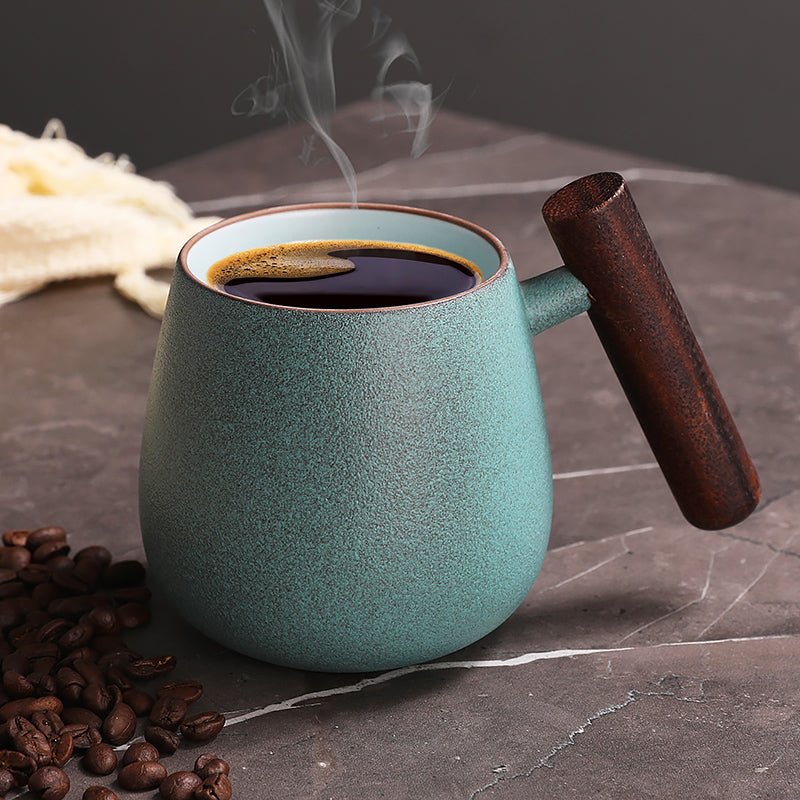
Best Size Ceramic Mug for Breakfast Nook Coffee Tray: What to Compare
On a narrow breakfast nook tray, base diameter and handle clearance decide whether a mug works — capacity is only half the story. Here's how 8, 10, and 12 ounce ceramic mugs behave in a real arrang...
Read more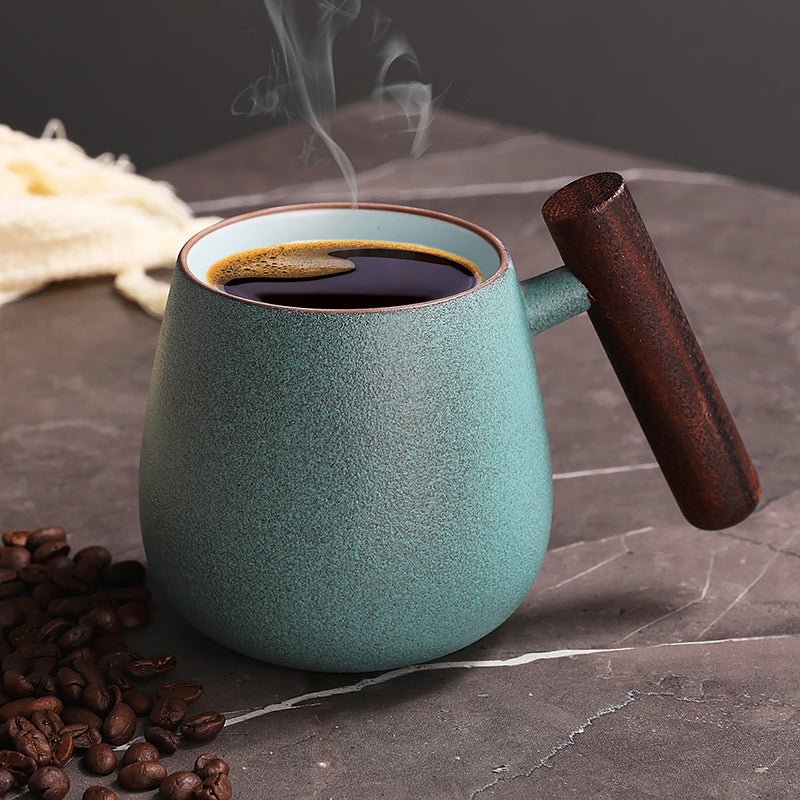
Best Ceramic Mug for Coffee Counter: What Buyers Compare
A counter mug has to survive daily pours, dishwasher cycles, and a permanent spot in your sightline. We break down footprint, wall thickness, glaze type, and the two shapes worth comparing before y...
Read more
Leave a comment
This site is protected by hCaptcha and the hCaptcha Privacy Policy and Terms of Service apply.