



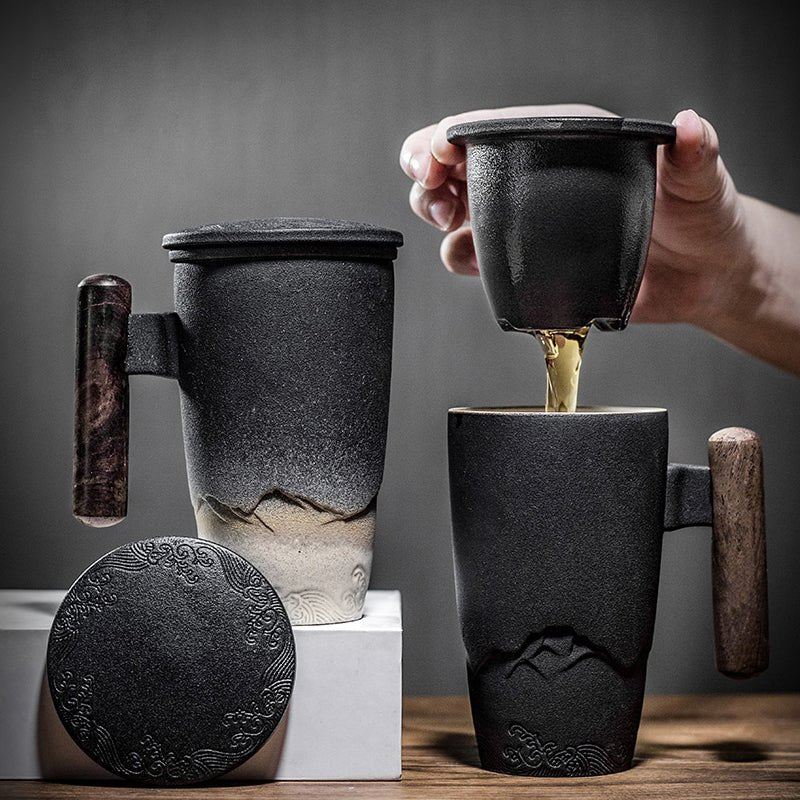
Best Size Ceramic Mug for Apartment Counter Coffee: 8–16 oz Fit Guide
Reading time: about 11 minutes
A 16 oz mug looks sensible in a product photo. On a 24-inch apartment counter, with a kettle on one side and an upper cabinet 18 inches above the surface, that same mug becomes the object you move twice a day. We sell ceramic drinkware, and the returns conversations we have are rarely about color. They are about fit. The best size ceramic mug for apartment counter coffee is the largest one that clears your upper cabinet, sits inside your usable counter footprint, and still feels balanced when it is full. That is a measurement decision before it is a style decision.
Why does counter footprint matter more than ounce capacity?
Capacity tells you how much coffee the mug holds. Footprint tells you whether the mug can live on the counter instead of in a cabinet. Those are two different problems, and most listings show only the first one.
A tall, narrow mug can hold 14 oz while taking less counter depth than a short, wide 12 oz mug. The catch is that the tall one may not clear your upper cabinets. In our store, apartment buyers almost always compare ounces first and discover the real constraint at home. Measure these five dimensions before you shop:
- Base diameter: the circle that touches the counter. If the mug lives on its side in a cabinet, add the handle to the width instead.
- Handle projection: how far the handle sticks out past the body. In a tight corner, this is often the difference between fitting and not fitting.
- Overall height: include any rim flare. Measure from the counter to the bottom of the upper cabinet, then subtract at least 2 inches for your fingers and the lift.
- Filled weight: a mug that feels fine empty can feel awkward carried one-handed when it is full.
- Coaster or saucer footprint: if you use one, measure that too. A 4-inch coaster under a 3.5-inch base turns a compact mug into a 5-inch-wide object on a narrow strip.
The coaster is the point buyers forget most often, and it is also the cheapest thing to change. Downsizing the coaster can buy back an inch without changing the mug at all.
Is the best size ceramic mug for apartment counter coffee 10 oz or 14 oz?
For most apartment setups, the practical range is 8 to 14 oz. The choice inside that range depends on what you actually drink, not on a vague “medium” label.
| Capacity band | Best for | Main trade-off |
|---|---|---|
| 8–10 oz | Single espresso drink, small pour-over, tea | Little headroom for milk or a full 12 oz brew |
| 11–14 oz | Americano, standard drip, small latte | Can feel heavy when full if the body is thick |
| 15–16 oz | Large brews and iced coffee | Often too tall for shallow cabinets and too wide for narrow strips |
Here is the trade-off we explain most often: a larger mug stays hot longer because it holds more liquid and has more thermal mass, but it also weighs more and occupies more counter space. A smaller mug is easier to move and store, but it cools faster and may not hold a full recipe. If you drink one 10 oz coffee each morning, a 12 oz mug gives useful headroom without becoming counter furniture. If you drink 8 oz, a 10 oz mug usually ends the decision.
Lattes change the math because milk takes up volume. A 12 oz mug can hold a small latte but leaves little room for steamed milk and foam. A 14 oz mug is more forgiving. A 16 oz mug suits a large latte or iced coffee, provided your cabinet and counter can handle the size.
How much upper-cabinet clearance does a counter mug actually need?
Upper cabinets are the silent size filter in apartment kitchens. A mug can have a small base and still be unusable if you cannot lift it off the counter without tilting it into the cabinet door.
Measure from the countertop to the lowest point of the upper cabinet, then subtract 2 inches for your fingers and the natural lift angle. That number is your maximum mug height, not the cabinet height itself. If you have 14 inches of clear space, a 5-inch mug is comfortable. A 7-inch mug may technically fit but feels cramped on every reach.
Counter depth deserves the same tape measure, and it gets almost no attention in listings. The usable strip in front of a backsplash or beside a sink is often narrower than the full countertop, so check front-to-back clearance as well as side-to-side. A mug with a wide handle can push past the edge of that strip even when its base fits cleanly.
Profile matters as much as height:
- Straight-walled cylinders are predictable. They usually sit on a stable base with a simple silhouette, but the handle can still be the widest point.
- Tapered or flared cups can be easier to drink from, but the rim may be wider than the base. Check rim diameter if your counter is narrow.
- Tall, narrow mugs save base footprint but raise the height risk, and they tend to be more top-heavy when full.
- Pleated or textured bodies add grip and visual interest, but grooves can trap dried coffee or tea residue. Plan on a soft brush if you choose texture.
In our store, we ask customers to measure cabinet clearance before they fall in love with a silhouette. It is easier to change the mug than the kitchen.
Where do the Landscape Tall and Pleated cups fit in a small coffee setup?
Two current listings come up often when shoppers want a counter mug that does not look like every other cylinder. We cannot promise either one fits your counter without your numbers, so treat the listing as the place to verify, not the place to assume.
If you want a tall silhouette and have vertical clearance
Open the Landscape Tall Coffee & Tea Mug listing if you want a taller profile that may reduce the base footprint. That is the potential advantage: a narrower base can free up counter space beside a grinder or kettle. The trade-off is height. Before buying, confirm overall height, base diameter, capacity, and handle projection on the current product page. This shape is a poor match for a low upper cabinet, or for anyone who dislikes reaching up and over a full mug. It is also not the easiest choice if you routinely use a saucer on a shallow counter.
If you want texture and a lower, more decorative profile
The Pleated Coffee & Tea Cup is the one to check if you want a textured body rather than a plain wall. Texture can be easier to grip, and it gives an open counter some visual interest. The limitation is cleaning: ridges need a soft brush, and you should confirm the interior glaze and care instructions on the exact listing. Verify capacity, rim diameter, and whether the base is wide enough for your coaster. A decorative cup is not automatically a good counter mug if it is top-heavy or too wide for your free space.
If neither silhouette matches your cabinet clearance, browse the unique coffee mugs collection and compare heights and base diameters across shapes instead of forcing one style to fit.
How do you test a mug's footprint before it becomes counter clutter?
We walk customers through a low-tech test when they are deciding between two sizes. It takes about five minutes and prevents most “it looked smaller online” returns.
- Mark the zone. Put painter's tape on the counter around the exact area where the mug will live, including the space your hand needs to reach it.
- Measure the cabinet. Record countertop-to-cabinet clearance, then subtract 2 inches. Write that maximum height down.
- Make a footprint template. Cut a cardboard circle at the listed base diameter and add a rectangle for the handle projection. Set it in the taped zone.
- Test the lift. Fill a similar-weight mug with water to the listed capacity and raise it from the counter to your mouth without hitting the cabinet. If you have to tilt it, the height is too tight.
- Check the wash and dry zone. A mug that fits on the counter but not in the dishwasher rack or on the drying mat is only half solved.
This is also where we see buyers overbuy. A 16 oz mug can pass the footprint test and fail the one-handed lift test when full, especially if you carry coffee from the counter to a sofa or desk. Test with water first. It weighs about the same as coffee and costs nothing when you spill it.
If your goal is a calmer, less cluttered counter, our guide to the quiet ceramic coffee mug counter goes deeper on layout and visual weight.
What care details change the size decision?
Care is part of size because a mug you avoid washing becomes clutter. Three details matter more than most buyers expect.
Glaze and crazing. A glazed ceramic mug is easy to wipe, but over time some glazes develop fine surface cracks called crazing. Crazing is not automatically a defect in every case, but it can make the surface harder to clean. If you see it, stop using the mug for coffee until you check the manufacturer's guidance. We do not recommend assuming any ceramic stays fully non-porous once the glaze is compromised.
Thermal shock. Pouring boiling water into a cold, thick ceramic mug can stress the body. Warm the mug with tap water first, especially in winter or when it has been sitting in a cold cabinet. This is general ceramic care, not a claim about a specific listing.
Dishwasher heat and stacking. Many glazed mugs survive a dishwasher, but metallic trim, unglazed feet, and textured exteriors may not. Check the care section on the exact product page. Avoid stacking heavy ceramic mugs more than two high on a narrow counter; the top mug can slide, and the lower mug's handle is a weak point.
Smaller mugs get washed more often, so a 10 oz mug with a rough foot ring can wear on your patience faster than a larger mug you use once a day. If you hand-wash, pick a shape you can get your hand into. If you use a bottle brush, a narrow tall mug is easier to clean than a wide squat one.
For rounded shapes and storage, the round ceramic coffee mug apartment comparison covers how curve and cabinet fit interact.
When is a smaller mug the better buy — and when is it not?
A smaller mug wins when your counter is genuinely tight, when you drink 8 oz or less at a time, or when you need to lift the mug one-handed in a narrow space. An 8–10 oz mug is also easier to store in a cabinet with low clearance and easier to wash in a small sink.
It is not the better buy if you make lattes, iced coffee, or a full 12 oz brew. You will end up filling it to the rim, which makes spills more likely and leaves no room for milk or ice. A very small mug can also feel unstable if it has a narrow base and a heavy handle.
A larger mug wins when you want one vessel for a long morning, when you use a milk frother, or when you want coffee to stay warm longer. It is not the better buy if your upper cabinet clearance is under about 14 inches, if you have small hands, or if your only free counter space is a narrow strip beside the sink. In those cases, a 12 oz mug with a compact base is usually more useful than a 16 oz mug that technically holds more.
If you are choosing between a counter mug and a desk mug, our comparison of the best size ceramic mug for desk coffee explains why the same capacity can feel different in each spot.
Frequently asked questions
What is the best size ceramic mug for apartment counter coffee if I drink one 10 oz cup?
A 12 oz mug is the practical starting point because it gives you headroom without adding much height or base diameter. If your cabinet clearance is tight, a 10 oz mug may fit better. Measure counter-to-cabinet clearance and subtract 2 inches before deciding.
Does a taller mug actually save counter space?
A taller mug can reduce the base footprint, which matters on a narrow strip of counter. It does not save vertical space, and it may fail under a low upper cabinet or feel top-heavy when full. Tall is a good trade only after you have measured the clearance.
How much clearance should I leave under an upper cabinet?
Measure from the countertop to the bottom of the cabinet, then subtract at least 2 inches for your fingers and the lift. That gives you a realistic maximum mug height. A mug that barely clears the cabinet will be annoying every single time you use it.
Can I put a ceramic mug in the dishwasher?
Many glazed ceramic mugs are dishwasher-safe, but metallic trim, unglazed feet, and some decorative finishes are not. Check the care section on the exact product listing rather than assuming. When in doubt, hand-wash and dry the mug upside down with airflow.
Is a 12 oz mug enough for a latte?
A 12 oz mug can hold a small latte, but it leaves little room for steamed milk and foam. If you steam milk aggressively or like a larger drink, move up to 14 oz. A 16 oz mug gives more room but takes up more counter space.
Ready to pick your mug? Two ways to save on today's order:
Ordering 1–3 mugs? Get an extra 10% off your 1st order with code 10_OFF Apply 10% Off & Shop Wooden-Handle Mugs →
Gifting 4+ mugs? Buy 3, Get the 4th Free applies automatically at checkout (no code needed; offers do not stack) · Free standard shipping (Nov pre-Christmas delivery: 15–20 calendar days US) · Free replacement if chipped in transit.
Popular mug buying guides: Ceramic Mugs with Lids Compared · Wooden-Handle Tea Infuser Mugs Compared · Christmas & Secret Santa Mugs 2026 · Espresso & Cortado Cups Guide · Cup & Saucer Gift Sets · All 25 Mugs Spec Table · Mug Size Guide · Shipping & Promo FAQ
FIRST ORDER 10% OFF (CODE: 10_OFF) · OR BUY 3, GET THE 4TH FREE


Read more
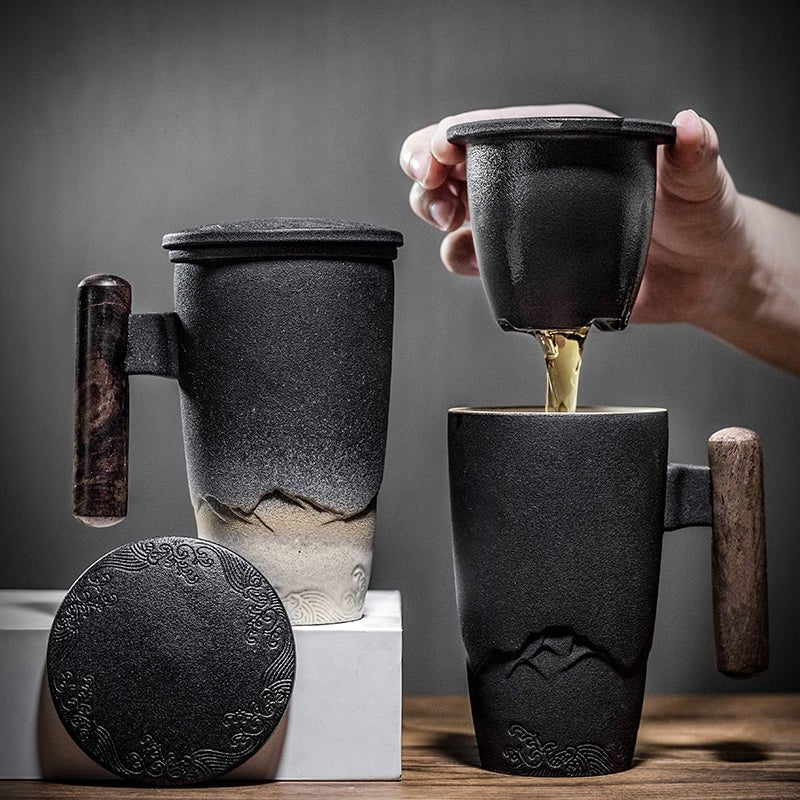
Best Pair of Mugs for Remote Work: A Desk-Space Comparison
A practical, brand-side comparison of the best pair of mugs for remote work: heat loss, handle clearance, base footprint, lid reality, and care. Includes which CoffeifyMug listings to open first an...
Read more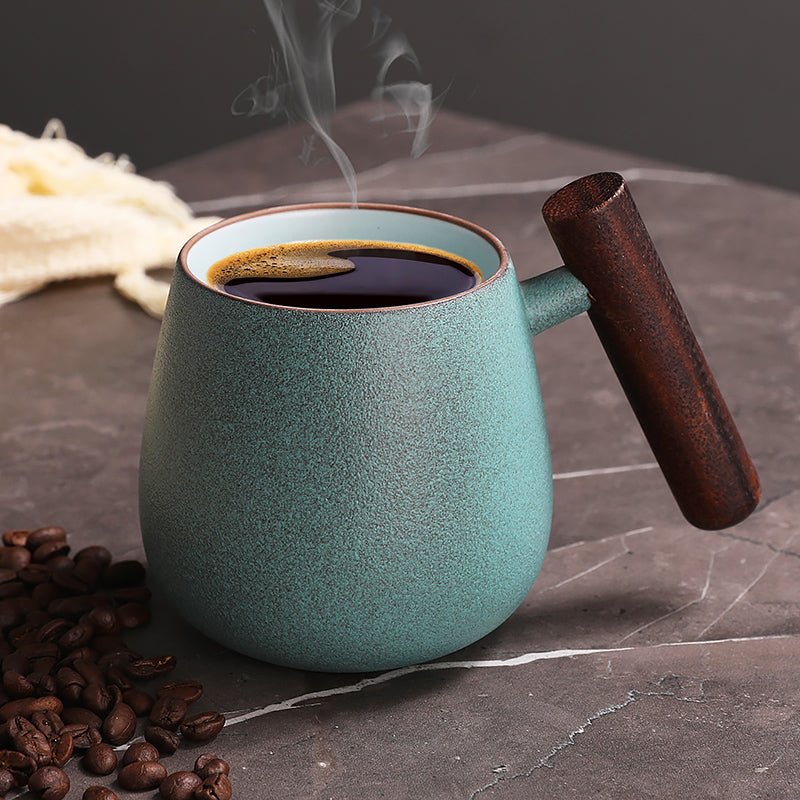
Best Size Ceramic Mug for Breakfast Nook Coffee Tray: What to Compare
On a narrow breakfast nook tray, base diameter and handle clearance decide whether a mug works — capacity is only half the story. Here's how 8, 10, and 12 ounce ceramic mugs behave in a real arrang...
Read more
Leave a comment
This site is protected by hCaptcha and the hCaptcha Privacy Policy and Terms of Service apply.