
Your affogato cup compact kitchen product shortlist guide: 3 picks
Reading time: about 8 minutes
A compact kitchen exposes a poor cup choice quickly: there may be room beside the espresso setup, but the only open cabinet slot is shallow, low, or partly blocked by the door. This affogato cup compact kitchen product shortlist guide keeps that decision practical. We compare three CoffeifyMug options using verified listed capacities—170 ml, 200 ml, and 270 ml—plus the visible shape shown in each listing.
Our comparison is deliberately narrow. In our store, we do not treat capacity as a substitute for external dimensions. A 170 ml cup is the smallest by listed volume here, but that does not prove it is the shortest, narrowest, or easiest to stack. The goal is to build a useful shortlist without filling gaps in the catalog facts with guesses.
Which kitchen constraint should remove a cup first?
Start with the place where the cup will spend most of its time. In our experience handling this category, shoppers often picture the clear counter during serving but overlook the crowded cabinet where the cup must be stored every day.
- Counter landing zone: Check the actual space between the coffee setup, sink, and food-preparation area. A cup that has no regular landing place soon becomes counter clutter.
- Shelf clearance: Measure the usable opening rather than the full interior. A shelf lip or the need to lift a cup over neighboring items can reduce practical clearance.
- Cabinet depth and door path: Confirm that the door can close without touching the stored cup. Capacity alone cannot tell you how far a cup's visible form projects.
- Serving headroom: Test how much open space you prefer above your normal affogato portion. A technically adequate volume may still feel cramped during serving.
Use these constraints to eliminate unsuitable choices, but do not infer exact fit from product photographs. The only product measurements used in this shortlist are the listed capacities.
The affogato cup compact kitchen product shortlist guide: 170, 200, or 270 ml?
The three choices form a simple capacity ladder. Their visible shapes differ as well, which matters if the cup will remain on an open shelf or counter.
| Option | Listed capacity | Visible-shape cue | Choose for | Skip if |
|---|---|---|---|---|
| Retro Coffee & Tea Cup | 170 ml | Retro-style cup silhouette | A tested 170 ml serving and the smallest listed capacity | You regularly want more headroom |
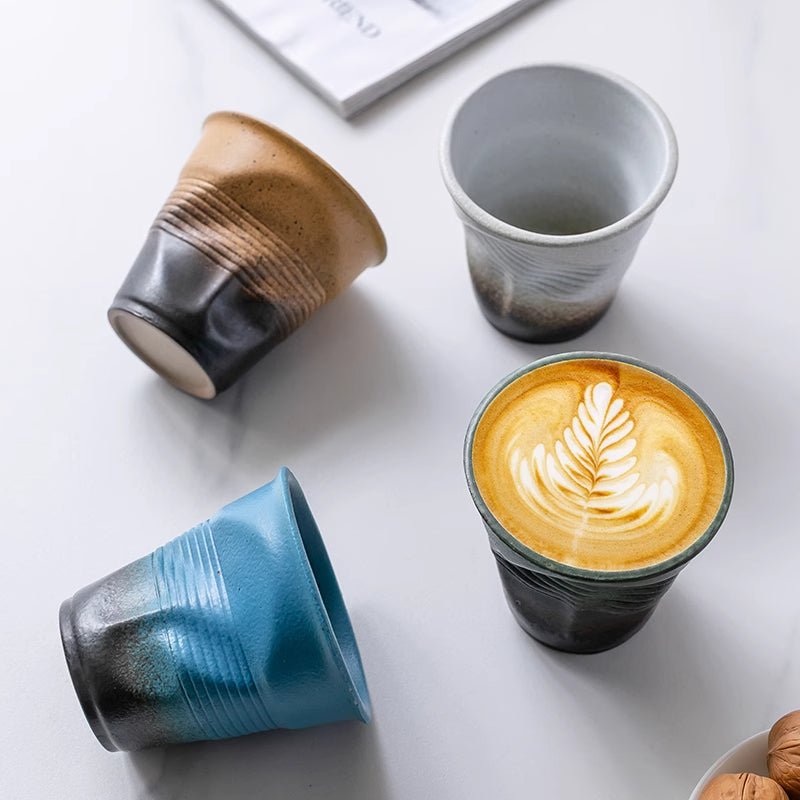
| Pleated Coffee & Tea Cup | 200 ml | Visible pleated exterior | A middle-capacity compromise with a textured look | You want either capacity extreme |
| Emerald Coffee & Tea Mug | 270 ml | Larger mug-style visible form | More listed capacity and an affogato mug presentation | Your priority is minimizing allocated volume |
None of these options is being ranked by footprint, height, or stackability. If their visible forms do not suit your kitchen, browse our unique coffee mugs collection rather than forcing a capacity match that you do not like.
Which option suits a single-cup, smallest-capacity setup?
The Retro 170 ml is the first option to consider if one dedicated affogato cup will live in a compact coffee corner. Its reason for making the shortlist is precise: it has the lowest listed capacity, sitting 30 ml below the Pleated and 100 ml below the Emerald.
- Choose it when: A test with your current vessel confirms that 170 ml leaves the serving headroom you prefer.
- Why it fits: It answers a smallest-capacity brief without asking you to pay for volume you do not plan to use.
- Skip it when: Your normal serving reaches close to the rim of a 170 ml test vessel, or you prefer the look of a roomier affogato mug.
Do not select the Retro solely because a low cabinet is involved. Its capacity ranking is verified; an external height ranking is not.
Is 200 ml the practical middle ground for a shared shelf?
The Pleated 200 ml sits between the other two options: 30 ml above the Retro and 70 ml below the Emerald. That makes it the clearest compromise for a household that wants more capacity than 170 ml without moving directly to 270 ml.
- Choose it when: Your existing-cup test makes 170 ml feel tight, but 270 ml is more volume than your usual serving requires.
- Why it fits: The middle capacity is easy to justify on a shared shelf, while the pleated exterior gives the cup a distinct visible profile.
- Skip it when: You want the simplest-looking open shelf, the lowest listed capacity, or the most serving headroom in this three-product set.
The pleating is a visual comparison point only. We are not using it to make unlisted claims about grip, durability, insulation, or storage footprint.
When does 270 ml earn its cabinet space?
The Emerald 270 ml offers 70 ml more capacity than the Pleated and 100 ml more than the Retro. It is the strongest candidate if a 200 ml test feels crowded or if your preferred presentation is closer to an affogato mug than a small dessert cup.
- Choose it when: Additional headroom matters more than selecting the lowest listed capacity.
- Why it fits: It provides the largest verified volume in this shortlist and has a visible mug-style form.
- Skip it when: You are assigning the least possible cabinet volume to a single-purpose cup or already know that 200 ml is sufficient.
The 270 ml capacity does not tell us exactly how the mug uses its exterior space. Buyers with a rigid cabinet opening should confirm current external measurements before relying on it as a fit.
How can you test cabinet and serving fit before ordering?
You can make the shortlist more reliable with one existing cup, a measuring jug, and the storage space you intend to use. This separates your own kitchen facts from assumptions about the products.
- Select the real storage position. Do not measure an empty shelf that will later be filled with bowls, glasses, or pantry items.
- Record usable clearance. Check the cabinet opening, interior depth, shelf lip, hinges, and the room needed to lift a cup out without moving everything beside it.
- Model the three capacities. Pour 170 ml, 200 ml, and 270 ml of room-temperature water into a cup or bowl you already own, one amount at a time. This shows how each listed volume relates to your preferred headroom; it does not test the performance of the CoffeifyMug products.
- Review the visible forms. Use the product imagery to decide between the Retro silhouette, Pleated exterior, and Emerald mug form, but never treat an unscaled image as an exact size reference.
- Pause if external fit is non-negotiable. Confirm current product-page information or contact the store rather than assuming that the lowest capacity has the smallest footprint.
If storage is already settled and timing is the bigger concern, our affogato cup morning-routine shortlist addresses that separate buying scenario. If you actually need an espresso-first vessel rather than an affogato cup, the ceramic espresso cup morning-routine shortlist may be a more relevant category starting point.
Which claims are outside this three-cup comparison?
A trustworthy shortlist should make its limits obvious. We are not ranking these cups on facts that were not supplied for this comparison.
- External dimensions: No height, width, depth, or footprint ranking is stated.
- Material and construction: No comparison of weight, wall thickness, or material performance is made.
- Care and temperature changes: We do not infer dishwasher, microwave, or sudden temperature-change performance.
- Package contents: We do not imply that a spoon, saucer, food, drink, or other serving accessory is included.
We also do not assume that any option stacks or nests. If one of these details determines whether the cup works in your kitchen, keep the shortlist provisional until the current listing confirms it.
Frequently asked questions
Can capacity alone tell me whether an affogato cup will fit my cabinet?
No. This affogato cup compact kitchen product shortlist guide ranks the options using listed capacity and visible shape; it does not provide external height, width, or depth. Measure your cabinet opening and confirm current product dimensions if exact fit is essential.
Is a 170 ml affogato cup too small?
Not automatically. The Retro 170 ml suits shoppers whose existing-vessel test shows that amount leaves their preferred serving headroom. Skip it if your normal portion makes a 170 ml vessel feel crowded.
Is 200 ml the safest choice for a compact kitchen?
It is the middle choice by capacity, not a guaranteed fit. The Pleated holds 30 ml more than the Retro and 70 ml less than the Emerald. Its external shape still needs to work with your particular shelf or cabinet.
Should I buy the 270 ml option if I search for an affogato mug?
The Emerald is listed as a mug and has the largest capacity of these three at 270 ml. Choose it if extra headroom and a mug-style presentation are priorities. Skip it if your main goal is selecting the lowest listed volume.
Do these cups include a spoon, saucer, or dessert?
This shortlist makes no claim that serving accessories, food, or drink are included. Check the current product page for the exact package contents before ordering.
Use this checkout check before giving up shelf space
- Confirm whether 170 ml, 200 ml, or 270 ml works with your normal serving by testing the amounts in a vessel you own.
- Measure the usable cabinet opening, shelf depth, door path, and counter landing zone.
- Pick the visible form you want to see every day: Retro, Pleated, or mug-style Emerald.
- Do not assume external dimensions, stackability, care performance, or included accessories.
- Choose the Retro for the lowest listed capacity, the Pleated for the middle option, or the Emerald for the most headroom.
If the capacity is clear but the visual style is not, compare the wider range in CoffeifyMug's unique coffee mugs collection before committing your limited shelf space.
More from our blog
Read more

Two Tone Ceramic Coffee Mugs: Morning Routine Purchase Checklist
Use your usual drink volume, brewer clearance, and refill tolerance to shortlist a two-tone ceramic mug. This checklist also covers finish choices, care questions, unboxing checks, and when a trave...
Read more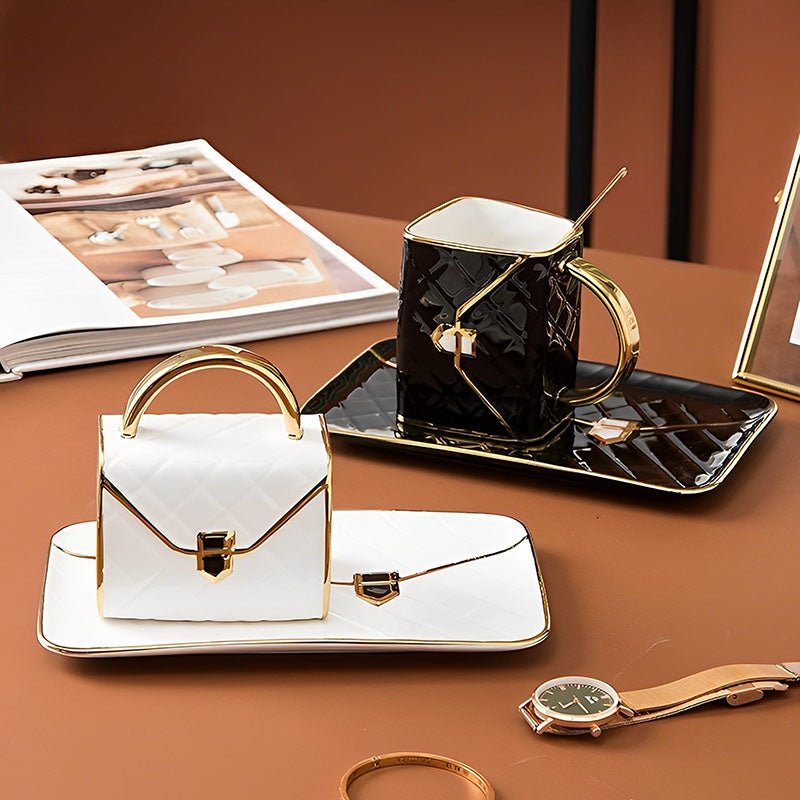
Unique Design Coffee Mugs Morning Routine Practical Purchase Checklist
Use your first-pour volume, available time, refill tolerance, brewer clearance, and care habits to shortlist a distinctive mug. Compare CoffeifyMug’s Handbag, Rhombus, and Crane options without ass...
Read more
Leave a comment
This site is protected by hCaptcha and the hCaptcha Privacy Policy and Terms of Service apply.