




Yellow Coffee Mug Gift: What to Compare Before You Buy
Reading time: about 10 minutes
Two yellow mugs can arrive in the same brown box and still feel like gifts from different stores. One is a warm sunflower glaze with a handle that takes three fingers; the other is a thin lemon-yellow print that clouds after a month of hot water. Both were sold as a yellow coffee mug gift. Only one is still in daily rotation by February.
We sell these cups, pack them, and answer the follow-up emails, so we know where the disappointment usually comes from — almost never the color itself. It is the gap between the studio photo and the object: glaze versus print, listed millilitres versus what actually pours in, and a care claim the listing never made. In our store, this is the order we walk shoppers through when they ask us to compare two yellow cups side by side: shade, then volume, then how the yellow got there, then safety and care, and last whether the tone suits the person opening the box.
Why does a yellow coffee mug gift look different in the hand than in the photo?
Because the word "yellow" is doing very little work. Two listings can show the same cheerful square of color and still differ on every variable that decides whether the gift gets used:
- Shade and finish: lemon, sunflower, mustard, butter and pastel are all sold as yellow, and no naming convention sits behind any of them.
- Where the yellow sits: a fully glazed body, a white cup with a yellow interior, or a plain mug with only a yellow handle. Interior color changes what you see every time you look into the cup — including every coffee ring.
- How the color was applied: a fired glaze versus a print, decal, or sublimation wrap laid over a blank.
- Listed capacity: compact cups in the 170–200 ml range against 300 ml-plus mugs — and fill volume always sits below brim volume.
- Handle fit: some loops take two fingers, some take three. That matters to anyone with larger hands or a weaker grip.
- Care statements: dishwasher and microwave claims are decided per brand, per glaze, and plenty of listings publish none at all.
- Packaging: a plain kraft carton versus a printed gift box you can hand over as-is.
Shape is easy to underestimate. You can see it across our unique coffee mugs collection, where a pleated exterior and a retro silhouette read as two different gifts before color even enters the conversation.
Lemon, sunflower, or butter — how do you pin the shade down before you order?
Screen color is the least reliable thing on a product page. Studio lighting on a white sweep lifts and cleans a glaze; the same glaze on a wooden counter in a dim kitchen reads warmer and duller. Translate the name into a direction first:
- Sunflower or marigold: warm, slightly orange-leaning, the safer pick for someone whose kitchen leans wood, brass, and cream.
- Lemon: cooler and sharper, closer to the peel than to a crayon — better against white cabinets and stainless steel.
- Butter, pastel, or pale: the shade that looks almost cream in low light and surprises anyone who expected bright yellow.
If the recipient has opinions about warm versus cool tones — and people who decorate usually do — that distinction matters more than the word on the listing. Ask for a daylight photo when the cup has to sit beside something they already own.
Building a set is a separate problem. Glazes are fired in batches, batch variation is normal in ceramics, and two cups with the same shade name bought months apart can sit a shade apart. Order the pieces together, and treat a match to existing dinnerware as a complement rather than an exact pairing unless the maker confirms the same glaze.
170 ml or 200 ml: which cup matches the way they actually drink?
This is the number gift buyers skip and then regret. Our Retro coffee and tea cup is listed at 170 ml. Our Pleated coffee and tea cup is listed at 200 ml. Both are currently offered in yellow. Thirty millilitres is about two tablespoons — trivial on paper, obvious in the hand.
- 170 ml suits: a short black coffee, a small milk drink, or a pot of tea taken in stages. It is a good pick for someone who refills often rather than nursing one big cup, and a good pick for a desk where a full-size mug gets knocked over.
- 200 ml suits: a standard pour-over, or a tea bag with room to steep without brimming. It is the easier middle ground if you cannot watch the recipient drink.
- Neither suits: the person who fills a 350 ml tumbler on the way out the door, or anyone expecting an oversized morning mug. At that point a cup this size becomes a shelf piece — fine, as long as you know that before you wrap it.
Check whether a listing quotes fill volume or brim volume, because the two can differ by a mouthful or more. Check the care statement on the exact product page too, rather than inferring it from the word ceramic; we would rather you confirm it there than take our word for a claim the listing does not make. If you are weighing compact cups against larger ones in general, our guide to 170 ml, 200 ml and 270 ml cups walks through the same trade-off.
Is the yellow a fired glaze or a print — and which one still looks right in year three?
This is the biggest quality gap between two mugs that cost roughly the same, and it never shows in the hero photo.
A colored glaze is part of the fired surface. A print, decal, or sublimation wrap sits on top of it. That top layer is what clouds after repeated hot-water cycles, peels at the rim, and loses contrast on photo mugs. A solid yellow glaze has no print layer to lose, which is why plain colored cups tend to look in year three much as they did in week one.
The trade runs both ways. Prints let you add a name, a date, or a photo — the heart of most personalized yellow coffee mug orders — and a plain yellow cup cannot do that. If personalization is the whole point of the gift, accept a shorter visual lifespan and wash it gently. If you want something that outlasts the novelty, buy the glaze.
Two durability notes that rarely reach a listing. Rim chips are the failure you will actually see, usually from stacking cups without a cloth between them. Crazing — the fine web of cracks in glaze — is the signal to retire a cup from daily use rather than keep drinking from it. Pale glazes also show coffee staining along the rim as a dull brown haze sooner than dark ones; a baking-soda paste lifts surface staining, but staining that has crept into a crazed surface is not something you clean away.
We cannot tell from a product photo how any mug was decorated, and neither can a marketplace listing. "Is the yellow a glaze or a print?" is a fair question to send a seller, and the answer tells you how to wash it.
Is a bright yellow mug safe to drink from?
Worth a straight answer rather than a reassurance. The FDA's compliance policy sets a lead action level for cups and mugs of 0.5 micrograms per millilitre of leaching solution, applied to any one of six units tested — tighter than the 3.0 micrograms/mL average guideline used for flatware such as plates. For cadmium, FDA guidance for small hollowware under 1.1 litres is 0.5 micrograms/mL on any one of six units. The extraction method behind those figures, ASTM C738, is described as a deliberately severe acetic-acid test unlikely to be matched in ordinary use.
The place to slow down is not modern factory ware. The FDA specifically flags glazed, antique, damaged and flea-market pottery, and notes that pieces brightly decorated in orange, red or yellow warrant extra caution because lead has historically been used with those pigments. Properly made commercial dinnerware is described as much less likely to have a lead problem. Washing or boiling will not remove lead from a contaminated piece, so "I'll just wash it well" is not a fix.
Practically: buy from a seller who will say where a mug is made and what testing backs it, and treat a thrifted or unmarked bright yellow cup as decor rather than drinkware. "Lead safe" and "lead free" are not the same claim, and neither means much without a test behind it.
Which recipient gets which cup — coworker, mom, housewarming, or commuter?
The person opening the box changes the choice more than the color does.
- Coworker, intern, secret-santa: keep it plain or lightly cheerful. Hidden-message and joke mugs are a coin flip in an office where you do not know someone's humor; a clean yellow shape reads as thoughtful instead of as a bit. The textured 200 ml cup gives you visual interest without a punchline.
- Mom, grandmother, close friend: this is where a name or photo print earns its shorter lifespan. Pair it with something consumable so the gift is not only an object.
- Housewarming or a new desk: color carries the gesture, and a compact cup is fine because it works as an accent rather than a workhorse. The 170 ml retro cup is the more decorative of the two.
- Anyone who commutes with coffee: a ceramic cup is the wrong gift, full stop. Lidded travel drinkware raises different questions — heat retention, lid seal, cup-holder diameter — and a 170 ml open cup answers none of them.
Form carries tone as well. If you are choosing between a smooth retro profile and a textured surface, our breakdown of patterned and abstract mugs covers how surface detail changes the way a mug reads coming out of the box.
What do we check before a yellow coffee mug gift goes in the cart?
- Shade in plain words: warm sunflower or cool lemon? Ask for a daylight photo if the listing only shows studio shots.
- Where the yellow sits: full body, interior only, or handle only.
- Glaze or print: this decides lifespan and washing method.
- Listed capacity and what it measures: fill volume, not brim volume.
- Handle fit: how many fingers it takes, especially for older recipients.
- Care statement in the seller's own words: not inferred from the word ceramic.
- Provenance: a seller who can say where the mug is made and what testing applies.
- Packaging: gift box or plain carton — this decides whether you are also buying wrapping paper.
That is roughly the list we run through when a shopper asks us to compare two cups side by side. Put the 170 ml Retro next to the 200 ml Pleated and the whole exercise shrinks to a manageable size: same color family, different volume, different surface. If you are still deciding between formats, browse the full collection of unique coffee mugs and pick the shape first — the yellow is the easy part. For the material and construction questions that apply to any ceramic cup, our ceramic mug gift comparison covers glaze and rim basics before you commit.
Frequently asked questions
Is a yellow coffee mug gift dishwasher safe?
Only if the seller says so for that exact mug. Bodies and prints vary, so the word "ceramic" tells you nothing about dishwasher tolerance, and high heat plus detergent is hard on applied designs. When no care claim is published, hand-wash in warm water with a soft sponge — it protects both the glaze and any print.
Will the yellow match the product photo?
Usually close, sometimes not. Screens, studio lighting and unstandardized names such as lemon, sunflower or butter all shift perception. Ask for a daylight photo if the shade has to sit next to something the recipient already owns.
Is a 170 ml yellow coffee mug gift too small for a daily drinker?
It is small by modern mug standards. 170 ml suits a short black coffee, a small milk drink, or tea taken in stages — not a large morning brew. If the recipient drinks big cups, choose the 200 ml Pleated cup instead, because a beautiful cup that is too small tends to stay in the cupboard.
How do I know a yellow ceramic mug is lead safe?
Ask the seller where it is made and what testing applies. The FDA's lead action level for cups and mugs is 0.5 micrograms/mL on any one of six tested units, and the agency specifically cautions about glazed, antique and flea-market pottery, especially pieces brightly decorated in orange, red or yellow. Washing does not remove lead, so provenance matters more than cleaning.
Can these yellow cups go in the microwave?
Check the listing for the specific mug first — we would rather you confirm it there than assume. The FDA advises using only cookware specified as microwave-safe, and metal, including metallic rims and real gold bands, should stay out because microwaves reflect off metal and can heat unevenly or damage the oven. With any metallic trim, heat the coffee separately and pour it in.
Ready to pick your mug? Two ways to save on today's order:
Ordering 1–3 mugs? Get an extra 10% off your 1st order with code 10_OFF Apply 10% Off & Shop Wooden-Handle Mugs →
Gifting 4+ mugs? Buy 3, Get the 4th Free applies automatically at checkout (no code needed; offers do not stack) · Free standard shipping (Nov pre-Christmas delivery: 15–20 calendar days US) · Free replacement if chipped in transit.
Popular mug buying guides: Ceramic Tea Cups & Infuser Mugs · Ceramic Mugs with Lids Compared · Wooden-Handle Tea Infuser Mugs Compared · Christmas & Secret Santa Mugs 2026 · Espresso & Cortado Cups Guide · Cup & Saucer Gift Sets · All 25 Mugs Spec Table · Mug Size Guide · Shipping & Promo FAQ
FIRST ORDER 10% OFF (CODE: 10_OFF) · OR BUY 3, GET THE 4TH FREE


Read more
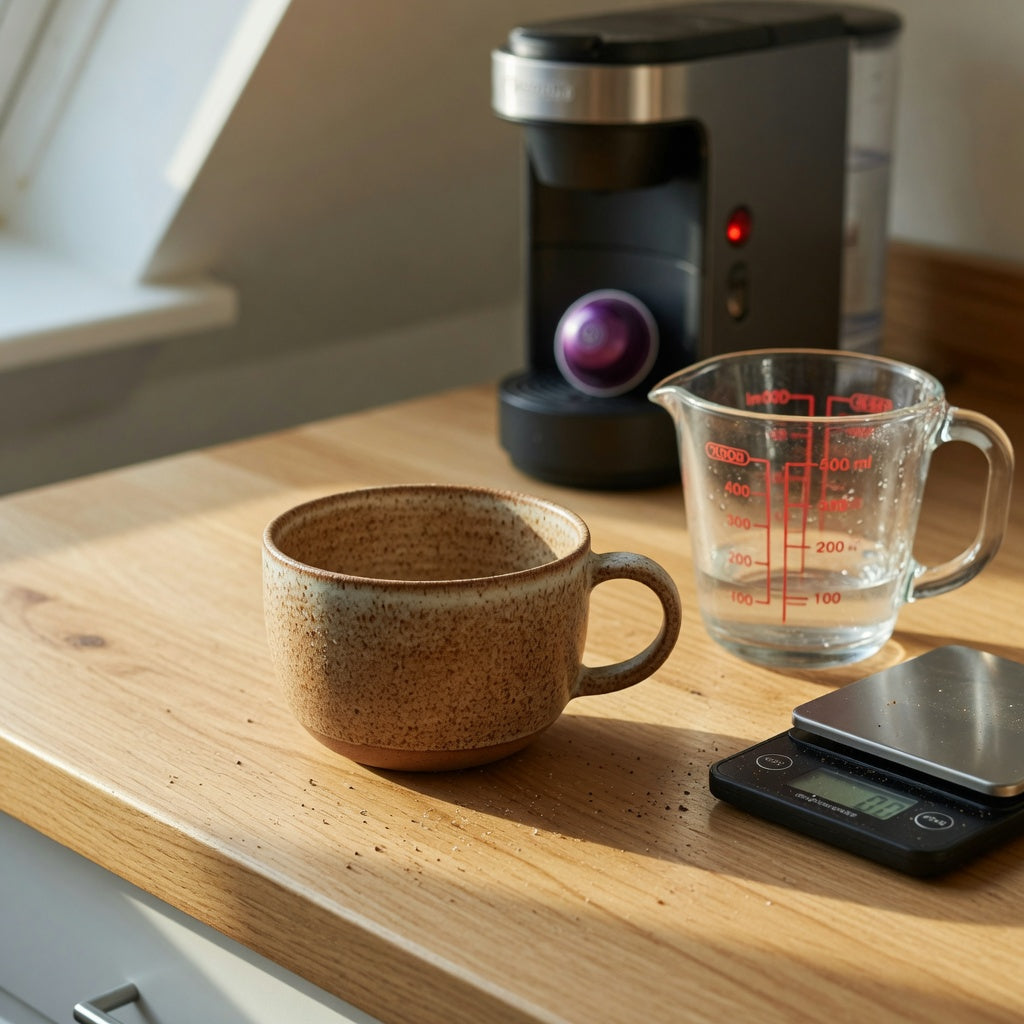
Large Round Ceramic Coffee Mug: What Buyers Should Compare
The ounces on the label are rarely what you pour. Here is how our team compares large round ceramic mugs — usable fill, rim shape, brewer clearance, handle fit, microwave labels, and glaze testing.
Read more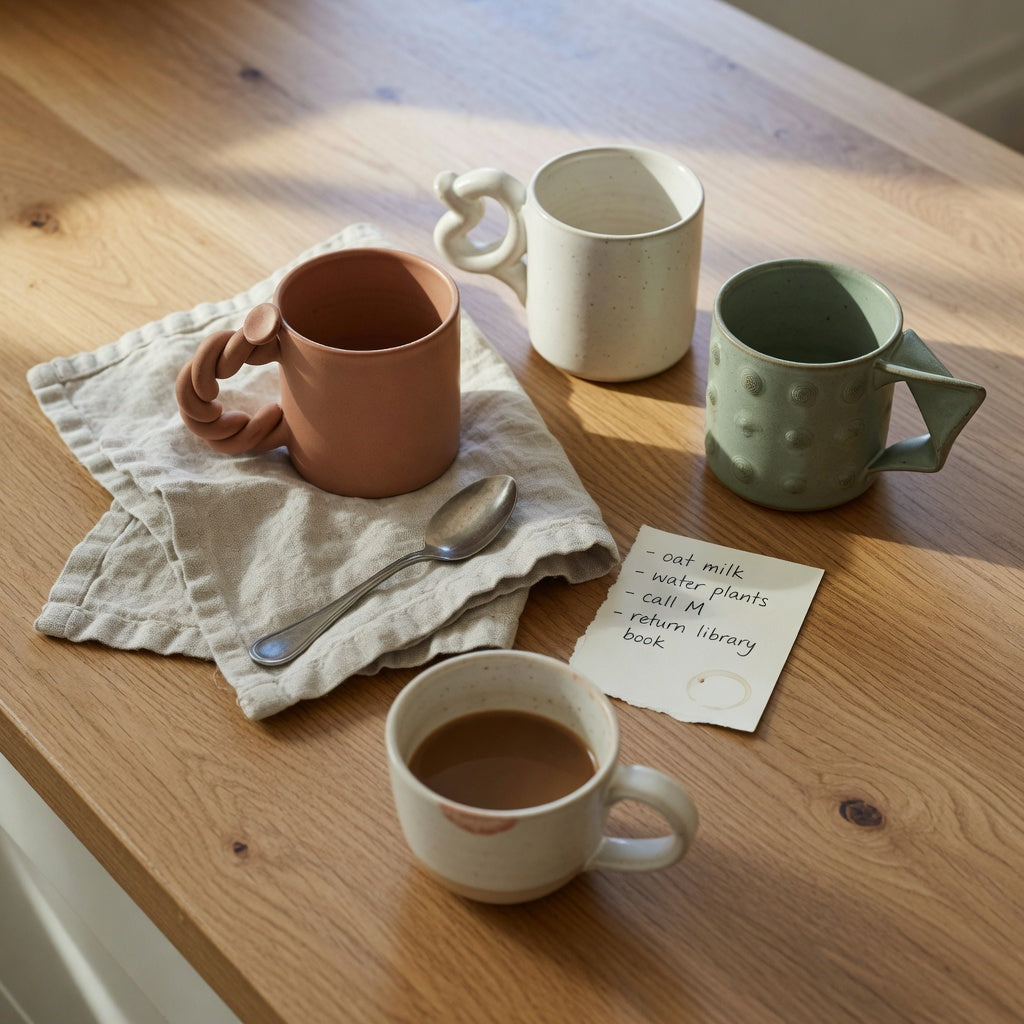
Unique Coffee Mug Gift Practical Enough to Use: Buyer Checklist
A unique mug gift only works if it survives daily use. We compare capacity, handle clearance, care labels, glaze safety, and shape—then map three silhouettes to real drinkers.
Read more
Leave a comment
This site is protected by hCaptcha and the hCaptcha Privacy Policy and Terms of Service apply.