



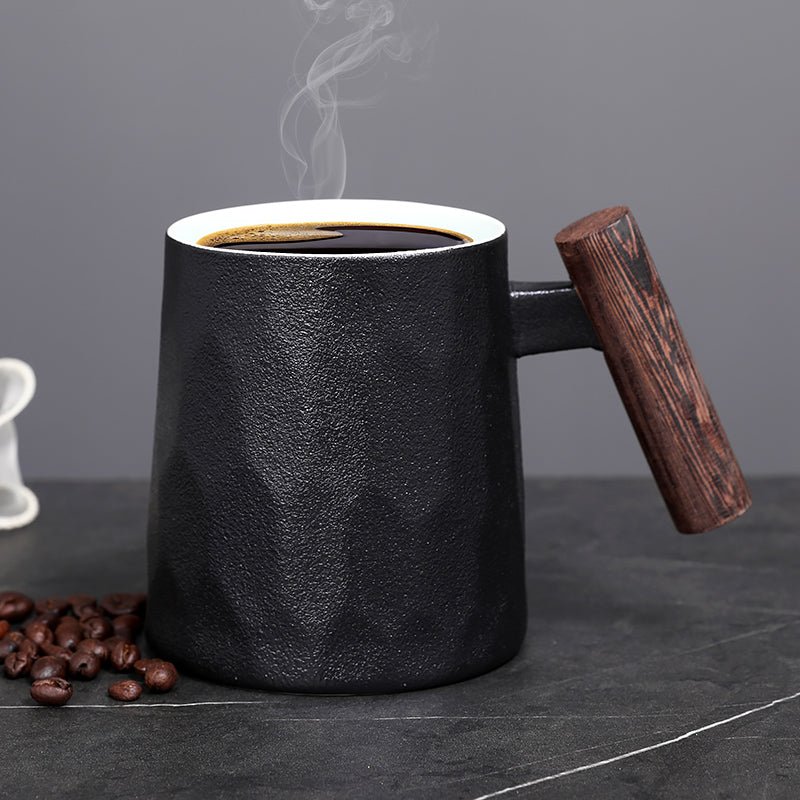
15 oz ceramic coffee mugs home coffee station product shortlist guide
Reading time: about 11 minutes
A mug labeled 15 oz can pour closer to 11 or 12 ounces once you leave room for cream and stop before the rim. That gap between the box number and the cup is why this 15 oz ceramic coffee mugs home coffee station product shortlist guide starts with fill math instead of product photos. We sell these mugs, pack them, and hear the same follow-up after delivery: my new mug looks smaller than my old one.
Below is the shortlist half of the job: exact capacities for the three mugs we currently list, the coffee-station routines each one fits, and the cases where a 15 oz mug is the wrong purchase. No invented heat-retention times. No pretending a size label is a standard.
How we built this 15 oz ceramic coffee mugs home coffee station product shortlist guide
We started with one conversion: 1 US fl oz is about 29.57 ml, so 15 fl oz is roughly 444 ml. Then we matched our listed capacities — 400 ml, 440 ml, and 480 ml — to routines rather than a best-for-everyone claim.
Three mug facts matter more than the headline ounces:
- Brim capacity is the theoretical maximum, measured full to the edge. Almost nobody drinks a mug filled that way.
- Usable pour leaves a finger-width of headspace so you can carry, stir, or add milk without spilling.
- Full weight matters as much as empty weight. A 440 ml mug holding 440 ml of coffee carries roughly 440 g of liquid before you count the mug itself.
FDA guidance describes a typical cup or mug as about 240 ml (8 fl oz) for regulatory purposes. That is a category example, not a 15 oz standard. No government or standards source we reviewed defines a standard 15 oz mug, so a retail label is a merchandising number until measured capacity backs it up.
What does a 15 oz label actually pour after headspace and milk?
This is where most 15 oz buyers get surprised. A 440 ml mug filled to a sensible level and topped with 60 ml of steamed milk is not a 15 oz milk drink. It is closer to 12 or 13 oz. The mug did its job; headspace and milk took the rest.
- Black coffee or tea: 15 oz is generous. Expect a real 13 to 14 oz pour from a 440 ml mug.
- Coffee plus a splash of cream: fine in 440 ml, more forgiving in 480 ml.
- Latte or cappuccino: foam needs volume. The 480 ml mug gives the milk somewhere to go.
- Iced coffee: ice takes up real space, so a 15 oz mug of iced coffee is a smaller drink than it looks.
If you drink black coffee fast at a desk, the 400 ml mug can feel better because the liquid sits closer to the rim. If the drink is mostly milk and foam, size up. That is the decision rule.
Which mug fits a fast black-coffee desk routine?
Reader situation: you make 10 to 12 oz of drip or an americano, drink it while answering email, and refill once before lunch. Choose The Flow, 400 ml (~13.5 fl oz). The capacity is a step below 15 oz, and that is the point: a smaller pour leaves less dead air above the coffee, and the mug is easier to lift with one hand while you are typing. We point desk drinkers here when they say their old 20 oz mug goes cold before they finish.
Skip it if you measured your current mug at 15 oz and liked that volume. Moving to 400 ml is a noticeable step down. It is also wrong if your coffee station exists to produce one large mug that lasts an hour. See The Flow coffee and tea mug for the current listing.
Which mug is closest to a true 15 oz pour?
Reader situation: you want the 15 oz experience without guessing, and you add two or three ounces of milk or a spoon of foam. Choose Morning and Night, 440 ml (~14.9 fl oz). At 440 ml it is within a sip of 15 fl oz, so a 12 oz brew plus a modest splash still lands below the rim. This is the mug we point to when a shopper says their current 15 oz mug is about right.
Skip it if you need a full 16 oz pour, or if iced drinks are your default. Ice takes up volume, and you will want the extra room. The Morning and Night coffee and tea mug page is the next step for 440 ml.
When does a 16 oz mug make more sense than 15 oz?
Reader situation: a 15 oz mug has left you short — a large single-serve brew plus creamer, a latte you carry from kitchen to sofa, or one tea fill that has to last a whole meeting. Choose The Rock, 480 ml (~16.2 fl oz). The extra 40 ml over the 440 ml mug is not dramatic on paper, but in use it is the difference between a full pour and a careful one.
Skip it if grip, weight, or shelf clearance is already tight. A bigger mug is heavier empty and considerably heavier full. It is also not the right pick if you mainly drink 8 to 10 oz and dislike leftover coffee cooling in the bottom. Check The Rock coffee and tea mug for the current product details.
Who should skip a 15 oz mug because of grip, weight, or shelf height?
Two details get lost in capacity talk: handle clearance and full weight. A full 440 ml mug is fine for most hands and awkward for some — smaller hands, arthritic grips, anyone carrying a mug upstairs with a laptop in the other hand.
- Count how many fingers fit through the handle. Three is workable; four is comfortable.
- Ask for empty weight if wrist or grip issues are real. Heavy stoneware is not automatically better.
- Measure cabinet clearance before buying anything taller than your current mug.
If grip is the deciding factor, ask us before ordering rather than guessing a handle opening from a photo. In our experience, a mug that feels premium on a product page can feel like a brick by the time it is full. Readers who want a substantial, weighty mug should say so explicitly; if you want light and easy, the 400 ml mug is the safer starting point.
If keeping coffee hot for two hours is the main requirement, a 15 oz ceramic mug is not the right tool. An insulated tumbler is. Ceramic is for the weight, feel, and drinking experience, not for all-day heat retention.
What do microwave, dishwasher, and glaze claims leave unresolved?
This part has nothing to do with size. A microwave-safe label and a lead-free claim are not the same statement, and neither one settles how a glaze behaves after two years of dishwasher cycles.
- Lead: FDA guidance for cups and mugs sets a lead guideline of 0.5 micrograms per ml of leaching solution, tested on any one of six units using methods such as ASTM C738. FDA also says ware with extractable lead should not be labeled “Lead Free,” and has reported imported pottery carrying that label that still contained extractable lead.
- Cadmium: the parallel guideline is 0.5 micrograms per ml for small hollowware — under 1.1 liters — which covers every mug in this shortlist.
- Acidic drinks: California’s health department notes that coffee and tea are acidic and leach lead from contaminated dishes faster than non-acidic drinks, that heat speeds the process, and that repeated dishwashing can damage a glaze and increase later leaching.
- Decoration: under 21 CFR 109.16, decorative ceramicware that looks food-safe is treated as foodware unless it carries a permanent warning on the base or a hole through the food-contact surface.
In practice: if a listing claims lead-free or cadmium-free, look for a stated test result rather than a badge. Ask whether the print or glaze is dishwasher-safe specifically, not just the mug body. If a mug has metallic trim or a decal you can feel with a fingernail, hand-wash it. On our own product pages, use the care line on the individual listing; we do not treat ceramic as a blanket care instruction.
How do you shortlist for a shared office shelf or a gift?
At home, a 15 oz mug is a counter-space decision as much as a drinking decision. Three 440 ml mugs take more shelf real estate than four 300 ml ones, and they usually do not stack as tightly because of handle geometry. On a narrow coffee station — a tray beside a grinder and a kettle — one larger mug often works better than a pair of small ones because you are not shuffling things around to pour.
In a shared office kitchen the calculation flips. Big mugs migrate to desks and never come back, and they are the first to chip in a crowded drying rack. If the mugs are communal, buy plainer and cheaper. If they travel between home and desk, the 440 ml size is the sweet spot for many people. For gifts, shape matters more than capacity: a mug that reads as a gift on the shelf is often the one someone reaches for first. Our unique coffee mugs collection is where we keep the shapes that look less like plain stock.
Which mug wins on a side-by-side shortlist?
| Mug | Listed capacity | Choose it when | Skip it when |
|---|---|---|---|
| The Flow | 400 ml (~13.5 fl oz) | You drink 10 to 12 oz drip or tea and refill mid-morning | You want one big mug that lasts an hour |
| Morning and Night | 440 ml (~14.9 fl oz) | You want a true 15 oz feel with room for a splash of milk | You need 16 oz or more, or make iced drinks |
| The Rock | 480 ml (~16.2 fl oz) | 15 oz left you short, or foam-heavy drinks are the routine | Grip, weight, or tight cabinet clearance is a problem |
What belongs on the five-point cart check?
- Convert the listed capacity: millilitres divided by 29.57 gives fluid ounces. Compare that to the mug you already like.
- Subtract headspace. If the mug is 440 ml, plan on drinking about 13 to 14 oz of black coffee.
- Decide whether milk or ice is part of your routine. Both argue for the larger mug.
- Measure cabinet clearance, and ask for empty weight if grip matters.
- Look for a stated care and testing line — dishwasher, microwave, and leach results — not just an icon.
If you are still torn between sizes, compare the 440 ml and 480 ml mugs first; that is the choice most 15 oz shoppers actually face. Start with one mug, use it for a week, then add a second only if the handle and full weight suit you. That is a more reliable shortlist method than ordering four at once.
Frequently asked questions
Is a 15 oz ceramic coffee mug big enough for a latte?
Usually yes, but the milk eats the margin. A 440 ml mug holds about 14.9 fl oz at the brim, so once you leave headspace for foam you are pouring a 12 to 13 oz drink. If foam is the point of the drink, go up to a 480 ml mug.
How do I compare my current mug with the three mugs on this shortlist?
Use this 15 oz ceramic coffee mugs home coffee station product shortlist guide as a filter: fill your current mug with water, pour it into a measuring jug, and note the millilitres. Match that number to 400 ml, 440 ml, or 480 ml, then use handle fit and full weight as tiebreakers.
Does 15 oz mean the same as 440 ml?
Close. 15 US fl oz is about 444 ml, so a 440 ml mug is within a sip of a true 15 oz. A 400 ml mug is closer to 13.5 fl oz, and 480 ml runs about 16.2 fl oz.
Are 15 oz ceramic mugs microwave and dishwasher safe?
It depends on the specific mug, not the size. Glaze, decoration, and metallic trim all change the answer, and a microwave-safe label does not confirm anything about lead or cadmium. Check the individual listing’s care line, and hand-wash anything with trim or a raised print.
Should I buy a set of four 15 oz mugs or start with one?
For a household of two who entertain, four smaller mugs stack better. For two people who each drink one big coffee slowly, two 440 ml mugs get more use. Sets win on convenience; singles let you test a shape before committing, which is why we suggest starting with one mug from our unique coffee mugs collection and adding the rest once you know how it feels when full.
More from our blog
Ready to pick your mug? Two ways to save on today's order:
Ordering 1–3 mugs? Get an extra 10% off your 1st order with code 10_OFF Apply 10% Off & Shop Wooden-Handle Mugs →
Gifting 4+ mugs? Buy 3, Get the 4th Free applies automatically at checkout (no code needed; offers do not stack) · Free standard shipping (Nov pre-Christmas delivery: 15–20 calendar days US) · Free replacement if chipped in transit.
Popular mug buying guides: Ceramic Tea Cups & Infuser Mugs · Ceramic Mugs with Lids Compared · Wooden-Handle Tea Infuser Mugs Compared · Christmas & Secret Santa Mugs 2026 · Espresso & Cortado Cups Guide · Cup & Saucer Gift Sets · All 25 Mugs Spec Table · Mug Size Guide · Shipping & Promo FAQ
FIRST ORDER 10% OFF (CODE: 10_OFF) · OR BUY 3, GET THE 4TH FREE


Read more
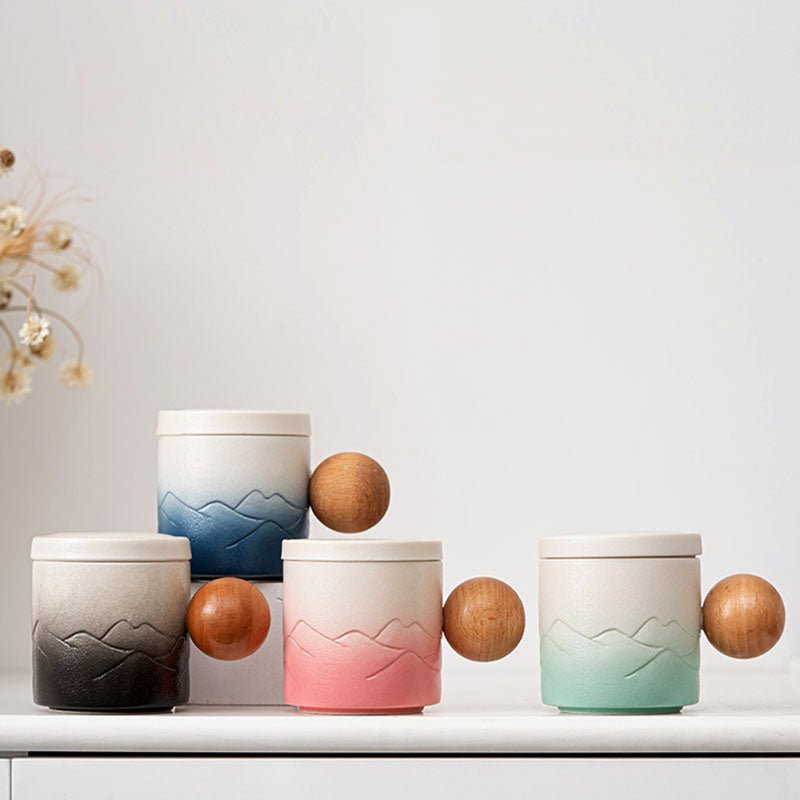
Wide Based Coffee Mugs Home Coffee Station Product Shortlist Guide
A scenario-based shortlist for wide based coffee mugs on a home coffee station: which listed capacity suits which counter, brewer clearance, and shelf, plus the four measurements that settle the de...
Read more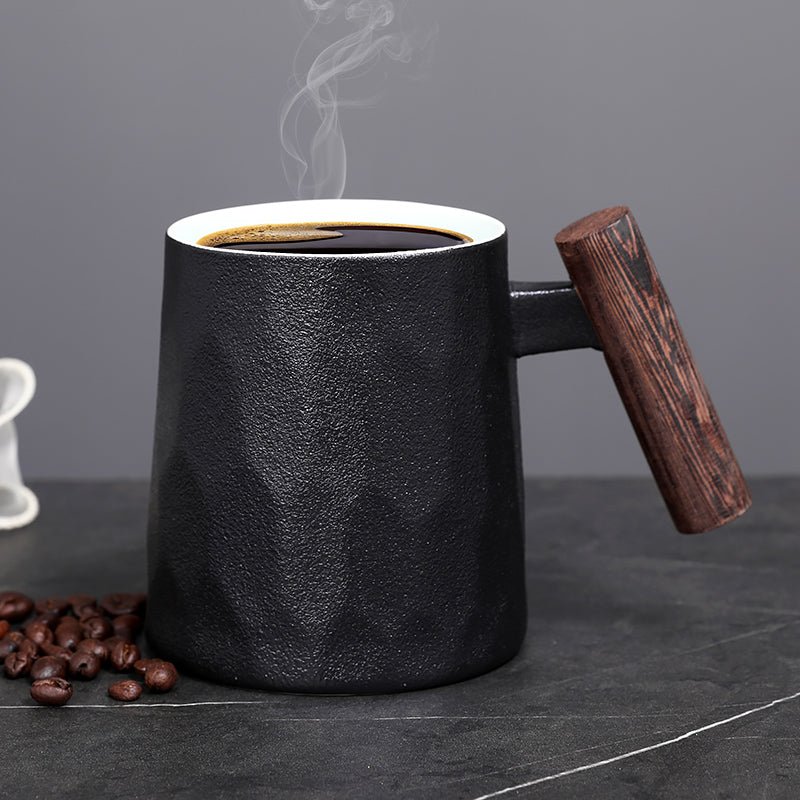
Latte Mugs Tall Everyday Mug Rotation Practical Purchase Checklist
A practical comparison of CoffeifyMug's 400 ml, 440 ml, and 480 ml tall latte mugs — capacity, silhouette, machine clearance, latte-art access, and care details to verify before checkout.
Read more
Leave a comment
This site is protected by hCaptcha and the hCaptcha Privacy Policy and Terms of Service apply.