



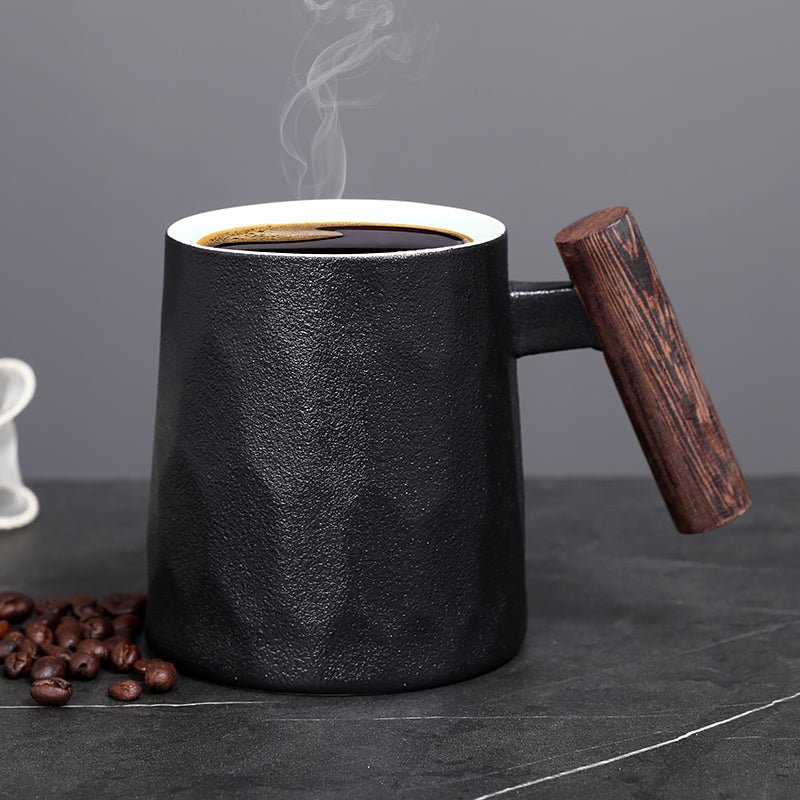
Coffee Mugs With Big Handles Buying Priorities: Fit, Weight, Space
Reading time: about 11 minutes
Three shoppers can look at the same mug and disagree about whether the handle is big. One has wide palms and wants four fingers through the loop. One has knuckles that swell by mid-morning and cannot flex into a tight C-shape. One simply wants a 480 ml coffee that will not tip when the dog brushes past the desk. Our coffee mugs with big handles buying priorities start with that difference, because the word “big” on a product page tells you almost nothing about how the mug behaves in your hand at eight in the morning.
In our store the capacities are stated plainly: the Ball Handle mug is listed at 250 ml, The Flow at 400 ml, and The Rock at 480 ml. We do not publish interior handle clearance or empty weight for these three models. So treat the photos as shape guidance, and ask us for the numbers if the mug has to fit a specific hand, a specific shelf, or a recipient you cannot test it on.
What does your normal pour actually look like in millilitres?
Measure the drink, not the mug. Fill a kitchen jug with the coffee or tea you make on a normal weekday, including the milk you always add, and note the volume. Then compare that figure with the listed capacity, leaving the headspace you personally like so the mug does not slosh when you walk.
| Mug | Listed capacity | Shopper it usually suits | What to verify before buying |
|---|---|---|---|
| Ball Handle | 250 ml | Short espresso-length drinks, tea taken in small refills, smaller hands | Whether the loop suits your fingers; less room for a long milky drink |
| The Flow | 400 ml | A filter coffee that sits on the desk through a morning of calls | Handle clearance and the mug’s footprint beside a keyboard |
| The Rock | 480 ml | Large servings, milk-heavy drinks, anyone who resents refilling | Empty weight and full height if you carry it or brew under a low dispenser |
The gap between these three is larger than it looks on paper. Moving from Ball Handle to The Rock adds 230 ml of liquid — close to another small cup — and that extra volume is what your wrist notices on the walk from kitchen to sofa, not the handle design.
If you already own a mug that feels about right, put it beside these numbers. A 350 ml mug that you fill to the brim is roughly The Flow territory once you allow for headspace; the 12 oz ceramic mug breakdown in our journal walks through that conversion if you prefer to think in ounces.
How do you judge handle clearance when the listing only says “big handle”?
You judge it with numbers, or you accept that you are guessing. Handle appearance and handle usability are different things: a loop can look generous from the outside and still pinch because the grip section is thick, or because the inner edge sits close to a hot wall.
Published ergonomics work gives us useful anchors. A 2023 study of cups for people with reduced strength and dexterity cited earlier hand-clearance work suggesting a mean opening area of roughly 650 mm² for two fingers to pass and about 950 mm² for three. The same study’s focus group preferred lighter cups with larger handles, and the authors flagged cup mass, diameter, handle length and handle opening as the dimensions that matter most. None of that tells us which of our mugs clears four fingers — it tells you what to ask for.
- Interior height and width of the loop — the opening your fingers pass through, not the outside height of the handle.
- Wall clearance — the gap between the inner edge of the handle and the body, so knuckles do not rest against hot ceramic.
- Grip thickness — the diameter of the handle section itself. Some hands want a fatter grip; small hands often do not.
- Where the handle attaches — a handle set high on the body changes the balance point compared with one set low.
A related finding is worth knowing if joint pain is the reason you are shopping: in a biomechanics study of people with rheumatoid arthritis using spoons, larger handle diameters reduced finger-joint flexion, and most participants chose a 1.50-inch built-up handle over a 1.00-inch option. Handles and spoons are not the same object, but the direction of the finding is consistent — a wider grip section can be easier for some hands, while a wider opening helps others. Those two preferences are not identical, which is why “large handle” alone is such a poor filter.
One practical shortcut: take your favourite mug to the hardware drawer, measure the loop interior with a ruler, and write the number on a sticky note. That measurement is the single most useful thing you can bring to a listing that only shows lifestyle photos.
Which coffee mugs with big handles buying priorities change once lifting is the hard part?
When grip strength or a painful wrist is the real constraint, the loop is only half the problem. The other half is mass. A generous handle on a heavy mug still asks your forearm to hold a kilogram of liquid and ceramic at arm’s length, and a handle that is too wide for your span can be harder to control than a snug one.
We are deliberately not going to rank Ball Handle, The Flow and The Rock by weight or balance, because we have no verified empty weights to rank them with. What we can tell you is what to do with that gap:
- Ask for empty weight before you buy — and add the weight of your usual pour (a 400 ml drink adds roughly 400 g).
- Fill a quarter of the way first — a partly filled mug is lighter, cooler and far more forgiving while you learn its balance.
- Test over the sink with cool water — lift, tilt and set down with your normal hand position before hot liquid is involved.
- Consider two hands or a different format — a two-handled cup, a T-handle or a lidded tumbler often beats one oversized loop for tremor, one-sided weakness or very swollen knuckles. That is an honest “not for you” on a single-loop mug, not a sales failure.
If you want a large-capacity mug mostly for looks or for long desk sessions, The Rock at 480 ml is the comparison to make. If lifting is the deciding factor, ask us for its weight first — and be prepared for the answer that a smaller vessel you already own is the better choice.
Will it fit under the brewer, on the warmer and in the dishwasher rack?
A big handle adds width that the capacity figure never mentions. Before shortlisting, take four measurements with a tape — they take two minutes and prevent most returns in this category.
- Brewer clearance: measure from the drip tray to the lowest part of the dispenser, then check the mug’s full height including any rim flare. If you pull the tray out for travel mugs, measure that configuration separately.
- Desk or shelf footprint: you need the overall width including the handle, not the body diameter. A handle that juts over the edge of a narrow shelf is a mug on the floor waiting to happen.
- Warmer surface: a mug warmer needs a flat base that sits within the plate. Check the base diameter rather than the rim.
- Dishwasher rack: a long handle throws off the spacing between dishes, and tall mugs may foul the upper spray arm. Check the care guidance on the listing before you commit, and confirm the handle will not knock against a neighbour mid-cycle.
Storage is the same story in reverse. Stacking handled mugs wastes vertical space, so if your cabinet is tight, measure shelf height with a mug in place rather than the empty shelf. For a different take on base footprint and stacking, our comparison of wide-bottom ceramic mug priorities covers the trade-offs between a broad base and a tall profile.
What should you check about glaze, metallic rims and care claims?
Handle size does not decide whether a mug is microwave safe, dishwasher safe or food-contact compliant. Glaze and decoration do. We do not have verified microwave or dishwasher instructions for these three models in front of us, so the honest answer for Ball Handle, The Flow and The Rock is: ask before you buy, and follow whatever the current listing states for the exact variant you receive.
Two safety points are worth carrying into any purchase. First, the FDA notes that lead in glazes or decorations can leach from some improperly made or fired pottery, that washing or boiling will not remove it, and that glazed ware with extractable lead above FDA action levels should not be described as lead free. If a lead-free claim matters to you, ask for the documentation behind it for that specific item — not for the collection, and not from a photo. Second, the CPSC recall of certain metallic-coated mugs showed that a decorative metallic finish can overheat or crack when microwaved or filled with very hot liquid. That recall covered specific products, not ours, but the lesson travels: a shiny rim is not a microwave guarantee.
Finally, inspect the handle joint the way we do when stock arrives. Run a thumbnail along where the handle meets the body and look for a hairline crack or a sharp, unfilled seam. Chips and cracks at that joint are the failure point to watch, and a damaged mug is not one to keep using with boiling water.
Which mug suits a gift when you cannot test the handle yourself?
Gift shopping is where vague handle claims cost the most, because the recipient is not there to say “too tight.” Work from what you know about their routine instead of picking the largest mug on the page.
- They drink small, frequent coffees: shortlist Ball Handle at 250 ml. It is the wrong gift if they routinely pour a large filter coffee — they will be refilling before the first meeting ends.
- They live at a desk with one long coffee: The Flow at 400 ml sits in the middle of the range and is the safest guess for an adult with an ordinary pour.
- They have said, out loud, that they want a bigger mug: The Rock at 480 ml is the one to compare. Ask us about weight and height if they carry their coffee between rooms.
- They struggle with grip, tremor or swollen joints: message us before ordering. A purpose-built adaptive cup may serve them better than any single-loop mug, and we would rather point you there than sell you the wrong thing.
For a recipient who is choosing by look as much as by feel, the full unique coffee mug collection shows the range of shapes side by side, which is often how people decide anyway.
Frequently asked questions
Can I tell from a photo whether four fingers will fit a big-handle mug?
Not reliably. Ask for the interior height and width of the handle opening, then compare those figures with a mug you already find comfortable. Handle thickness and the gap between the handle and the mug wall matter just as much as the outer loop size.
Which of these three mugs holds the most?
Of the models we compare here, The Rock is listed at 480 ml, The Flow at 400 ml and Ball Handle at 250 ml. That is a capacity ranking only — it says nothing about which handle has the largest opening or which mug is lightest.
Do coffee mugs with big handles buying priorities change for arthritis?
They shift toward handle opening size, grip thickness and filled weight rather than looks or capacity alone. A large loop is not a medical solution, and two-handled or adaptive cups suit some people better. An occupational therapist can advise on individual needs.
Are these mugs microwave and dishwasher safe?
We do not have verified appliance-care information for Ball Handle, The Flow or The Rock, so please check the current listing or ask us about the exact item before relying on either feature. Even a microwave-safe label does not promise the handle stays cool to the touch.
Is a wider handle always easier to grip?
No. A wider grip section can reduce finger-joint flexion for some hands, but if the loop is wider than your comfortable span, control drops and the mug feels less secure. Fit beats size every time.
Measure once, then choose between 250, 400 and 480 ml
Write down four things on your phone before you open another product page: your usual pour in millilitres, the loop interior of a mug you already like, the clearance under your brewer, and whether the mug must be dishwasher safe. Those four answers eliminate most of the wrong choices in this category faster than any photo gallery.
Then compare the three capacities in our unique coffee mug collection and message us for the handle and weight numbers we have not published. If the answer points to a smaller cup than you expected, that is a good outcome — it is far cheaper than discovering it with a full mug of hot coffee.
Ready to pick your mug? Two ways to save on today's order:
Ordering 1–3 mugs? Get an extra 10% off your 1st order with code 10_OFF Apply 10% Off & Shop Wooden-Handle Mugs →
Gifting 4+ mugs? Buy 3, Get the 4th Free applies automatically at checkout (no code needed; offers do not stack) · Free standard shipping (Nov pre-Christmas delivery: 15–20 calendar days US) · Free replacement if chipped in transit.
Popular mug buying guides: Ceramic Tea Cups & Infuser Mugs · Ceramic Mugs with Lids Compared · Wooden-Handle Tea Infuser Mugs Compared · Christmas & Secret Santa Mugs 2026 · Espresso & Cortado Cups Guide · Cup & Saucer Gift Sets · All 25 Mugs Spec Table · Mug Size Guide · Shipping & Promo FAQ
FIRST ORDER 10% OFF (CODE: 10_OFF) · OR BUY 3, GET THE 4TH FREE


Read more
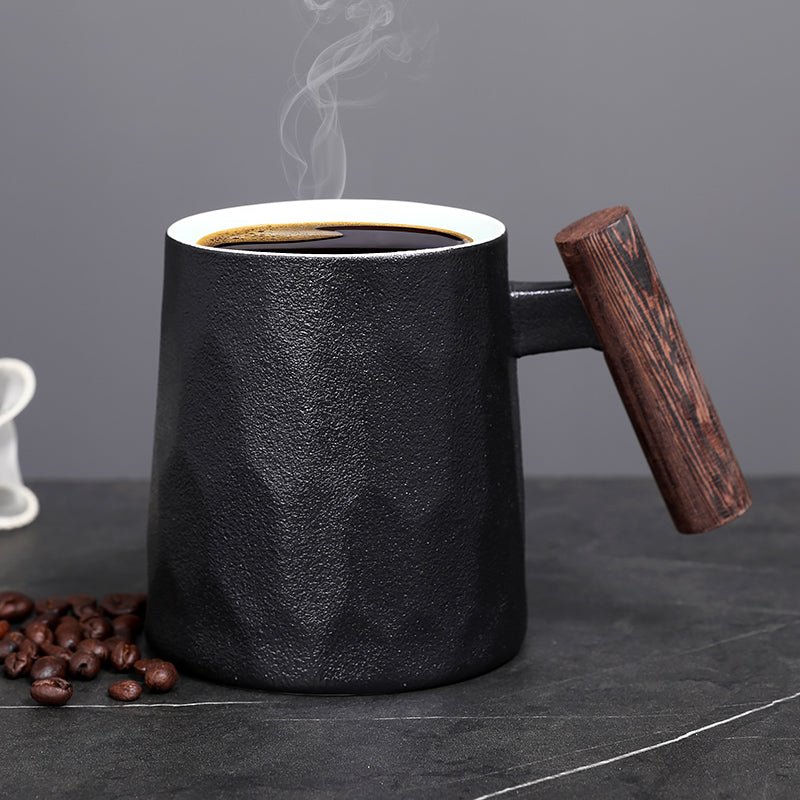
Mocha Mug vs Coffee Mug: Capacity, Shape, and Daily Fit
The names overlap; the jobs do not. We compare usable capacity, headroom, mouth width, and glaze care, then map three real mug sizes to the way you actually drink coffee or cocoa.
Read more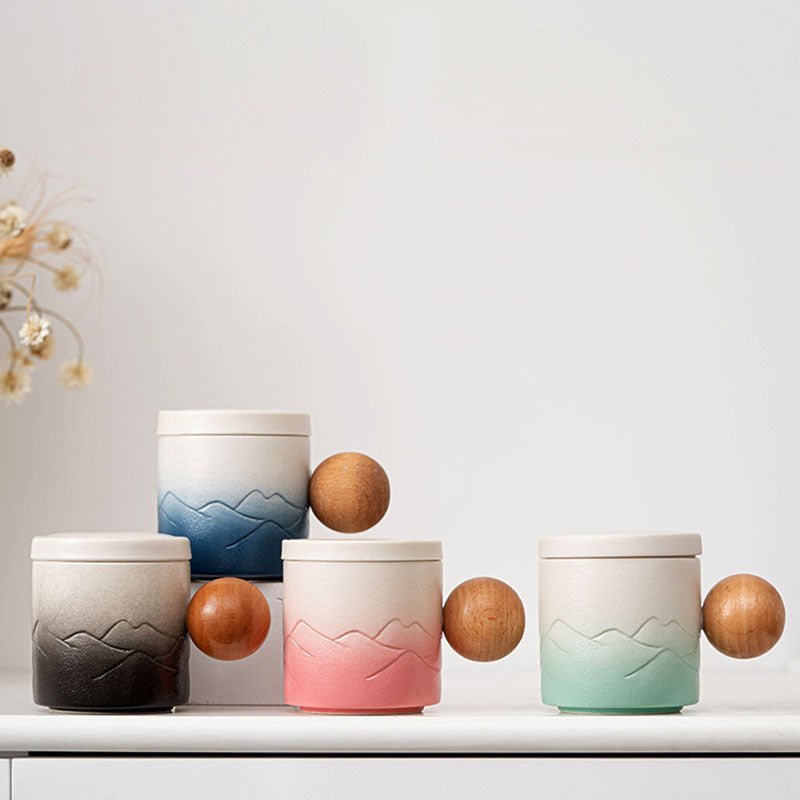
Wide Based Coffee Mugs Buying Priorities: Capacity, Shape, Space
A working framework for wide based coffee mugs buying priorities: what a broad foot does and does not fix, how 250, 400, and 480 ml pours change the trade-off, and which clearance checks to run bef...
Read more
Leave a comment
This site is protected by hCaptcha and the hCaptcha Privacy Policy and Terms of Service apply.