



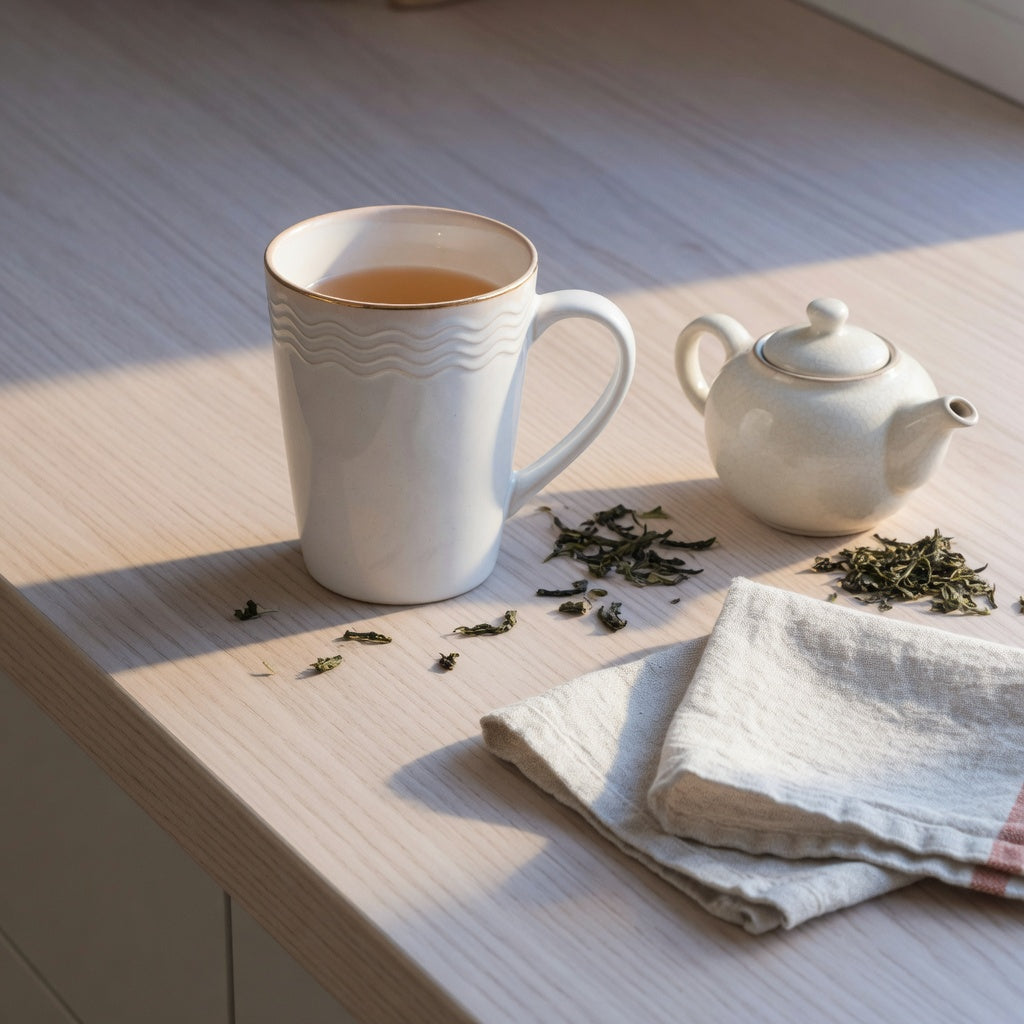
White and Golden Tall Tea Mug: What Buyers Should Compare
Reading time: about 14 minutes
A white mug with a gold lip looks finished the moment it hits a desk. Last week a shopper at our counter turned one in the window light, pressed a thumb to the rim, and asked the question that decides whether it gets used on a Tuesday: can I reheat this? The finish is the easy part. A white and golden tall tea mug might be thick ceramic, thin porcelain, bone china with a metallic band, or glass with a painted edge. Those bodies do not share one microwave rule, one dishwasher rule, or one way of holding heat.
In our store the white-and-gold look is usually chosen for a tidy desk or a gift that has to look considered in the box. Trouble shows up later, after a heated dry cycle or a spark nobody expected. We handle this category, so the checks we use on the sales floor are the ones we want on the product page: name the body, name the gold, read the real height, and see whether the listing calls it food-use drinkware or only photographs a pretty cup.
What does tall change about a white and golden tall tea mug?
Tall is a selling word. It is not a size. One maker means a latte shape that clears a diner mug by a noticeable margin. Another means a straight cup only a little higher than the tea mug already in the cupboard. The FDA compliance guide on lead in ceramic foodware describes cups and mugs as small ceramic hollowware for drinks such as coffee or tea, normally but not exclusively about 240 milliliters (8 fluid ounces), and normally made with a handle. Mugs sold as tall often land above that everyday volume. Some do not. A cropped photo cannot settle it.
Extra height changes three things you notice at home:
- Shelf and cabinet clearance. A higher wall catches the underside of a kitchen cabinet, misses a low mug rack, and crowds a narrow office shelf.
- Stability. A narrow foot under a high, full body feels less planted, especially beside a laptop and a stack of mail.
- How you drink. More height can mean a longer reach to the rim and a handle that sits higher than the one on a short stoneware mug. Smaller hands often find that grip less natural once the mug is full of hot tea.
Our catalog lists the piece we point to for this look as the White Golden Waves Large Coffee Mug. Words such as large, tall, white, and golden in a title are not measurements and not a materials test. Open the current page and read ounces or milliliters, height, diameter, and the materials line, then set those figures beside a mug you already finish. If a number is missing, treat size as unanswered.
Which body are you holding: ceramic, porcelain, bone china, or glass?
Search pages fold every white cup with gold into one style. On a counter they do not behave alike. None of these materials is automatically the body of the mug in our catalog. Read the materials line. Do not guess from the color.
| Body | How it usually feels in the hand | What to verify before daily tea |
|---|---|---|
| Everyday ceramic or stoneware | Thicker wall, heavier, more at home beside the kettle | Glaze at the rim, the handle join, and a clear food-use statement |
| Porcelain | Denser, often smoother, sometimes a brighter white | Thin rims that chip, and whether gold sits on top of the glaze |
| Fine bone china | Lighter, sometimes translucent at the edge, more formal | Metallic-decoration rules; many makers limit microwave and dishwasher use when gold is present |
| Glass | You can see the tea color; gold is often only a rim | Thermal shock if boiling water hits a cold thin wall, plus any metal-rim rule |
Bone china is not a better daily mug than stoneware by default. It is lighter and usually more delicate. A knock against the sink is harder on a thin rim than on thick stoneware. Neither label tells you the gold will survive a heated dry cycle. If a listing never names the body, ask before you order. A white ground and a gold line are not proof of bone china.
Shoppers who want a shorter cup, a matte glaze, or no metallic trim can compare other shapes in our unique coffee mugs collection. The tall white-and-gold style is one option there, not the right default for every desk.
Is the gold metal, luster, plating, or only pigment?
This is the gap we run into most on the sales floor. Pages say gold, golden, or 24K and stop. Those words cover different materials, and the difference changes both microwave risk and how fast the lip looks tired.
- Metal or gold leaf on the rim, handle, or motif. Treat it as metal until the maker says otherwise.
- Gold luster, a fired decorative finish common on porcelain and bone china. It can still contain metal compounds, and makers often keep it out of microwaves.
- Electroplated trim, a thin metal layer. It wears first where your mouth, a spoon, and a sponge all meet the lip.
- Gold-colored pigment or glaze with no metallic content. Some makers then mark the mug microwave-safe. It will not look or wear exactly like leaf.
You also feel the difference at the mouth. A raised metallic band is the first place a spoon, a sponge, and your lip all meet, so comfort and wear live in the same spot. A flat gold-colored print may feel like ordinary glaze and may carry a different microwave mark. Shine in a photo is not proof of metal, and a flat gold print is not proof of safety.
On the product page, read the materials line and any sentence about metallic decoration. If the page does not say whether the gold is metal, luster, plating, or pigment, that question is still open. Do not answer it from the color name.
Will a reheat make metallic gold spark?
The FDA page on microwave ovens says microwaves are reflected by metal and that, generally, metal pans or aluminum foil should not be used in a microwave. Reflection can cook food unevenly and can damage the oven. That guidance is about metal in general. It does not specifically explain a gold rim on a tea mug. Makers fill the gap, and they do not all write the same warning.
Where the decoration is metallic, brands that sell gold rims commonly tell buyers not to microwave it. Where the gold is non-metallic color in the glaze, a maker may mark that particular mug microwave-safe. Follow the label on the exact piece. A similar white mug from another brand is not evidence for ours.
A loose-leaf setup changes the answer again. A stainless basket, a metal lid ring, or a spoon left inside will reflect microwaves even if the cup body has no metal mark. If you reheat, take every metal part out first, and only if the mug itself is labeled microwave-safe. If our listing does not mention an infuser or a lid, do not assume either one ships in the box.
If a gold-accent mug is microwaved by mistake, stop the oven if you see arcing. Let the mug cool on the counter. Look for new cracks, glaze blisters, or trim that has lifted. A cracked mug is finished as a drinking cup: breaks in the glaze collect stains and, on poorly made decorative ware, can make leaching problems worse. An unchanged look is not permission to heat it again. We still would not put it back in the microwave, and we would not guess from the color whether one accidental cycle changed the drink.
This style is a poor fit if the habit is brew, forget, and reheat. A plain mug with no metallic marking is the less fussy tool for that morning.
Does a dishwasher cycle dull or peel the trim?
Microwave risk and dishwasher wear are different problems. One is metal and energy. The other is detergent, heat, and rubbing that slowly eat a thin decorative layer. Retail pages do not agree. Some gold-rim porcelain is sold as hand-wash only. Some bone china with a metallic accent is described as acceptable on a gentle cycle if you skip heated dry and skip abrasive pads. Some everyday ceramic with gold-colored print is marked dishwasher-safe. In our store we treat those labels as specific to the item. We do not promise that every white-and-gold mug will come through the same cycle looking the same.
In our experience, wear shows up in a familiar order:
- The lip goes first, because it meets spoons, other mugs, and the rack.
- Alkaline detergent and a hot dry cycle dull a bright band into a patchy one.
- A scouring sponge leaves fine scratches that catch tea stain.
- Stacking gold against gold rubs the decoration off at the contact points.
If you want a rim or a motif to stay even, wash in warm water with a soft sponge, skip bleach and baking-soda scrubs, and dry the mug fully so water does not sit on the trim. That is more work than dropping every cup on the bottom rack. If nobody in the house will do it, choose a mug with no metallic decoration.
A neat gift box does not mean the mug is dishwasher-safe. Tell the recipient the care line when you hand over the box. If the listing is silent, say that too, instead of guessing on the gift tag.
How do you judge lead risk when the color proves nothing?
A gold line is not a lead test. A white-and-gold colorway does not show that a mug meets foodware limits, and it does not show that it fails them. Results depend on the glaze, the decal, and that maker's testing. Plenty of pages never publish a number.
The FDA compliance guide sets an action level of 0.5 micrograms of lead per milliliter of leaching solution for cups and mugs, applied to any one of six units tested. Separate FDA guidance on the phrase lead free says ceramicware that still releases extractable lead under the prescribed method should not be labeled that way. Using the phrase on such ware can be false or misleading. A casual badge with no testing context is not something we treat as settled.
U.S. regulation 21 CFR 109.16 describes lead as a toxic metal used in some ceramic glazes and decorative decals. Ornamental or decorative ceramicware used to prepare, serve, or hold food may leach lead into the food. That warning is about pieces made to be looked at, not about every handled mug. The practical line is simpler. Drink from ware sold for food. Do not sip from a cup marked decorative, ornamental, or not for food use, however attractive the rim is.
On our listing, look for an explicit food-contact statement. If it is absent, ask before you make the mug a daily tea cup. We would rather answer that question than have you infer safety from a white ground and a gold edge. Those public references still do not replace the label on one specific mug.
Does the extra height help loose-leaf tea?
Tall mugs get picked for tea because the extra height looks like room for leaves and a long steep. Sometimes that is fair. Sometimes the piece is only a tall coffee cup with no basket, no lid, and a wide mouth that lets a delicate tea cool before you finish it.
Check these against the routine you actually have:
- Capacity in ounces or milliliters, not the words large or tall. Fill the mug you already like, note the volume, and match that number on the listing.
- Interior color. A white well shows tea tannin over months of black tea. The stain is cosmetic, and afternoon drinkers notice it. A rinse after each cup slows it. Bleach is a bad trade if gold is on the piece.
- Handle opening. Two fingers should pass comfortably. A tall body with a short, tight handle strains the grip when the mug is full.
- Infuser and lid. Useful for loose leaf, irrelevant if you only use bags. Any metal basket stays out of the microwave. Confirm those parts are included, not just styled in a photo.
- Foot and balance. If the base looks narrow for the height, treat it as a sit-down mug. It is a poor choice to carry across the kitchen while you are also holding a full kettle.
Heat is another place pages overpromise. We do not have a lab count of minutes for how long tea stays hot in a tall white mug. Wall thickness matters more than the gold. Thicker ceramic usually holds heat longer and feels hotter against the palm. Thin porcelain feels refined and cools sooner. If a long steep is the point, read whatever the listing says about the wall, and only count on a lid if the page includes one.
Who should leave a gold-accent tall mug on the shelf?
We like this look for a desk where the mug stays out, for tea you finish in one sitting, and for a gift when the care rules travel with the box. It is not the right mug for every kitchen.
- You reheat coffee twice each morning. Pick a mug with no metal in the decoration and a clear microwave-safe mark.
- The whole household runs one dishwasher cycle and nobody hand-washes. Gold trim will be the first surface to look tired.
- You need a leak-resistant commute cup. A tall open mug, gold or not, is not a travel bottle.
- You stack hard in a small cabinet. Decorated rims scuff when they knock together.
- You are buying from a lifestyle photo, and the listing never names the body, the capacity, or food-use status. Wait until those lines are filled in.
Frequently asked questions
Is a white and golden tall tea mug microwave safe?
Not as a category. Metal reflects microwave energy, which is why FDA guidance generally keeps metal pans and foil out of the oven. If the gold is leaf, luster, or plating, makers commonly say not to microwave it. If the gold is non-metallic pigment, that specific mug might be marked safe. Read the listing for the exact cup, and take any metal infuser or lid out before you even consider a reheat.
Will a dishwasher fade gold on the rim or the pattern?
It can. Detergent, heat, and rubbing at the lip are the usual causes, and brands disagree on whether a gentle cycle is acceptable. If the page says hand wash only, follow that. If it says dishwasher-safe, still skip scouring pads and avoid stacking rim to rim if you want the gold to stay even.
How do I know the mug is actually tall and not just a tall photo?
Use stated capacity and height. The words tall and large are not fixed measurements. FDA descriptions often place a typical cup around 8 fluid ounces, while many taller mugs are sold above that, and some are not. Compare the listing numbers with a mug you already use. If ounces, milliliters, or height are missing, ask before you buy.
Is white porcelain with a gold rim safe for hot tea every day?
Use it for hot tea when it is sold as food-contact drinkware and you follow the care label. Do not serve from a piece marked decorative or ornamental. Lead free has a specific FDA meaning: ware that still leaches lead under the prescribed test should not carry that phrase. A gold rim does not, by itself, prove compliance or a problem.
What should I tell someone if this mug is a gift?
Tell them whether the listing says it is microwave-safe and whether it should be hand washed. The box does not say that for you. Mention that any metal infuser stays out of the microwave, and that a soft sponge beats a scrubber if they want the trim to last. If those facts are not on the listing, do not invent them on the gift tag.
Match the listing to the way you actually drink
Before you order a white and golden tall tea mug from us, run this against the current product page:
- Confirm the body: ceramic, porcelain, bone china, glass, or another material. Do not infer it from the white color.
- Confirm capacity and height in numbers, then compare them with a mug you already finish.
- Confirm what the gold is, and whether that page allows the microwave or the dishwasher.
- Confirm the mug is sold for food use. Treat a bare lead-free line as incomplete unless the seller stands behind the test meaning.
- Confirm whether an infuser, a lid, or gift packaging is actually included.
- Decide if you will hand wash. If you will not, pick a different shape from the other mugs we carry.
When those answers fit a sit-down tea or coffee habit, open the White Golden Waves listing and read it line by line. If they do not, start with the broader collection and choose a mug that matches the way the kitchen actually runs.
More from our blog
Ready to pick your mug? Two ways to save on today's order:
Ordering 1–3 mugs? Get an extra 10% off your 1st order with code 10_OFF Apply 10% Off & Shop Wooden-Handle Mugs →
Gifting 4+ mugs? Buy 3, Get the 4th Free applies automatically at checkout (no code needed; offers do not stack) · Free standard shipping (Nov pre-Christmas delivery: 15–20 calendar days US) · Free replacement if chipped in transit.
Popular mug buying guides: Ceramic Tea Cups & Infuser Mugs · Ceramic Mugs with Lids Compared · Wooden-Handle Tea Infuser Mugs Compared · Christmas & Secret Santa Mugs 2026 · Espresso & Cortado Cups Guide · Cup & Saucer Gift Sets · All 25 Mugs Spec Table · Mug Size Guide · Shipping & Promo FAQ
FIRST ORDER 10% OFF (CODE: 10_OFF) · OR BUY 3, GET THE 4TH FREE


Read more
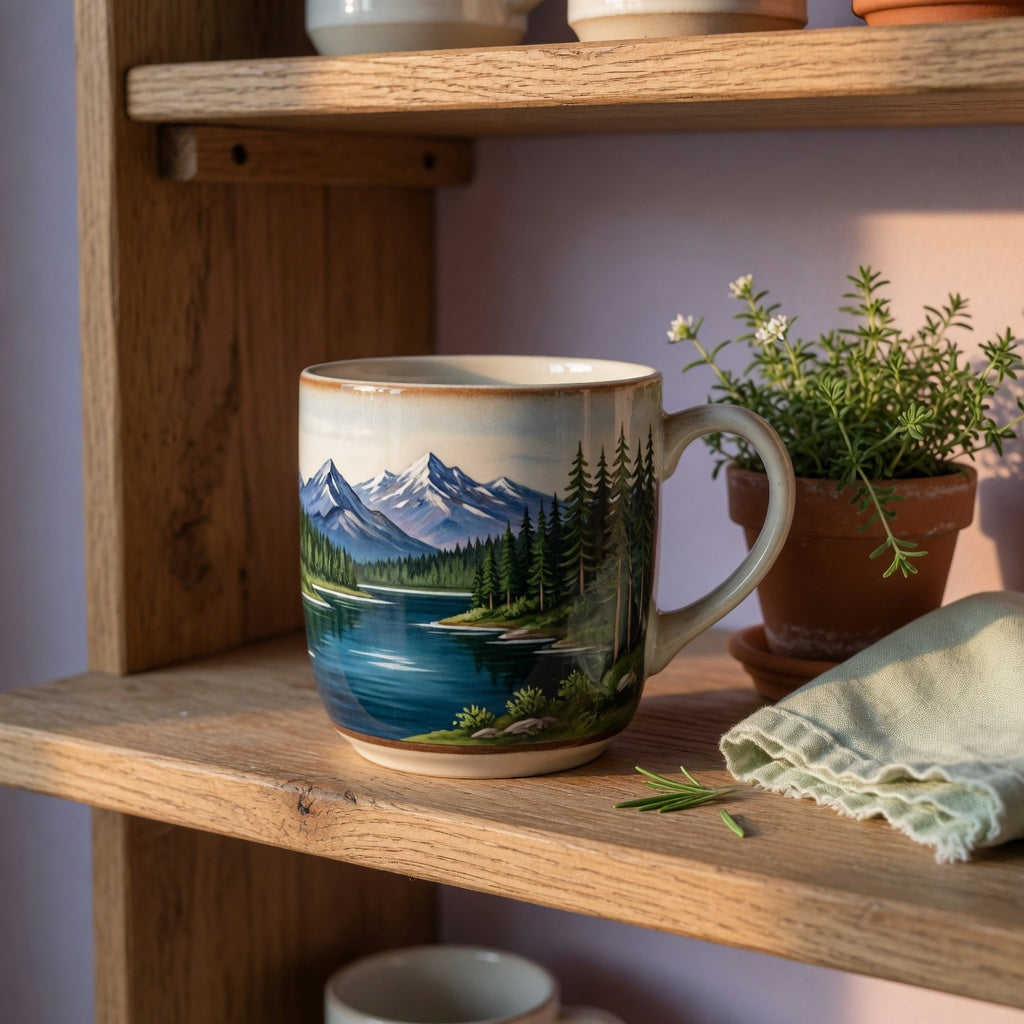
Landscape Mug Gift for Home Decor: Capacity, Glaze, and Care
Scenic landscape mugs are bought as a morning cup and as shelf art. Compare scene type, usable fill, wash care, and food-safe labeling before a housewarming or holiday gift goes out.
Read more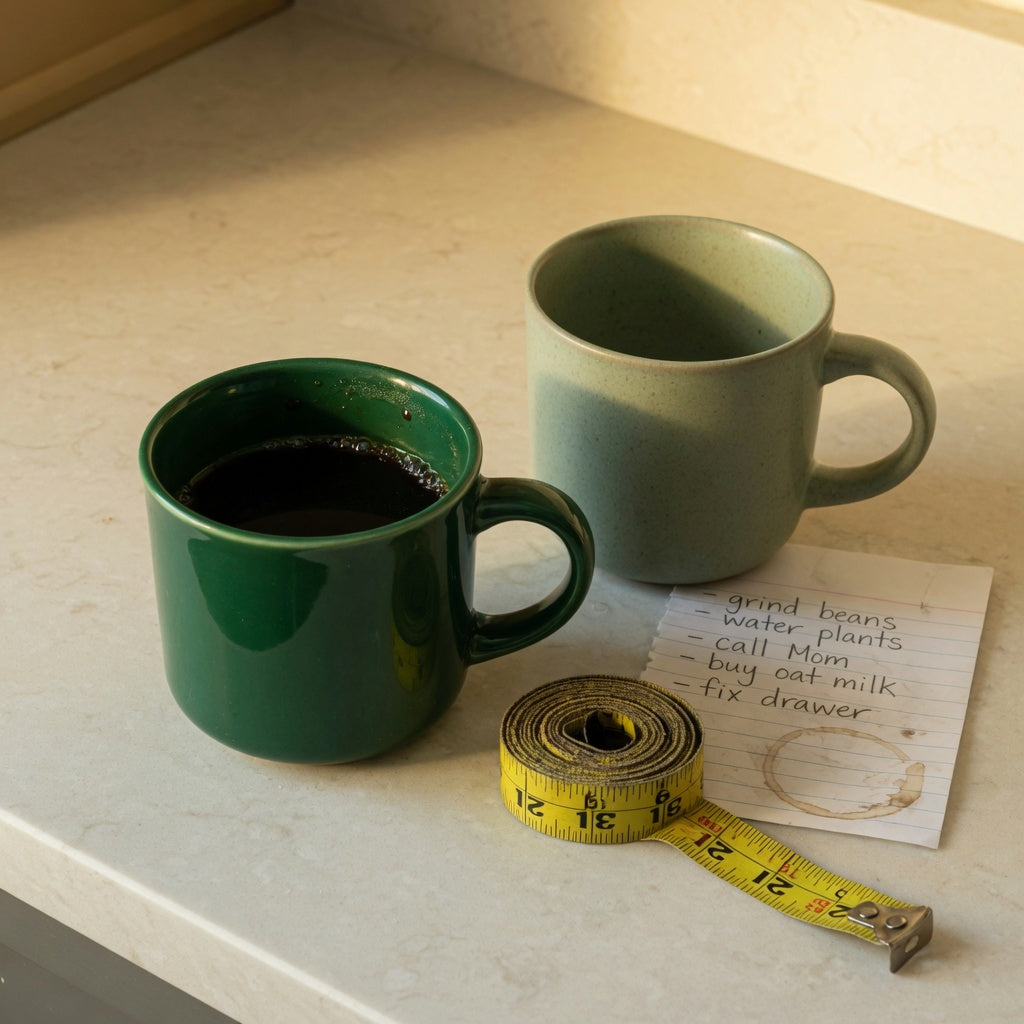
Emerald Ceramic Coffee Mug Buying Checklist: What Buyers Should Compare
A deep green glaze is only the start. This emerald ceramic coffee mug buying checklist walks through color match, usable fill, food-contact glaze, metallic rims, handle comfort, and care labels bef...
Read more
Leave a comment
This site is protected by hCaptcha and the hCaptcha Privacy Policy and Terms of Service apply.