

What Size Mountain Coffee Mug for Desk, Gift, or Camp
Reading time: about 11 minutes
A gift box looks generous in the product photo. On our packing table, the same 11 fl oz mountain camp cup sits beside a diner-style mug and suddenly reads like a sample pour. We see that mismatch when someone searches what size mountain coffee mug to buy and treats a ridge-line graphic as if it defined the vessel. It does not. A printed ceramic, a steel enamel camp cup, and an insulated travel mug can share the same skyline and still hold different amounts, heat the hand differently, and fail different mornings.
There is no official mountain-mug capacity. In our store the useful split is the job: a desk pour, a gift unboxing, a camp stove, or a light pack. Our Mountain Ceramic Coffee Mug is the ceramic, mountain-design option we sell for the desk and the gift box. Open the current listing and read the capacity before you assume it matches an 11 fl oz camp cup or a 20 fl oz commuter bottle. If you want other prints in the same pass, look through printed mugs meant for a desk or a gift and compare stated fluid ounces side by side.
What size mountain coffee mug are shoppers actually choosing between?
Three vessels get grouped because the artwork says mountains. The ounce number on the page is doing the real work, and it is easy to miss under a full-bleed ridge print.
- Printed ceramic. Pages shoppers compare often list mountain designs around 11, 12, 13, 15, or 16 fl oz. These are household mugs with a handle and an open rim, meant for a desk or a table. They are a poor fit in a backpack, and they are the wrong tool if you need a sealed lid on a drive.
- Enamel or stainless camp cups. Often sold around 11 or 12 fl oz, sometimes 15. They are light enough for a camp box and fine beside a stove. The wall conducts heat, so a full pour of very hot coffee can be unpleasant to cradle in a bare hand.
- Insulated travel or backpacking mugs. 16 and 20 fl oz show up often, sometimes with a lid. Better for a car or a cold morning outside. Many are not microwave mugs, and a handle can keep them out of a cup holder even when the base looks narrow in the photo.
Treat those numbers as examples from listings people compare, not as a standard. No standards body publishes one capacity or one exterior size for a mountain coffee mug. FDA guidance on ceramic foodware describes cups and mugs as small hollowware normally, though not exclusively, about 240 milliliters (8 fl oz), made with a handle, for coffee or tea above room temperature. That is a category description. It is not the pour sitting on most office desks.
The same guidance calls ceramicware under 1.1 liters small hollowware, and 1.1 liters or more large hollowware. Capacities shoppers compare, including 15 and 20 fl oz, sit well under 1.1 liters, so they remain small hollowware in that classification. A product title that says large has not crossed a regulatory size line.
Is 11 fl oz too small, or is 15 fl oz the safer gift?
This question shows up at the packing bench when the mug is a present and you cannot watch the first pour. An 11 fl oz enamel mountain cup is not too small for a short, strong coffee with nothing added. It is often too small for someone who fills a household mug, adds milk, and still expects the cup to look full after the foam settles.
CDC NHANES dietary measuring guides used three mug models listed at 8, 10, and 14 oz, and those same figures were the rim capacities. Rim capacity is the fill to the lip. It is not the comfortable pour once cream, foam, or a lid needs space. Leave about a finger of room under the rim and an 11 fl oz camp cup can land near a small breakfast pour. A 15 fl oz ceramic still looks like a real mug after that same gap.
We use a simple gift rule on orders we pack. If you know they like a short cup, 11 or 12 fl oz is honest and lighter to wrap. If you do not know, a 15 or 16 fl oz ceramic is the less risky printed gift. A 20 fl oz travel mug is a different present. It assumes a commute or a trail, not a cabinet of open ceramic.
For how those steps compare with ordinary household mugs, our notes on what size a standard coffee mug usually is and what an average mug tends to hold keep the mountain graphic from doing the sizing work.
An 11 fl oz mountain mug is the wrong gift for someone who hates refills. A 16 fl oz ceramic is the wrong pick for a hiker counting empty weight, and it chips more easily in a camp box. Match the vessel to the morning, not to the illustration.
Desk coffee, fewer refills, or a trail pour?
Capacity only helps after you name the counter the mug lives on. For everyday desk coffee, what size mountain coffee mug you pick is really a question of refills versus a cup you can finish while it is still hot. In our experience the photo fools people twice: height looks like volume, and a wraparound print hides a narrow bowl.
| Situation | Capacity shoppers compare | Vessel that usually fits | Where it disappoints |
|---|---|---|---|
| Short, strong coffee, little or no milk | 8–12 fl oz | Small ceramic or enamel camp cup | Looks stingy next to a diner mug and needs refills |
| Everyday desk pour | 12–16 fl oz | Ceramic with a comfortable handle | Goes lukewarm on a slow sip; check shelf height |
| Gift when you do not know their pour | 15–16 fl oz | Ceramic mountain mug, capacity confirmed on the listing | May be too tall for a small cabinet; not a trail cup |
| Car camping, stove nearby | 11–15 fl oz | Enamel or steel camp cup | Hot walls, a dented rim, and no microwave |
| Commute or a cold trail | 16–20 fl oz | Insulated mug with a real lid | Cup-holder miss, more empty weight, often not microwave-safe |
Fewer refills push the fluid ounces up. They also push you toward a mug that stays pleasant to hold for a long sip, not a quick gulp. A wide 15 fl oz ceramic can be easier on the hand than a tall 12 fl oz cup with a skinny handle, even when the tall one looks bigger in a thumbnail. A narrow loop can pinch a finger against the wall. We notice that on the packing table when the handle looks decorative rather than usable.
If the desk is the main job, stay with ceramic and confirm the ounce line before you order. Read it when you check the fluid ounces on our mountain ceramic coffee and tea mug. That style is not the one we would pack for a light hike, and it is not a stand-in for a lidded travel cup in a center console. If the listing does not publish a capacity you can live with, do not guess from the artwork. Move to another design instead.
Fluid ounces, empty weight, and the measurements that change the fit
Two different ounces get mixed on hiking pages. Fluid ounces are volume. The ounce figure in a pack-weight chart is mass. A mug can weigh 12 oz empty and hold 15 fl oz of coffee. Under NIST Handbook 130, a U.S. liquid-quantity declaration that uses the word ounce is supposed to identify it as fluid unless the meaning is already obvious, and ordinary liquid measure is expressed at 68 degrees F. Read the listing for fl oz or fluid ounces. If it only says ounces beside a shipping weight, do not treat that number as the pour.
A stated capacity is a volume declaration, not a promise that hot coffee plus foam will sit level with the rim. You buy the volume, then you leave space because the drink is hot and because milk takes room you cannot see in the hero photo.
We ask buyers to collect five measurements before they trust the artwork. If the listing omits one, capacity is an incomplete story.
- Stated fluid capacity, and whether it is a brim fill or a practical fill.
- Height, so it clears the cabinet shelf or the mug rack.
- Diameter without the handle, which is the bowl.
- Width including the handle, which is what hits a dish rack or the side of a bag.
- Base diameter, separate from the rim. Cup holders grip the bottom. A wide rim or a handle can make a travel mountain mug useless in a car even when the ounce count looks right.
Lid headroom is the extra check on insulated cups. A 20 fl oz vessel whose stopper steals the top inch does not drink like 20 fl oz. Cream does the same quiet shrink on an open ceramic. Our guide to how many ounces a coffee mug actually holds walks through that gap without pretending every brand measures the fill the same way.
Hot enamel, heavy ceramic, and what a mountain mug is not for
Metal camp mugs move heat fast. On a cool morning that can feel fine for a few minutes. Fill one with coffee just off a boil and the rim can be too hot to cradle. A sleeve changes the decision. An insulated mug is the better mountain choice when the drink has to stay hot on a drive, or when bare hands should not touch the wall. You pay for that in empty weight, a lid to clean, and appliance limits that belong to one product at a time.
Ceramic keeps the opposite problems. It is microwave-friendly only if that exact maker says so. It can go in a dishwasher only if the listing says so. A mountain print answers neither question. In our experience the later complaint is rarely the ounce count. It is a handle that feels sharp, a foot that rocks on the desk, or a graphic that was never described as dishwasher-safe and then got scrubbed like a plain diner mug.
Food-contact claims are separate from care icons. For ceramic cups and mugs, the FDA action level for lead is 0.5 micrograms per milliliter of leaching solution under CPG 545.450. A product photo is not a test report. If a listing does not say the mug is meant for food, do not guess. Handmade mountain pottery is stricter still: capacity is often approximate, and two pieces from the same batch can differ. Ask for a fill line or a photo with a scale before you trust the ounce line.
Skip a ceramic mountain mug when you need a drop-proof camp cup, a verified cup-holder fit, or the lightest empty vessel in the pack. Skip an 11 fl oz enamel cup when the gift is supposed to be one long, milky pour. Skip a 20 fl oz insulated mug when they want a mug that lives in a microwave and a dish rack.
A short check before you add a mountain mug to the cart
Run this on the listing you have open, including ours.
- Name the job: desk, gift, car camp, or hike.
- Read fluid ounces, not a bare oz that might be empty weight.
- Subtract headroom for milk, foam, or a lid. The brim number is the ceiling.
- Compare height, bowl diameter, handle width, and base diameter.
- For a car, judge the base, not the mountain graphic.
- For heat, decide whether a bare hand will hold the wall.
- For ceramic, confirm food-contact intent and any microwave or dishwasher line on that page. A missing line is not a silent yes.
- For handmade ware, expect capacity to vary from the photo you liked.
If the job is a ceramic mountain design for coffee at a desk or as a gift, read the current details on the listing, then browse the unique coffee mugs collection for a different print only after the ounce line matches the pour.
Frequently asked questions
What size mountain coffee mug should I buy if I have not seen their usual cup?
Choose by the morning, not by the print. A 15 or 16 fl oz ceramic is the safer gift when you do not know whether they drink a short cup or a full diner pour. An 11 fl oz camp mug suits a small, strong coffee and a pack. A 20 fl oz insulated mug suits a commute or a cold trail, not a microwave routine, unless that specific product says otherwise.
Is an 11 fl oz mountains camp mug too small for a normal coffee pour?
For black coffee in a short cup, no. For a household pour plus milk, it often feels small because the stated 11 fl oz is brim capacity, and you should not fill to the lip. Picture a finger of space under the rim. If that leaves less coffee than they drink at the office, step up to a 15 fl oz ceramic or plan on a refill.
Will a mountain travel mug fit a standard car cup holder?
Not from the artwork, and not from the fluid-ounce number. Holders grab the base. You need the base diameter, measured without the handle, and you need to know the holder in that car. Width across the handle is the wrong number. If the listing does not publish a base diameter, assume it might not fit and pick a different mug for the drive.
How many fluid ounces does a handmade mountain pottery mug actually hold?
Only as much as that piece holds, and the page should say the figure is approximate. Handmade capacity varies from mug to mug. Look for a fill line or a photo with a scale. A molded ceramic labeled 15 fl oz is a more repeatable number than a studio mug described as about a size. Neither number includes the space you leave for cream.
Does a larger mountain mug stay comfortable, or should I jump to 20 fl oz?
A 15 or 16 fl oz ceramic stays comfortable when the handle is wide enough and the mug is not top-heavy. It will not keep coffee hot for a long drive. Move to a 20 fl oz insulated mug when fewer refills and heat retention matter more than a dishwasher or a microwave. Confirm those appliance claims on the individual listing. A mountain graphic does not settle them.
Read more
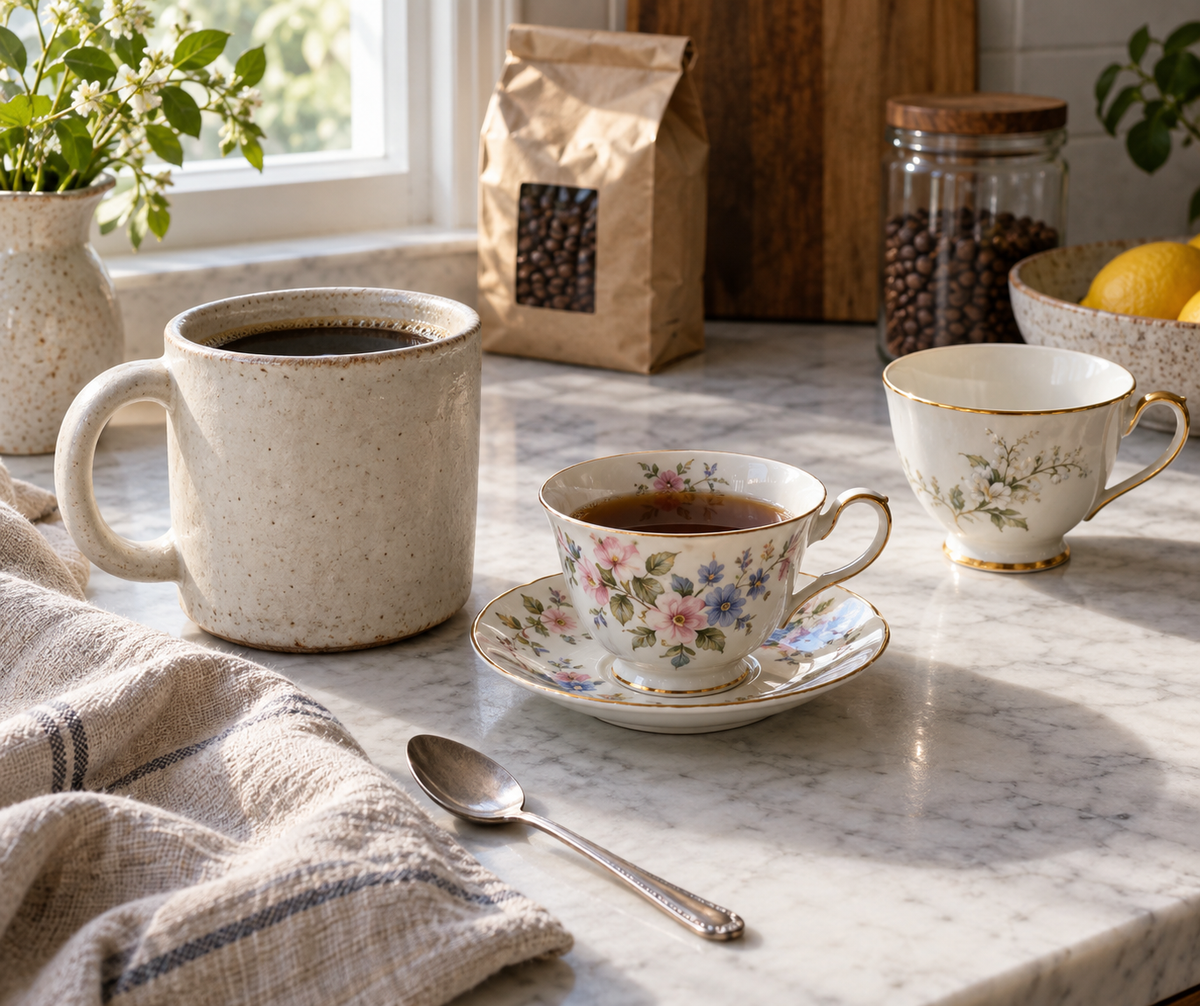
Best Retro Coffee Mugs Tea Cups Gift Guide: Size and Safety
Shoppers comparing retro coffee mugs and tea cups need more than a pretty silhouette. We separate new daily drinkware from true vintage, then cover lead safety, usable size, metallic trim, and what...
Read more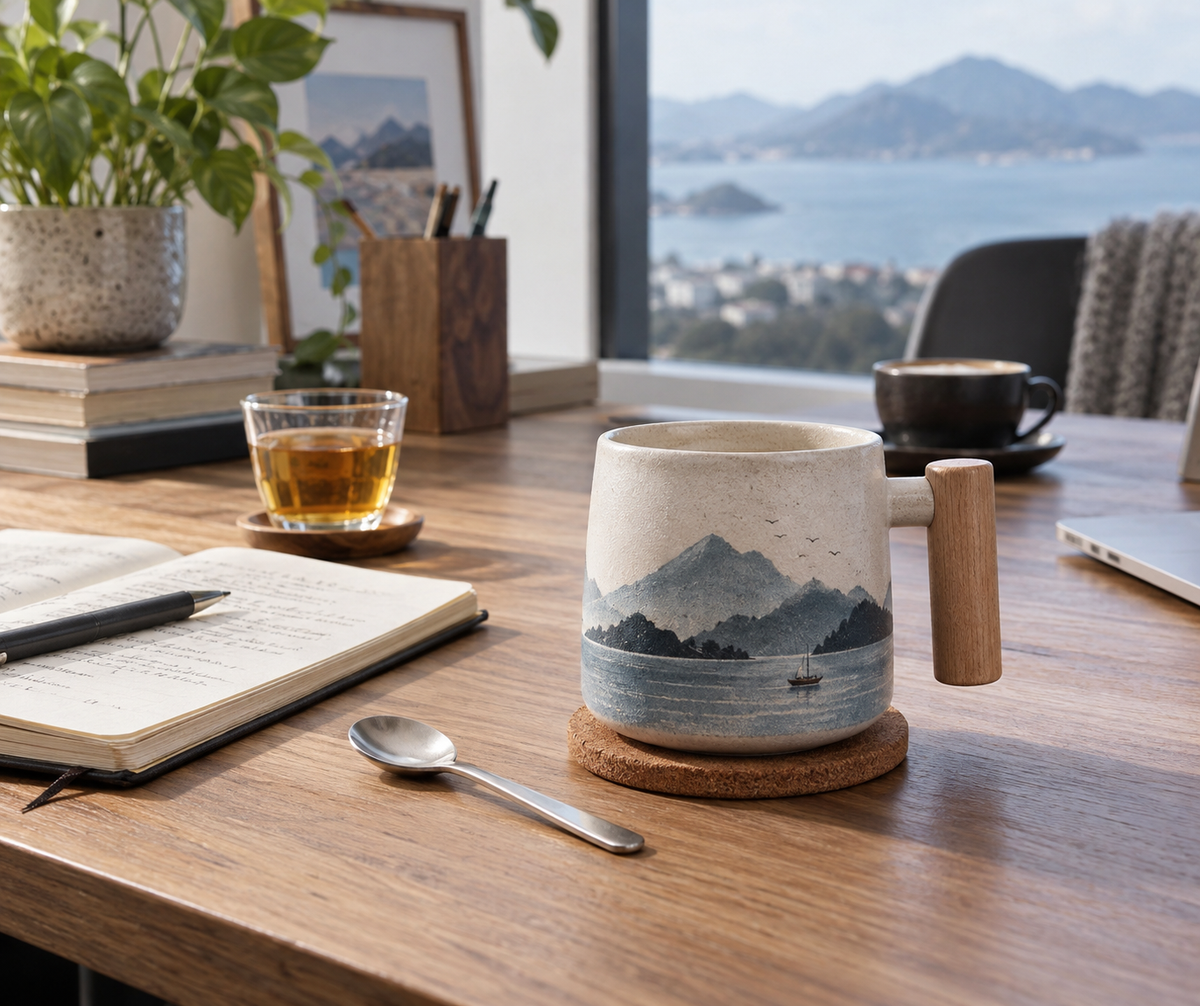
Coffee and Tea Mug Gift for Desk: What to Compare
Desk coffee goes lukewarm during slow sipping, and some teas turn harsh if a warmer keeps them steaming. Compare ceramic, insulated, and warmer gifts for handle comfort, a stable base, food-safe us...
Read more
Leave a comment
This site is protected by hCaptcha and the hCaptcha Privacy Policy and Terms of Service apply.